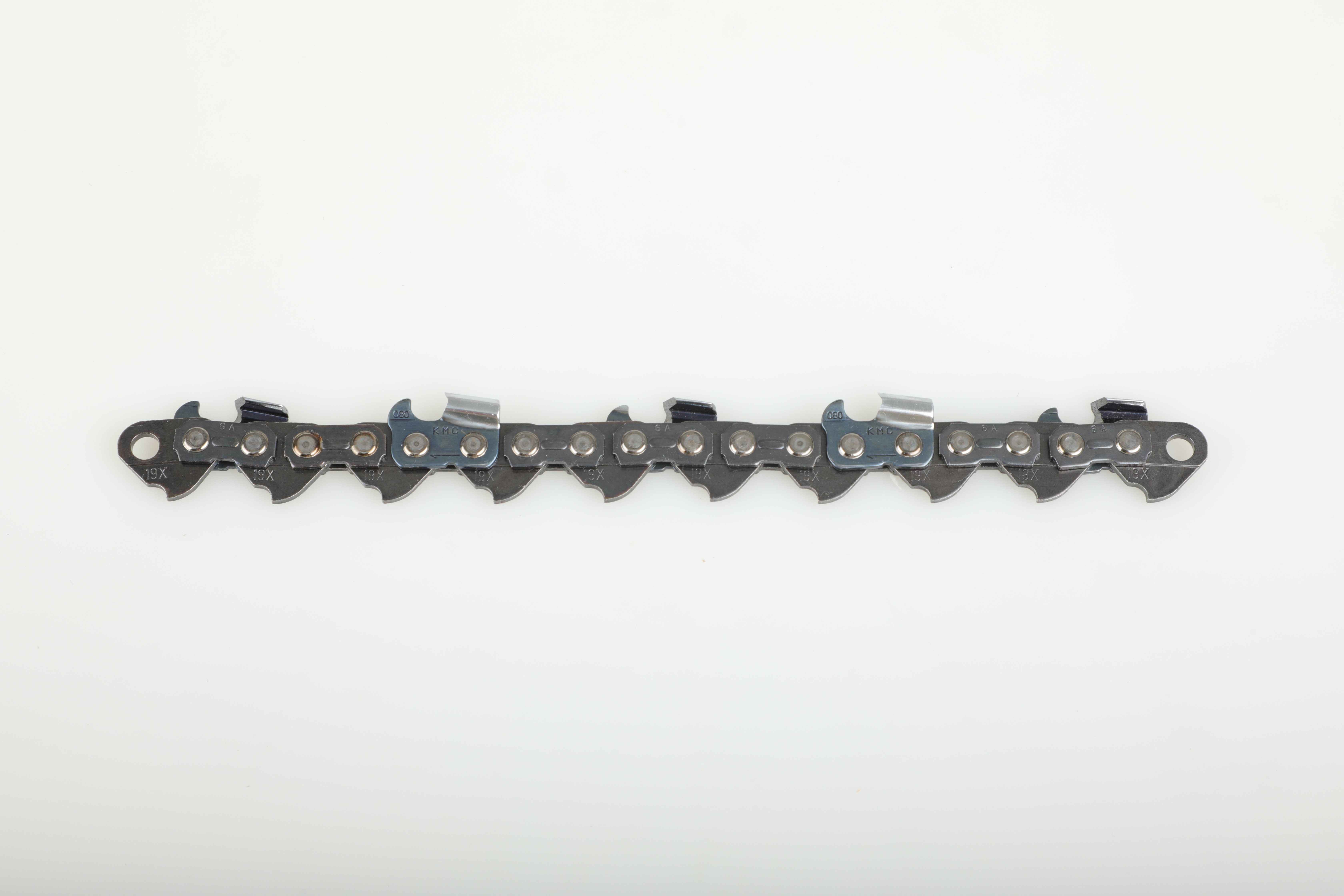
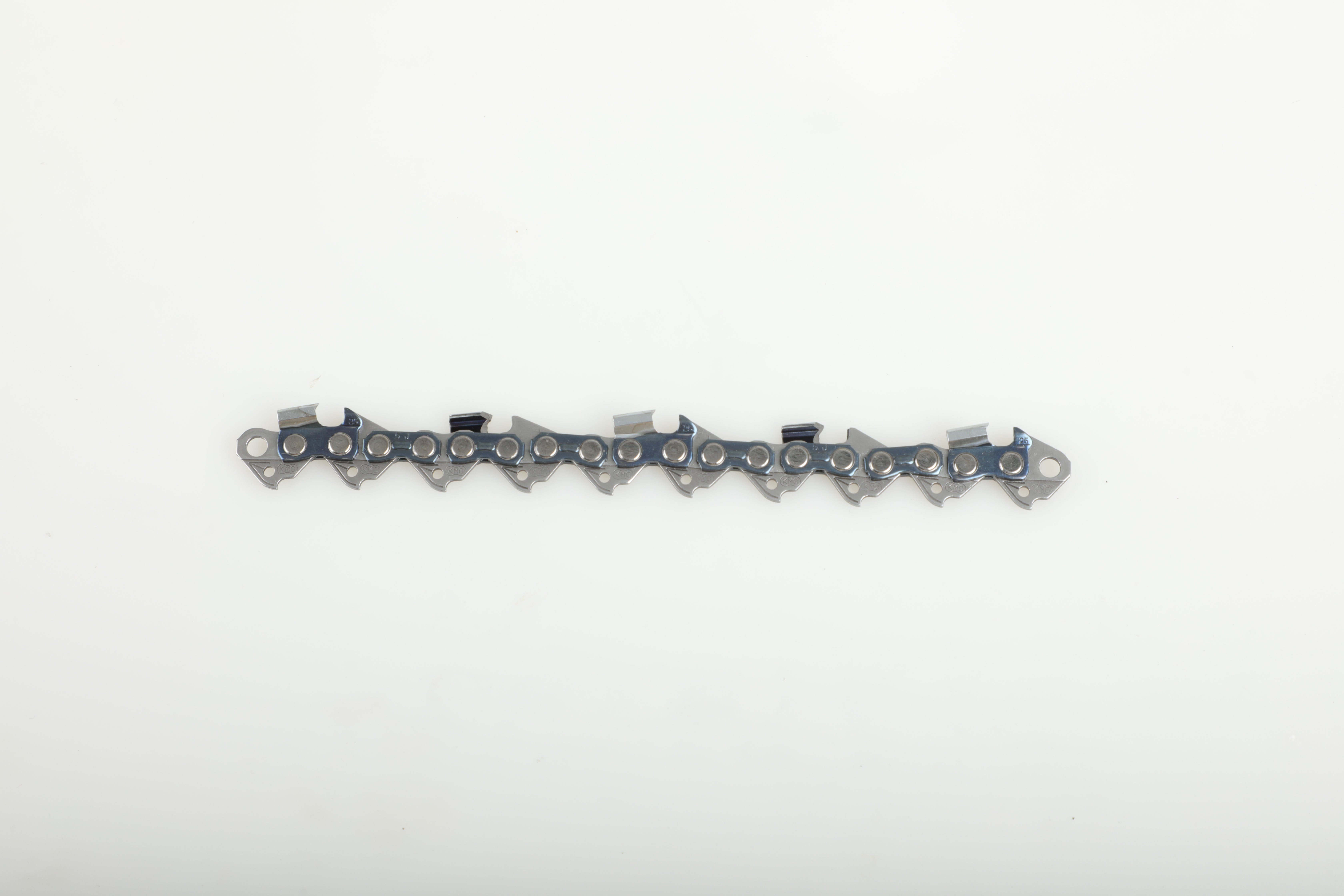
Quick answer: To measure chainsaw chain pitch, measure from the center of one rivet to the center of the third consecutive rivet, then divide that distance by two. Compare the result with a known pitch category and verify it against the sprocket and guide-bar information. Pitch alone is not enough; gauge and drive-link count must also match.
Rivet spacing offers a practical way to identify pitch when markings or packaging are missing. Measurement needs care because small errors can point to the wrong category, and 3/8 low profile requires more than recognizing the fraction. This guide focuses on the measurement procedure and compatibility checks.
- Make rivet centers visible and stable.
- Use center-to-center distance over two intervals.
- Convert the two intervals into pitch.
- Match the result to a real chain system.
- Treat chain, bar and sprocket as one system.
Table of Contents
- Prepare the Chain and Measuring Tool
- Measure Across Three Consecutive Rivets
- Divide the Span by Two
- Distinguish Common Pitch Categories
- Verify Sprocket and Guide-Bar Compatibility
- Complete Gauge and Drive-Link Checks
- Frequently Asked Questions
- Conclusion
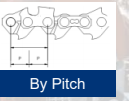
Pitch is calculated from the distance across three consecutive rivet centers divided by two.
Prepare the Chain and Measuring Tool
Clean loose debris, lay the chain flat and choose an undamaged straight section with clear rivet centers. For saw owners, service technicians and buyers checking an unidentified loop, this point should be connected to a written product or order requirement rather than left as a general preference. The response is easier to compare when every candidate uses the same terminology and confirms any exception before work begins.
The practical action is to use a precise ruler or caliper appropriate to the condition and keep fingers away from cutters Keep the result with the quotation, sample or order record so later decisions use the approved version. When several chain configurations are involved, separate them by pitch, gauge and drive-link count instead of combining different loops in one description.
A common failure is measuring a curved, damaged or moving section and estimating the centers The guardrail is to repeat the measurement on another section and compare results This does not eliminate every supply or operating risk, but it makes the decision visible, reviewable and easier to correct before a full order is packed or used.
| Decision point | What to confirm | Why it matters |
|---|---|---|
| Prepare | Clean chain and stable surface | Improves measurement |
| Span | Center of first to center of third rivet | Uses two pitch intervals |
| Calculate | Divide the span by two | Produces chain pitch |
| Compare | Match a standard category | Avoids invented values |
| Verify | Check sprocket, bar, gauge and count | Confirms the full setup |
Measure Across Three Consecutive Rivets
Select three consecutive rivets and measure from the center of the first to the center of the third. For saw owners, service technicians and buyers checking an unidentified loop, this point should be connected to a written product or order requirement rather than left as a general preference. The response is easier to compare when every candidate uses the same terminology and confirms any exception before work begins.
The practical action is to align the tool carefully and record the span before calculating Keep the result with the quotation, sample or order record so later decisions use the approved version. When several chain configurations are involved, separate them by pitch, gauge and drive-link count instead of combining different loops in one description.
A common failure is measuring the outer edges of rivet heads or only one uncertain interval The guardrail is to use rivet centers and repeat when wear or dirt hides the reference This does not eliminate every supply or operating risk, but it makes the decision visible, reviewable and easier to correct before a full order is packed or used.
Divide the Span by Two
The measured distance covers two equal pitch intervals in the chain’s rivet pattern. For saw owners, service technicians and buyers checking an unidentified loop, this point should be connected to a written product or order requirement rather than left as a general preference. The response is easier to compare when every candidate uses the same terminology and confirms any exception before work begins.
The practical action is to divide the recorded span by two and retain enough precision for comparison Keep the result with the quotation, sample or order record so later decisions use the approved version. When several chain configurations are involved, separate them by pitch, gauge and drive-link count instead of combining different loops in one description.
A common failure is rounding early or treating the full three-rivet span as the pitch The guardrail is to compare the calculated result with recognized product categories This does not eliminate every supply or operating risk, but it makes the decision visible, reviewable and easier to correct before a full order is packed or used.
Distinguish Common Pitch Categories
Common chains include 1/4, .325, 3/8 low profile, standard 3/8 and .404 categories. For saw owners, service technicians and buyers checking an unidentified loop, this point should be connected to a written product or order requirement rather than left as a general preference. The response is easier to compare when every candidate uses the same terminology and confirms any exception before work begins.
The practical action is to use the pitch reference and equipment information Keep the result with the quotation, sample or order record so later decisions use the approved version. When several chain configurations are involved, separate them by pitch, gauge and drive-link count instead of combining different loops in one description.
A common failure is choosing the closest-looking value without considering measurement error or chassis The guardrail is to repeat the measurement and verify markings before deciding This does not eliminate every supply or operating risk, but it makes the decision visible, reviewable and easier to correct before a full order is packed or used.
Verify Sprocket and Guide-Bar Compatibility
A measured pitch must agree with the drive sprocket and the guide bar’s intended system. For saw owners, service technicians and buyers checking an unidentified loop, this point should be connected to a written product or order requirement rather than left as a general preference. The response is easier to compare when every candidate uses the same terminology and confirms any exception before work begins.
The practical action is to inspect verified equipment markings and resolve any conversion or replacement history Keep the result with the quotation, sample or order record so later decisions use the approved version. When several chain configurations are involved, separate them by pitch, gauge and drive-link count instead of combining different loops in one description.
A common failure is installing a correctly measured chain on a sprocket of another pitch The guardrail is to stop when components disagree and have the setup reviewed This does not eliminate every supply or operating risk, but it makes the decision visible, reviewable and easier to correct before a full order is packed or used.
Complete Gauge and Drive-Link Checks
Pitch identifies spacing but not drive-link thickness or loop length. For saw owners, service technicians and buyers checking an unidentified loop, this point should be connected to a written product or order requirement rather than left as a general preference. The response is easier to compare when every candidate uses the same terminology and confirms any exception before work begins.
The practical action is to confirm gauge from the bar groove and count every drive link Keep the result with the quotation, sample or order record so later decisions use the approved version. When several chain configurations are involved, separate them by pitch, gauge and drive-link count instead of combining different loops in one description.
A common failure is ordering immediately after pitch measurement The guardrail is to record pitch, gauge and count together on the final product request This does not eliminate every supply or operating risk, but it makes the decision visible, reviewable and easier to correct before a full order is packed or used.
Frequently Asked Questions
Why measure across three rivets?
The distance from the first to the third consecutive rivet spans two pitch intervals. Dividing that center-to-center distance by two reduces the effect of trying to measure one small interval.
Can worn rivets change the result?
Wear, dirt and damage can make centers harder to identify. Clean the chain, use an undamaged section and repeat the measurement in more than one place. Confirm the result with equipment markings.
Does a measured 3/8 result prove standard 3/8 chain?
No. You must distinguish standard 3/8 from 3/8 low profile using the complete chain and equipment specification. Gauge, chassis and approved saw system also matter.
Where can I compare pitch products?
View the KMC product categories and submit measured pitch, gauge and drive-link count through the contact page.
Conclusion
The reliable method for how to measure chainsaw chain pitch is three rivet centers divided by two, followed by comparison with a recognized category. Repeat the measurement and verify the sprocket and bar. Then complete gauge and drive-link count before selecting a replacement loop.