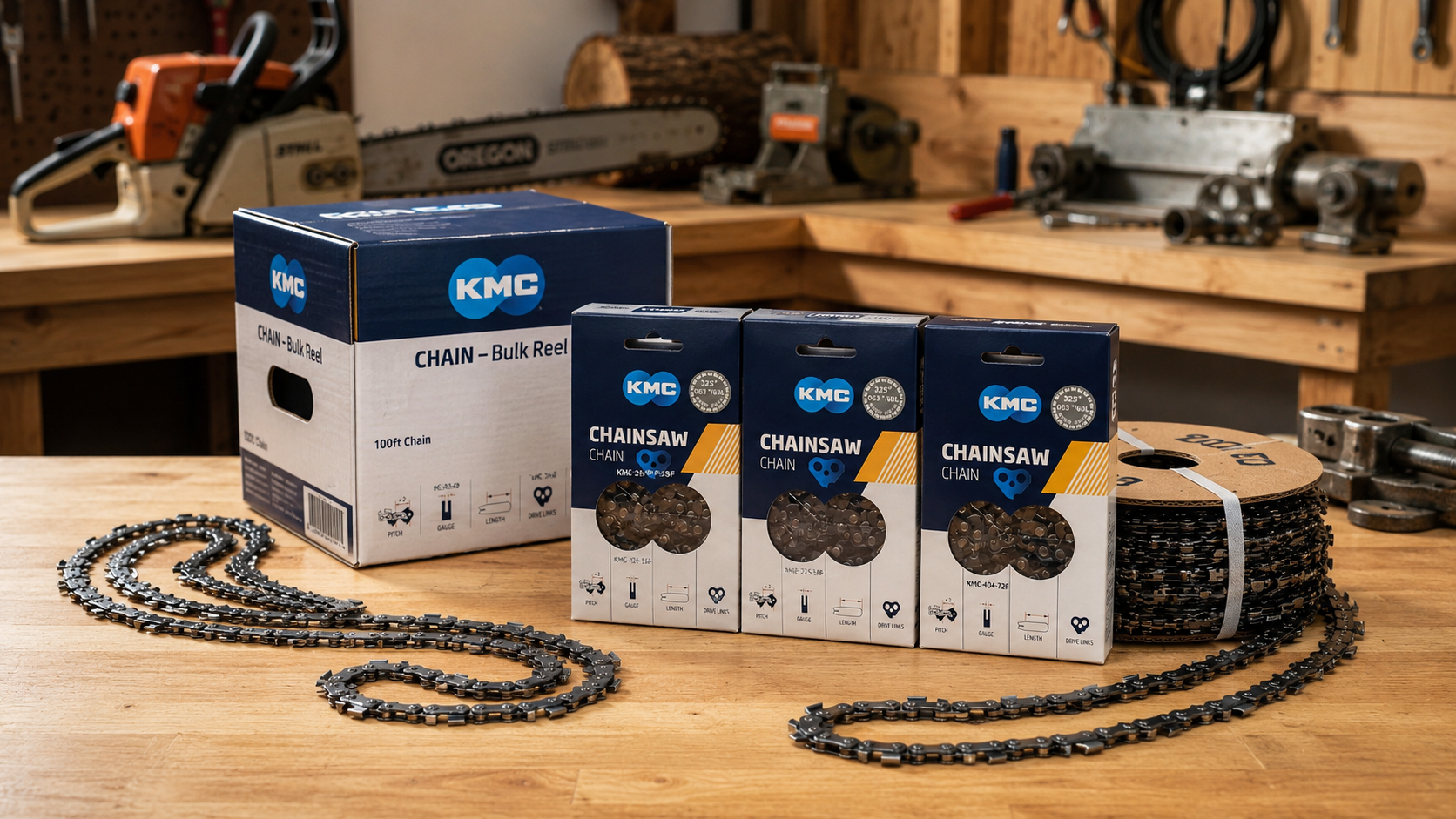
An importer, tool brand, replacement-parts distributor or forestry buyer should approve a chainsaw chain manufacturer only after one real fitment has moved from specification to sample, inspection and packed order. The first facts to confirm are pitch, gauge and drive-link count. Cutter shape, chain sequence, packaging and volume come after those three dimensions because a loop that does not match the bar and sprocket cannot be rescued by attractive branding or a low unit price. Buyers comparing KMC can begin with the complete saw chain range and then examine the OEM and wholesale manufacturing information before selecting control samples.
This approach is suitable for buyers building a mixed replacement range, approving a private-label program or qualifying a second source. It is also useful for engineering teams that must keep handheld chains separate from mechanical-harvester chain. The audit should produce a build sheet, an approved sample, an inspection record and a packaging reference for every ordered loop. If the manufacturer cannot keep those four records connected, a large catalogue does not reduce the buyer's risk.
A chainsaw chain manufacturer must pass fitment before price comparison
Pitch describes how the chain engages with the sprocket and guide-bar nose. Gauge is the thickness of the drive link that runs inside the bar groove. Drive-link count determines the finished loop length. These dimensions form one fitment identity: changing any one of them creates a different chain. An old loop, a clear photograph of the bar stamp and the saw or cutting-head model can support identification, but the purchase specification should still state the three dimensions explicitly.
A buyer should not approve a sample described only as “16-inch chain” or “fits a popular saw.” Bar length alone does not define pitch, gauge or the number of drive links. Brand compatibility lists can help narrow the search, but they cannot replace the dimensions printed on the bar or confirmed from the original equipment documentation.
Build one control sample from pitch, gauge and drive links
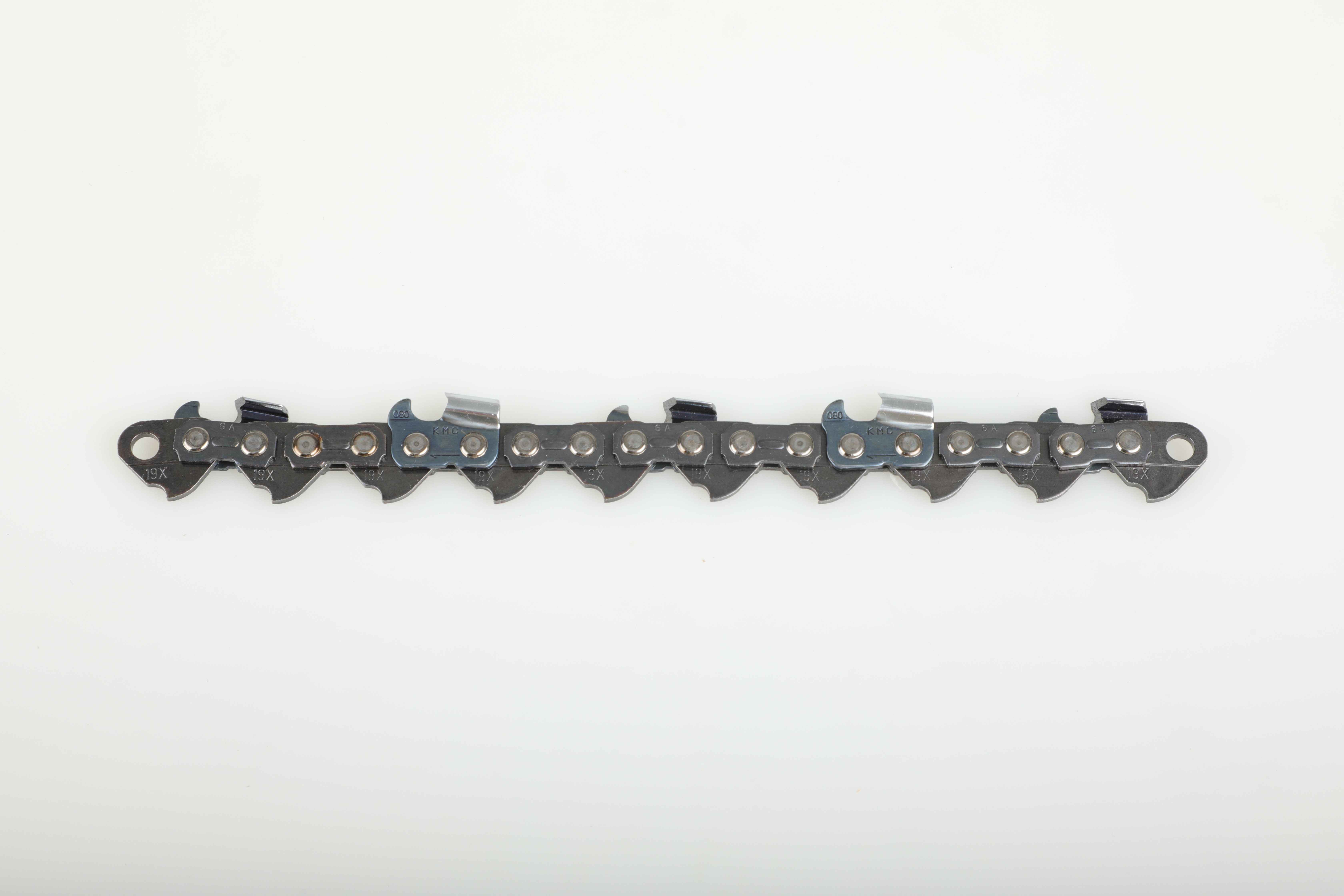
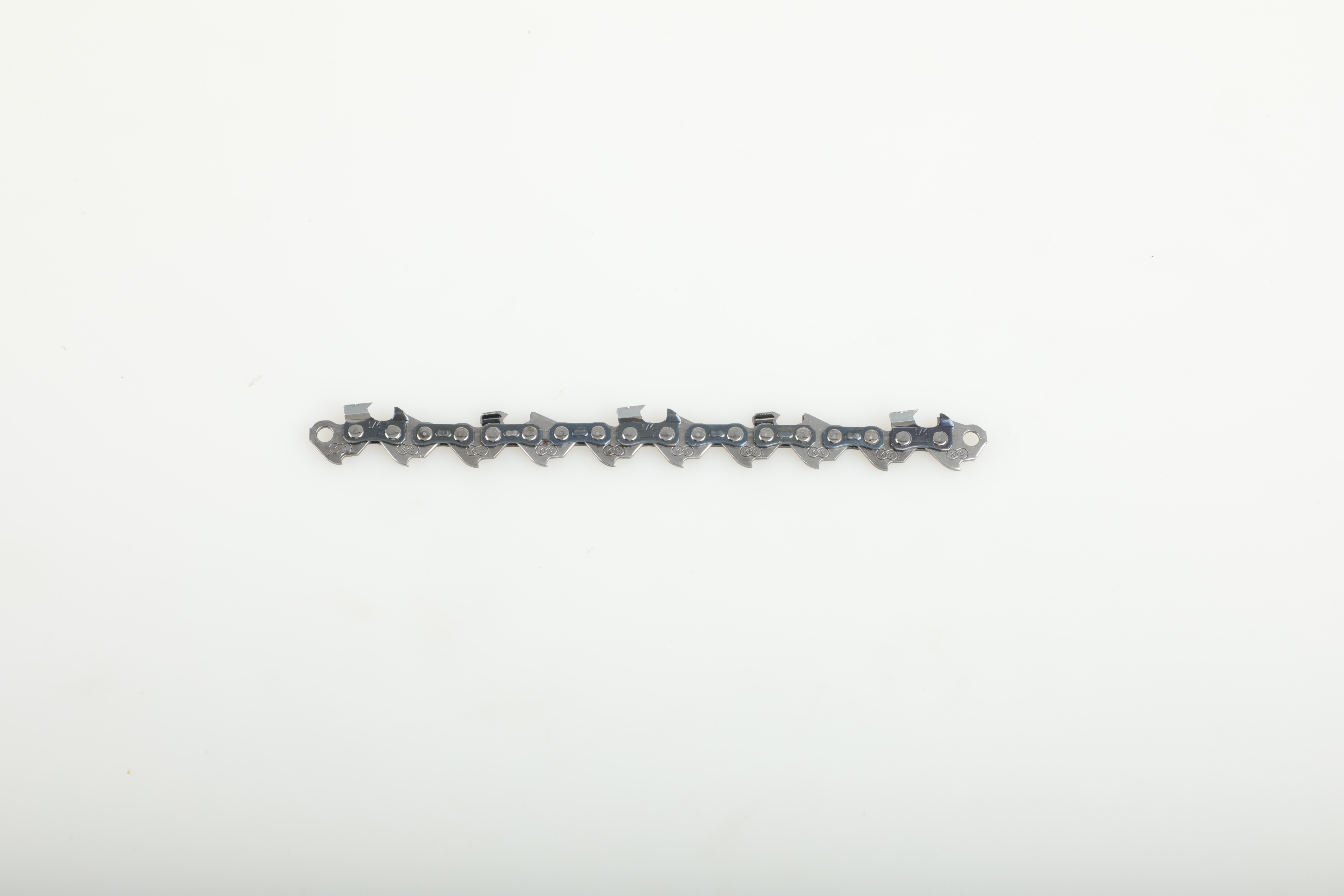
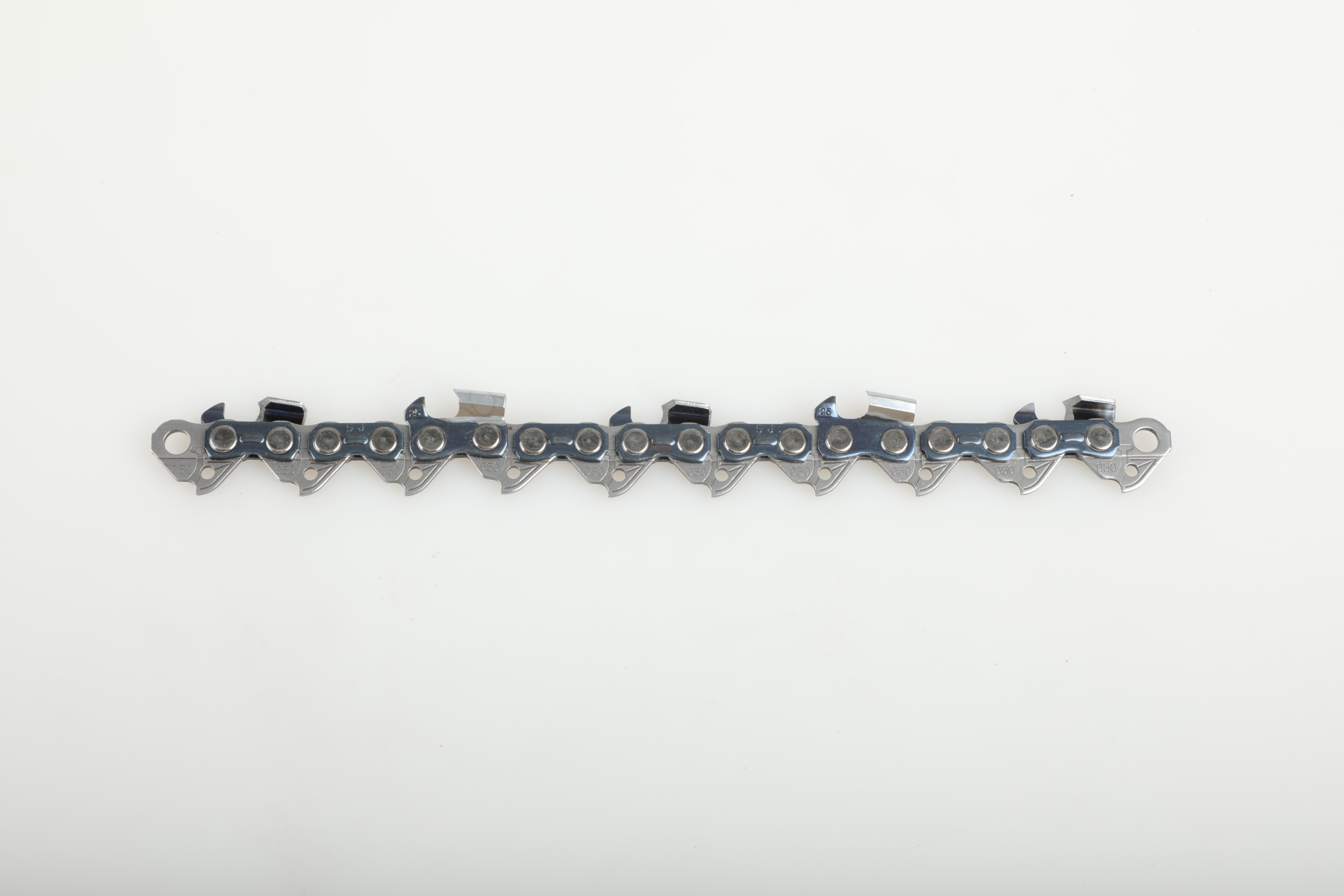
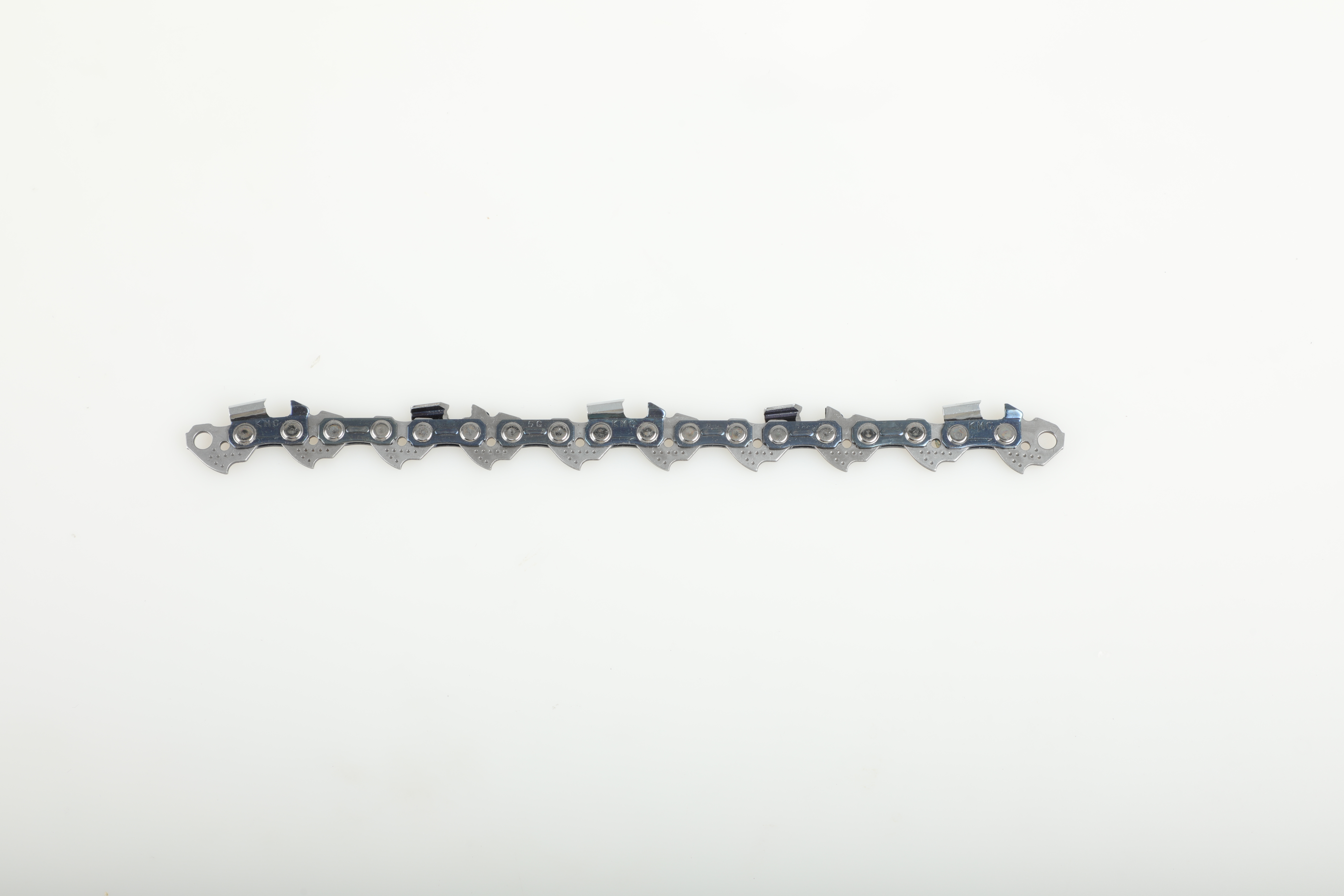
Choose a high-volume item and make it the control sample for the audit. For a compact-saw line, KMC's 3/8 LP .050 chain is published with 40, 45, 50, 52, 55, 56 and 59 drive-link options. Its table lists 68CrNiMo3 material, semi-chisel or full-chisel cutters, and standard, semi-skip or skip sequences. The build sheet should name the selected drive-link count and cutter rather than copying the entire option list into the order.
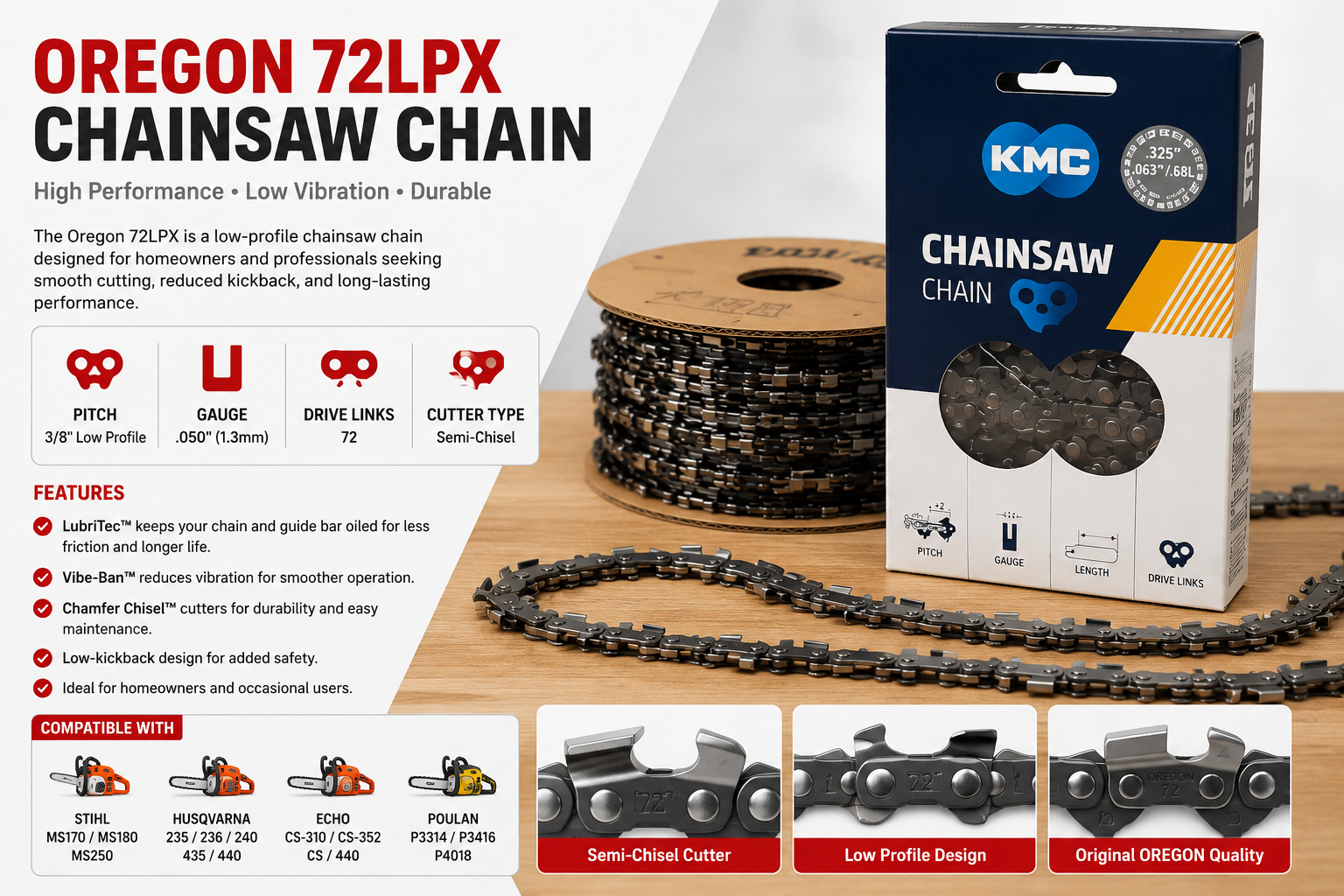
For a mid-size professional range, the .325 .050 chain offers published loop counts of 64, 72, 76, 78 and 86. A distributor might sell both 72 DL and 78 DL, but the factory sample for each must remain a separate approved item. A shared pitch and gauge do not make the two loop lengths interchangeable.
The physical sample and its record should carry the same internal item code. Measure the gauge, confirm the loop count, compare cutter form and sequence with the order, and fit the sample only to the matching bar-and-sprocket system. Record the packaging description at the same time. This prevents a later artwork file or carton label from being attached to the wrong loop.
Separate handheld loops from .404 / .080 harvester chain
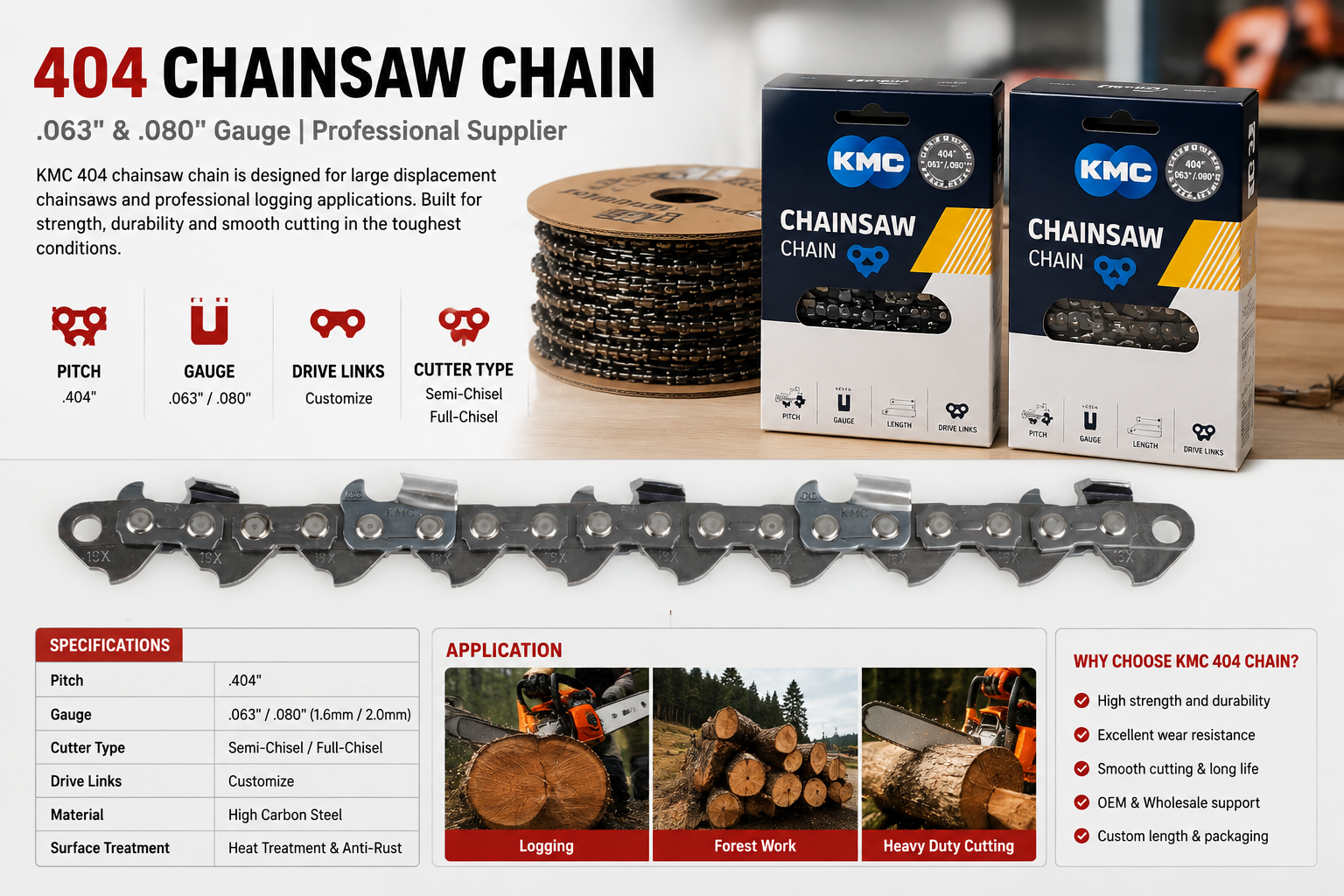
The word “.404” can describe products for very different operating systems. KMC publishes a .404 .063 chain for heavy cutting and a distinct .404 .080 harvester chain for mechanized forestry. The harvester table lists a 2.0 mm gauge, semi-chisel cutters and 78, 80, 90, 91, 94, 95 or 100 drive links. Those figures should be verified against the cutting head, guide bar and sprocket rather than treated as variants of a handheld loop.
A forestry contractor replacing worn chains on a mechanical head should confirm more than pitch. Gauge and running fit affect how the drive links sit in the bar groove, while loop length must match the installed bar and tensioning range. The operator's maintenance practice, lubrication system and the condition of the bar and sprocket also influence field performance. A supplier sample cannot compensate for a mismatched or worn cutting system.
Trace the order through the chainsaw chain factory
A factory visit or remote audit becomes useful when the buyer traces one selected item through the actual process. KMC's website describes checks for steel composition, heat treatment and hardness, assembly precision, cutting performance and final inspection. The buyer should ask how the approved sample number appears at each stage and how an out-of-tolerance result is isolated from saleable product.
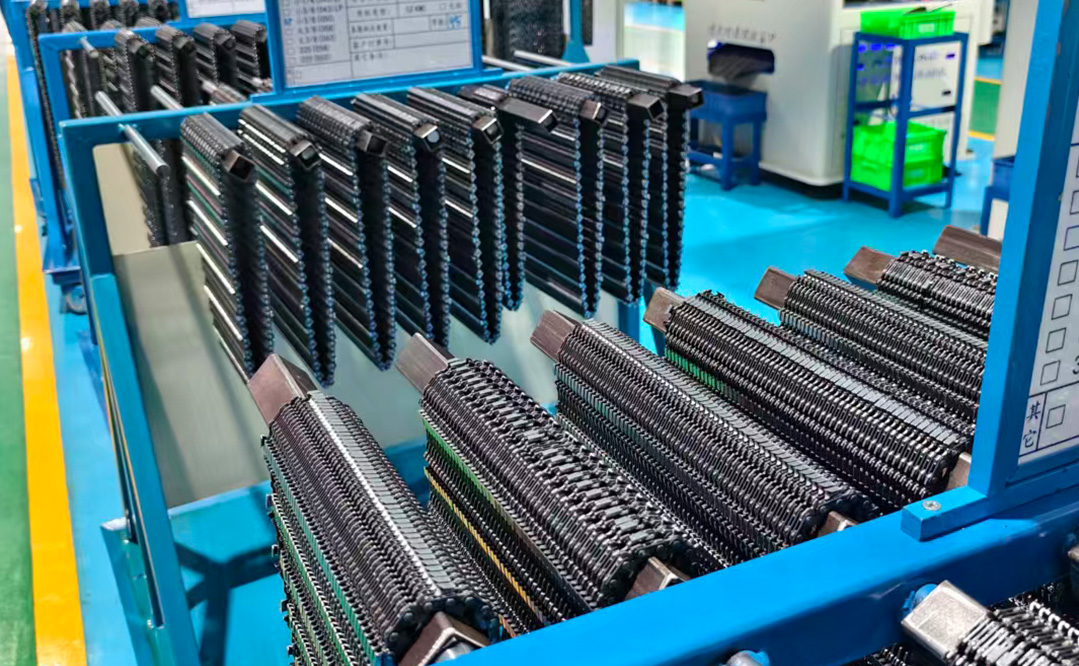
Do not accept a tour that shows equipment without explaining the control record. For the selected 3/8 LP .050 sample, for example, the audit trail should connect the material lot to the correct cutters, tie straps, drive links and assembly setting. For a 3/8 .058 order, the record should keep its 1.5 mm gauge and specified loop count separate from nearby .050 or .063 production.
Heat treatment and assembly checks must connect to the approved sample
Heat treatment affects hardness and toughness, but a buyer does not need to invent a universal target number. The practical question is whether the factory has a documented range for the ordered component, a calibrated method for checking it and a response when a result falls outside that range. The approved specification should identify which components are checked and whether the retained record refers to the same item code as the sample.
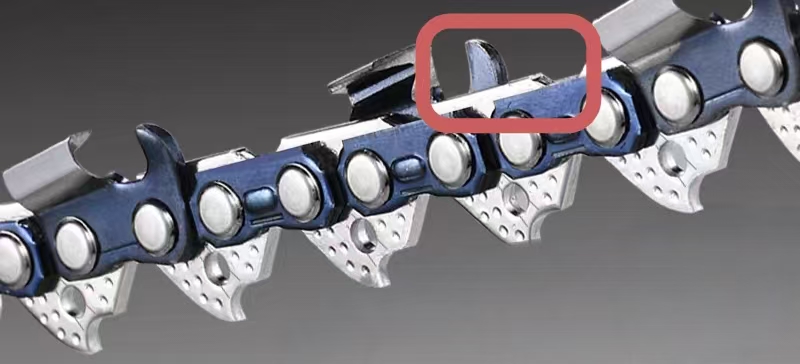
Assembly checks should cover the features that can alter running behavior: rivet formation, articulation, side clearance, cutter orientation, sequence and the finished number of drive links. KMC's 3/8 .058 product, for example, lists 68, 72, 76 and 84 DL. Counting the completed loop is simple, objective and directly tied to the buyer's order. It should be part of in-process control, not left for a customer to discover after packing.
Cutting tests need a buyer-defined acceptance record
A cutting demonstration is more meaningful when the wood condition, bar, sprocket, lubrication, chain tension and sample identity are recorded. Otherwise, two visually similar tests may not be comparable. The buyer should decide what the trial is intended to confirm: stable tracking, acceptable cutting feel, chip evacuation, or comparison with an approved reference chain under the same conditions.
Field feedback should also distinguish product condition from system condition. A new chain installed on a worn bar or sprocket can produce misleading wear and vibration. When a test loop behaves differently from the approved sample, keep the chain, bar, sprocket and test notes together until the cause is understood. That evidence is far more useful than a complaint described only as “does not cut well.”
Test the manufacturer's range with two real buyer scenarios
Range breadth matters only when the manufacturer can control the differences between items. Two practical scenarios reveal more than asking for a catalogue: a distributor with mixed replacement loops and an OEM buyer combining branded handheld chain with mechanized-forestry supply.
A distributor carrying 3/8 LP, .325 and 3/8 replacement loops
Suppose a distributor serves garden-equipment dealers, farms and professional woodcutters. A reasonable first assortment might include compact 3/8 LP loops, .325 .050 loops and 3/8 .058 loops. These are not quality grades of one product; they are separate fitment families. The receiving team should be able to identify each item from the packaging without opening the loop.
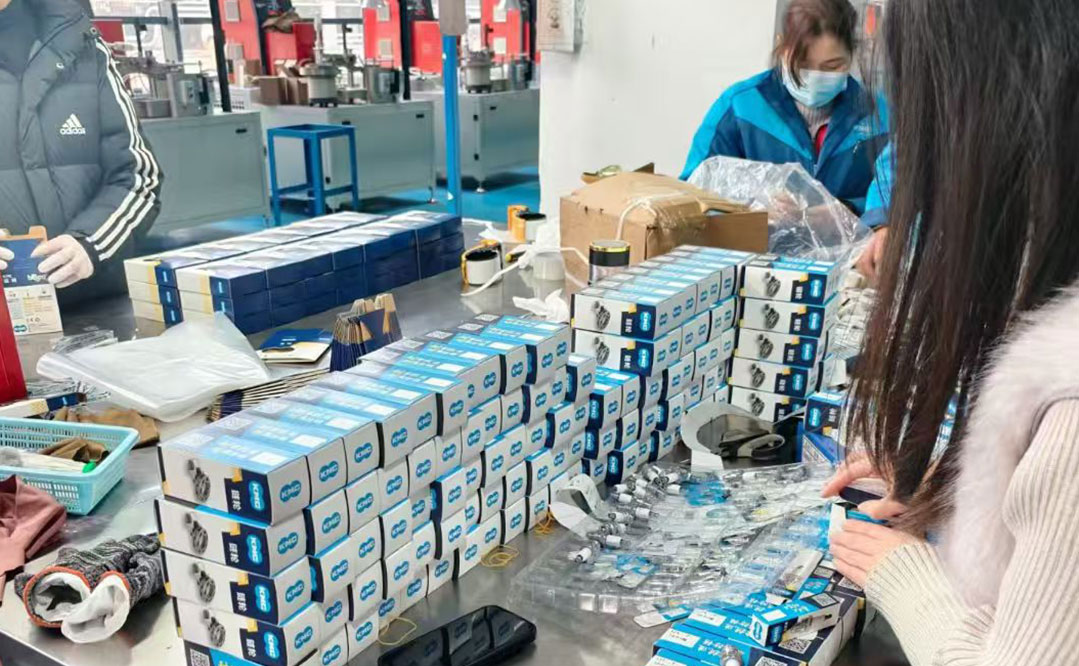
For each SKU, the front label should present pitch, gauge and drive-link count together. Cutter style should appear where the assortment includes both semi-chisel and full-chisel versions. Internal cartons need the same identifier as the unit package, and the packing list should not collapse several loop counts into a vague description such as “.325 chain.” This is where the manufacturer proves that product control continues beyond assembly.
A dealer replenishing 52 DL 3/8 LP .050 loops should not receive 55 DL because both use the same pitch and gauge. Likewise, a 72 DL .325 .050 loop must remain distinguishable from a 72 DL 3/8 .058 loop. A useful audit asks the factory to demonstrate how scanning, labels or documented checks prevent those substitutions.
An OEM brand combining loop boxes with .404 harvester supply
An OEM brand may want retail-ready loop boxes for handheld saws while a forestry division buys harvester loops or reels for service teams. The packaging workflows are different. Retail boxes need accurate fitment data, brand artwork and market-language control; forestry supply needs unambiguous technical identification and packaging that lets service personnel select the correct chain without confusing .063 and .080 gauges.
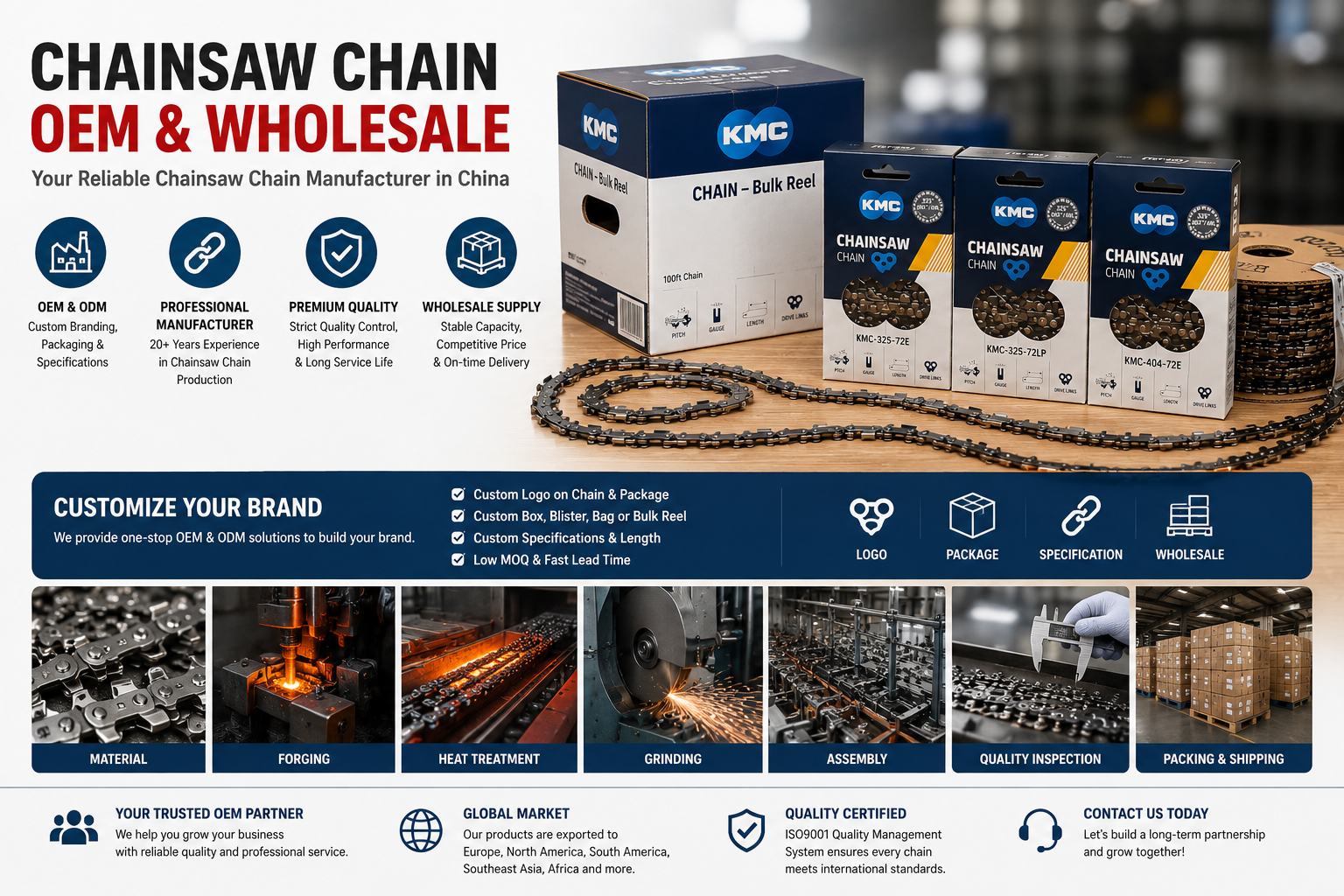
KMC's OEM page states that it supports individual loop boxes, blister cards, custom cartons, pallet marking and 100-foot reels. Treat those formats as options to approve, not as assumptions. The purchase file should say which SKU uses which format, how many units belong in a carton, what appears on the outer mark and which artwork revision is current.
For branded goods, an artwork proof should be checked against the physical sample before production release. A visually correct box with the wrong drive-link count is still a failed item. For service reels, the reel label should identify pitch, gauge, cutter configuration and reel length; joining and loop-making work must then follow the buyer's trained service procedure and the applicable equipment instructions.
Use the first production order to test repeatability
A perfect sample does not yet prove that the supply program is stable. The first production order should be intentionally manageable and should contain enough variation to test identification without introducing unnecessary complexity. Select a small set of important SKUs, define the inspection sample, retain approved packaging and record any deviation before expanding the range.
Lock loop counts and reel formats before artwork approval
The product specification and the packaging bill of materials should meet at one release point. For a 3/8 LP .050 retail loop, that means a named drive-link count, cutter type, sequence and unit-box artwork. For a .404 .080 service item, it means a named loop count or 100-foot reel, the correct 2.0 mm gauge identification and a shipping mark that cannot be mistaken for .404 .063.
Ask for one packed approval sample, not only a loose chain. Check the chain inside, the printed fitment data, the barcode if used, the inner quantity and the carton mark. If multilingual manuals are part of the order, control their revision just like the box artwork. This creates a reference that receiving inspectors can use without relying on memory.
Stage lead times by order size rather than one headline promise
KMC currently publishes lead-time ranges of 7-10 days for samples, 15-20 days for 1,000-5,000 units, 25-30 days for 5,000-20,000 units and 35-45 days for orders above 20,000 units. These are useful planning ranges, but a buyer should ask the factory to confirm timing for the actual SKU mix, packaging work and approval status. Ten standard loops and ten new branded packages do not create the same preparation work.
The production plan should identify the point at which artwork, samples and quantity become frozen. It should also say whether a partial shipment would disrupt the distributor's range. A shipment containing boxes without the matching high-turn loop, or harvester chain without the required gauge mix, may arrive on time yet fail the business need.
Approve the chainsaw chain manufacturer with a written release gate
The approval decision should rest on evidence the buyer can hold: a fitment build sheet, a physically checked sample, a process record tied to that item, a packed reference, an agreed inspection method and a production schedule for the real order. KMC publishes a broad range and specific OEM capabilities, but the buyer still needs to turn those options into controlled SKUs.
A sound release gate asks six concrete questions. Does every SKU state pitch, gauge and drive-link count? Does the sample match the ordered cutter and sequence? Can the factory connect material, heat-treatment, assembly and final checks to the item? Does the packed sample identify the loop correctly? Are order-size and packaging work reflected in the schedule? Can the receiving team inspect the shipment against the same reference?
If any answer is unclear, hold that SKU rather than approving the whole catalogue by association. When all six are documented for one representative item, expand the program in deliberate steps. That is how a buyer turns a factory claim into a repeatable chainsaw-chain supply decision.