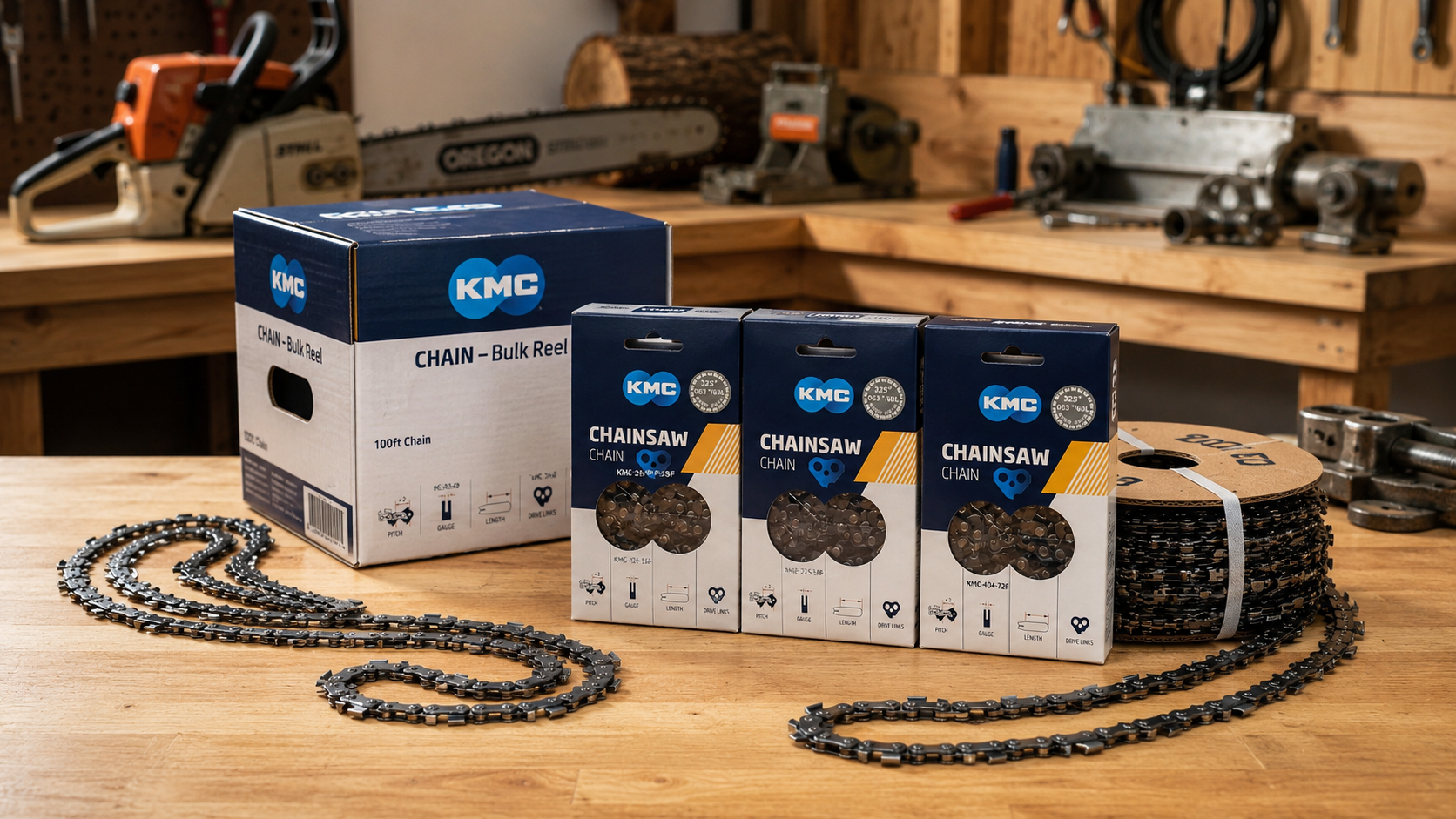
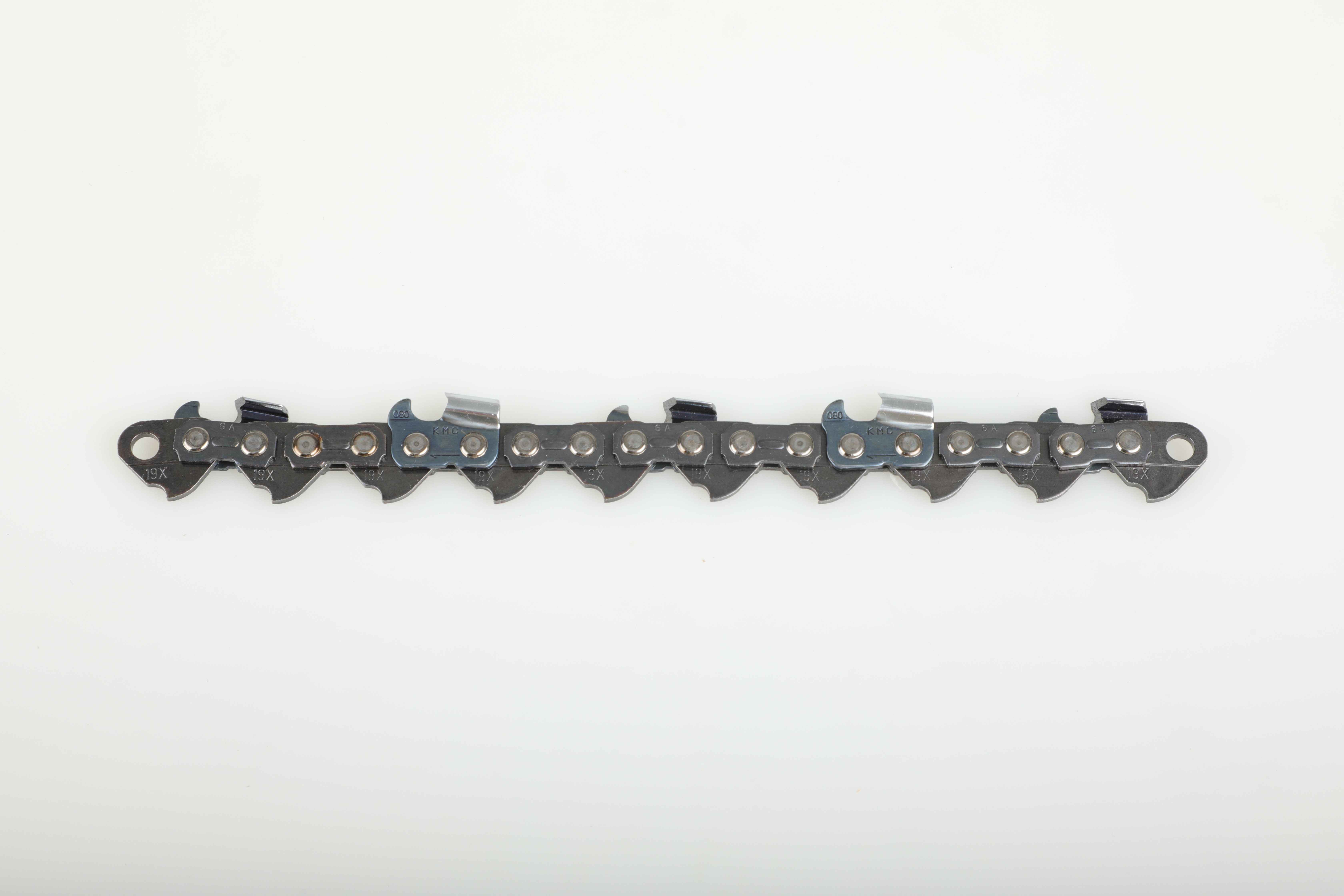
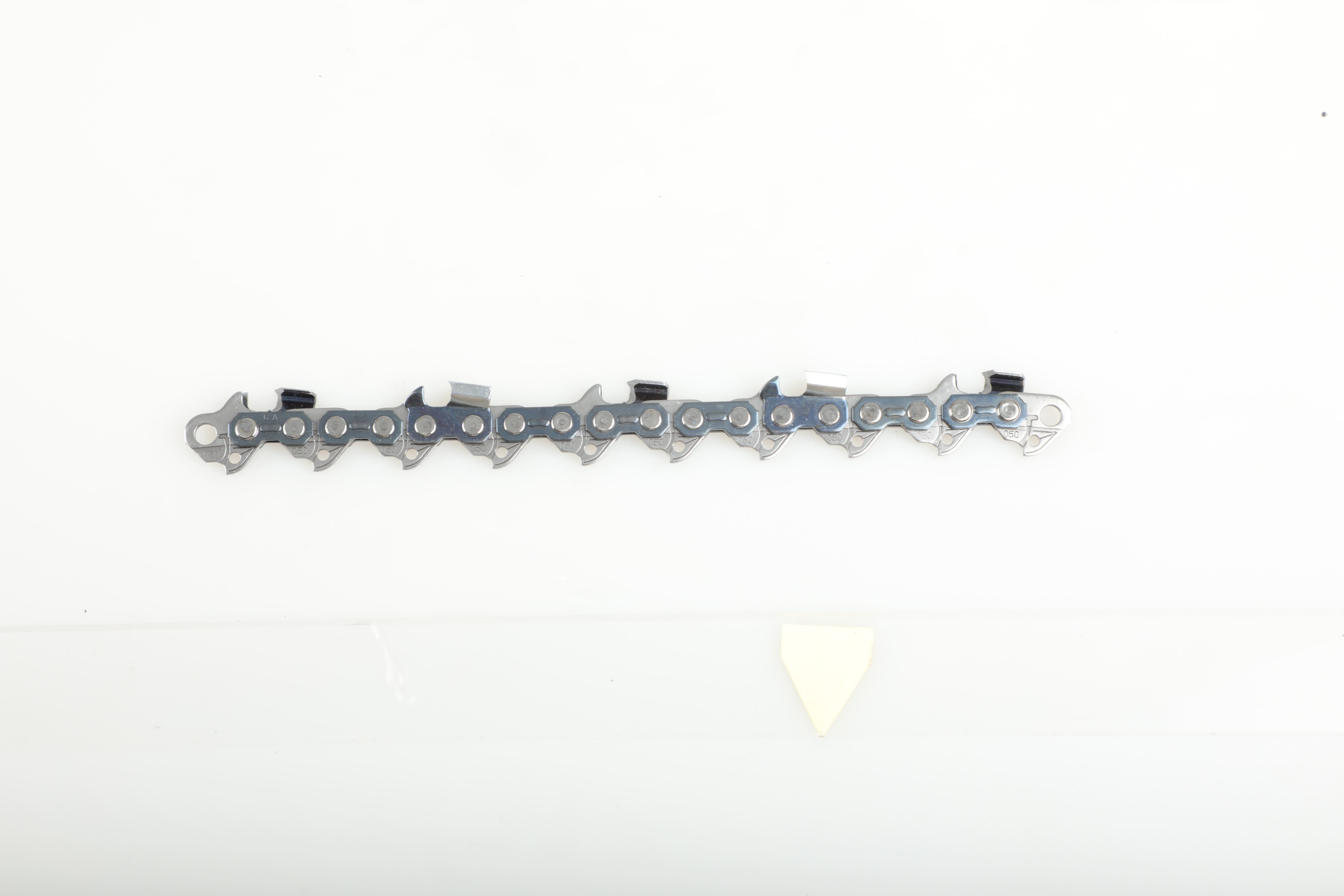
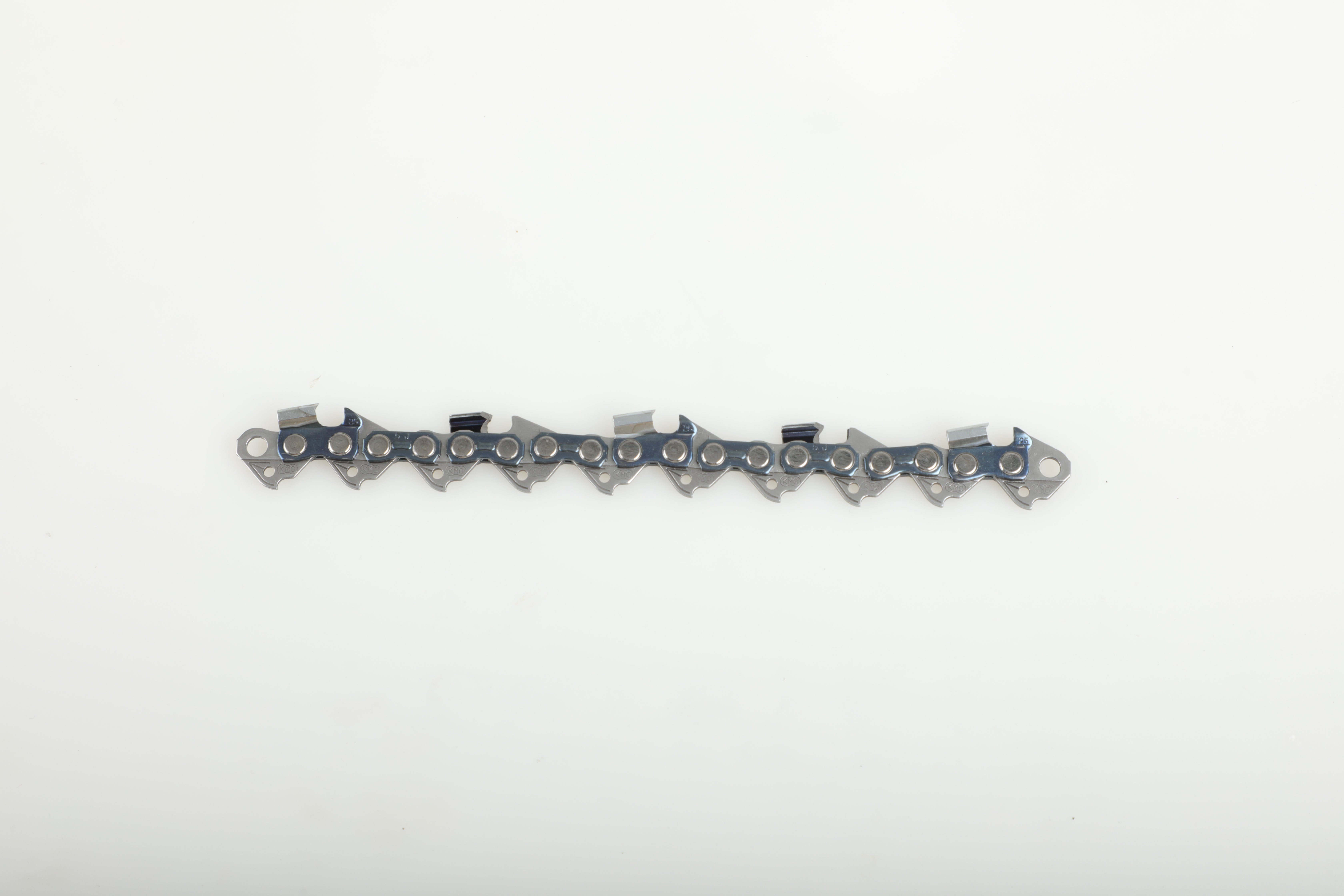
Chainsaw chain types are best understood by the cutting jobs they are designed to support. Low-profile chains are commonly used on compatible lightweight equipment. Semi-chisel chains suit mixed wood and practical maintenance. Full-chisel chains are selected when clean timber and fast cutting are priorities. Cutter sequence and pitch add further distinctions.
Type describes the job only after size compatibility is confirmed. Every replacement loop must match the drive sprocket and guide bar in pitch, gauge and drive-link count. A chain described for logging, pruning or dirty wood cannot be installed safely if those specifications are wrong.
Chainsaw Chain Types by Cutting Job
| Cutting job | Common starting type | Main reason |
|---|---|---|
| Pruning and small yard work | Specified low-profile chain | Matches compatible lightweight equipment |
| Firewood and property maintenance | Semi chisel | Balances cutting and mixed-condition tolerance |
| Clean timber processing | Full chisel, when compatible | Prioritizes a fast clean-wood cut |
| Dirty bark or field work | Semi chisel | Rounded corner is often more tolerant of contamination |
| Long cutting attachments | Compatible sequence selected for the system | Cutter spacing and chip clearance may be considered |
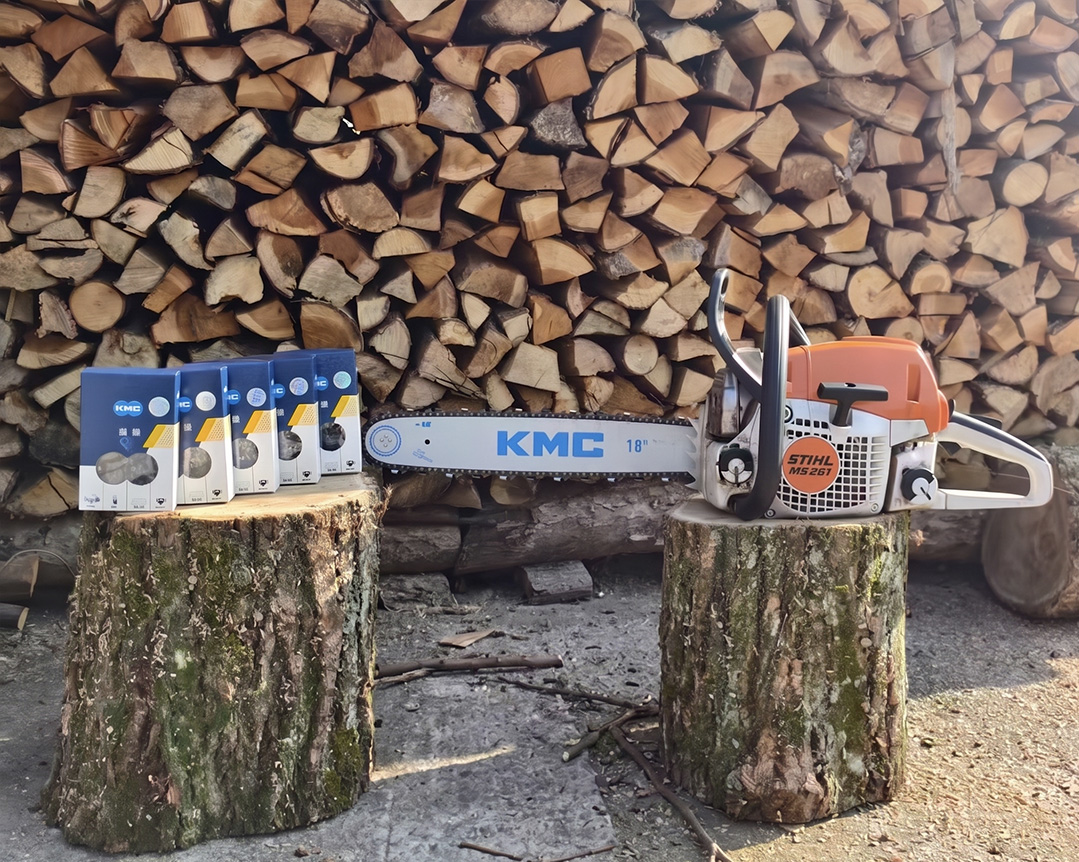
Choose a chain type for the work only after confirming the complete size and cutting system.
The table is an application guide, not an interchange chart. A semi-chisel loop in .325 pitch cannot replace a standard 3/8 chain simply because both are used for general cutting. Type and size answer different questions.
Low-Profile Chains for Pruning and Lightweight Saws
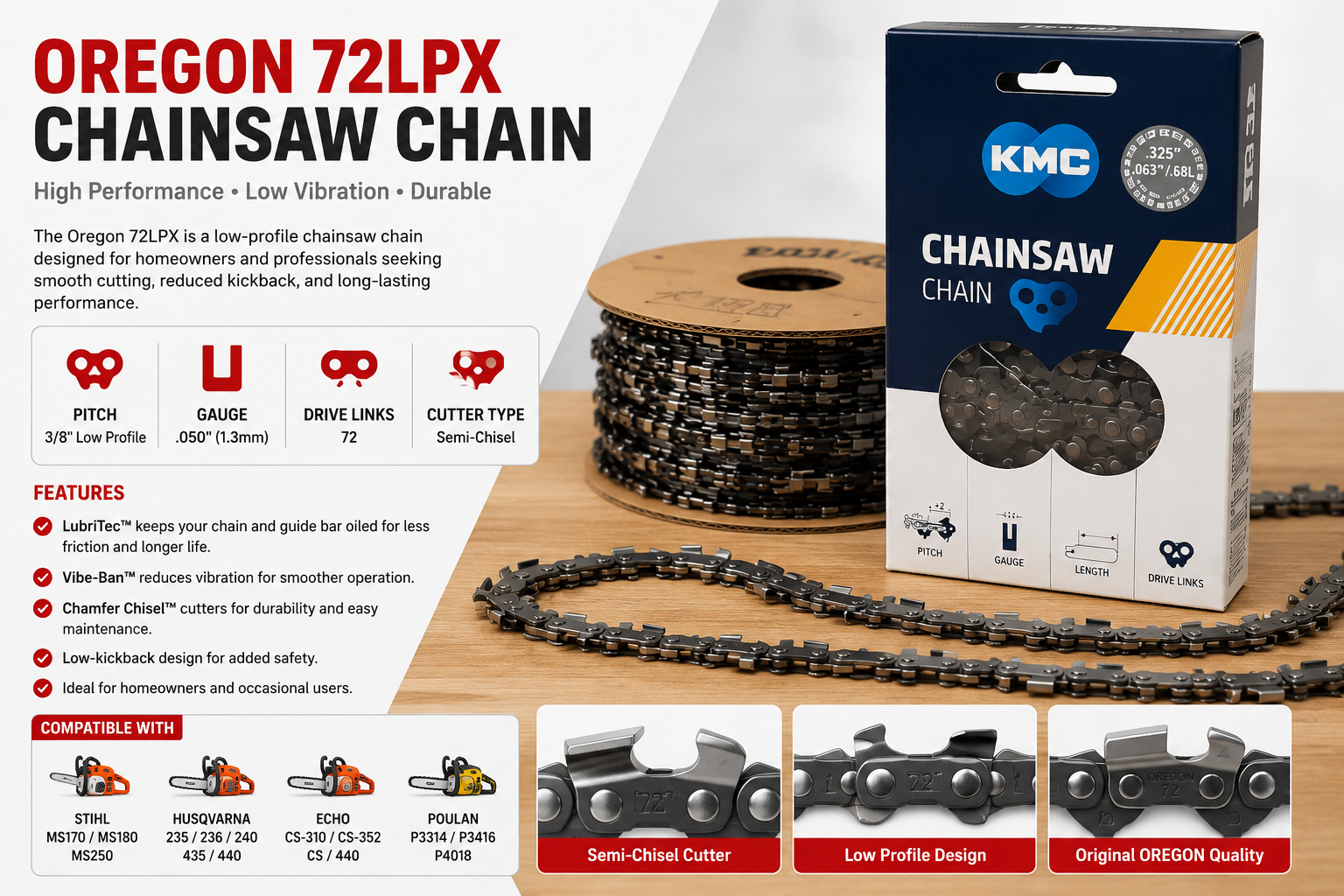
Low-profile chain is designed for compatible lightweight saws, compact gas saws, electric saws, pole saws and pruning equipment. It normally uses compact cutter geometry and safety-oriented features intended for the cutting system specified by the equipment maker.
The 3/8 low-profile chainsaw chain family is a common example. It must not be confused with standard 3/8 chain. The names share a nominal fraction, but the component geometry and compatible bars and sprockets are different.
Choose low-profile chain when the saw and bar are marked for it, not because the work appears easy. Confirm gauge and drive-link count. A compact chain can still be incorrect if it is too thick for the groove or the loop contains the wrong number of drive links.
Suitable starting point for compatible pruning and yard equipment.
Available in more than one size combination depending on the product.
Safety-oriented design does not eliminate kickback.
Depth gauges and bumper features must remain unmodified.
Sharpening and tension still follow the chain and saw specifications.
Semi-Chisel Chains for Firewood, Farm and Mixed Conditions
Semi-chisel cutters have a rounded working corner. The geometry is often selected when logs carry dirty bark, wood conditions vary or the operator values a practical edge that is less sensitive to small amounts of contamination.
This type is widely useful for cutting firewood, maintaining rural property, clearing branches and working in mixed forests. It can also be a professional choice when field conditions make a sharply angular cutter require frequent service.
Semi chisel does not mean “no maintenance.” Cutters should be filed with the correct tool and kept similar in length. Depth gauges need the specified guide, and the chain should be inspected for damaged links, stiff joints or loose rivets. A rounded cutter that is dull will still create slow cutting and excess feed pressure.
Semi-chisel options can be offered in size families such as .325 chain and standard 3/8 chain. The cutter name does not determine pitch or gauge, so read the complete product label.
Full-Chisel Chains for Clean Timber and Production Work
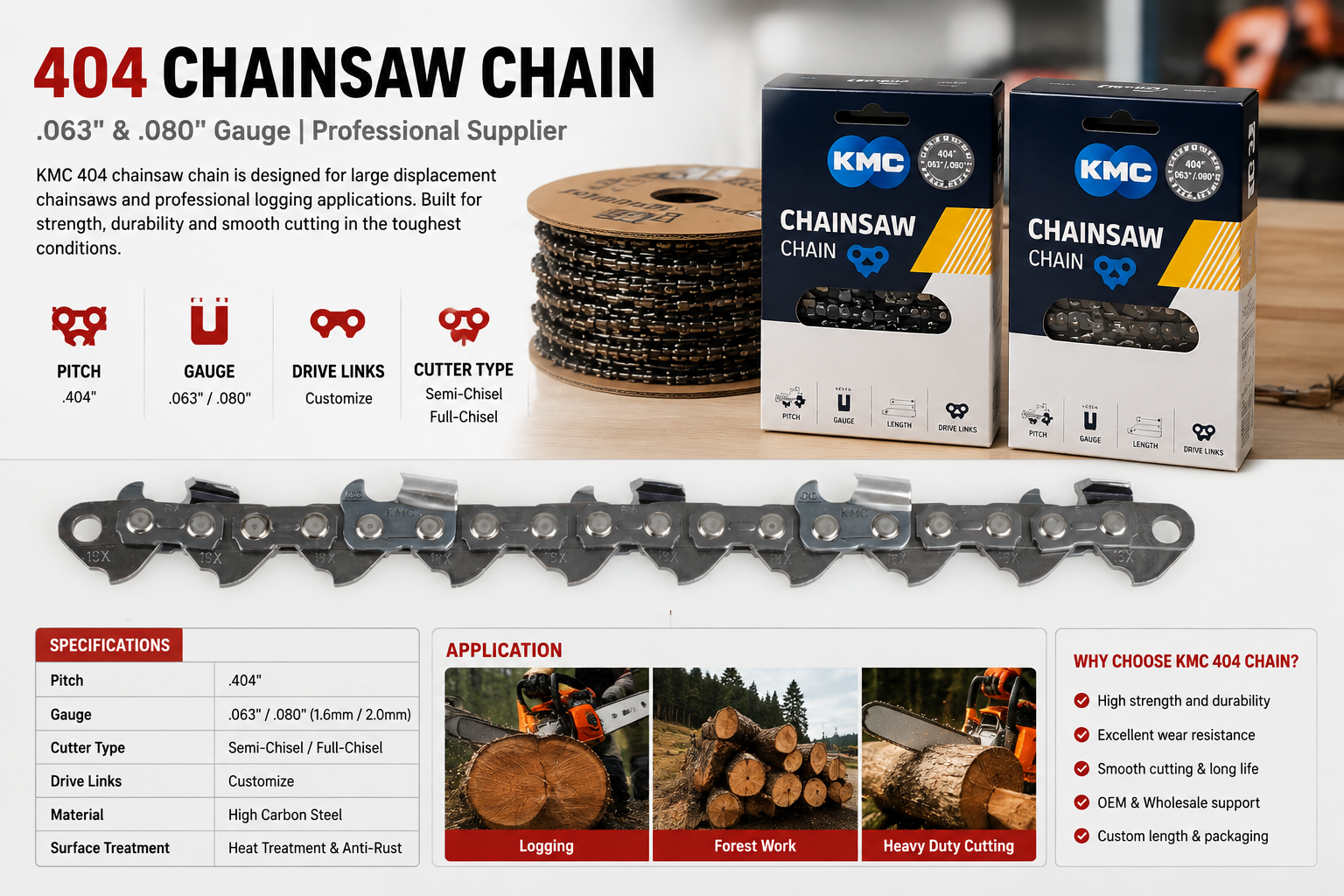
Full-chisel cutters use an angular working corner. With compatible equipment, clean timber and accurate sharpening, they are selected for an aggressive cut and are common in professional processing and logging.
The angular edge is more sensitive to soil, grit and dirty bark. A chain that contacts the ground may need immediate sharpening. Operators can protect the edge by clearing the base of the cut, keeping logs off soil where practical and inspecting material before cutting.
Full chisel is not automatically the best type for every large saw. If the wood is contaminated or maintenance must be completed under varied field conditions, semi chisel may provide a more useful balance. The better choice is the one that supports the total work cycle, including sharpening time.
Cutter profile also does not identify low-kickback performance. Review the complete chain design and use an approved bar, sprocket and chain combination. Professional experience does not remove kickback risk or the need for correct protective equipment.
Cutter Sequence, Pitch and Specialized Types
Cutter sequence describes the spacing of cutters around the loop. Full-complement chain uses a standard cutter arrangement. Semi-skip and full-skip patterns add more space between cutters and may be offered for particular long-bar and chip-clearance requirements.
A skip sequence is not a general upgrade. Fewer cutters can change smoothness, maintenance time and the way the chain clears chips, but results depend on the bar length, saw, timber and operator. Use a sequence offered and approved for the specific cutting system.
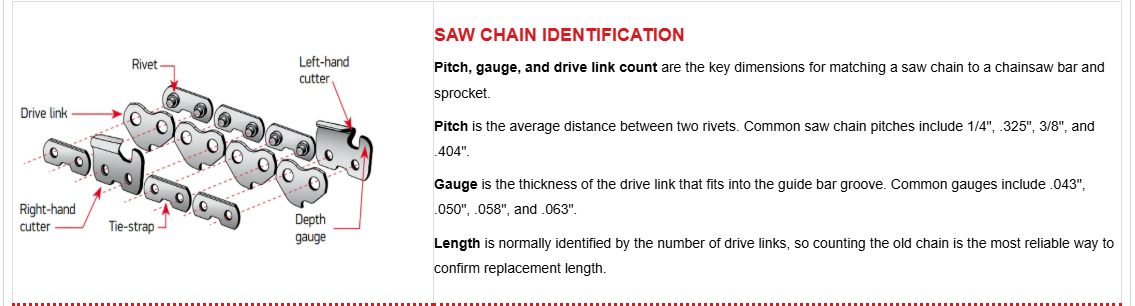
Pitch categories such as 1/4, .325, 3/8 low profile, standard 3/8 and .404 identify spacing systems, not application levels. Gauge and drive-link count further divide each pitch family. A complete order should therefore follow this pattern:
Fit: pitch + gauge + drive links.
Profile: low profile or standard, as specified.
Cutter: full chisel, semi chisel or another offered design.
Sequence: full complement, semi skip or full skip when applicable.
Application: pruning, firewood, landscaping, forestry or logging.
Specialized chains or cutting systems should be identified from the equipment and manufacturer information. Appearance alone is not enough to approve an unusual chain for a material or machine. Confirm the complete product description and compatible cutting attachment before it enters service.
How to Select and Maintain the Right Type
Record the fit data. Read pitch, gauge and drive links from the installed bar and chain specification.
Confirm the chain family. Distinguish low profile from standard construction.
Assess the wood. Decide whether it will be clean, dirty, wet, mixed or handled near soil.
Choose the cutter. Balance clean-wood speed against edge tolerance and maintenance.
Confirm sequence and safety features. Use only configurations approved for the saw and bar.
Before installation, inspect the guide bar, drive sprocket and lubrication system. Set tension according to the saw instructions and recheck it after initial operation. Sharpen with the correct file and guide, maintain depth gauges to specification and replace structurally damaged parts.
Retailers and distributors should label every loop with its complete size and cutter type. Separate standard 3/8 from 3/8 low profile in storage. Buyers can compare categories in the KMC chainsaw chain product range after building a verified size list.
Frequently Asked Questions
What are the three most common chainsaw chain types?
For application discussions, the common starting types are low-profile chain, semi-chisel chain and full-chisel chain. A complete product is also classified by pitch, gauge, drive links and cutter sequence.
Which type is best for firewood?
Semi chisel is often practical when firewood is mixed or carries dirty bark. Full chisel may suit clean logs when faster cutting and precise sharpening are priorities. Confirm the chain size before choosing either cutter.
Which type is best for pruning?
Use the chain family specified for the pruning saw or pole saw. Many compact tools use low-profile chain, but pitch, gauge and drive-link count must match the actual guide bar and sprocket.
Can I replace semi chisel with full chisel?
Only when a full-chisel option is offered for the compatible cutting system and matches pitch, gauge and drive links. Consider wood cleanliness, sharpening capability and the complete chain design before changing cutter profile.
Is a skip chain a different pitch?
No. Skip describes cutter spacing, while pitch describes the chain’s rivet-spacing family. A skip chain still needs the correct pitch, gauge and drive-link count for the bar and sprocket.
Conclusion: Chainsaw chain types become useful when they are connected to real work. Low profile suits compatible lightweight systems, semi chisel supports varied conditions and full chisel favors clean-wood production. Cutter sequence adds another application choice, while pitch, gauge and drive links remain the non-negotiable fit requirements.
For help matching a type to a verified size, contact KMC with the saw, guide-bar markings, drive-link count and intended cutting job.