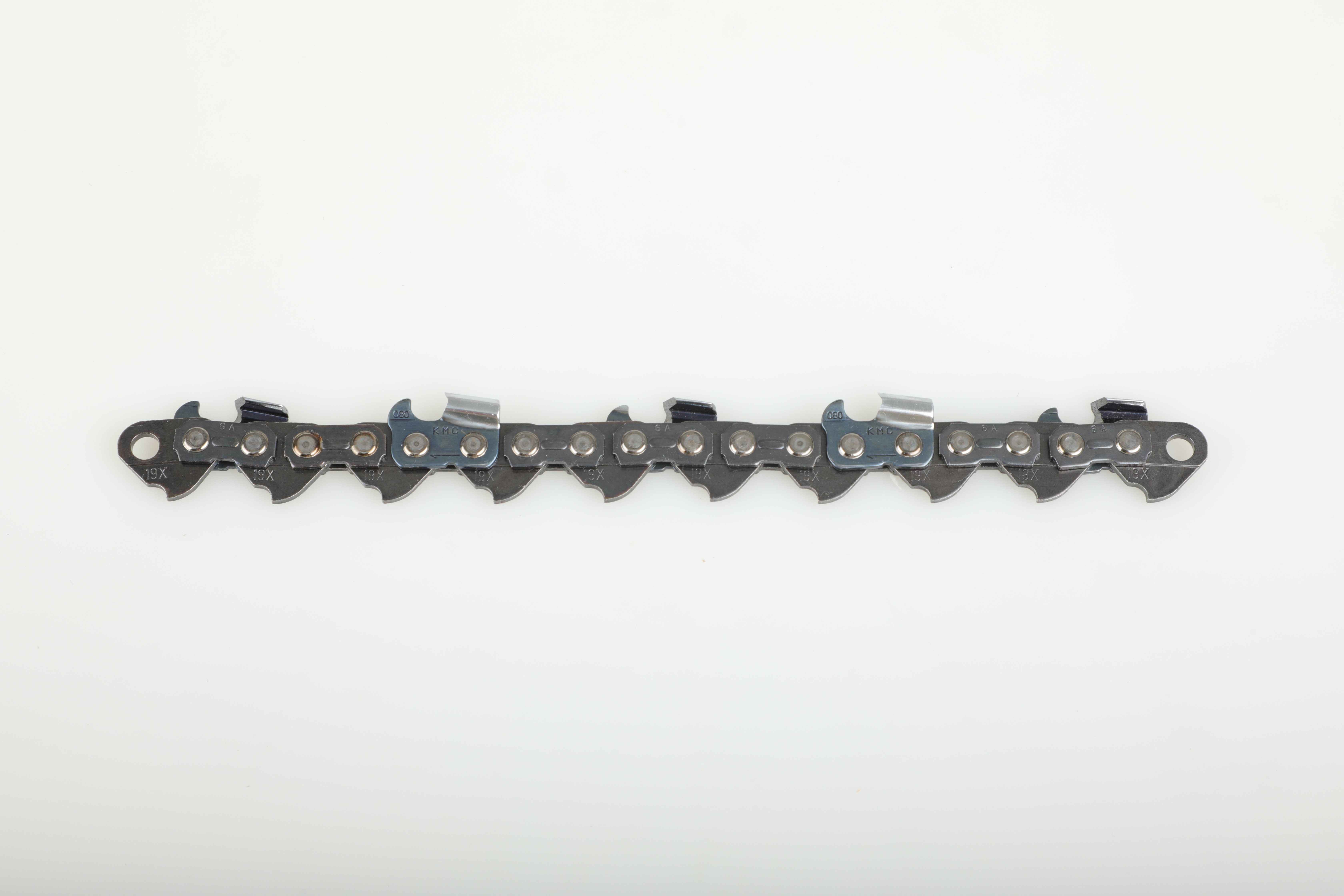
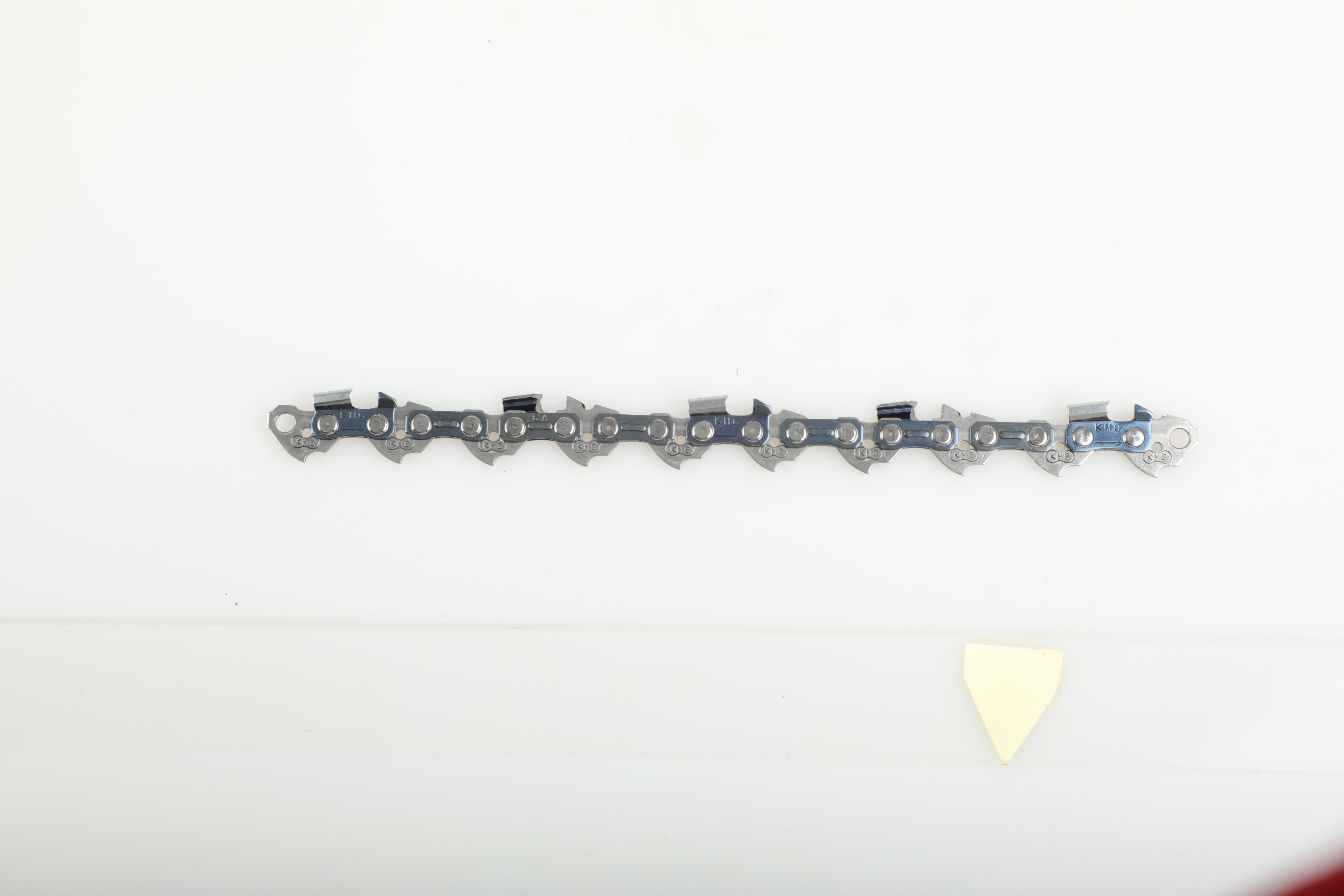
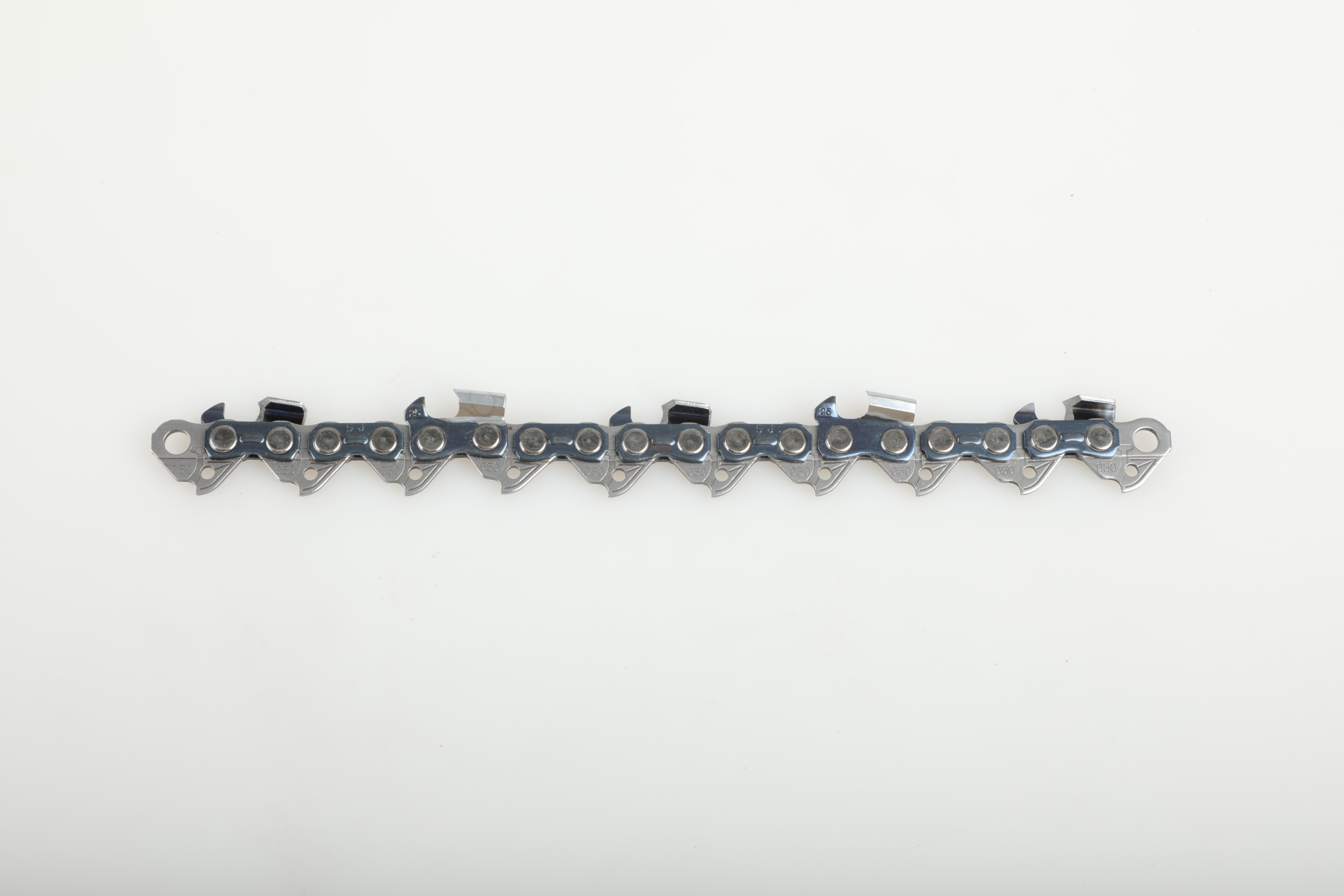
A low-kickback chainsaw chain is designed with components and cutter geometry intended to reduce the energy of certain kickback events when it is used on a compatible cutting system. It is commonly found on lightweight saws, pruning equipment and homeowner-oriented cutting attachments, but the label does not make the chain risk-free or suitable for every saw.
Low-kickback does not mean kickback-free. Kickback can occur when the upper quadrant of the guide-bar nose contacts wood or another object, or when the chain is pinched in a way that drives the bar back toward the operator. Correct equipment, handling, maintenance, protective gear and training remain essential.
What Is a Low-Kickback Chainsaw Chain?
The term describes a chain designed to limit how aggressively the cutting edge can engage in conditions associated with kickback. The design may combine a compact cutter with shaped depth gauges, bumper drive links or bumper tie straps. These features work as part of the complete loop and must not be removed or altered.
Many low-kickback products belong to the 3/8 low-profile chainsaw chain family, although a pitch name alone is not enough to identify the chain. Standard 3/8 chain and 3/8 low-profile chain are different systems. Gauge and drive-link count also have to match, and the bar and sprocket must be designed for the chain family.
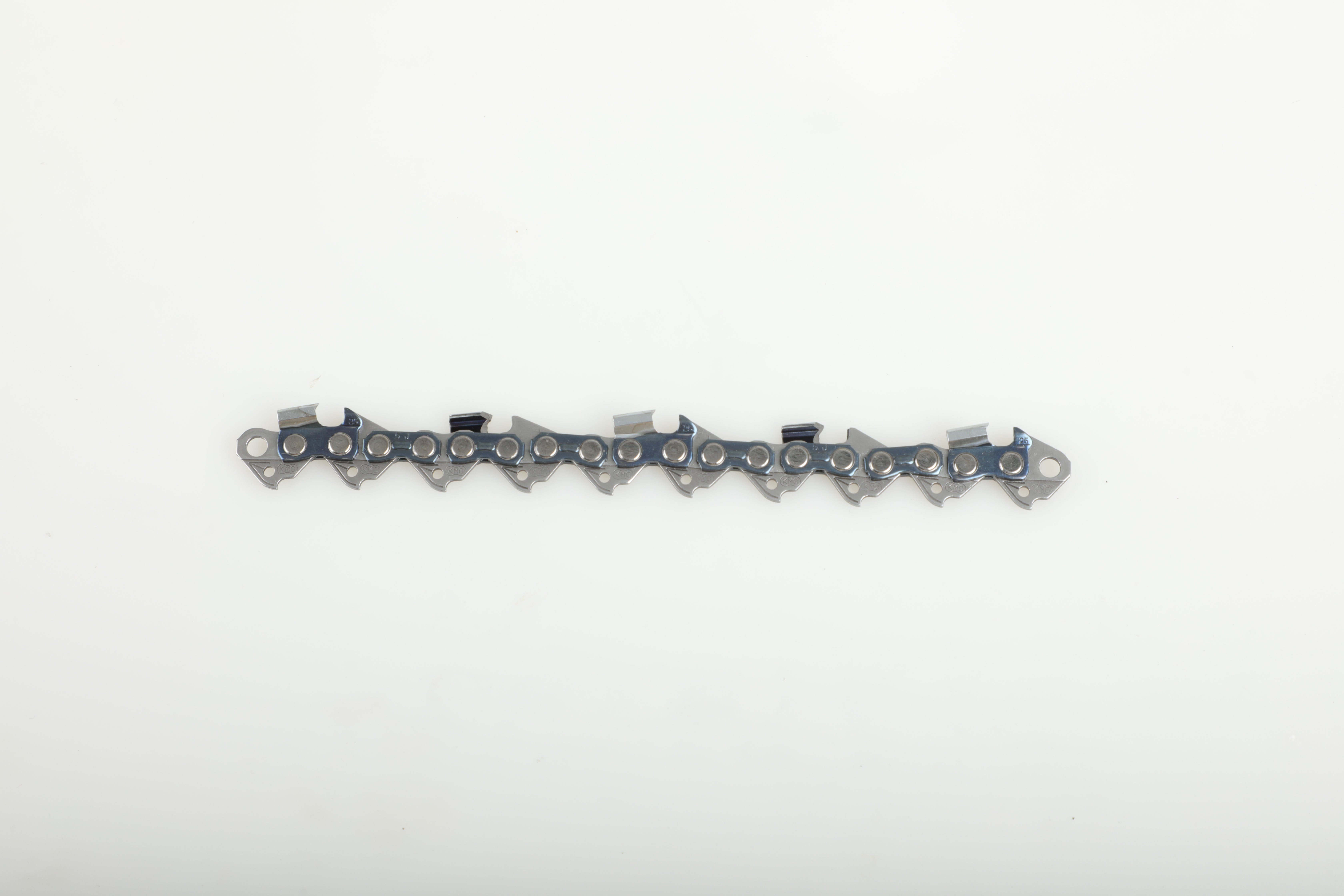
The complete chain profile, not one isolated part, determines how a low-kickback design is intended to behave.
A chain’s safety classification should be read from reliable product information for that exact model. Visual similarity is not a safe basis for substitution. Two loops may appear alike while differing in pitch, gauge, drive-link count or compatibility with the bar nose and drive sprocket.
How Low-Kickback Features Work
Controlled cutter engagement
The depth gauge sits in front of the cutter and helps control the amount of wood the cutting edge can engage. In a low-kickback design, the depth-gauge and cutter relationship is engineered as part of the safety response. Filing the depth gauge too low can make the chain behave more aggressively and can defeat the reason for choosing the design.
Bumper links and tie straps
Some chains use a shaped drive link or tie strap ahead of the cutter. As the chain travels around the bar nose, the bumper feature can help limit the cutter’s ability to take an excessive bite in the kickback zone. The feature does not prevent contact with the nose or replace correct cutting technique.
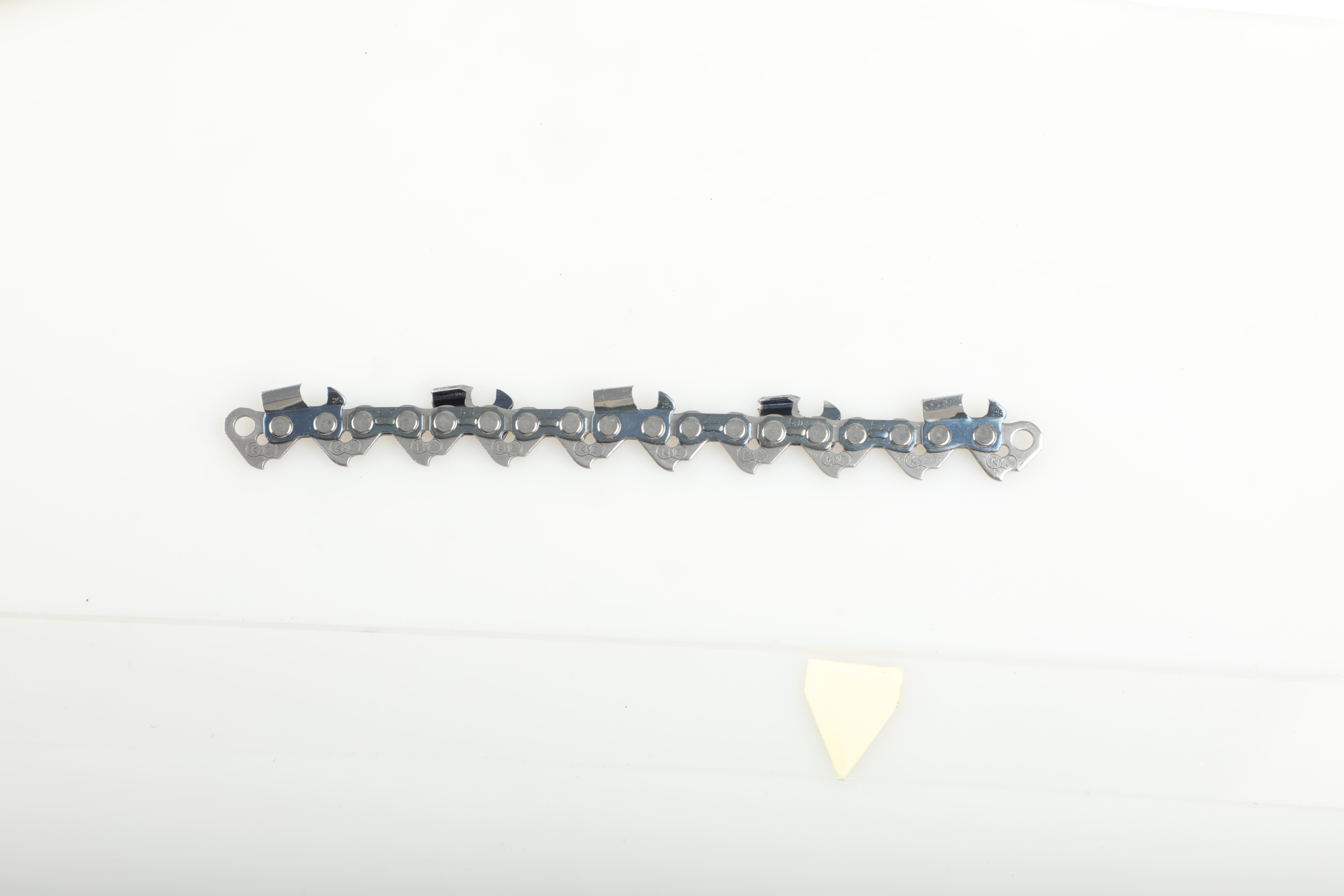
Cutter, depth-gauge and link geometry are designed to work together and should not be modified.
A matched cutting system
Chain features are only one part of kickback response. The bar nose, sprocket, saw power, chain speed, tension and condition of the cutting attachment all matter. A low-kickback loop fitted to an incompatible bar or sprocket is not a valid safety upgrade. The entire cutting system must be approved for the saw.
| Design area | Purpose | User responsibility |
|---|---|---|
| Depth-gauge profile | Controls cutter engagement | Maintain with the specified guide and setting |
| Bumper link or tie strap | Helps moderate engagement near the bar nose | Do not grind away or reshape the feature |
| Low-profile cutter system | Matches compatible lightweight equipment | Verify the saw, bar, sprocket and chain family |
Who Should Consider a Low-Kickback Chain?
A compatible low-kickback chain is a practical choice for many routine tasks performed with lightweight equipment. Examples include pruning limbs within the saw’s capacity, cutting small firewood, garden maintenance and storm cleanup after the work area has been assessed. It can also be appropriate for occasional users whose saw was originally supplied with that chain system.
The correct chain is still determined by the equipment specification. A professional user may operate a saw designed for a standard-profile chain, while a compact homeowner saw may require low-profile components. Chain selection should never be based only on experience level or an assumption that one safety feature can make unsuitable equipment appropriate.
Low-kickback chain is not a substitute for instruction. Users should understand the kickback zone, maintain secure footing, keep both hands on the saw as directed, avoid cutting above a safe working position and plan the cut so the chain is not pinched. Work that exceeds the user’s training or equipment should be left to a qualified operator.
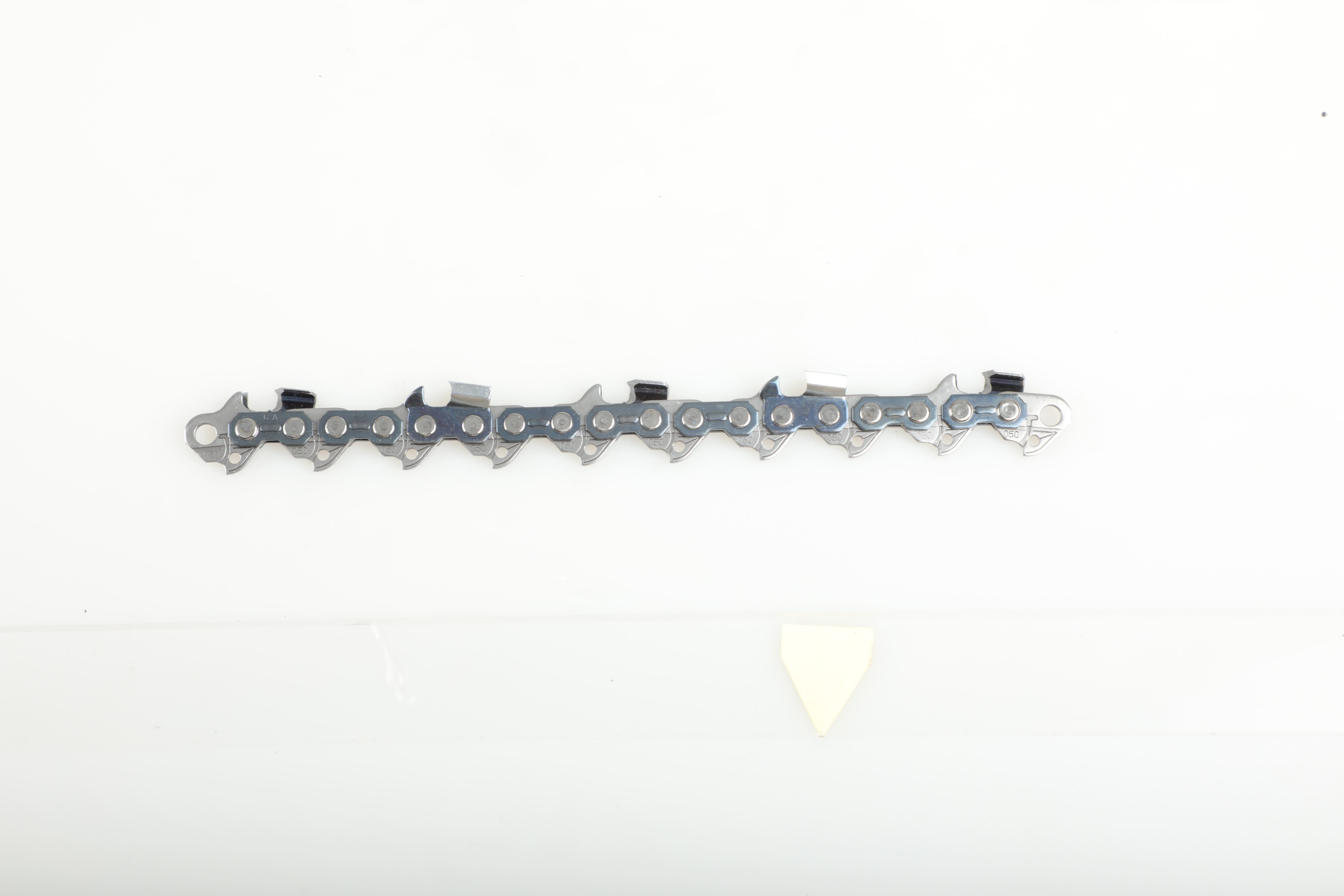
Compatibility with the saw, guide bar and sprocket comes before application preferences.
How to Select the Correct Low-Kickback Chain
Start with the current cutting attachment, not a general product name. The guide bar or manual should provide the required pitch and gauge. The drive-link count identifies the loop length. If those details are unreadable, use the equipment documentation or obtain help identifying the actual bar and chain.
Confirm the chain family. Determine whether the saw uses 3/8 low profile or another specified system.
Match pitch. Pitch must correspond to the drive sprocket and guide-bar nose.
Match gauge. The drive-link thickness must fit the bar groove.
Match drive links. Count or verify the exact number needed for the installed bar.
Confirm safety and cutter features. Choose the design recommended for the saw and intended work.
Do not substitute standard 3/8 chain for 3/8 low profile simply because both descriptions contain the same fraction. Do not choose a chain solely by bar length, either. For a complete explanation of the size fields, use the chainsaw chain specifications guide.
When ordering for several saws, create a line-by-line list containing model, bar, pitch, gauge and drive links. This prevents a mixed package from being treated as if every saw uses the same low-kickback loop.
Safe Use and Maintenance
Before installing, tensioning or inspecting the chain, isolate the saw from its power source according to the equipment instructions. Wear gloves and examine the full loop for cracked straps, damaged drive links, loose rivets, badly damaged cutters or stiff joints. Structural damage is not corrected through sharpening.
Install the chain in the correct direction and seat the drive links in the bar groove. Set tension using the procedure for the saw. A chain that hangs below the rails can derail, while excessive tension increases friction and interferes with free movement. Recheck tension after the chain has run and whenever operating conditions change.
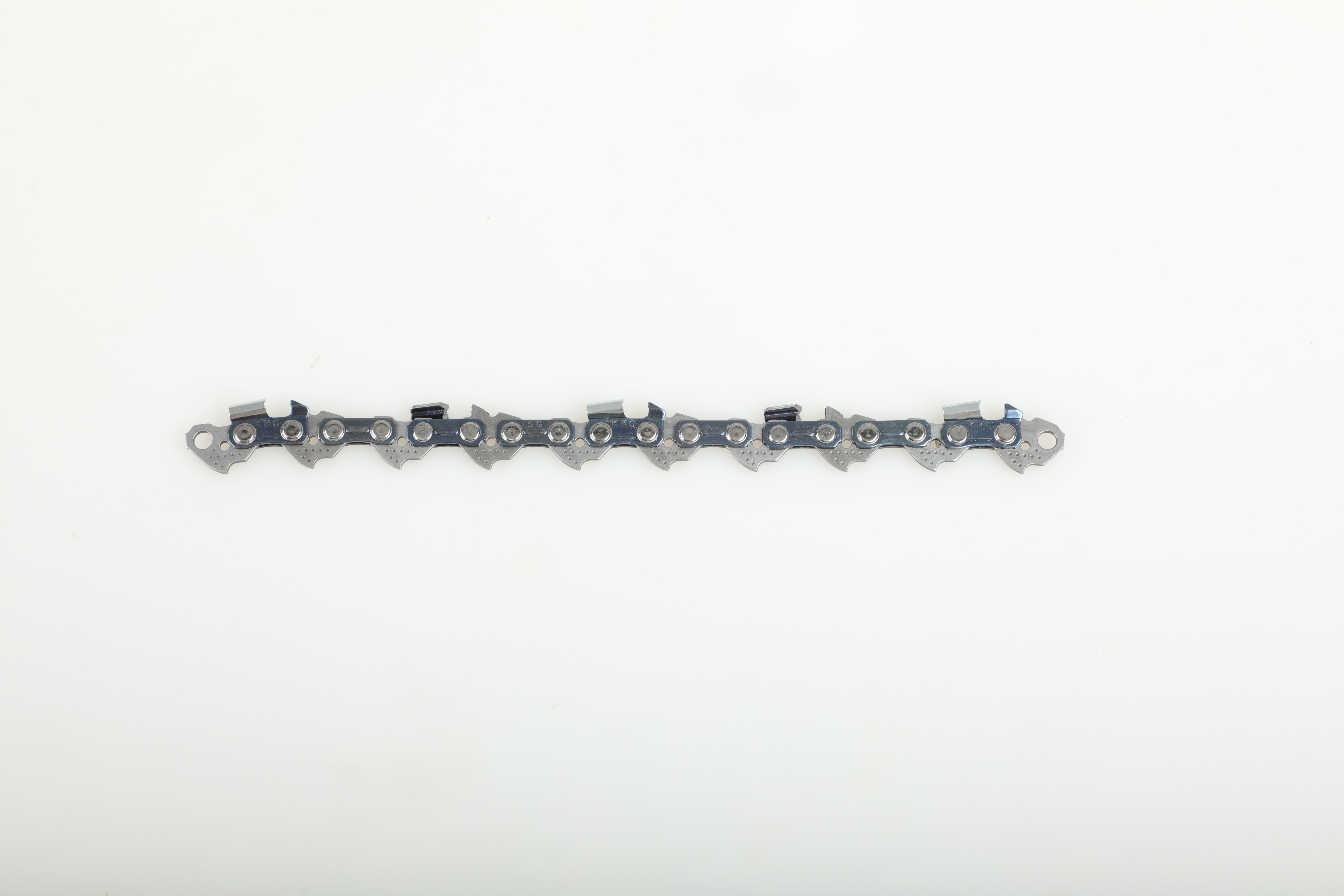
Inspect the complete loop and maintain cutters and depth gauges to the chain specification.
Sharpen with the file size and angles specified for the chain. Keep cutter lengths consistent and use a depth-gauge tool rather than filing by sight. Removing too much material from a depth gauge can change chain behavior. Clean the guide-bar groove and oil passages, check the bar rails and confirm that lubricant reaches the chain.
Never grind off bumper links or other safety-oriented features.
Replace a chain with cracked, distorted or seriously damaged components.
Inspect the sprocket and guide bar when wear repeats or the chain will not run smoothly.
Stop cutting if the chain behaves abnormally, derails or repeatedly loses tension.
Use suitable personal protective equipment and follow the saw instructions.
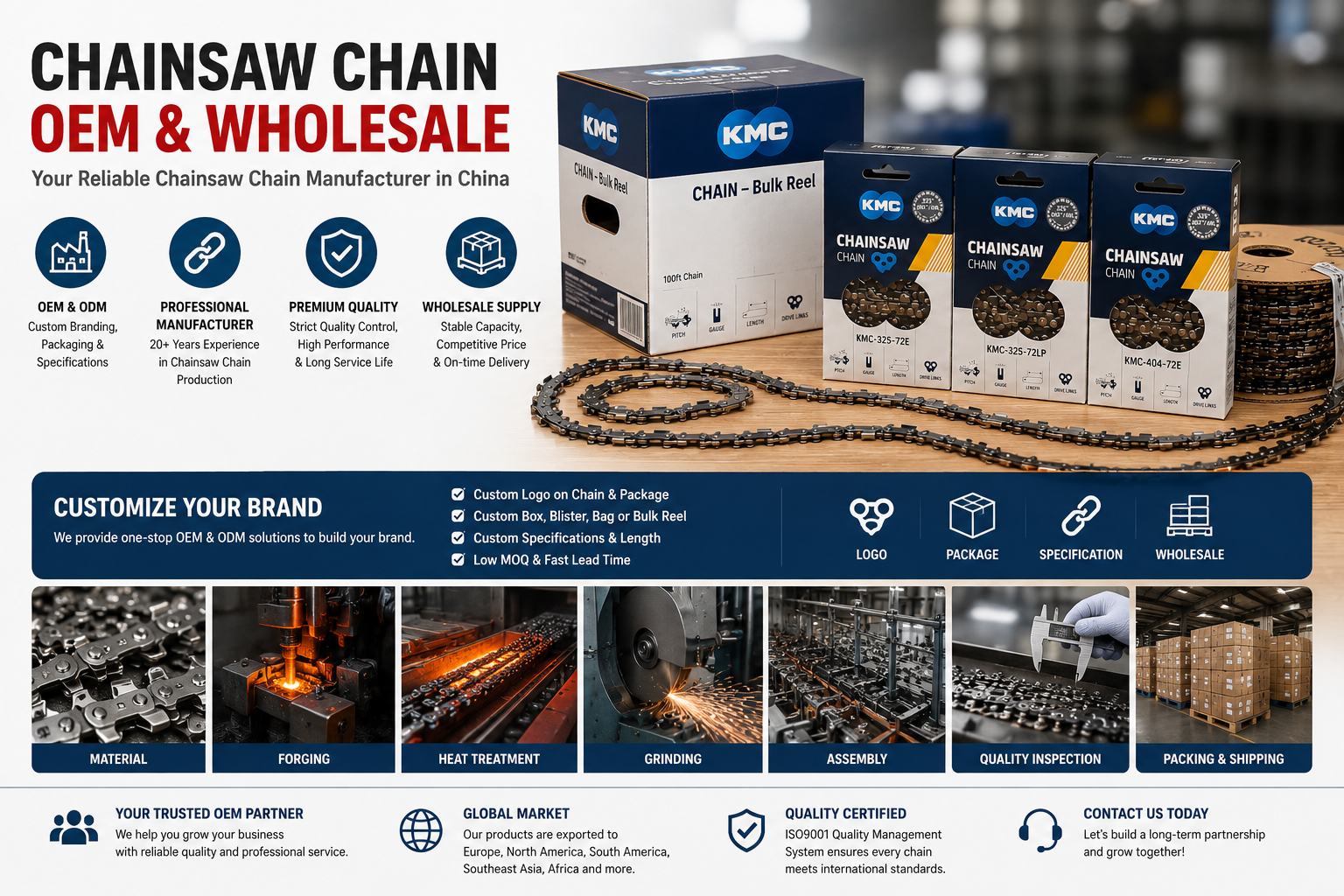
Buyers can compare compatible series in the KMC chainsaw chain range. For branded packs or a mixed wholesale assortment, the technical size list should be completed before reviewing OEM and wholesale options.
Frequently Asked Questions
Can a low-kickback chain eliminate kickback?
No. The design is intended to reduce the energy of certain kickback events, not eliminate the hazard. Contact with the upper bar-nose area, pinching, poor technique, incorrect maintenance or incompatible equipment can still create dangerous movement.
Is every 3/8 chain a low-kickback chain?
No. Standard 3/8 and 3/8 low-profile chains are different product systems. Confirm the complete designation, pitch family, gauge, drive-link count and compatibility with the saw, sprocket and guide bar before ordering.
Can I lower the depth gauges to make the chain cut faster?
Depth gauges should be maintained only to the specification for the chain, using the appropriate measuring guide. Filing them too low can increase cutter engagement and change chain behavior. It is not a safe way to compensate for dull or uneven cutters.
Can a low-kickback chain be fitted to any chainsaw?
No. It must be part of a compatible cutting system. The saw, drive sprocket, guide bar, chain family, pitch, gauge and drive-link count all need to match. Use the equipment documentation rather than choosing by appearance.
When should a low-kickback chain be replaced?
Replace it when structural parts are cracked, distorted or worn beyond the service limit, when cutters cannot be maintained correctly, or when the chain no longer runs safely after the bar and sprocket are inspected. Do not improvise repairs to damaged links.
Conclusion: A low-kickback chainsaw chain can be a useful part of a compatible, safety-oriented cutting system. Its cutter, depth-gauge and bumper features must remain intact, and pitch, gauge and drive links must match exactly. Safe technique, correct tension, lubrication, sharpening and inspection remain necessary every time the saw is used.
If the current markings are unclear, contact KMC with photos of the bar markings, the saw model and the drive-link count before selecting a replacement.