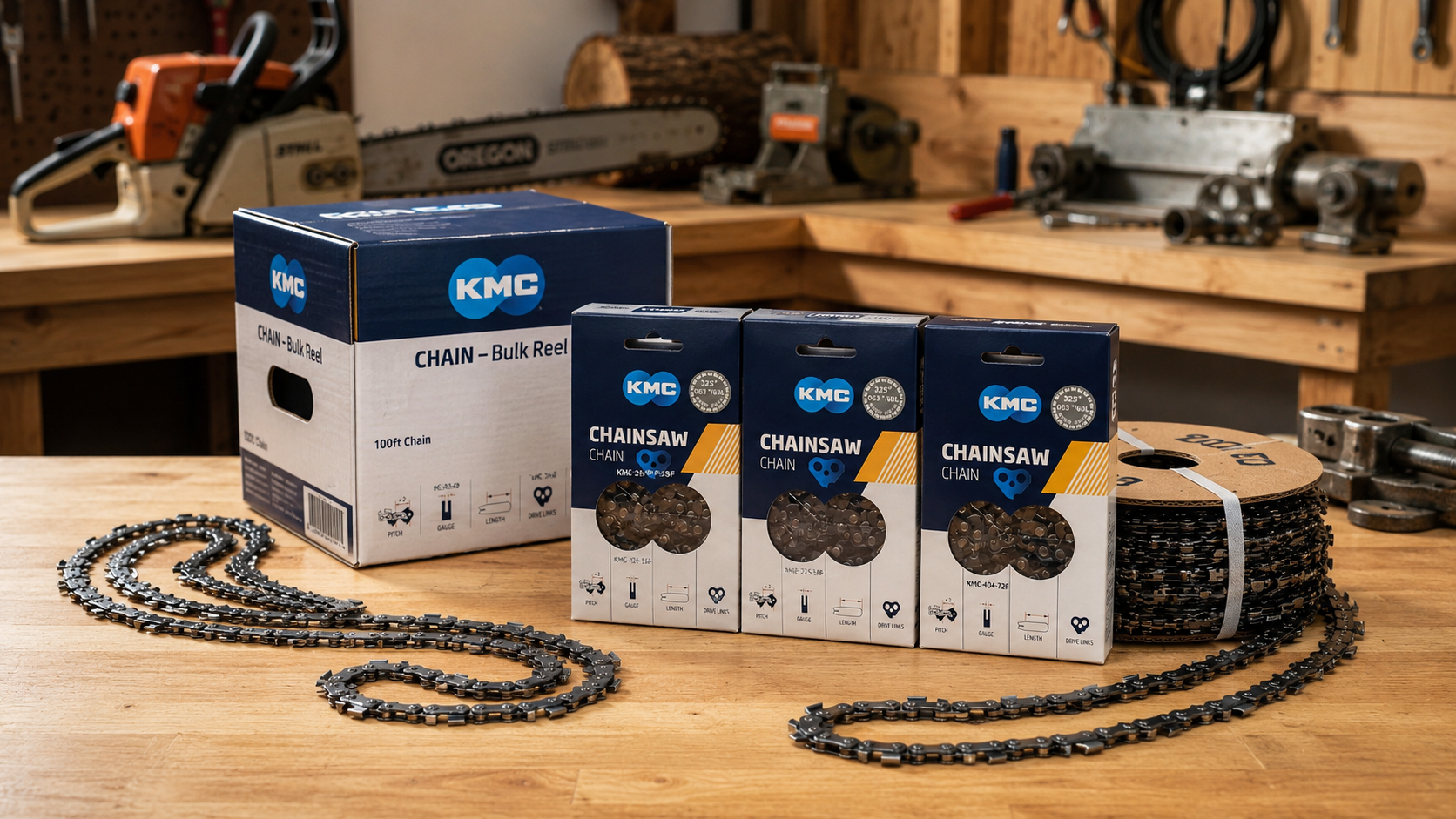
What is a chainsaw chain? A chainsaw chain is a linked cutting loop that travels around a guide bar and removes wood with a repeating series of sharpened cutters. It is not a simple strip of teeth. The loop combines cutters, drive links, tie straps, rivets and depth gauges, and every component has a specific job in guiding, driving and controlling the cut.
The chain works as one part of a matched cutting system. The drive sprocket moves it, the guide bar supports it, lubrication reduces friction, and the cutter geometry forms and clears wood chips. A replacement chain must therefore match the saw and bar in pitch, gauge and drive-link count before cutter style or brand preferences are considered.
What Is a Chainsaw Chain Made Of?
Although chains can be designed for different saws and applications, the basic architecture is recognizable. Looking at each component separately makes replacement, inspection and maintenance much easier.
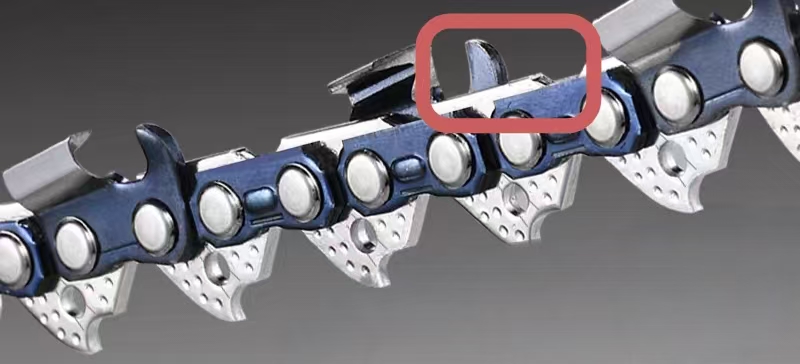
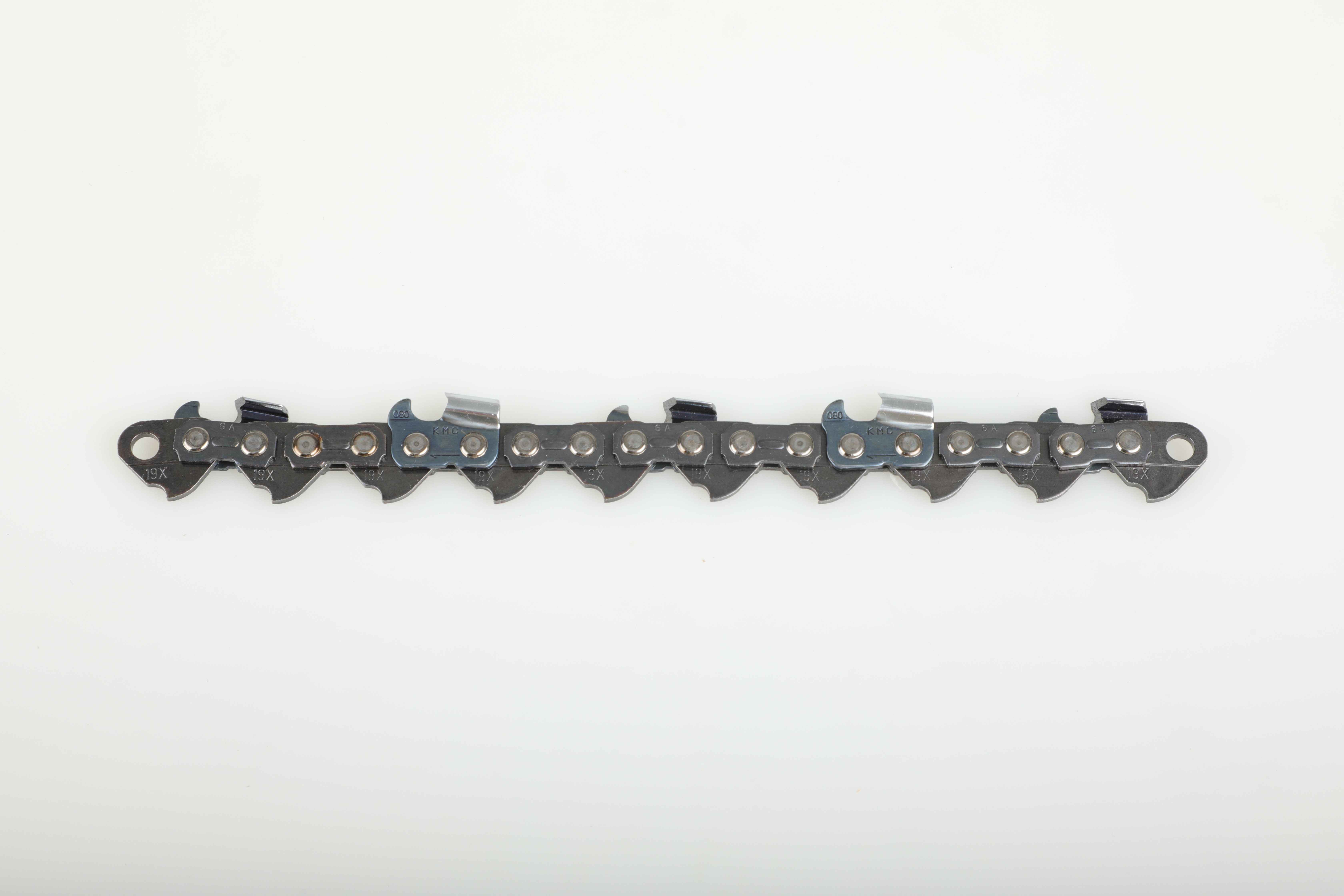
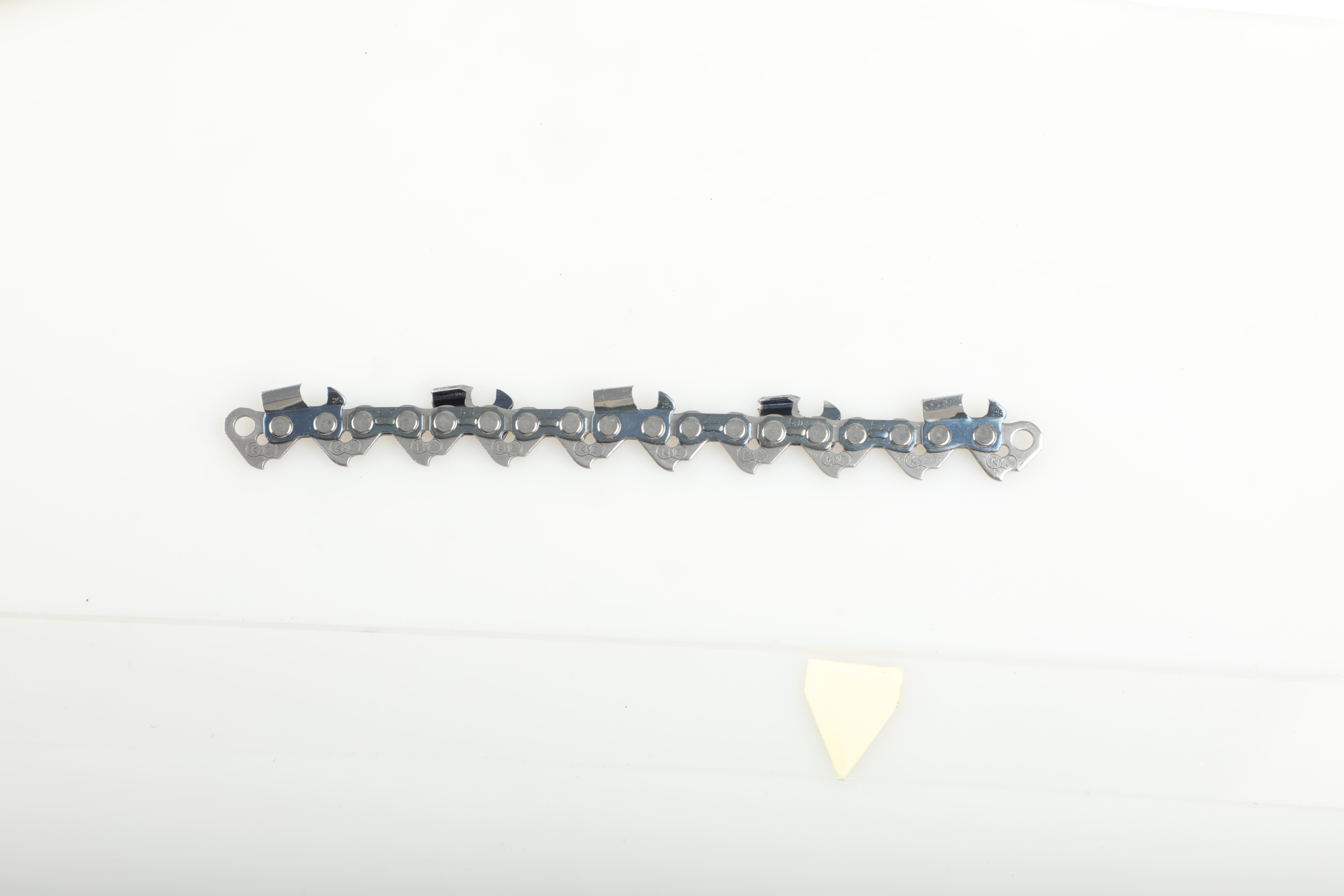
A chainsaw chain combines cutters, drive links, tie straps and riveted joints in one continuous loop.
Cutters
The cutters are the sharpened working links. Left-hand and right-hand cutters alternate around the chain so the kerf is opened on both sides. Each cutter includes a top plate, side plate, working corner and depth gauge. The exact shape varies by cutter family, but all cutters must be filed consistently if the chain is to track and cut evenly.
A cutter does not remove an unlimited amount of wood on every pass. Its depth gauge controls how deeply the cutting edge can enter. When the relationship between the cutting edge and depth gauge is incorrect, the chain may cut poorly or behave more aggressively than intended. Depth-gauge maintenance should follow the chain maker’s specifications and use the correct guide.
Drive links
Drive links extend into the guide-bar groove. Their lower tangs engage the drive sprocket, transferring motion from the saw to the chain. They also help distribute chain lubricant through the cutting attachment. The thickness of the drive link is the chain gauge, so it must correspond to the groove width of the bar.
Counting drive links identifies loop length. This count is more reliable than choosing a replacement only by the nominal bar length, because bars with the same stated length can require different loops. Bent, burred or damaged drive links can prevent smooth movement and deserve careful inspection before a chain is installed again.
Tie straps and rivets
Tie straps connect the cutters and drive links. Rivets pass through the assembled links to create joints that can flex around the sprocket and bar nose. The joints must move freely without excessive side play. A stiff joint, loose rivet or cracked strap is a reason to stop using the chain and inspect the cutting system.
Some tie straps or drive links include features intended to influence kickback response, oil distribution or chain identification. These details belong to the complete design. They should not be ground away or modified in an attempt to make the chain cut faster.
How a Chainsaw Chain Cuts Wood
The engine or electric motor turns a clutch drum and drive sprocket. The sprocket engages the chain’s drive links and pulls the loop around the guide bar. As each cutter enters the wood, the depth gauge limits the bite, the sharpened corner separates fibers and the top plate lifts a chip from the kerf.
Successive left- and right-hand cutters widen the path so the body of the chain and guide bar can travel through the cut. Chips need enough space to leave the kerf, and the chain needs adequate lubrication along the rails and nose. Cutting performance is therefore the result of several conditions working together:
the chain is the correct size for the bar and sprocket;
cutters are sharp and similar in length;
depth gauges are maintained to specification;
chain tension allows smooth movement without sagging away from the bar;
the lubrication system delivers oil to the cutting attachment; and
the bar rails, groove and sprocket are in serviceable condition.
A new chain cannot compensate for a damaged bar, worn sprocket or blocked oil passage. When a cutting problem appears, inspect the system rather than assuming that the cutter is the only possible cause.
How Pitch, Gauge and Drive Links Determine Fit
The most important answer to “Will this chain fit?” comes from three specifications. Pitch identifies the spacing family and has to match the sprocket and guide-bar nose. Gauge identifies the drive-link thickness and has to match the guide-bar groove. Drive-link count identifies the required loop length.
| Specification | What it describes | Where to check |
|---|---|---|
| Pitch | The chain’s rivet-spacing family | Bar markings, saw manual or existing chain identification |
| Gauge | Drive-link thickness in the bar groove | Bar marking or equipment documentation |
| Drive links | The loop length for a particular bar | Marked specification or a careful count of drive links |
A designation such as 3/8 does not give the gauge or number of drive links. Likewise, a description such as “16-inch chain” is incomplete because more than one cutting system may be used on a saw or bar of that nominal length. Buyers can review a full specification method in the chainsaw chain specifications guide.
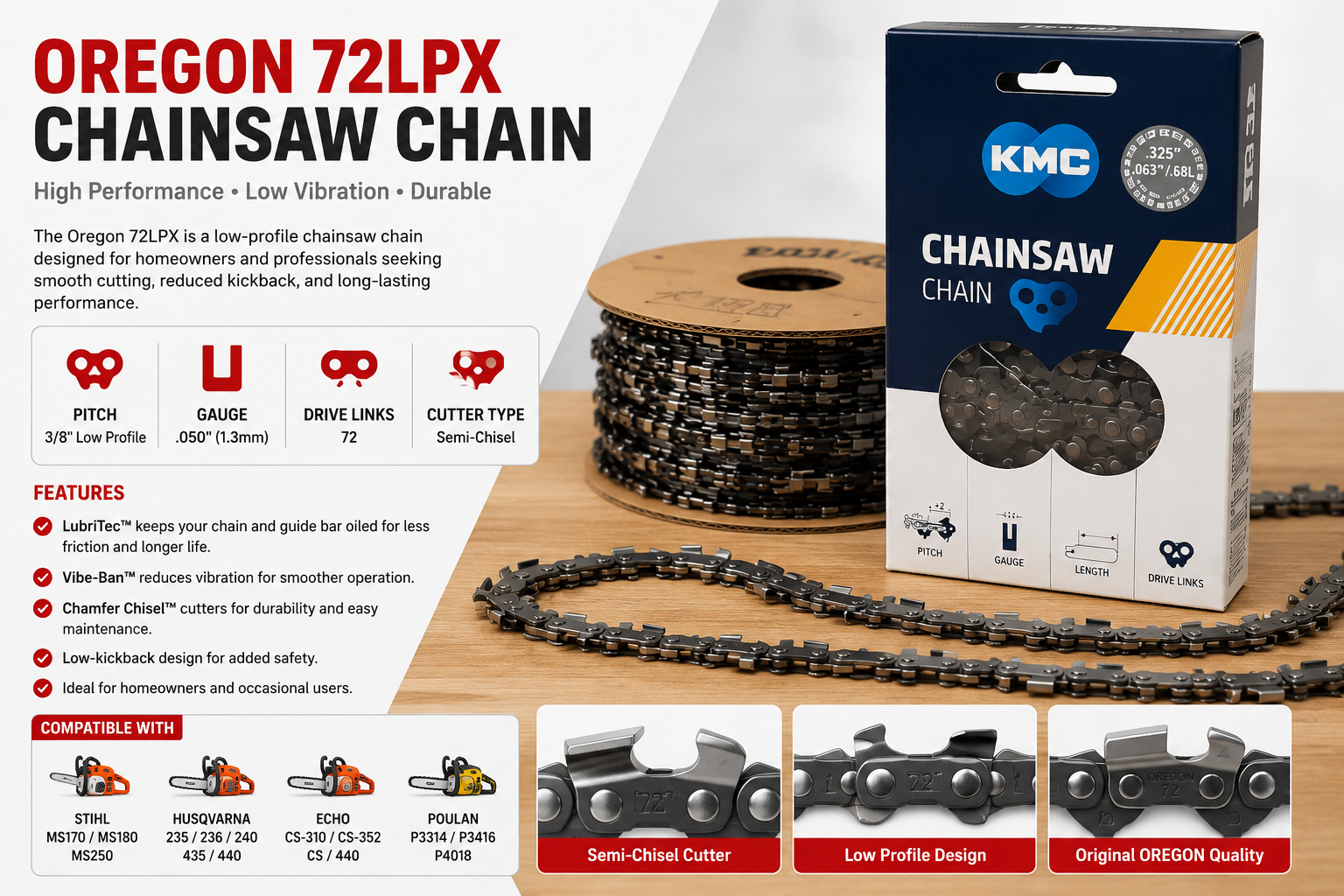
Common families include lightweight 3/8 low-profile chain and standard chains such as the .325 chainsaw chain range. The correct family is determined by the cutting system, not by a general assumption about saw size.
Different Chains for Different Work
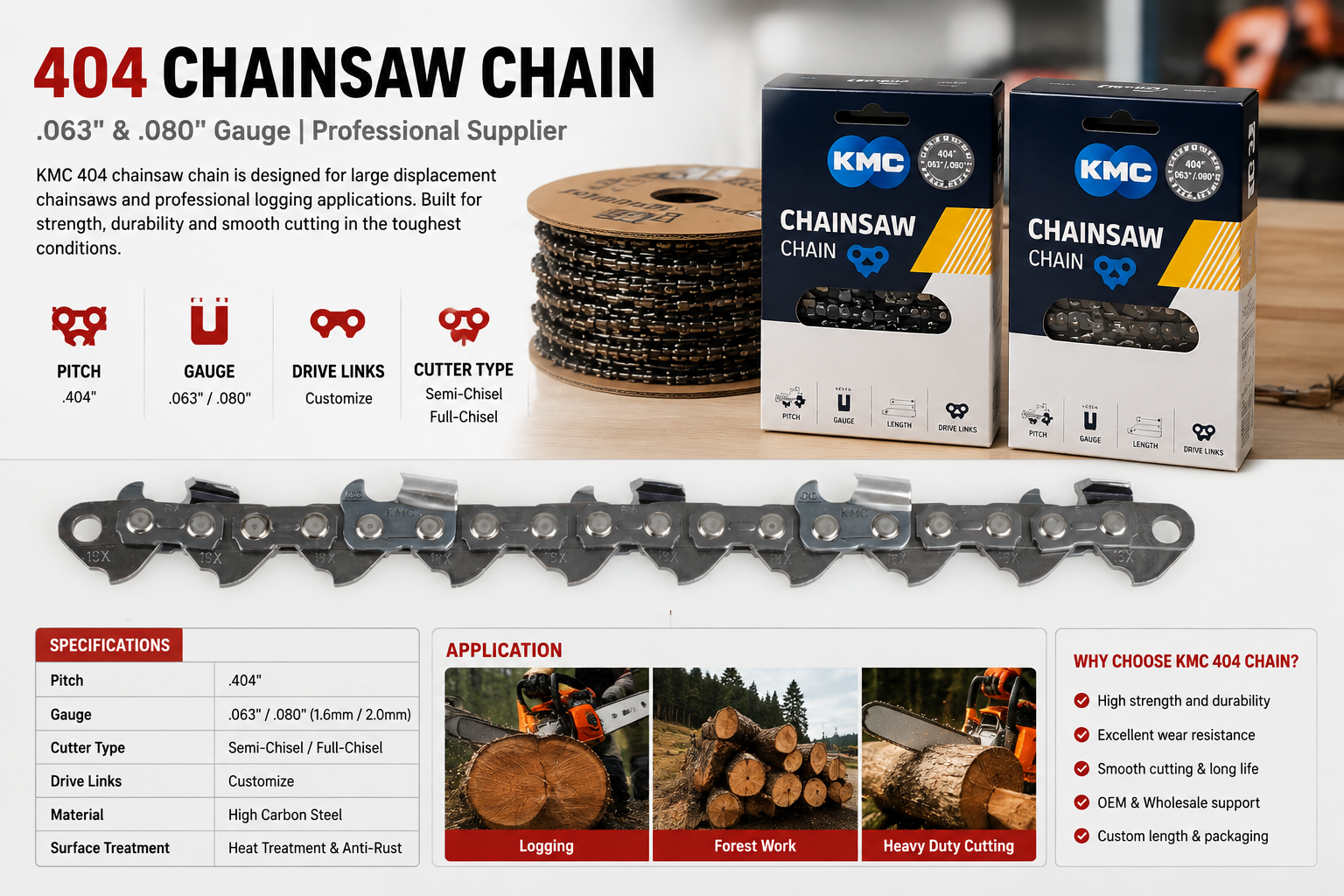
After fit is confirmed, cutter profile and chain design can be selected for the work. Full-chisel cutters have a more angular working corner and are chosen when fast cutting in relatively clean wood is important. Semi-chisel cutters use a more rounded corner and are often selected for mixed conditions and practical maintenance. Low-profile designs are made for compatible lightweight cutting systems and include safety-oriented geometry.
These categories overlap with the dimensions. A semi-chisel chain can be offered in multiple pitches and gauges; the cutter name does not make those loops interchangeable. Similarly, a low-kickback feature does not remove the need for correct technique, protective equipment and adherence to the saw manufacturer’s instructions.
The wood condition also matters. Clean logs, dirty bark, wet timber, storm debris and routine pruning do not expose the cutting edge to the same conditions. A useful product description therefore states both the exact size and the expected application.
Inspection, Tension and Maintenance Basics
Before fitting or servicing a chain, disconnect the power source according to the equipment instructions. Wear suitable gloves because cutters remain sharp even when the saw is not running. Inspect the entire loop for cracked parts, damaged cutters, stiff joints, loose rivets or distorted drive links. A structurally damaged chain should not be returned to service.
Install the chain in the correct cutting direction and seat the drive links fully in the groove. Adjust tension using the saw maker’s procedure, checking it again after initial operation because a new or recently serviced loop can settle. The chain should move around the bar as intended without hanging below the rails or being tightened so severely that free movement is restricted.
Sharpen all cutters with a tool sized for that chain and maintain consistent angles. Filing one side more than the other can make the saw pull in the cut. Depth gauges should be checked with the proper gauge rather than lowered by eye. Clean the bar groove and oil passages, inspect bar wear and confirm that chain oil reaches the cutting attachment.
Confirm the chain is the correct size before installation.
Inspect the chain, bar and sprocket as one system.
Set tension according to the equipment instructions.
Keep cutters even and use the correct filing equipment.
Stop if the chain is damaged, repeatedly derails or behaves abnormally.
Frequently Asked Questions
What is the difference between a chainsaw chain and a guide bar?
The chain is the moving cutting loop with cutters and drive links. The guide bar is the stationary rail assembly that supports and guides the loop. They work together, but each has its own dimensions and wear conditions that must be checked during replacement.
Can I buy a chain using only the chainsaw model?
A model number can help, but it may not be enough if that saw accepts more than one bar or cutting setup. The safest method is to confirm pitch, gauge and drive-link count from the actual bar, manual or verified current chain.
Why does a chainsaw chain have depth gauges?
Depth gauges control how much wood each cutter can engage as it passes through the cut. Their height relationship to the cutting edge affects chip thickness and chain behavior. They should be maintained with the correct gauge and procedure for that chain.
Does every cutter on the chain need to be the same length?
Cutters should be maintained consistently so the chain cuts evenly. If one side or a group of cutters is filed differently, the saw can cut inefficiently or pull to one side. Follow the chain’s sharpening specifications and inspect for damaged cutters.
When should a chainsaw chain be replaced?
Replacement is appropriate when the chain has structural damage, reaches its service limit, cannot be sharpened correctly or no longer runs safely after the complete cutting system is inspected. Do not repair cracked links or severely damaged components through improvised methods.
Conclusion: Understanding what is a chainsaw chain means seeing it as a matched assembly rather than a row of sharp teeth. Cutters remove wood, depth gauges control the bite, drive links transfer motion, and tie straps and rivets keep the loop articulated. Correct pitch, gauge and drive-link count come first; cutter type and application preferences follow.
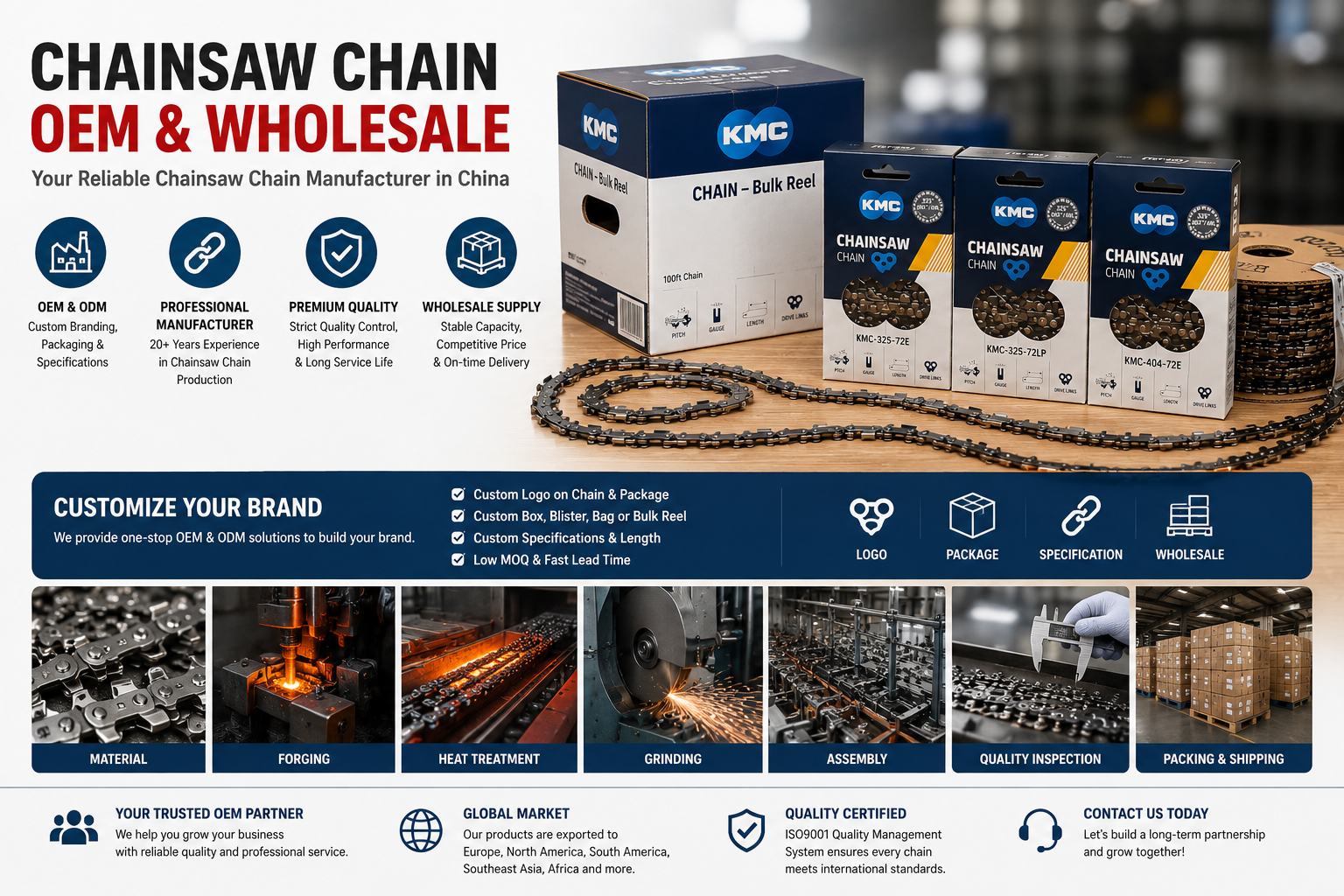
Browse the KMC chainsaw chain product range, or send KMC the saw model, bar markings and drive-link count for help identifying a suitable chain specification.