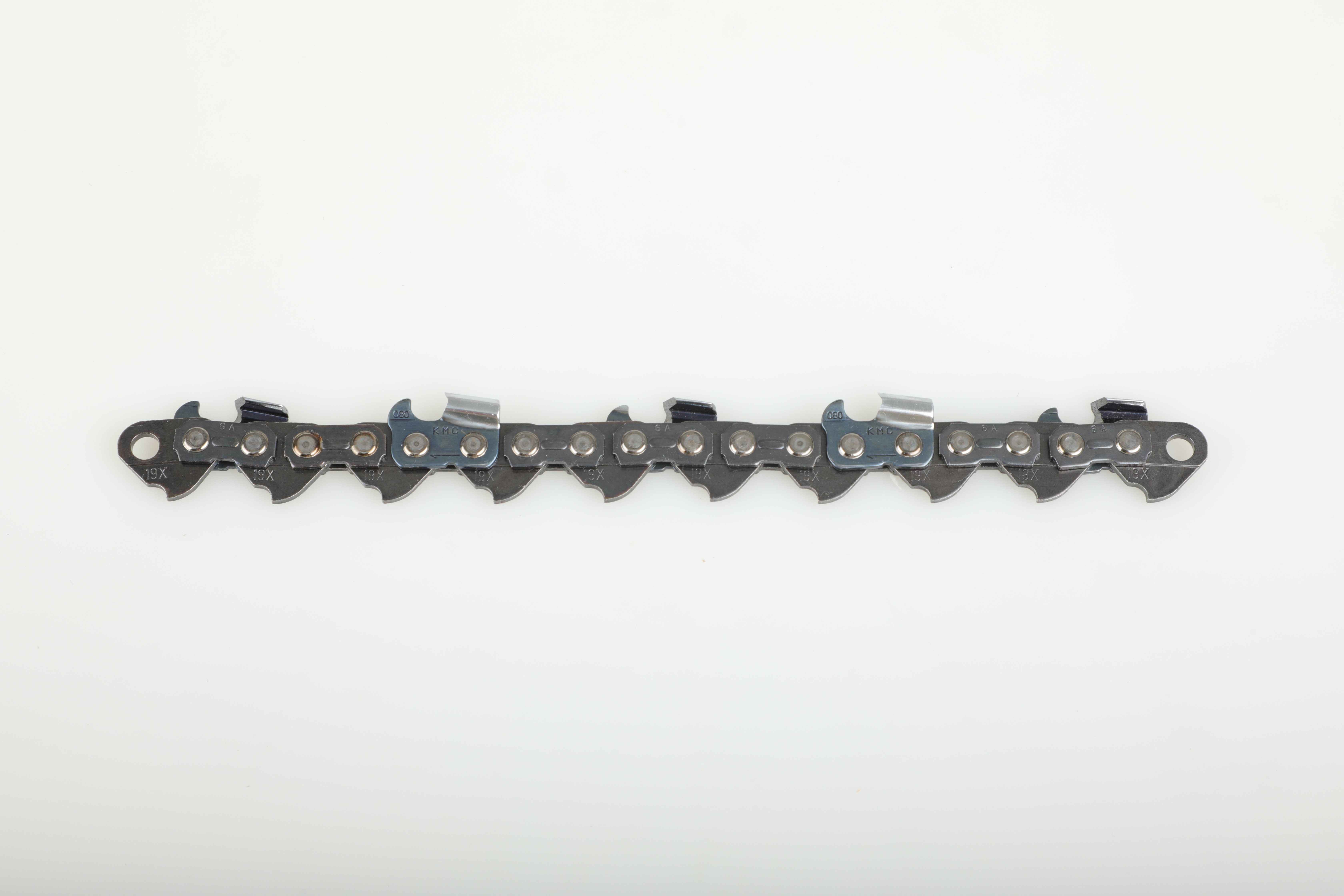
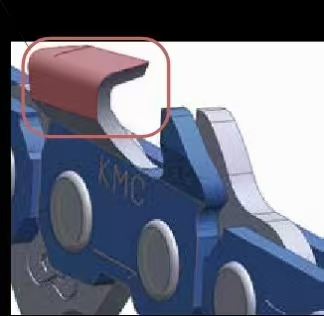
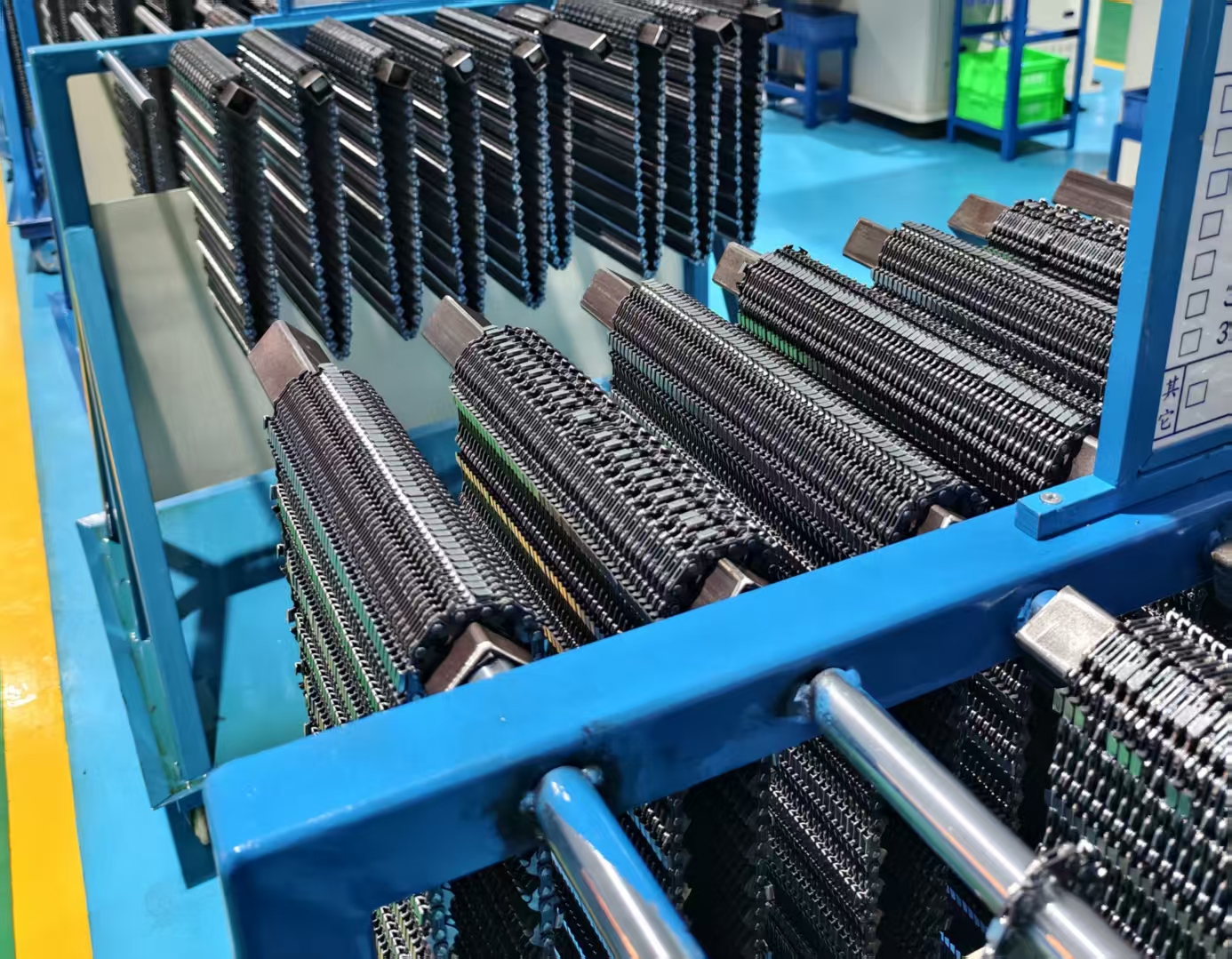
Chainsaw chain specifications tell you whether a saw chain will fit a guide bar, sprocket and cutting job. The three numbers to confirm first are pitch, gauge and drive link count. After those are matched, cutter type, chain sequence and application decide how smoothly the chain cuts in pruning, firewood, forestry or professional logging work.
Key takeaways for choosing chainsaw chain specifications
Pitch matches the chain to the drive sprocket. Common options include 1/4", 3/8" low profile, .325", 3/8" and .404".
Gauge matches the drive link thickness to the guide bar groove. Typical gauges include 1.1 mm, 1.3 mm, 1.5 mm and 1.6 mm.
Drive links set the final chain length. Many replacement and wholesale orders range from 45DL to 100DL, depending on the bar size.
Application matters too: light pruning, farm use, firewood cutting and heavy logging often need different cutter profiles.
What chainsaw chain specifications mean
A chainsaw chain is not selected by bar length alone. Two chains may both fit a 16 inch bar in appearance, but they may not be interchangeable if the pitch, gauge or drive link count is different. For distributors, repair shops and OEM buyers, confirming these specifications before ordering helps reduce returns, improves fit accuracy and keeps inventory easier to manage.
| Specification | What it controls | Common options |
|---|---|---|
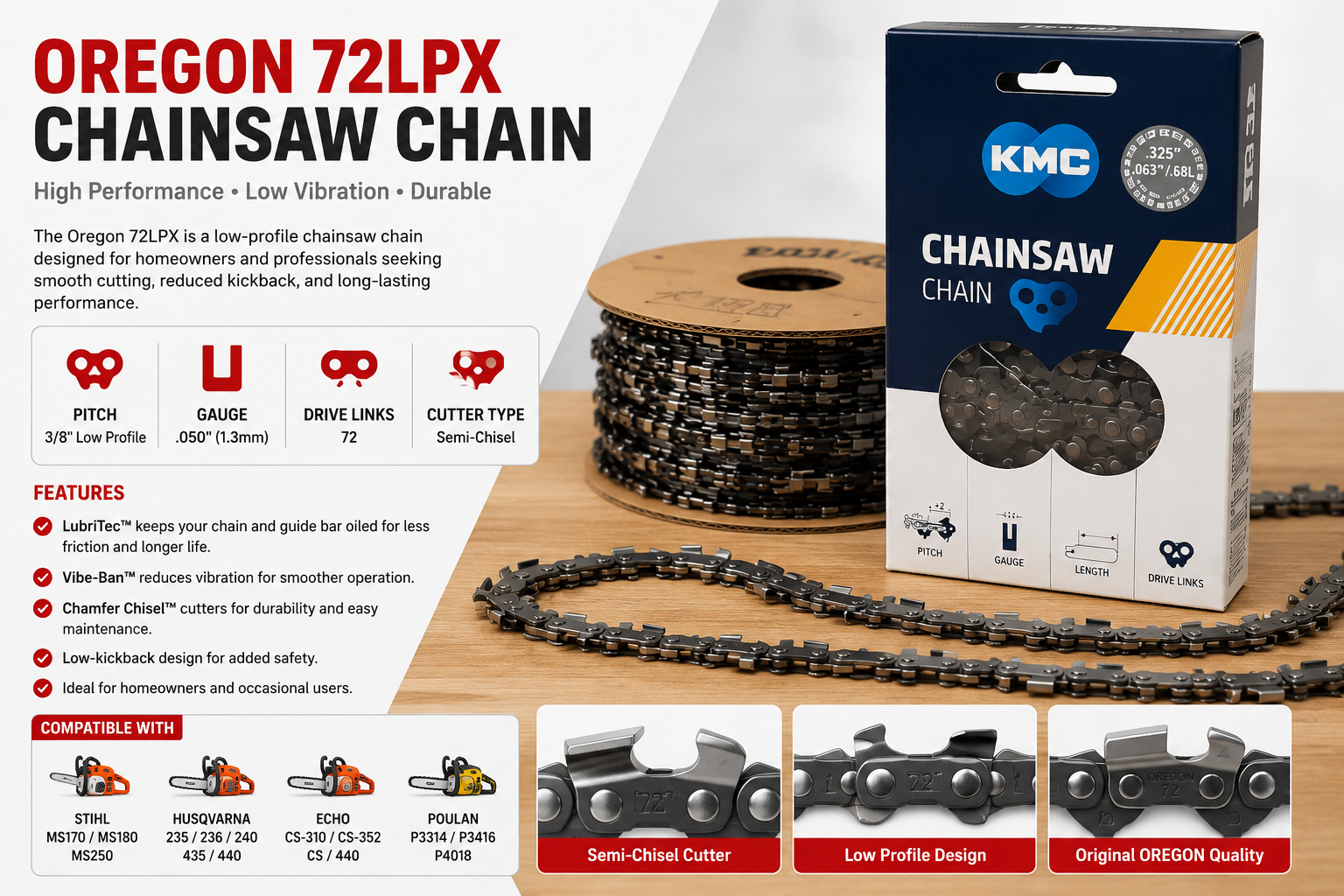
| Pitch | Distance pattern between chain rivets and sprocket teeth | 1/4", 3/8" LP, .325", 3/8", .404" |
| Gauge | Drive link thickness and guide bar groove fit | 1.1 mm, 1.3 mm, 1.5 mm, 1.6 mm |
| Drive links | Total chain length for the bar | 45DL to 100DL and custom lengths |
| Cutter type | Cutting speed, smoothness and sharpening needs | Full chisel, semi chisel and low-kickback designs |
Chainsaw chain pitch options
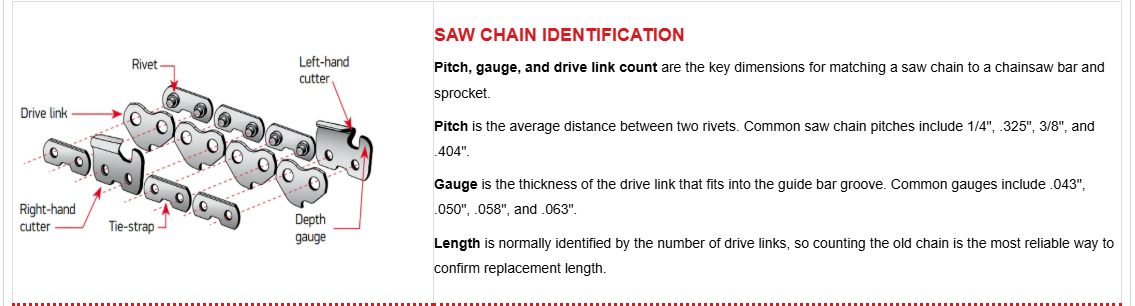
Pitch is one of the most important chainsaw chain specifications because it must match the drive sprocket and bar nose. Smaller pitch chains are often used on compact saws and pruning equipment, while larger pitch chains are common on more powerful saws used for heavy cutting.
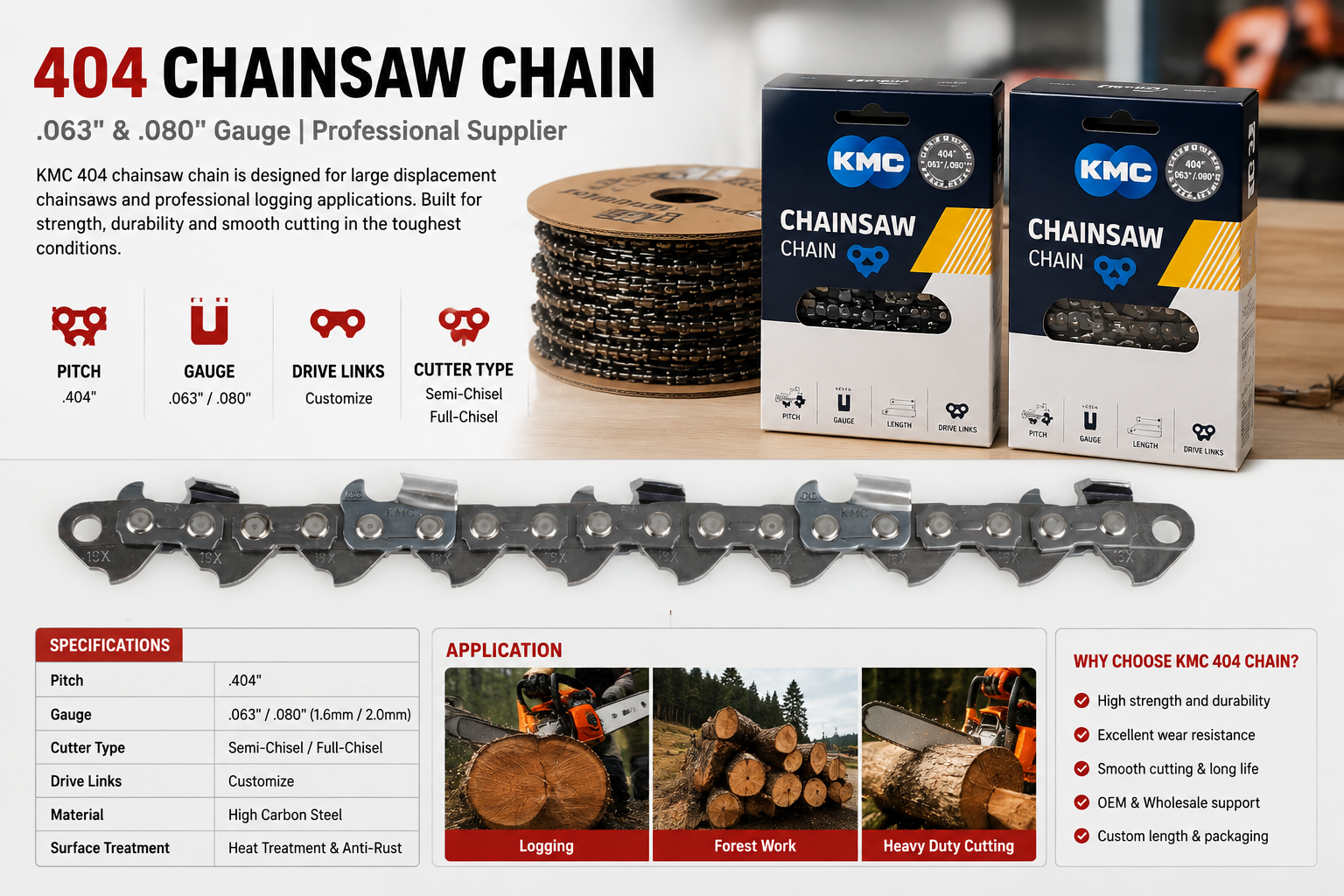
For example, 3/8" low profile saw chain is widely used for light-duty and homeowner saws. .325" chainsaw chain is a common choice for mid-size saws, and standard 3/8" saw chain is often selected for professional cutting. For large displacement saws and demanding work, .404" chainsaw chain may be required.
Chainsaw chain gauge and bar groove fit
Gauge describes the thickness of the drive link that runs inside the guide bar groove. If the gauge is too thin, the chain may feel loose and unstable. If it is too thick, the chain may not sit correctly in the bar. Common gauge choices include .043" (1.1 mm), .050" (1.3 mm), .058" (1.5 mm) and .063" (1.6 mm).
When ordering replacement saw chain in bulk, gauge should be checked against the guide bar marking, existing chain stamp or equipment specification sheet. This is especially useful for dealers carrying multiple saw brands and bar lengths.
Drive links decide the final chain length
The drive link count tells you how many drive links are in the chain loop. Bar length gives a helpful starting point, but it does not replace the drive link number because bars with the same nominal length may use different counts. A 16 inch setup, for example, can vary by saw model, pitch and bar design.
For OEM and wholesale orders, drive link count is also important for packaging, labeling and inventory control. Clear labels such as 3/8" LP, .050", 56DL make it easier for end users and service teams to identify the correct chain quickly.
How to choose the right saw chain for your market
Confirm the pitch from the sprocket, bar or original chain.
Check the gauge against the guide bar groove specification.
Count the drive links or use the equipment model list.
Select the cutter style based on cutting conditions and user experience.
Decide whether bulk reels, finished loops, private label packaging or mixed specifications are needed.
KMC support for OEM and wholesale chainsaw chain supply
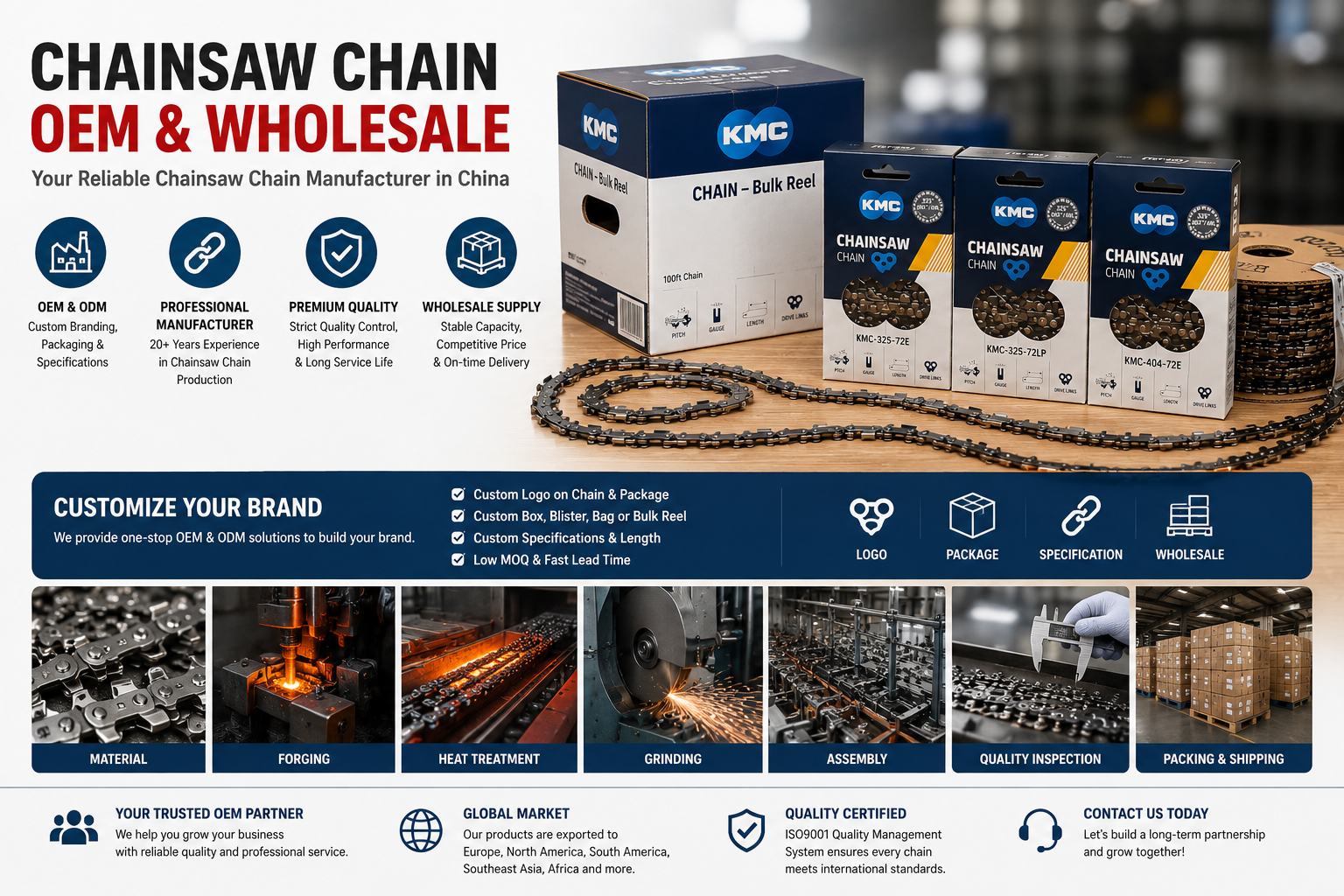
KMC supplies saw chain options for distributors, importers, retailers and equipment service channels. Buyers can review the chainsaw chain product range, compare common pitch and gauge combinations, and discuss finished loops or bulk chain supply for their target market.
If you need help matching chainsaw chain specifications for replacement programs, private label packaging or OEM supply, contact the KMC team through the OEM and wholesale chainsaw chain service page or send an inquiry from the contact page.
Frequently asked questions
What are the three main chainsaw chain specifications?
The three main chainsaw chain specifications are pitch, gauge and drive link count. Pitch matches the sprocket, gauge matches the bar groove, and drive links determine the finished chain length. All three must match the saw setup before the chain can fit correctly.
Can I choose chainsaw chain by bar length only?
No. Bar length is useful, but it is not enough by itself. Two guide bars with the same listed length can use different pitch, gauge or drive link counts. Always confirm the numbers on the bar, old chain or equipment manual before ordering.
What information should I send for an OEM chainsaw chain order?
Send the pitch, gauge, drive link count, cutter type, target bar lengths, estimated quantity and packaging requirements. If you serve several markets, include the saw models or replacement chain list so the supplier can help organize the specification table.
Conclusion
Choosing the right chainsaw chain specifications starts with pitch, gauge and drive links, then moves into cutter type, application and packaging needs. With the correct specification table, buyers can source replacement saw chain more confidently and build a cleaner product range for retail, distribution or OEM supply.
Common chainsaw chain specifications include:
Pitch: 1/4", 3/8", .325", .404"
Gauge: 1.1mm, 1.3mm, 1.5mm, 1.6mm
Drive links: 45DL–100DL