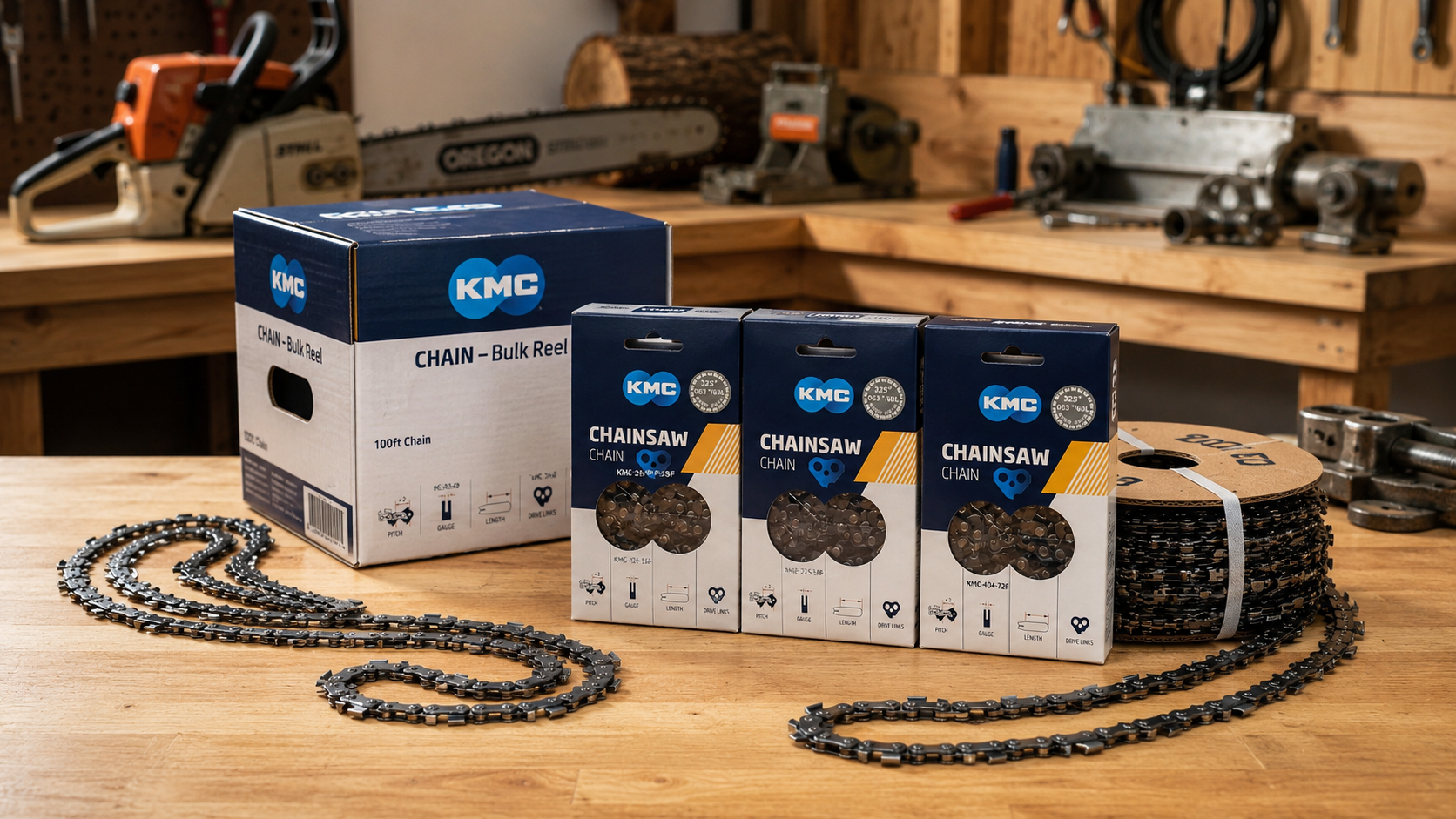
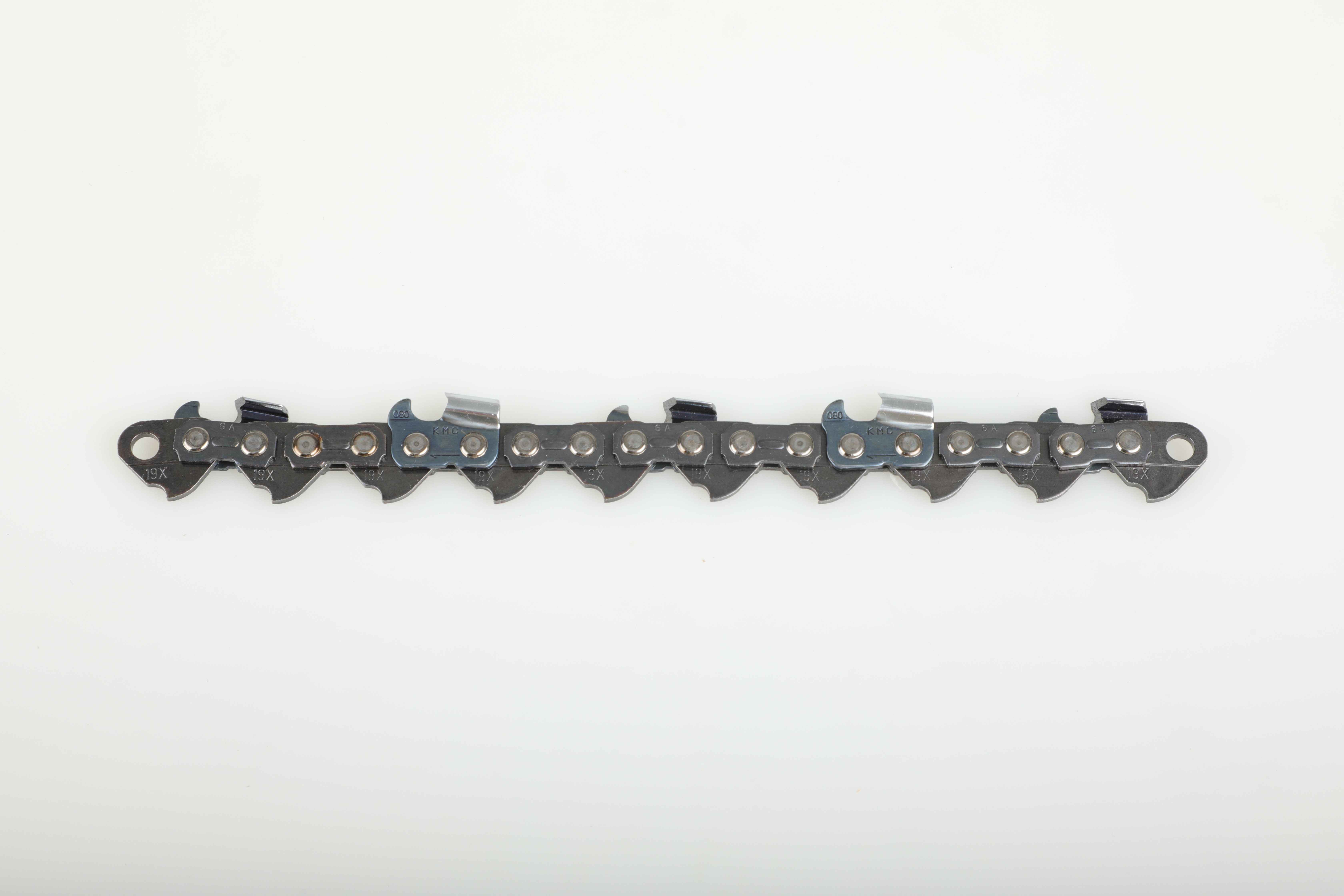
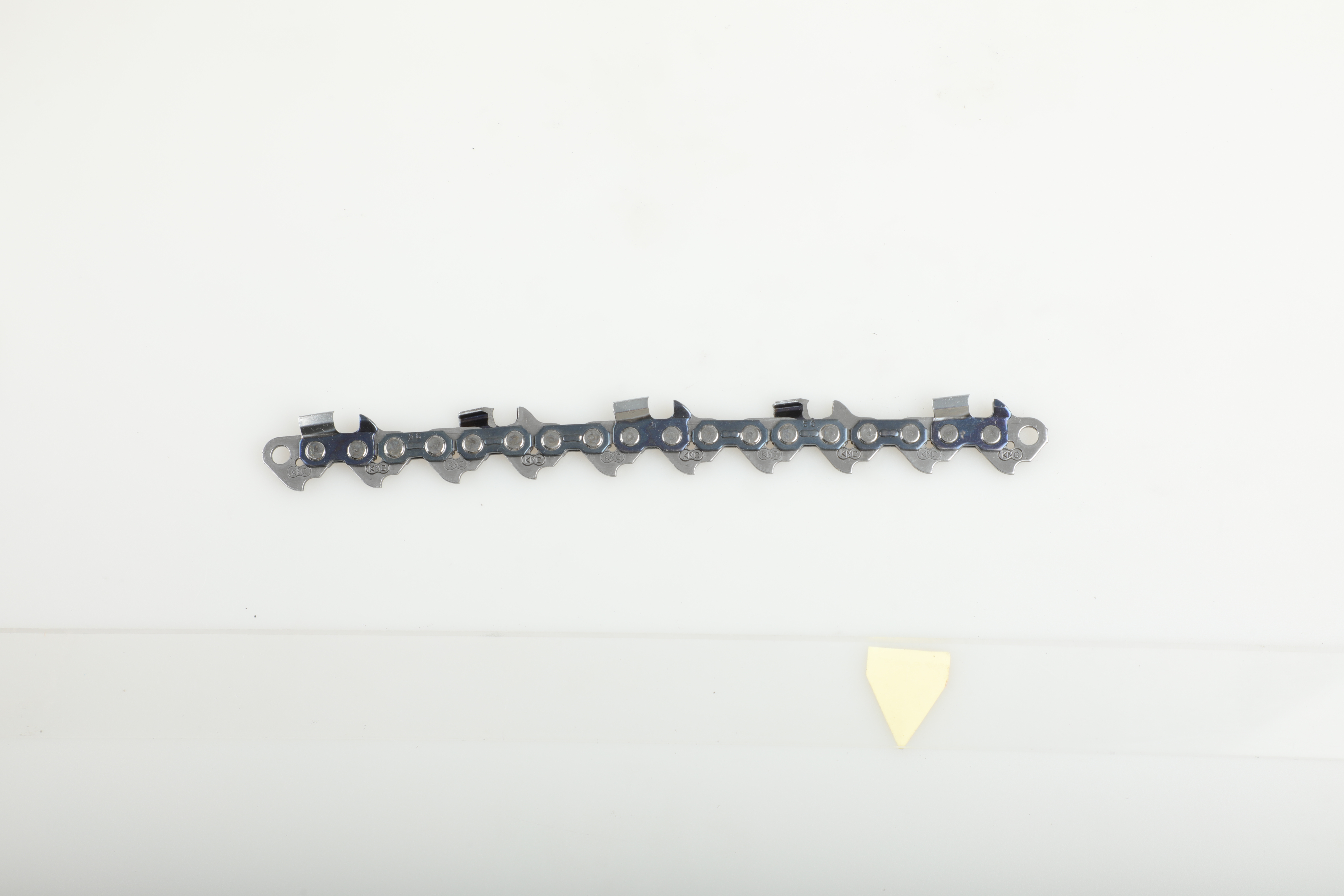
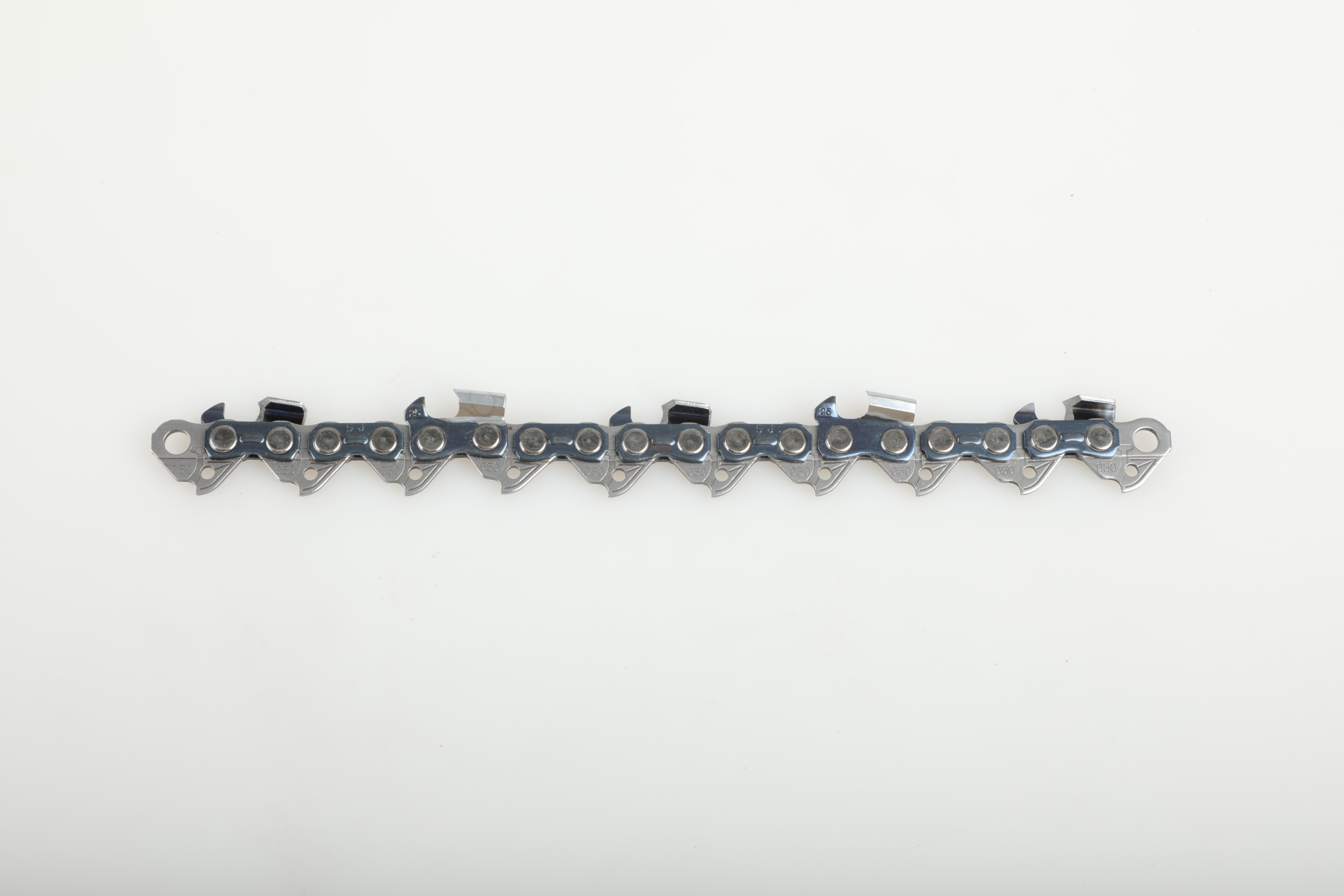
Quick answer: To learn how to evaluate a chainsaw chain manufacturer, begin with the exact pitch, gauge, drive-link count, cutter style and application you need. Then verify how the factory controls materials, heat treatment, assembly, inspection, samples, packaging and batch communication. The best partner is the one that can reproduce an approved specification consistently and explain how each critical feature is checked.
This guide is for importers, distributors, private-label brands and equipment businesses comparing OEM sources. Choosing a factory is not simply a search for the lowest unit price. A chain must fit the bar and sprocket, cut predictably in its intended environment and arrive in packaging that identifies the correct loop. The following method replaces vague catalog comparisons with a practical technical and commercial review.
- Write the complete chain specification before requesting a quotation.
- Ask for process and inspection evidence related to the product you will buy.
- Approve samples against fit, identification and cutting requirements.
- Compare quotations on an equal specification and packaging basis.
- Keep a written approval record for every production batch.
Table of Contents
- Start with a Complete OEM Chain Specification
- How to Evaluate a Chainsaw Chain Manufacturer Process
- Examine Quality Control and Traceability
- Use Samples to Confirm Fit and Communication
- Review OEM Branding and Order Control
- Compare Quotations on the Same Basis
- Frequently Asked Questions
- Conclusion
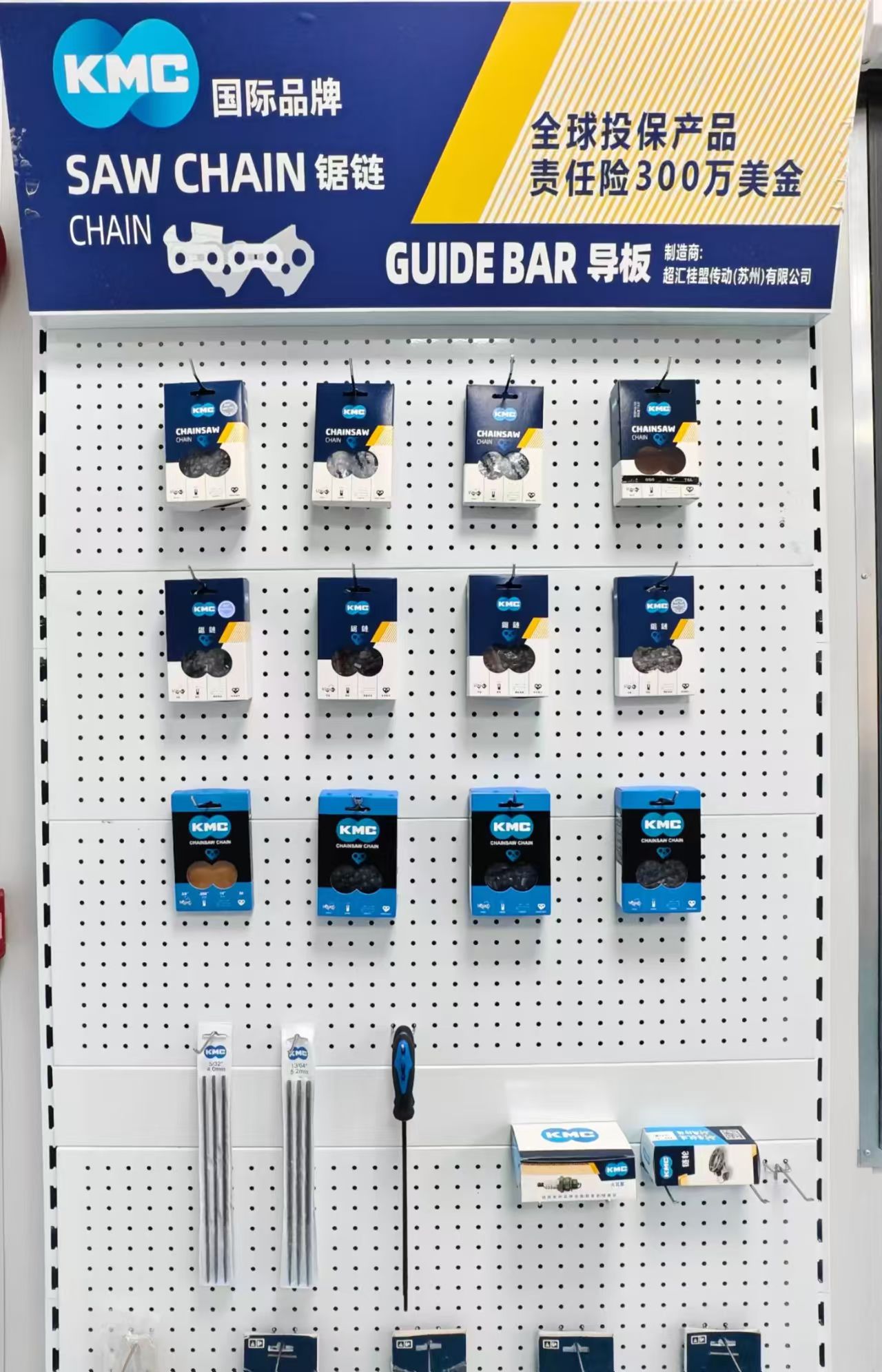
A manufacturer should be evaluated through specification control, sample consistency and production evidence—not a sales claim alone.
Start with a Complete OEM Chain Specification
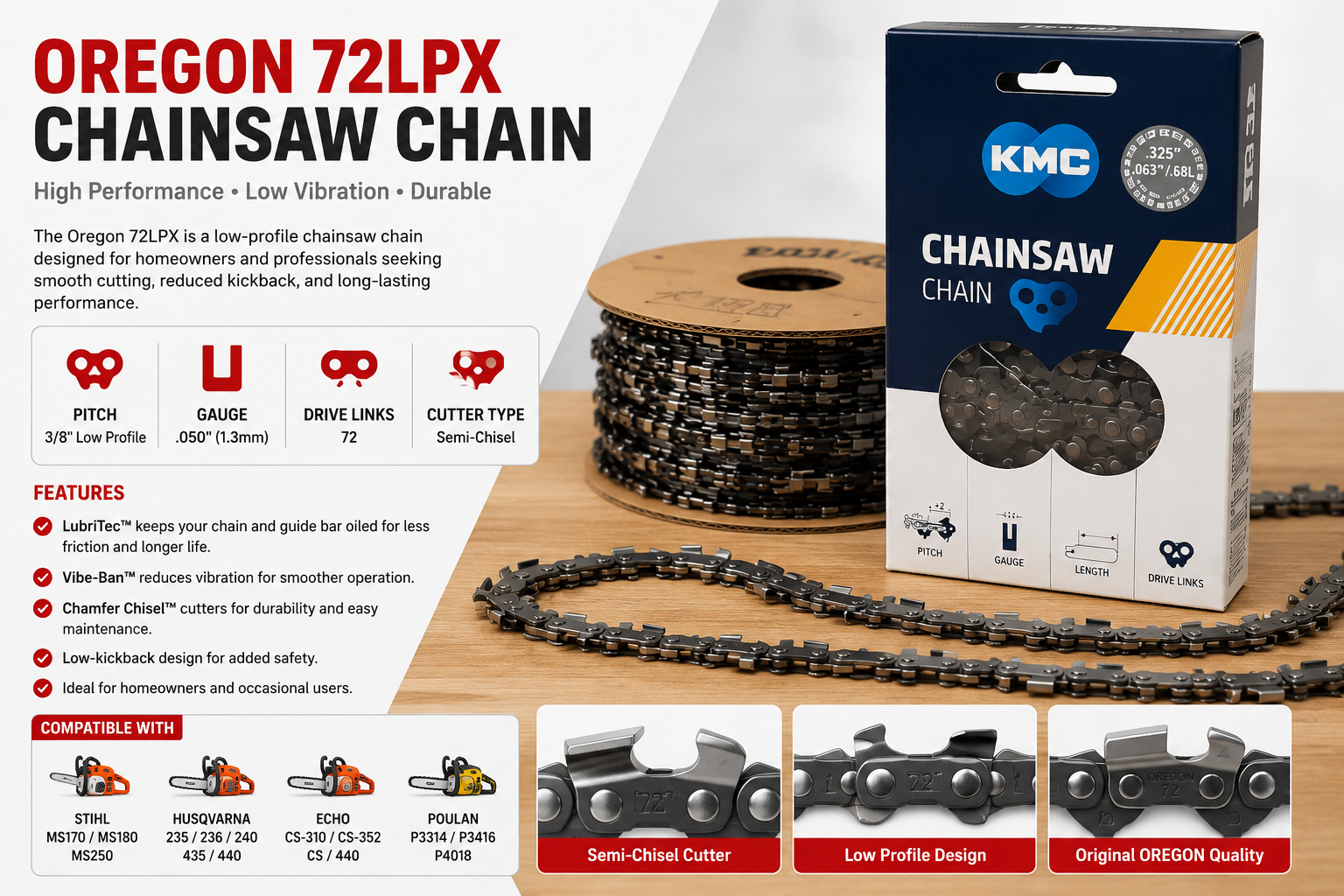
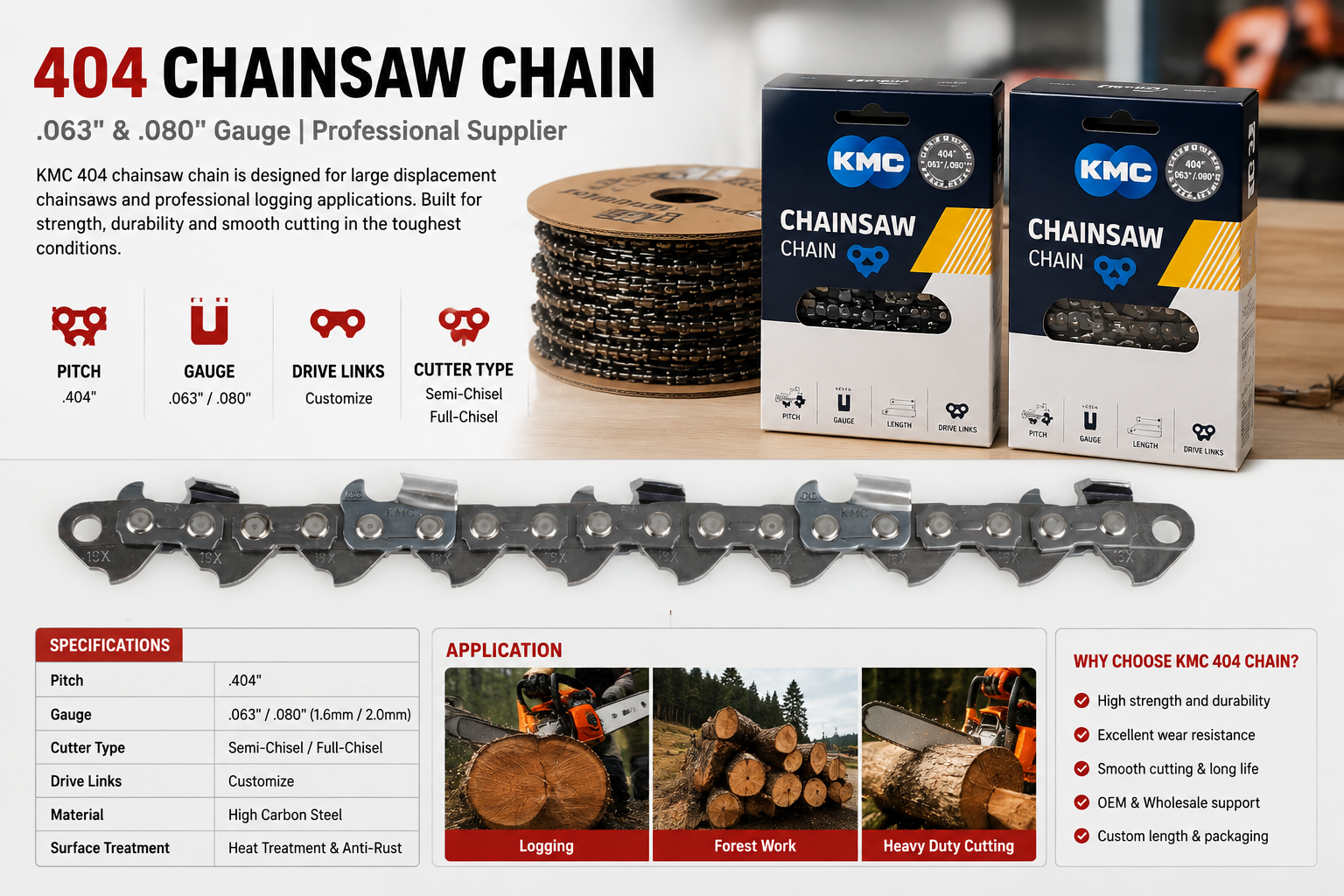
A useful evaluation starts with the buyer's own specification. Record pitch, gauge and drive-link count as separate fields because none can substitute for another. Add the cutter profile, low-profile or standard chassis, sequence, intended saw class and target cutting job. If an order covers several loops, give every combination its own line. The chainsaw chain specifications guide explains how these measurements work together.
Use the same document for the quotation, sample and production order. This prevents two factories from appearing to quote the same item while assuming different gauges, cutter styles, drive-link counts or packages. Questions that clarify a missing value are a positive sign. Silently guessing a fit-critical value is not.
Include packaging early. An individual retail loop, plain industrial loop and workshop reel need different identification and handling. State the market and language requirements, but base every compatibility statement on confirmed dimensions rather than an unsupported claim.
| Field | What to state | Why it matters |
|---|---|---|
| Pitch | 1/4, .325, 3/8 LP, 3/8 or .404 | Must match the drive system |
| Gauge | Inch and millimeter value | Must match the bar groove |
| Drive links | Exact count | Controls loop length |
| Cutter | Approved profile and sequence | Changes use and maintenance |
| Packaging | Retail, plain loop or reel | Controls labels and fulfillment |
How to Evaluate a Chainsaw Chain Manufacturer Process
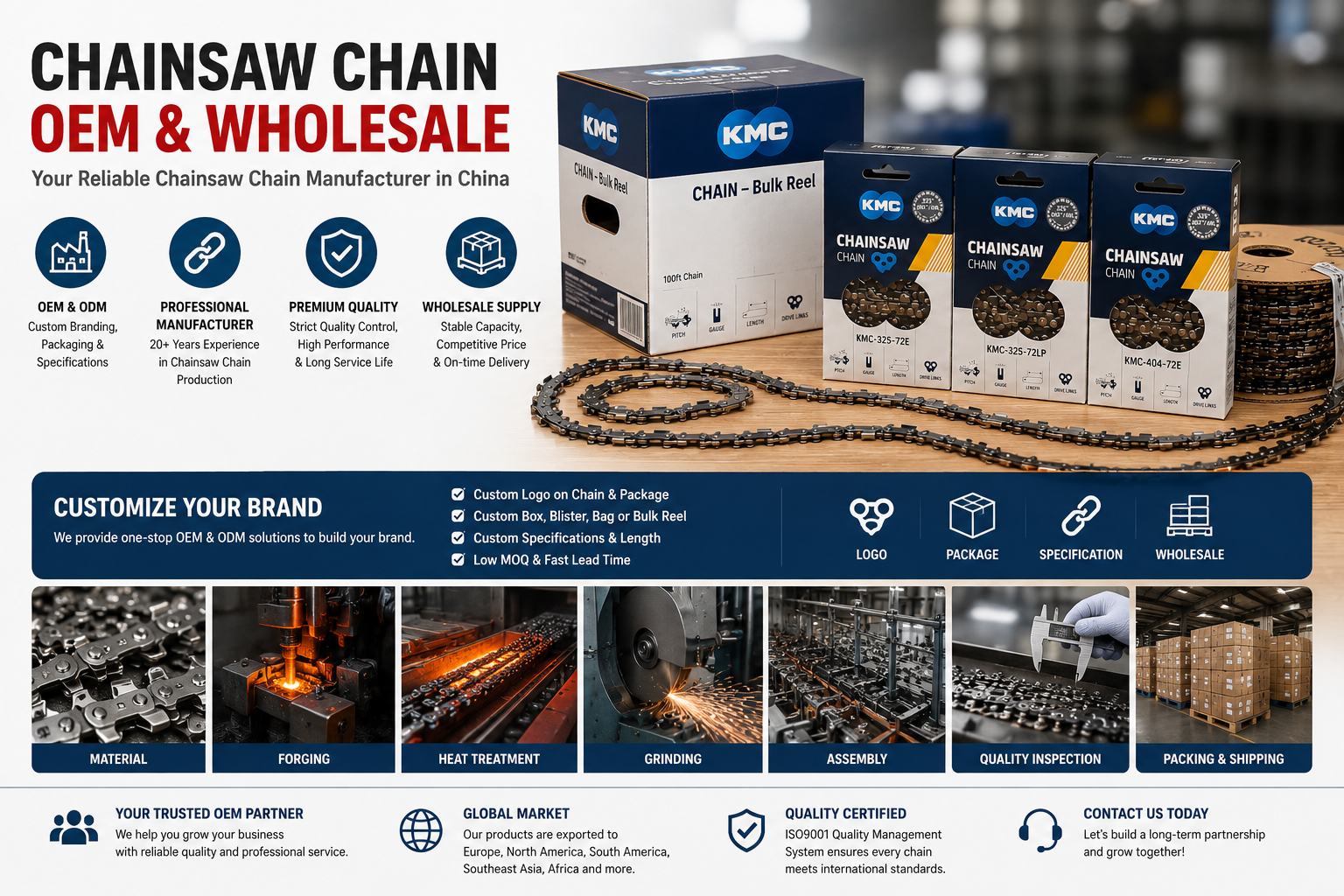
A factory presentation is useful only when it connects equipment to the chain you are sourcing. Ask the manufacturer to describe the route from incoming material through forming, heat treatment, finishing, assembly, lubrication and packing. The objective is not to collect impressive photographs. It is to understand which operations are controlled internally and where a batch can be held if a check fails.
For each important stage, request an explanation of the controlled variable. Heat treatment should not be reduced to the phrase “advanced technology.” The useful discussion is how the process is monitored, how consistency is evaluated and how out-of-range material is separated. Apply the same questions to cutter geometry, rivet setting and drive-link dimensions.
Capacity should be reviewed against the planned order mix, not as a headline number. Many specifications, small lots and several package versions create more changeovers than one large order of a common loop. Share a realistic forecast and ask how materials, tooling, artwork and line time would be scheduled. The answer helps reveal whether the proposed delivery date includes every required operation.
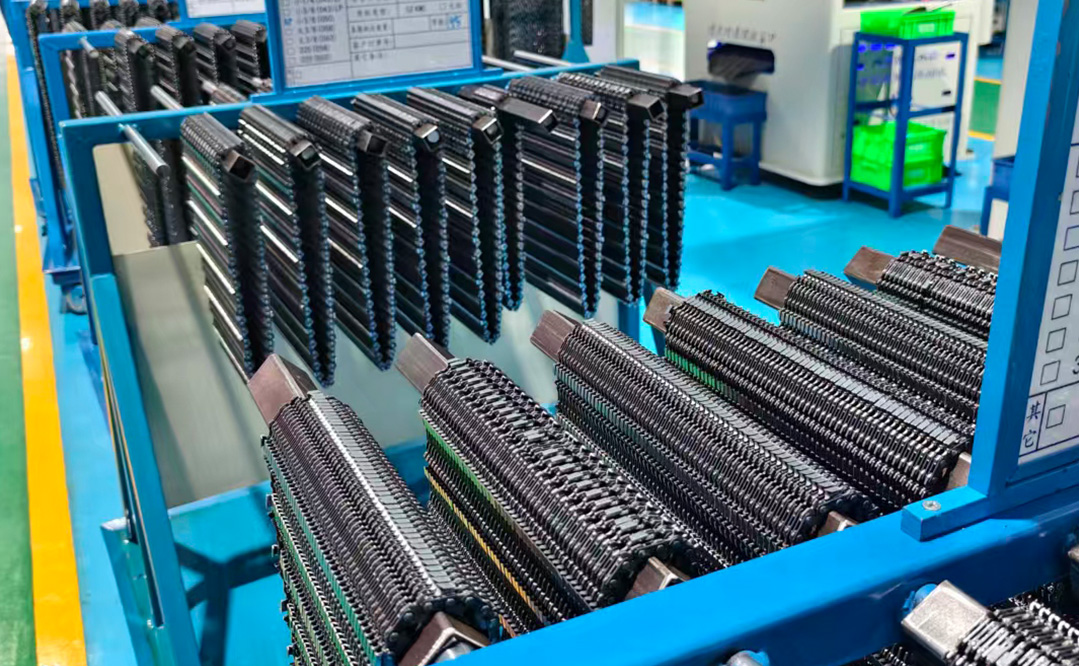
Assembly equipment matters when its settings, changeovers and checks are tied to the approved specification.
Examine Quality Control and Traceability
Quality control should follow product risks. Fit risks include the wrong pitch, gauge or drive-link count. Functional risks include inconsistent geometry, assembly condition or cutter preparation. Commercial risks include mixed labels and incorrect cartons. Ask for inspection points that address these risks rather than accepting a general statement that every item is checked.
Traceability should connect a finished carton to an order, specification and production batch. If a distributor reports a fit or label problem, this connection helps both parties isolate the affected goods and compare them with the approved sample. Also ask how nonconforming items are segregated and how similar-looking loops are kept apart during final inspection.
Review one example record from a completed batch and one from work in progress. The goal is to see whether results are entered when checks occur and whether an abnormal result leads to a visible decision. Records completed from memory at the end of a shift provide less assurance than timely entries linked to a clear batch identity.
Use Samples to Confirm Fit and Communication
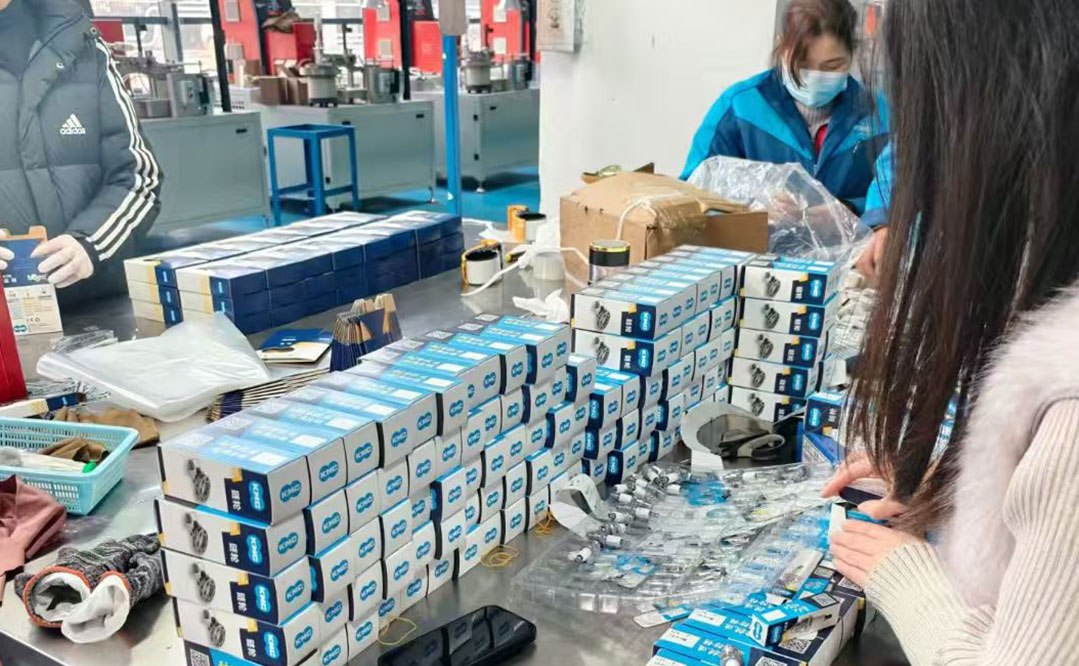
A sample is both a product test and a communication test. Supply the same written specification that will govern production, then check whether the sample label repeats those values accurately. Count the drive links, confirm pitch and gauge, and compare the cutter form with the approved request. Fit testing should use the intended bar, sprocket and saw configuration under controlled conditions.
Record the result in a sample approval sheet. Photographs help identify appearance, but they do not replace measurements or a part number. Note every required revision and request a new sample when the change affects fit, geometry, packaging identification or customer-facing claims. An approval that says only “looks good” gives production little guidance.
Review OEM Branding and Order Control
OEM work extends beyond placing a logo on a box. Decide which information must remain visible: pitch, gauge, drive-link count, chain type, internal part number and quantity. A private label should make identification easier, not hide the dimensions a user needs to select the correct replacement.
Request a packaging proof before printing. Check units, punctuation, barcode data, brand files and the relationship between the inner package and master carton. The KMC OEM and wholesale page outlines available branding discussions, while the final details should always be fixed in controlled order documents.
Specify who may approve a material, label or carton change and how the manufacturer must notify you. Repeat orders should reference the last approved version and list authorized differences explicitly.
Compare Quotations on the Same Basis
Normalize every quotation before comparing price. Confirm that each quote uses the same pitch, gauge, drive-link count, cutter form, quantity, package, labeling work, inspection scope and delivery basis. Separate one-time artwork or tooling costs from recurring unit costs and identify whether samples and special cartons are included.
Review the commercial response with the technical response. A lower price can disappear if the quote omits a required package or creates rework at the destination. Before selection, ask the preferred source to confirm exceptions in writing. Buyers can use the contact page to send pitch, gauge, drive links, quantities and packaging needs.
Final approval checklist
- Approve the full chain specification.
- Map production and inspection stages.
- Confirm batch and package identification.
- Test representative samples.
- Approve branding and change control.
- Normalize quotation and delivery terms.
Frequently Asked Questions
What should I send to a chainsaw chain manufacturer?
Send pitch, gauge, exact drive-link count, cutter or chassis type, intended application, quantity, package format and target market. Add an approved sample or drawing when available. Keeping each loop specification on a separate line reduces quotation and labeling errors.
Is a factory video enough to verify capability?
No. A video shows that equipment exists but does not prove your specification is controlled. Connect each relevant operation to settings, inspection points, records and nonconforming-product handling. Sample consistency and written technical answers provide stronger evidence.
Should price be the final selection factor?
Price matters after quotations are normalized. Compare the same dimensions, cutter form, quantity, packaging, inspection scope and delivery basis. A quote that omits required work is not cheaper in practice; it moves cost and risk to a later stage.
Conclusion
Knowing how to evaluate a chainsaw chain manufacturer means turning a sales comparison into a controlled review. Define the chain, examine the process, verify inspection discipline, approve samples and packaging, and compare equal quotations. Aligned records support reliable repeat OEM supply. Prepare your specification and contact KMC to discuss samples and pricing.