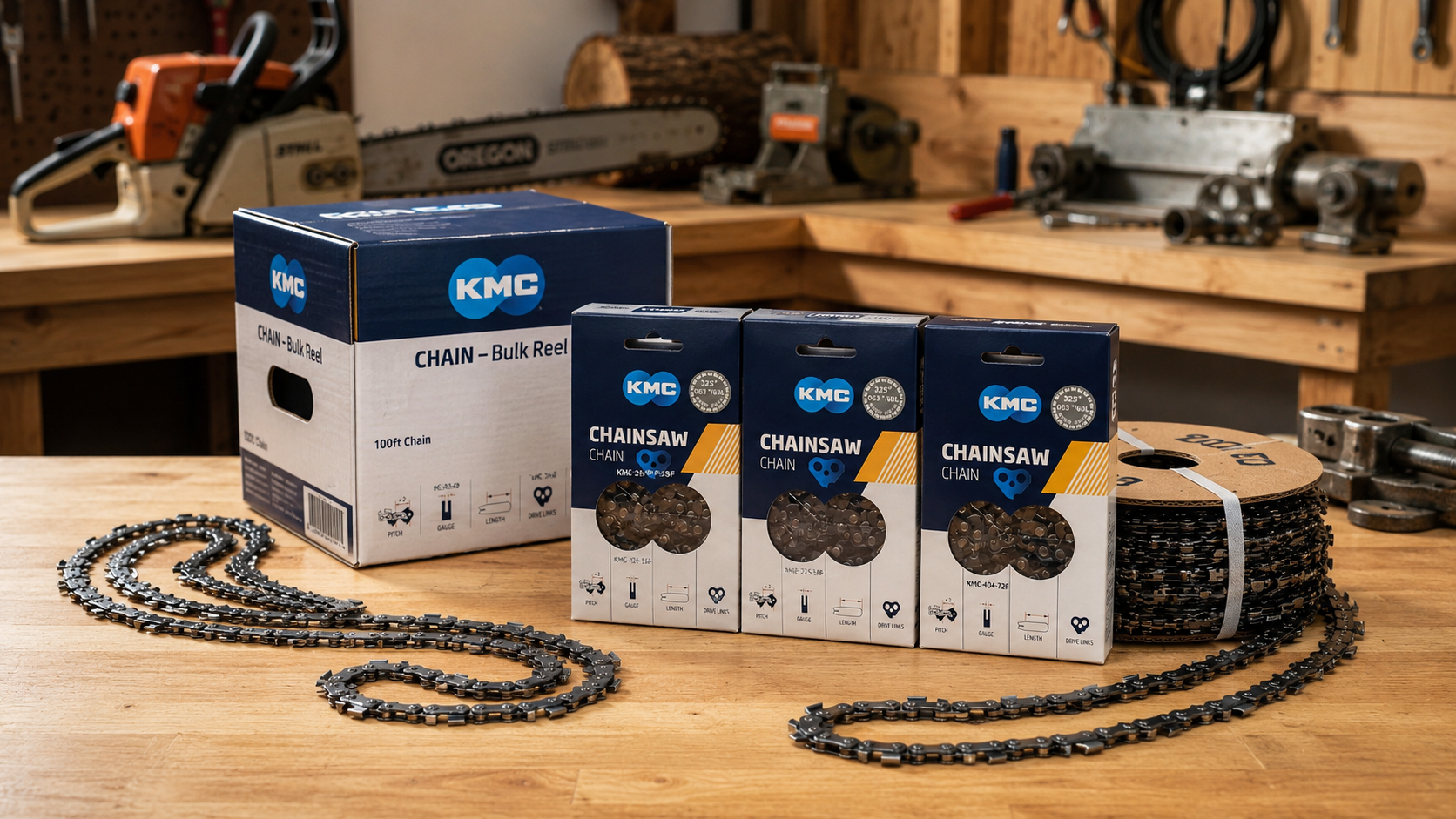
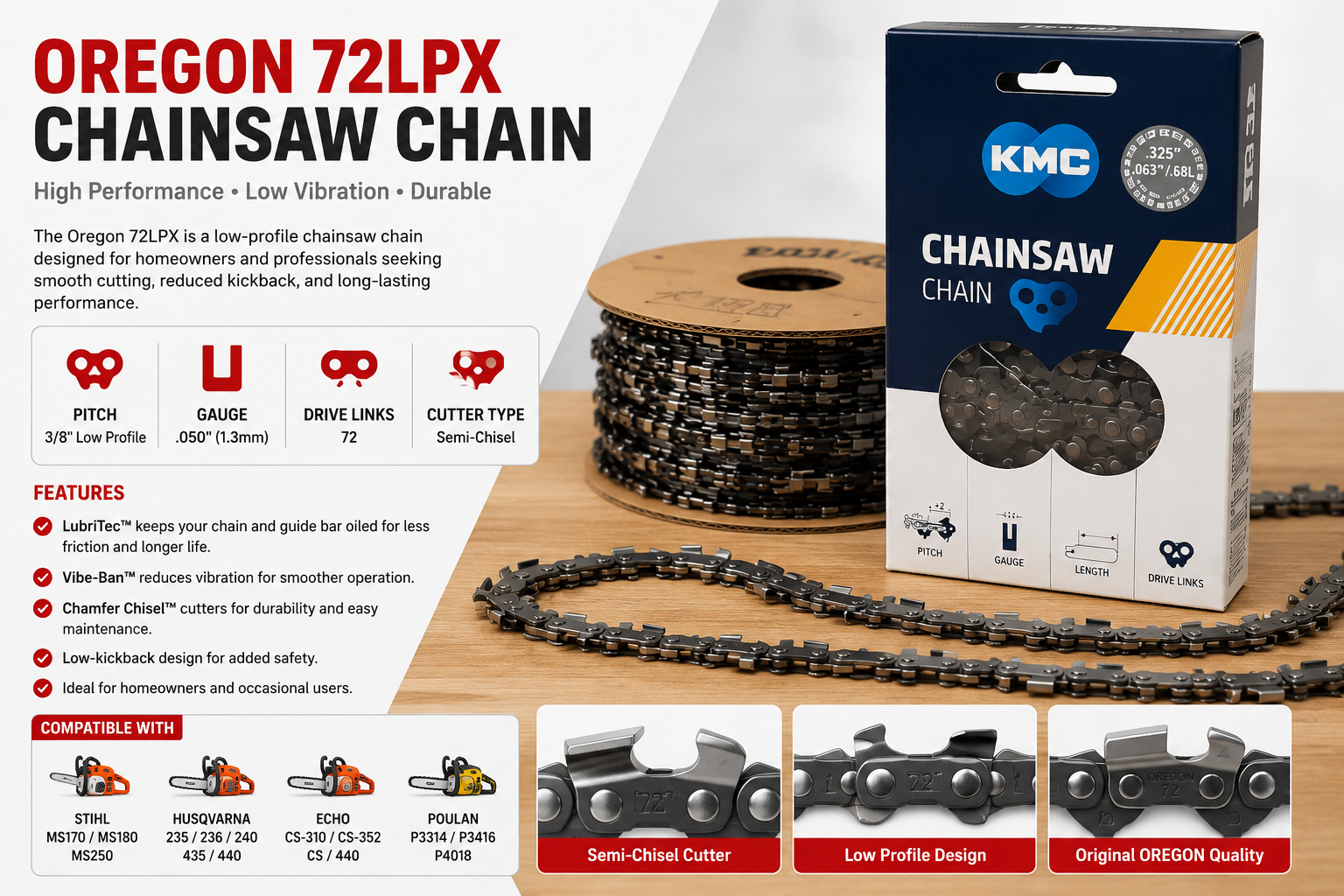
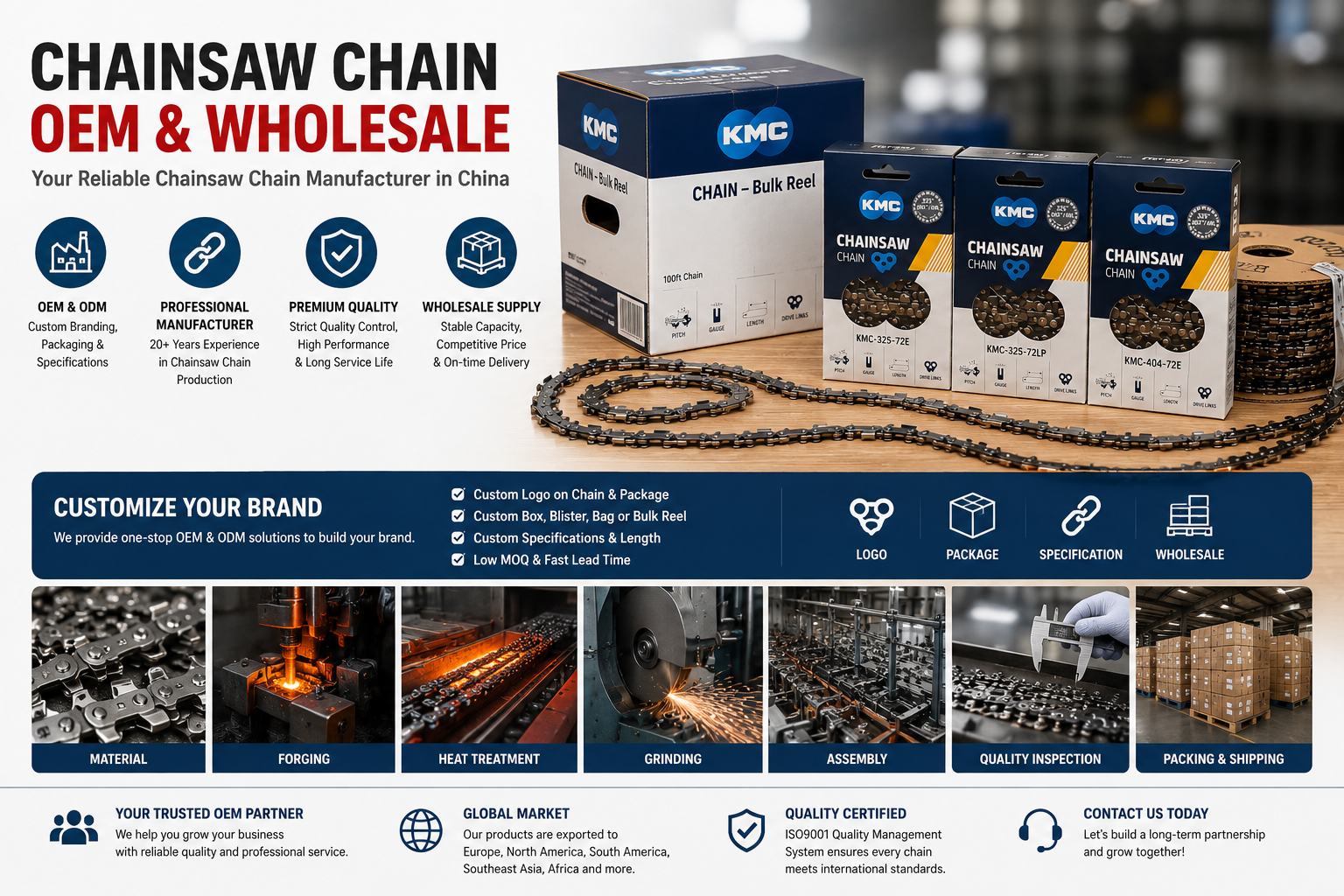
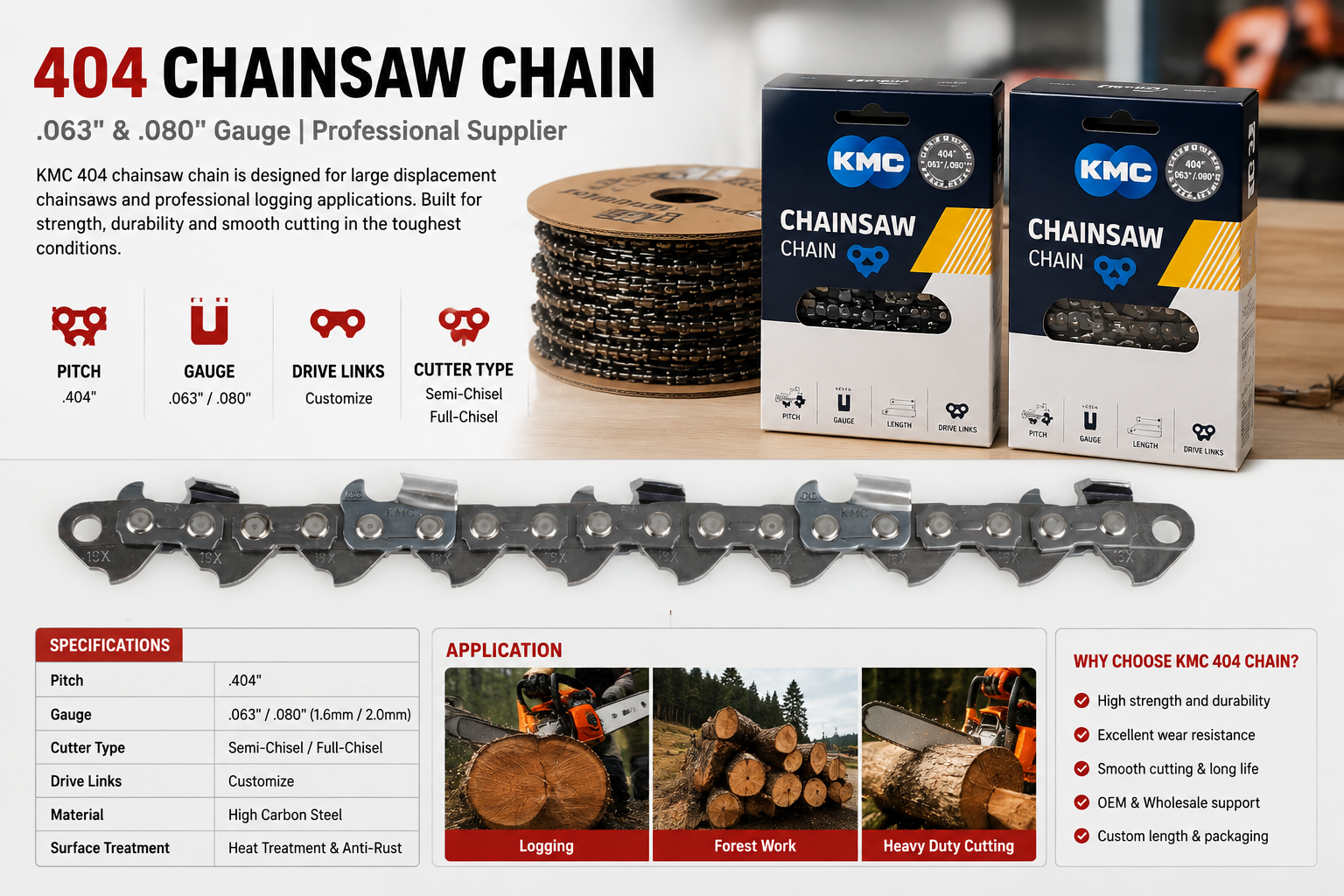
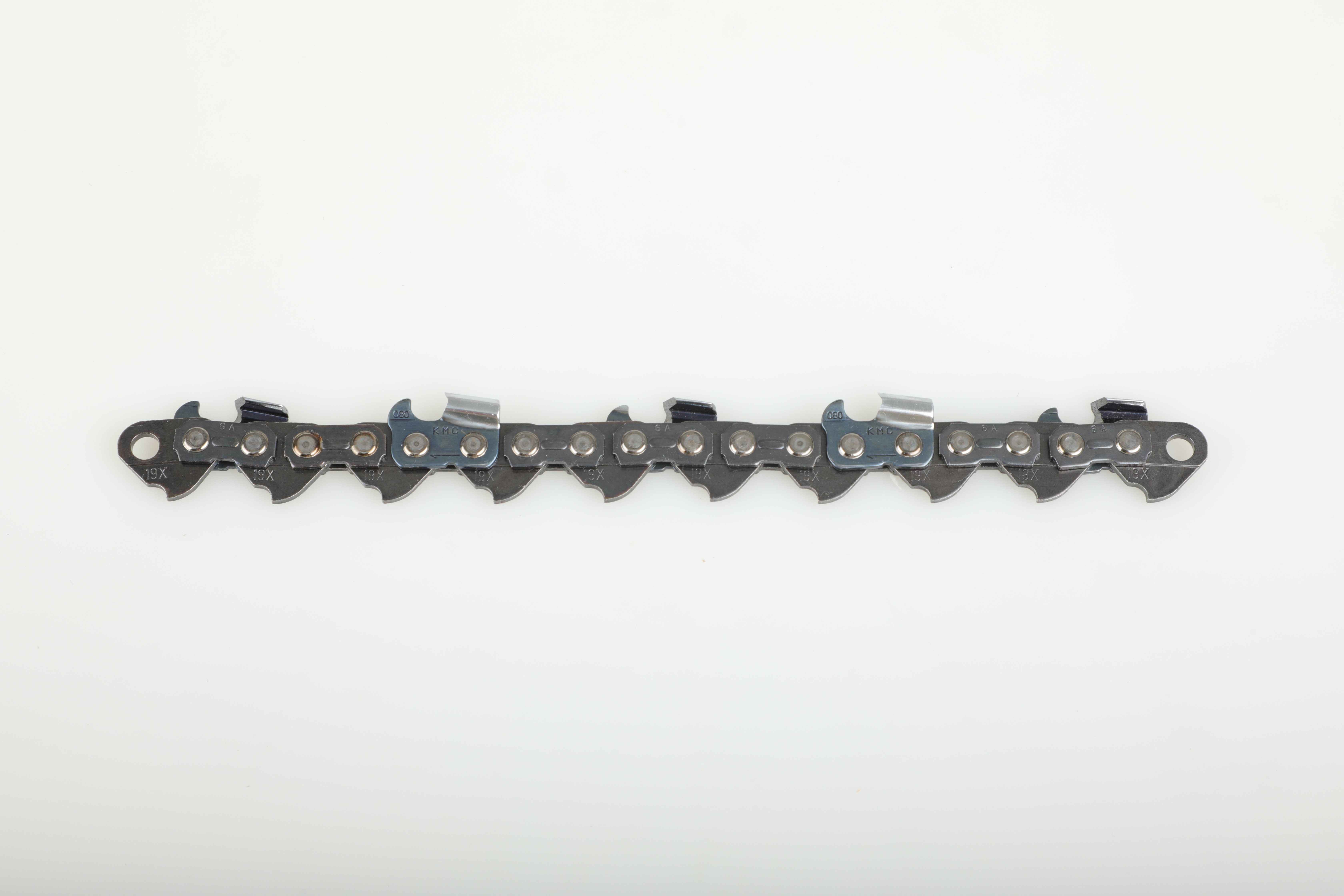
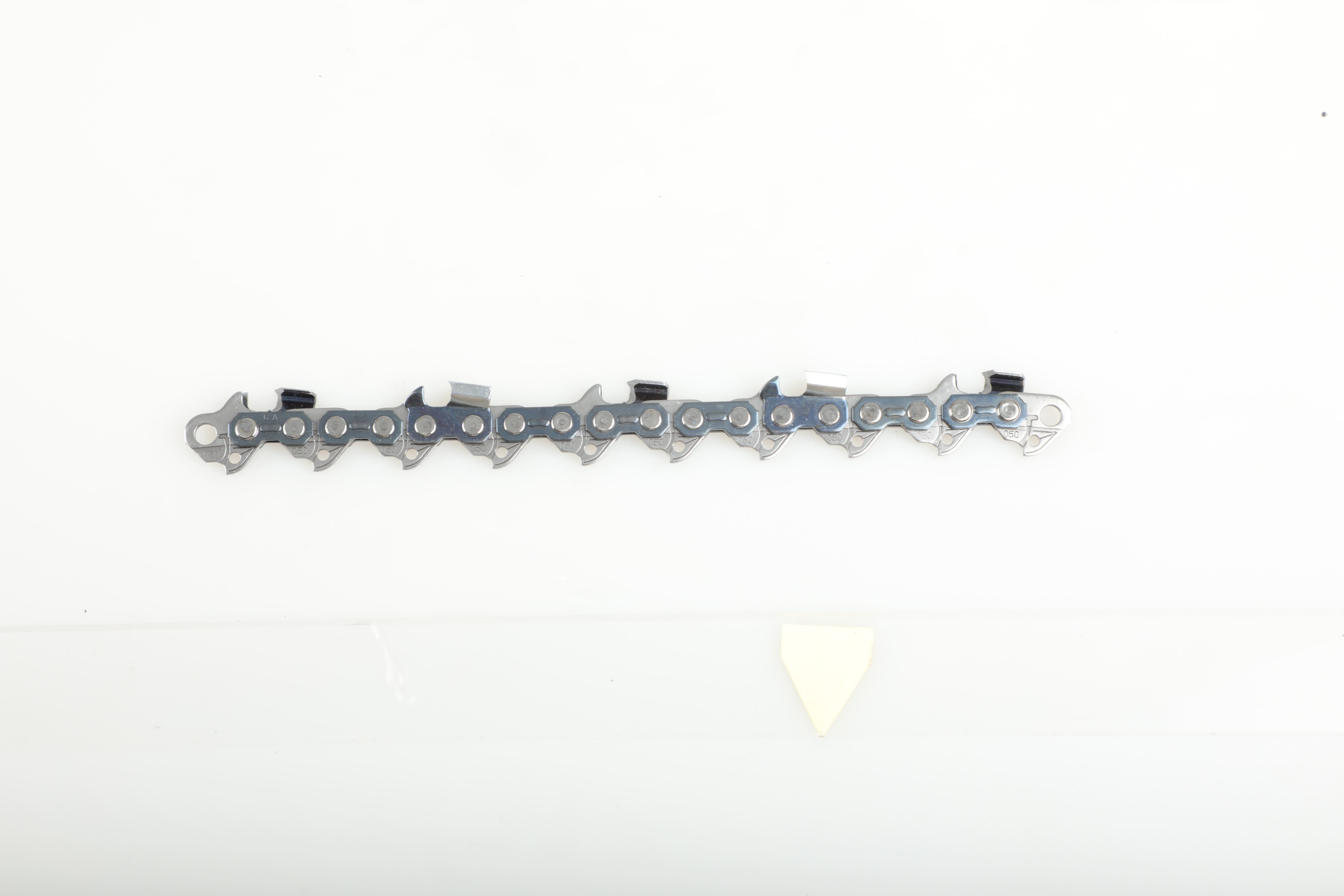
Quick answer: Chainsaw chain types by cutting job can be grouped into compact low-profile chains for suitable pruning tools, semi-chisel chains for varied or less-clean wood, full-chisel chains for compatible professional clean-wood cutting, and heavy-duty configurations for approved logging or harvester systems. Every type must first match pitch, gauge and drive-link count.
A type list is useful only when it leads to a correct decision. This guide starts with the job—pruning, firewood, farm cleanup, dirty wood or logging—and connects it to cutter and chassis considerations. The existing chainsaw chain types overview remains the broader taxonomy page.
- Match light-duty systems and controlled cuts.
- Balance edge tolerance and service routine.
- Use efficient cutters in supported conditions.
- Prioritize tolerance and frequent inspection.
- Define the machine and duty cycle.
Table of Contents
- Choose Chain for Pruning and Compact Saws
- Choose Chain for Firewood and Farm Maintenance
- Choose Chain for Clean Professional Cutting
- Choose Chain for Dirty or Contaminated Wood
- Choose Chain for Logging and Harvester Work
- Use a Five-Question Job-to-Chain Decision
- Frequently Asked Questions
- Conclusion
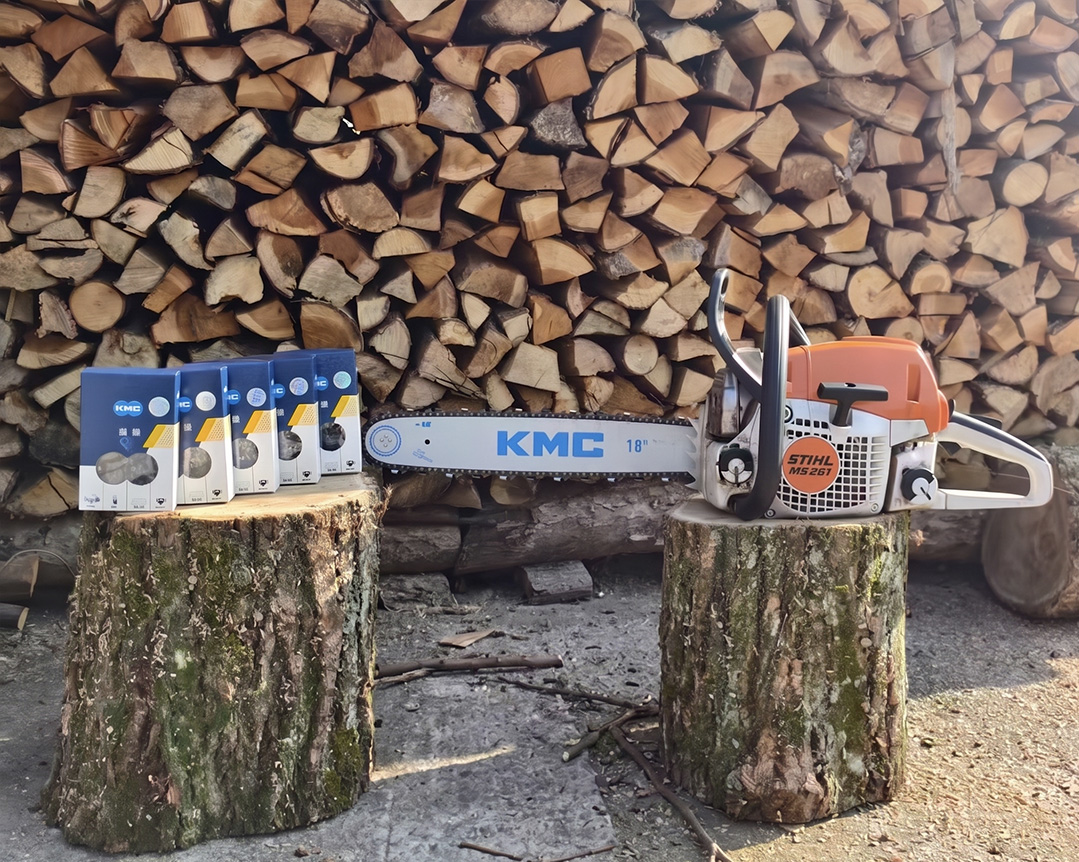
Cutting job helps choose cutter and chassis only after the chain fits the saw, sprocket and guide bar.
Choose Chain for Pruning and Compact Saws
Small saws may use 3/8 low profile or 1/4 chains in gauges and counts specific to the installed bar. For saw owners, retailers and buyers selecting chain for a specific job, this point should be connected to a written product or order requirement rather than left as a general preference. The response is easier to compare when every candidate uses the same terminology and confirms any exception before work begins.
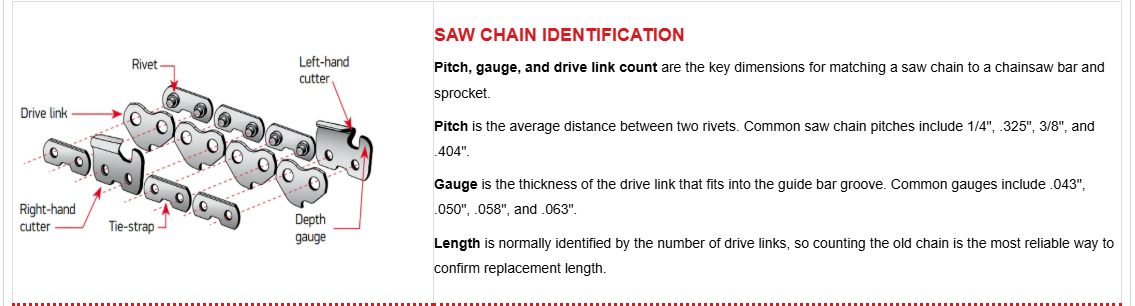
The practical action is to confirm the compact drive system, branch task and equipment guidance Keep the result with the quotation, sample or order record so later decisions use the approved version. When several chain configurations are involved, separate them by pitch, gauge and drive-link count instead of combining different loops in one description.
A common failure is using any small-looking chain because the tool is lightweight The guardrail is to verify pitch, gauge, count and full low-profile or 1/4 chassis This does not eliminate every supply or operating risk, but it makes the decision visible, reviewable and easier to correct before a full order is packed or used.
| Decision point | What to confirm | Why it matters |
|---|---|---|
| Pruning and compact work | Approved low-profile or 1/4 system | Light tool compatibility |
| Firewood and farm use | Often semi-chisel consideration | Varied wood and maintenance |
| Clean professional felling | Full-chisel consideration | Efficient clean-wood cutting |
| Dirty or dragged logs | More tolerant cutter consideration | Contamination affects the edge |
| Heavy logging or harvester | Approved 3/8 or .404 configuration | Machine-specific duty |
Choose Chain for Firewood and Farm Maintenance
Mixed bark, occasional dirt and varied operators often make maintenance predictability important. For saw owners, retailers and buyers selecting chain for a specific job, this point should be connected to a written product or order requirement rather than left as a general preference. The response is easier to compare when every candidate uses the same terminology and confirms any exception before work begins.
The practical action is to consider semi-chisel options after confirming saw fit and cutting conditions Keep the result with the quotation, sample or order record so later decisions use the approved version. When several chain configurations are involved, separate them by pitch, gauge and drive-link count instead of combining different loops in one description.
A common failure is choosing an aggressive cutter without a sharpening or inspection plan The guardrail is to prepare clean work areas, sharp spares and consistent service This does not eliminate every supply or operating risk, but it makes the decision visible, reviewable and easier to correct before a full order is packed or used.
Choose Chain for Clean Professional Cutting
Full chisel may be considered for compatible professional saws working in relatively clean wood. For saw owners, retailers and buyers selecting chain for a specific job, this point should be connected to a written product or order requirement rather than left as a general preference. The response is easier to compare when every candidate uses the same terminology and confirms any exception before work begins.
The practical action is to evaluate saw power, operator skill, wood and sharpening practice Keep the result with the quotation, sample or order record so later decisions use the approved version. When several chain configurations are involved, separate them by pitch, gauge and drive-link count instead of combining different loops in one description.
A common failure is treating full chisel as a universal professional upgrade The guardrail is to compare compatible chains in representative controlled work This does not eliminate every supply or operating risk, but it makes the decision visible, reviewable and easier to correct before a full order is packed or used.
Choose Chain for Dirty or Contaminated Wood
Semi-chisel profiles may retain a useful edge differently when bark carries grit or logs contact soil. For saw owners, retailers and buyers selecting chain for a specific job, this point should be connected to a written product or order requirement rather than left as a general preference. The response is easier to compare when every candidate uses the same terminology and confirms any exception before work begins.
The practical action is to remove contamination where possible and monitor cutter condition Keep the result with the quotation, sample or order record so later decisions use the approved version. When several chain configurations are involved, separate them by pitch, gauge and drive-link count instead of combining different loops in one description.
A common failure is assuming any cutter can safely cut unknown metal, stone or embedded debris The guardrail is to stop, inspect the wood and replace or sharpen after abnormal contact This does not eliminate every supply or operating risk, but it makes the decision visible, reviewable and easier to correct before a full order is packed or used.
Choose Chain for Logging and Harvester Work
Professional 3/8 and .404 configurations can serve demanding applications when the complete system matches. For saw owners, retailers and buyers selecting chain for a specific job, this point should be connected to a written product or order requirement rather than left as a general preference. The response is easier to compare when every candidate uses the same terminology and confirms any exception before work begins.
The practical action is to state machine, bar, sprocket, gauge, count or reel format and wood conditions Keep the result with the quotation, sample or order record so later decisions use the approved version. When several chain configurations are involved, separate them by pitch, gauge and drive-link count instead of combining different loops in one description.
A common failure is selecting only by pitch or the word heavy-duty The guardrail is to approve a machine-specific sample and maintenance plan This does not eliminate every supply or operating risk, but it makes the decision visible, reviewable and easier to correct before a full order is packed or used.
Use a Five-Question Job-to-Chain Decision
A practical decision asks what saw, what fit, what wood, what cutter behavior and what maintenance support are available. For saw owners, retailers and buyers selecting chain for a specific job, this point should be connected to a written product or order requirement rather than left as a general preference. The response is easier to compare when every candidate uses the same terminology and confirms any exception before work begins.
The practical action is to record the five answers on a retail or purchasing checklist Keep the result with the quotation, sample or order record so later decisions use the approved version. When several chain configurations are involved, separate them by pitch, gauge and drive-link count instead of combining different loops in one description.
A common failure is letting one marketing adjective replace the complete evaluation The guardrail is to stop when compatibility information is missing and seek qualified help This does not eliminate every supply or operating risk, but it makes the decision visible, reviewable and easier to correct before a full order is packed or used.
Frequently Asked Questions
Which chain type is best for pruning?
Use the chain system approved for the pruning saw and guide bar. Compact tools may use 3/8 low profile or 1/4 configurations, but gauge and drive-link count must also match.
Which type handles dirty wood better?
Semi chisel is often considered because the rounded working corner may tolerate imperfect conditions differently. Avoid soil, stone and metal, and inspect the chain after contamination.
Which chain type is used for professional logging?
Compatible professional 3/8 or .404 configurations may be used, with cutter form chosen for the wood and maintenance system. The exact saw, bar, sprocket, gauge and count determine compatibility.
Where can I compare KMC chain categories?
Browse 3/8 LP, .325, 3/8, .404 and 1/4 categories.
Conclusion
Use chainsaw chain types by cutting job only after confirming physical fit. Match compact systems to pruning, balance cutter tolerance for farm and dirty wood, consider full chisel for clean professional cutting and define heavy-duty machines precisely. The job guides cutter choice; pitch, gauge and drive links determine whether the loop fits.