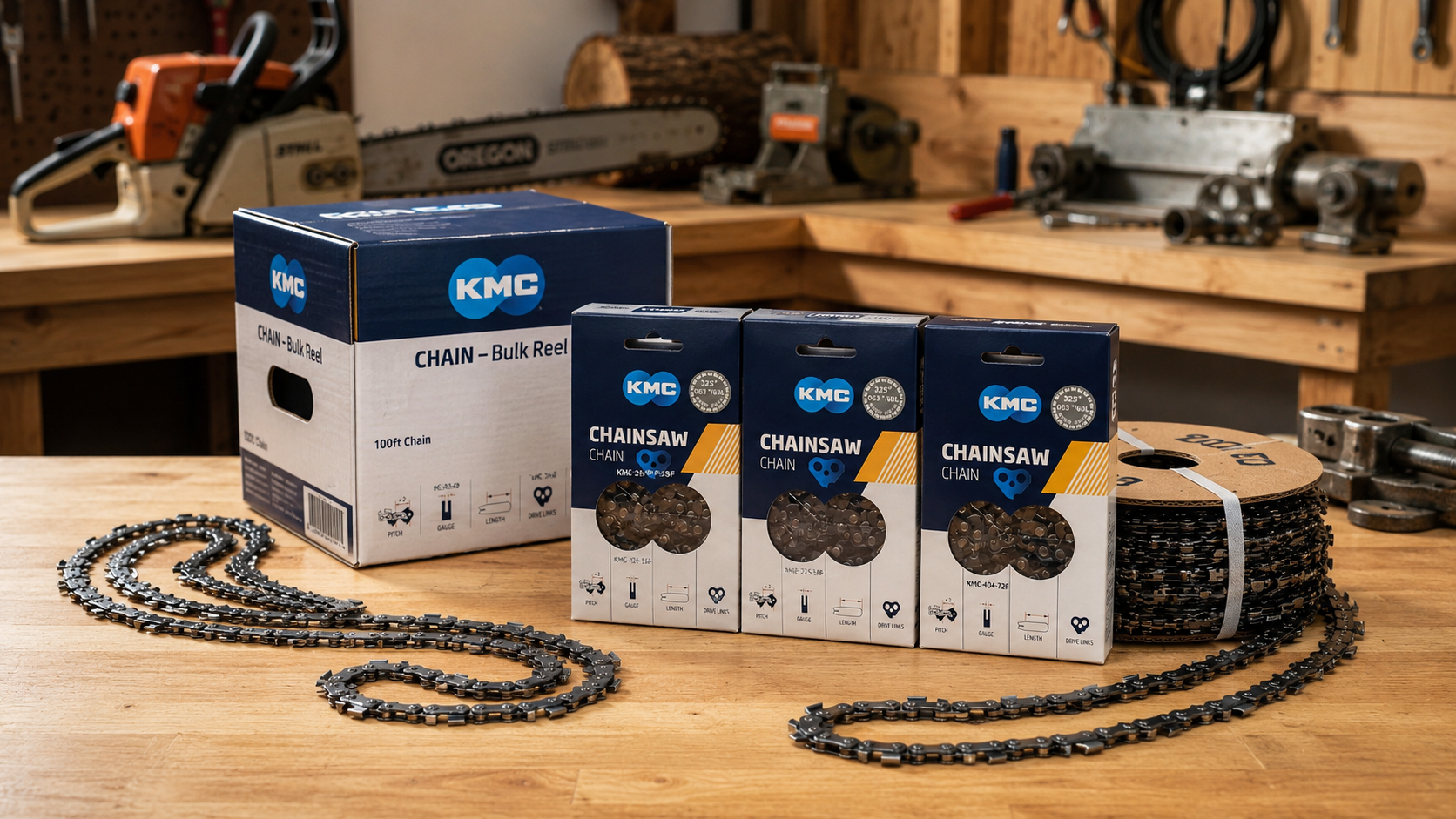
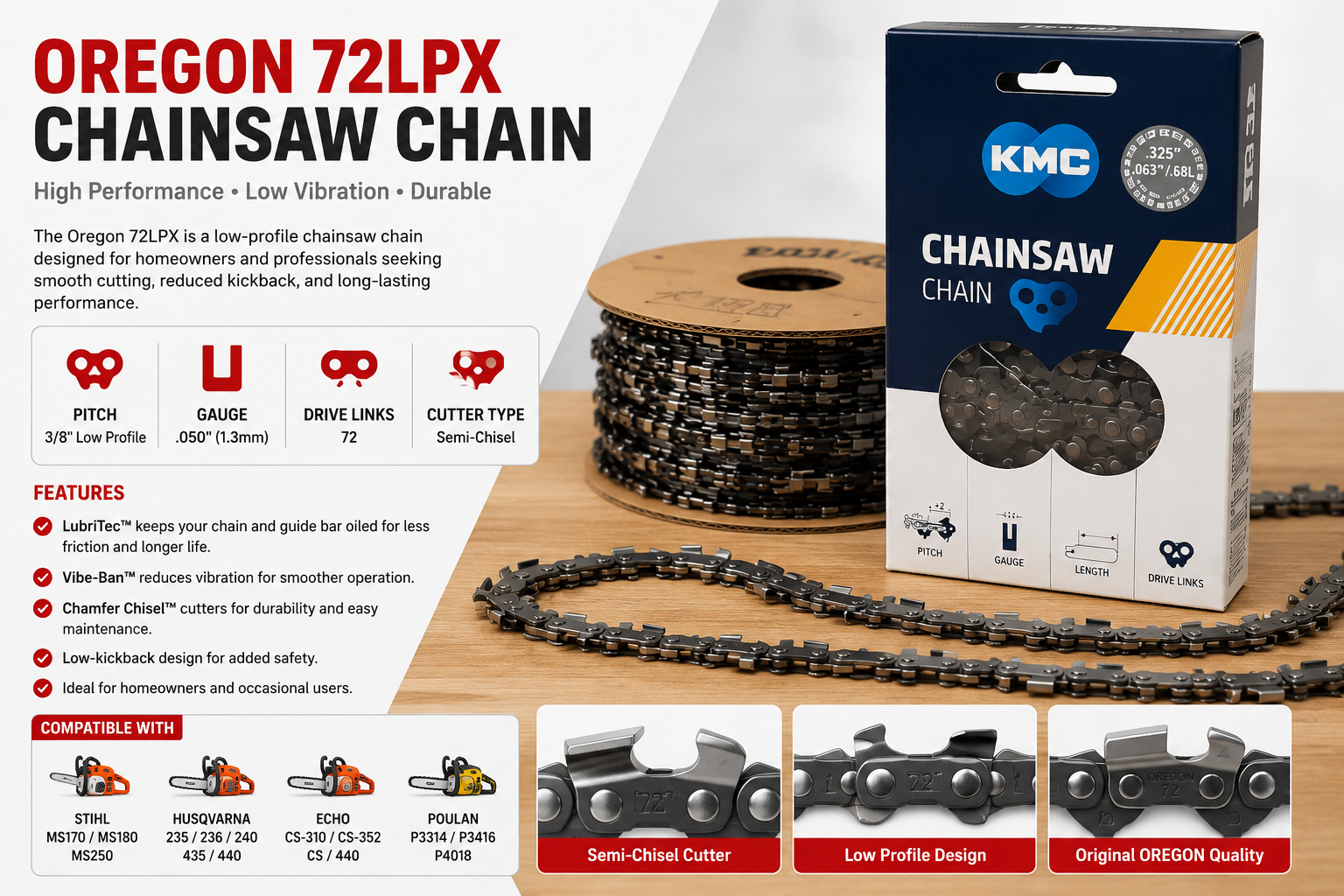
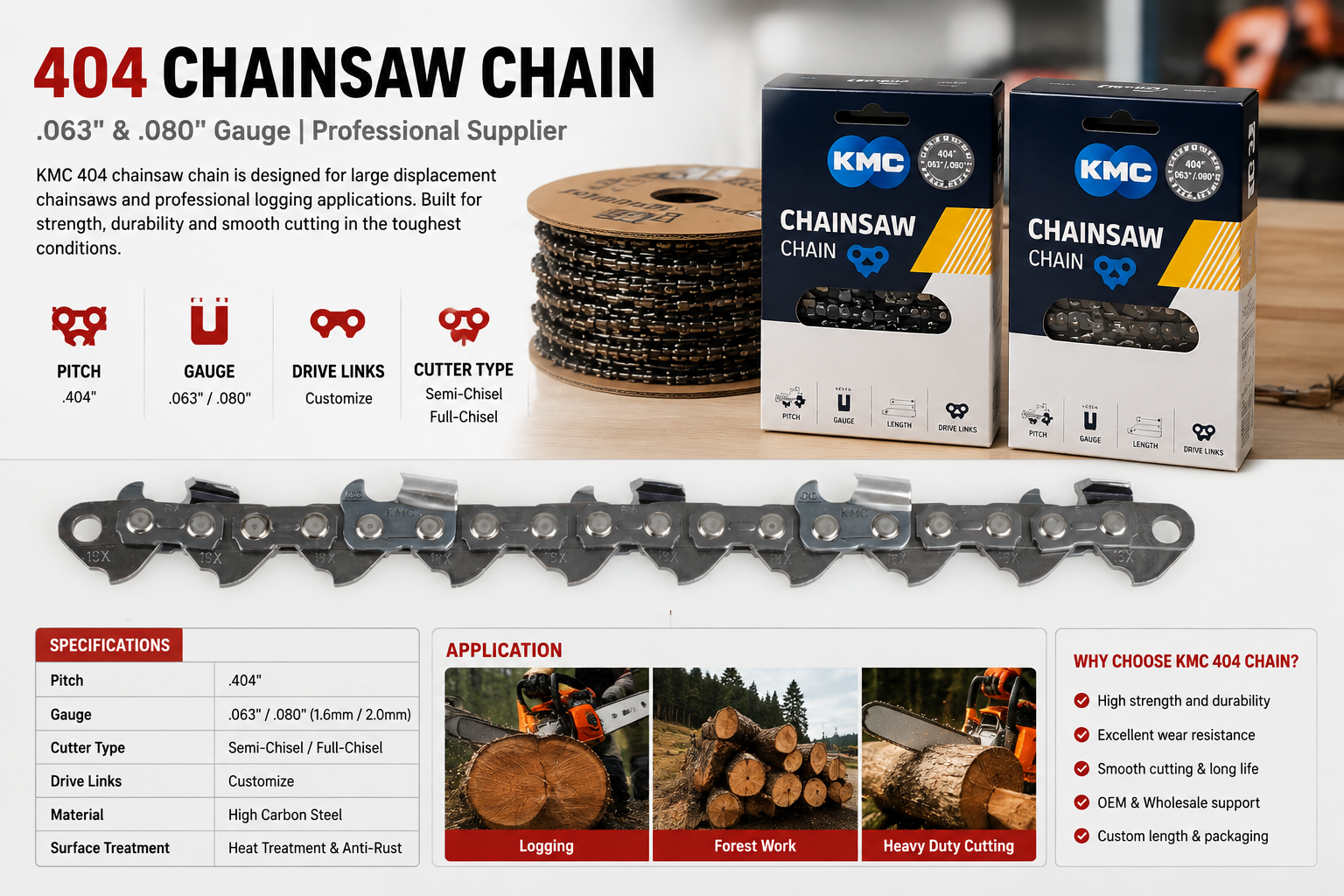
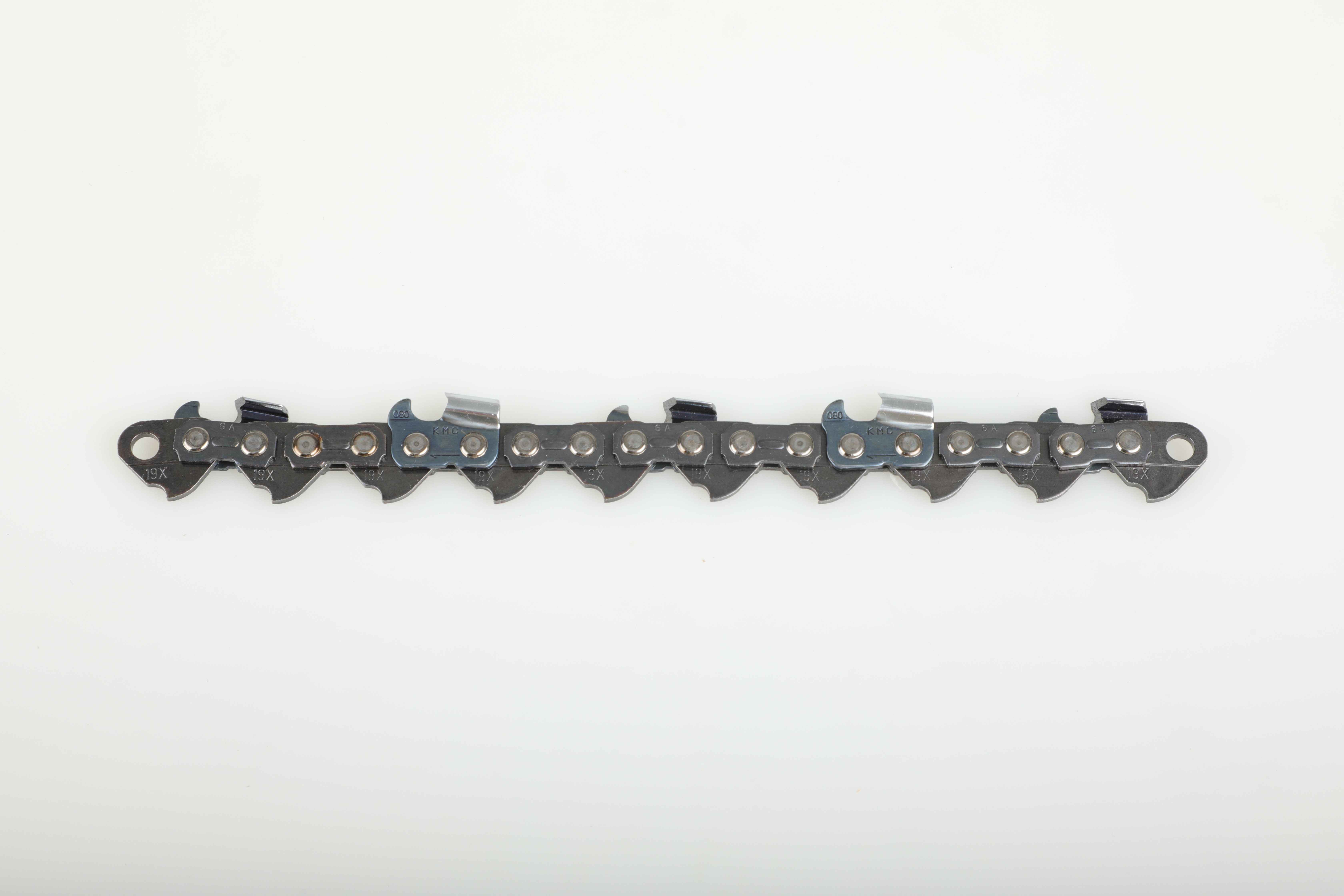
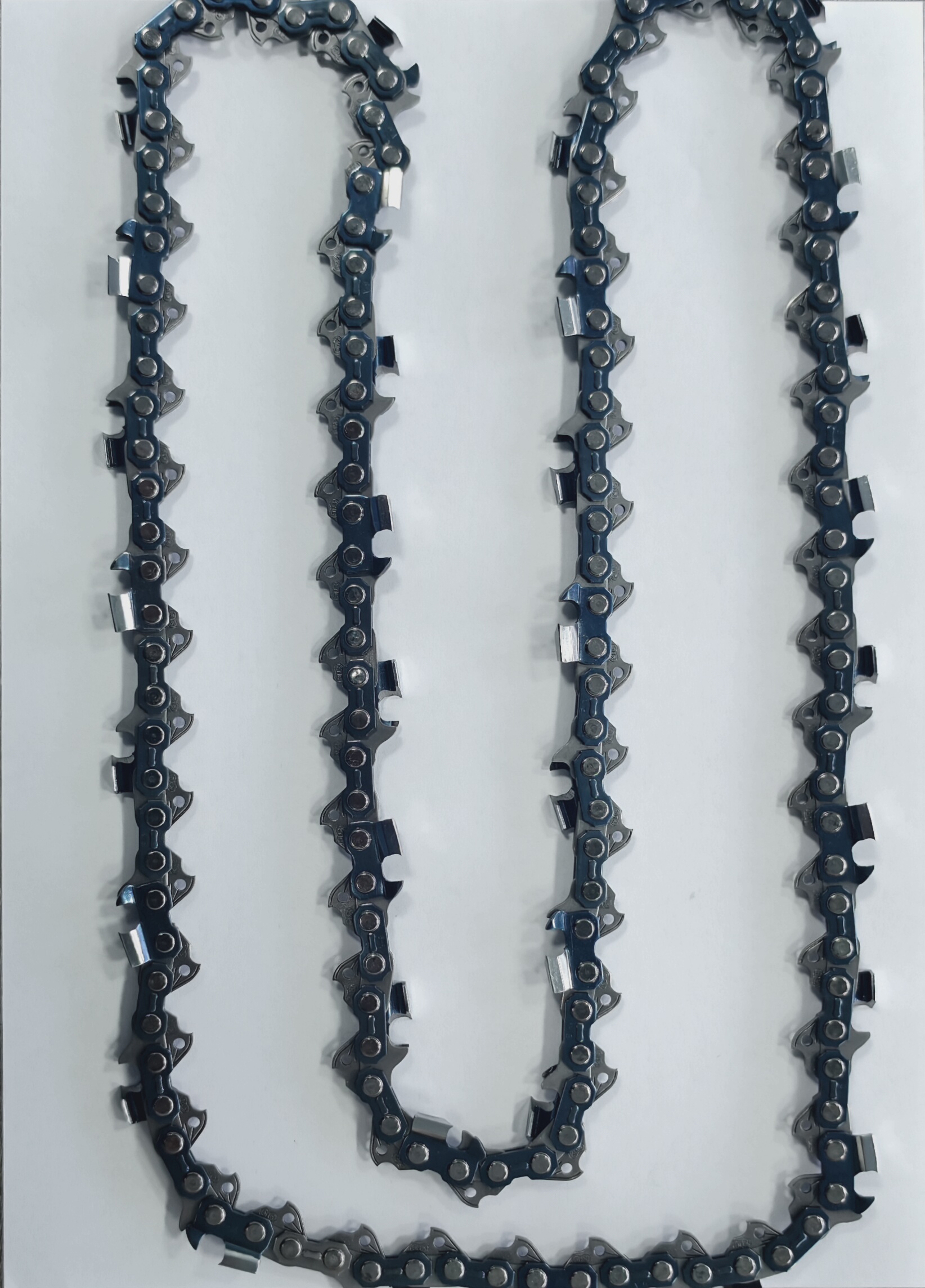
Quick answer: A 3/8 chainsaw chain for professional cutting must match the saw, sprocket and guide bar in pitch, gauge and drive-link count. After fit is confirmed, choose cutter profile and sequence for the wood condition, saw power, operator skill and maintenance system. Standard 3/8 professional chain should not be confused with 3/8 low profile.
Professional users need repeatable fit, cutting behavior and service practice across demanding work. The word professional does not remove the compatibility checks or make one cutter ideal for every site. This guide organizes the choice from hardware fit through operating conditions and fleet inventory.
- Distinguish standard 3/8 from 3/8 LP.
- Complete the physical loop definition.
- Match cutter form to wood and maintenance.
- Review the complete cutting system.
- Record conditions before comparing results.
Table of Contents
- Confirm Standard 3/8 Drive-System Fit
- Match Gauge and Exact Drive-Link Count
- Choose Full Chisel or Semi Chisel Deliberately
- Evaluate Sequence, Depth Gauges and Chain Condition
- Test the Chain in Representative Wood
- Standardize Professional Fleet Inventory
- Frequently Asked Questions
- Conclusion
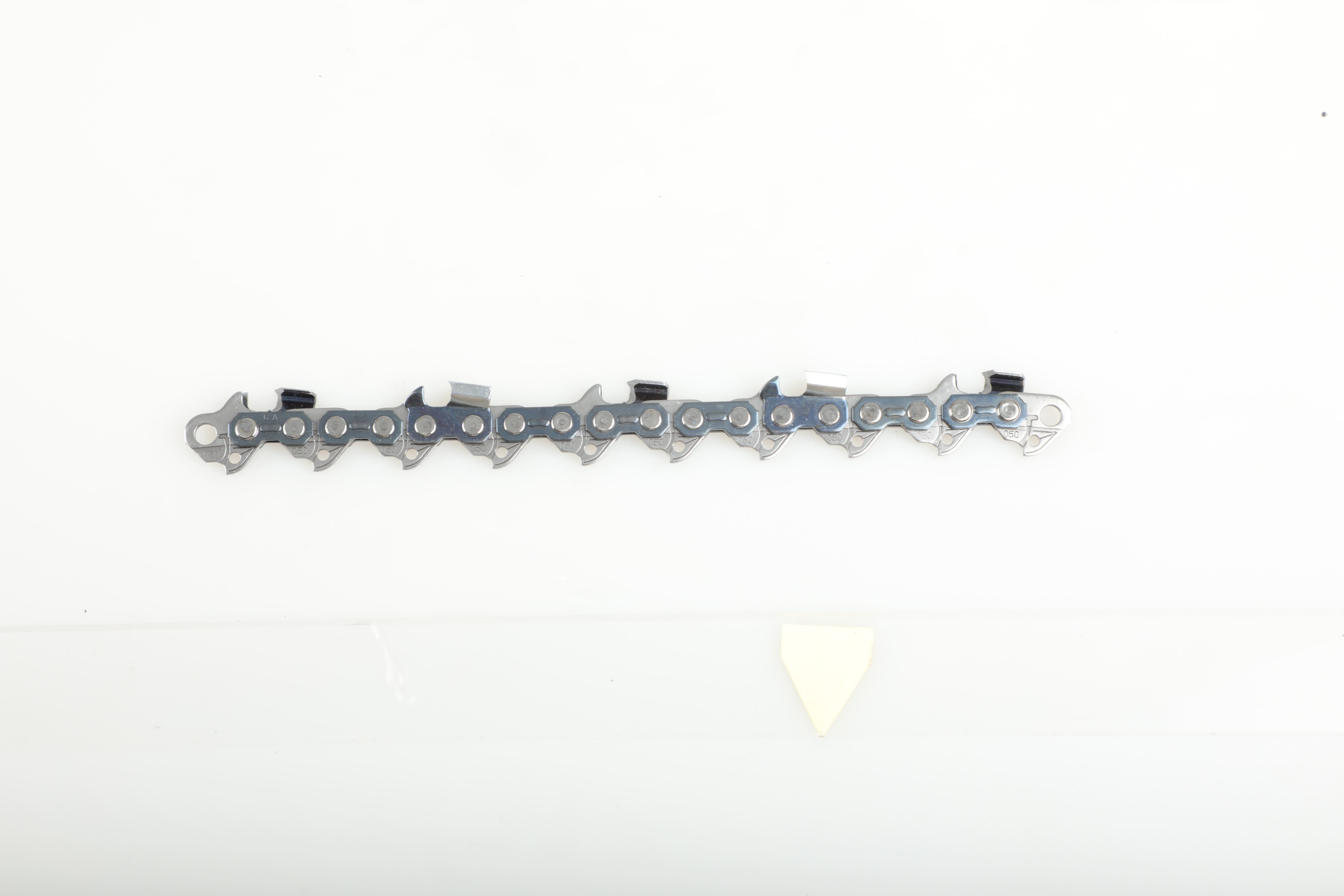
Professional selection begins with the complete drive-system fit and then considers cutter form, wood and maintenance.
Confirm Standard 3/8 Drive-System Fit
The sprocket, bar and chain must belong to the same approved pitch system. For professional cutters, forestry suppliers and service shops, this point should be connected to a written product or order requirement rather than left as a general preference. The response is easier to compare when every candidate uses the same terminology and confirms any exception before work begins.
The practical action is to review equipment markings and current components before selecting the category Keep the result with the quotation, sample or order record so later decisions use the approved version. When several chain configurations are involved, separate them by pitch, gauge and drive-link count instead of combining different loops in one description.
A common failure is ordering low-profile chain because the fraction appears identical The guardrail is to state standard 3/8 explicitly and verify the chassis This does not eliminate every supply or operating risk, but it makes the decision visible, reviewable and easier to correct before a full order is packed or used.
| Decision point | What to confirm | Why it matters |
|---|---|---|
| Pitch | Match sprocket and bar system | Controls drive spacing |
| Gauge | Match the guide-bar groove | Controls drive-link fit |
| Drive links | Use the exact count | Controls loop length |
| Chain form | Match saw class and job | Affects use and maintenance |
| Identification | Keep one code per configuration | Prevents mixed replacements |
Match Gauge and Exact Drive-Link Count
Professional 3/8 products may be available in different gauges and loop counts. For professional cutters, forestry suppliers and service shops, this point should be connected to a written product or order requirement rather than left as a general preference. The response is easier to compare when every candidate uses the same terminology and confirms any exception before work begins.
The practical action is to read the bar groove gauge and count or verify the required drive links Keep the result with the quotation, sample or order record so later decisions use the approved version. When several chain configurations are involved, separate them by pitch, gauge and drive-link count instead of combining different loops in one description.
A common failure is choosing from nominal bar length or pitch alone The guardrail is to use one product code for every gauge-and-count combination This does not eliminate every supply or operating risk, but it makes the decision visible, reviewable and easier to correct before a full order is packed or used.
Choose Full Chisel or Semi Chisel Deliberately
Full chisel may suit clean, controlled professional cutting, while semi chisel may tolerate less ideal conditions differently. For professional cutters, forestry suppliers and service shops, this point should be connected to a written product or order requirement rather than left as a general preference. The response is easier to compare when every candidate uses the same terminology and confirms any exception before work begins.
The practical action is to compare the full chisel and semi chisel guide with the actual job Keep the result with the quotation, sample or order record so later decisions use the approved version. When several chain configurations are involved, separate them by pitch, gauge and drive-link count instead of combining different loops in one description.
A common failure is treating cutter choice as a universal speed ranking The guardrail is to consider contamination, sharpening skill, workflow and equipment guidance This does not eliminate every supply or operating risk, but it makes the decision visible, reviewable and easier to correct before a full order is packed or used.
Evaluate Sequence, Depth Gauges and Chain Condition
Sequence and maintained depth-gauge relationship influence how cutters engage the wood. For professional cutters, forestry suppliers and service shops, this point should be connected to a written product or order requirement rather than left as a general preference. The response is easier to compare when every candidate uses the same terminology and confirms any exception before work begins.
The practical action is to use the approved product configuration and maintain cutters consistently Keep the result with the quotation, sample or order record so later decisions use the approved version. When several chain configurations are involved, separate them by pitch, gauge and drive-link count instead of combining different loops in one description.
A common failure is mixing components or altering depth gauges without the chain guidance The guardrail is to follow the chain and equipment instructions and inspect frequently This does not eliminate every supply or operating risk, but it makes the decision visible, reviewable and easier to correct before a full order is packed or used.
Test the Chain in Representative Wood
Wood species, cleanliness, diameter, moisture and operator technique affect observed cutting behavior. For professional cutters, forestry suppliers and service shops, this point should be connected to a written product or order requirement rather than left as a general preference. The response is easier to compare when every candidate uses the same terminology and confirms any exception before work begins.
The practical action is to run controlled comparisons on compatible, similarly maintained chains Keep the result with the quotation, sample or order record so later decisions use the approved version. When several chain configurations are involved, separate them by pitch, gauge and drive-link count instead of combining different loops in one description.
A common failure is turning one short field test into an absolute performance claim The guardrail is to document conditions and limit conclusions to the tested setup This does not eliminate every supply or operating risk, but it makes the decision visible, reviewable and easier to correct before a full order is packed or used.
Standardize Professional Fleet Inventory
A fleet benefits from controlled SKUs, bar and sprocket records, issue procedures and maintenance standards. For professional cutters, forestry suppliers and service shops, this point should be connected to a written product or order requirement rather than left as a general preference. The response is easier to compare when every candidate uses the same terminology and confirms any exception before work begins.
The practical action is to label every loop and storage location with pitch, gauge, count and cutter form Keep the result with the quotation, sample or order record so later decisions use the approved version. When several chain configurations are involved, separate them by pitch, gauge and drive-link count instead of combining different loops in one description.
A common failure is mixing similar chains or changing cutters without updating service practice The guardrail is to approve alternatives and train crews before general release This does not eliminate every supply or operating risk, but it makes the decision visible, reviewable and easier to correct before a full order is packed or used.
Frequently Asked Questions
Is professional 3/8 chain the same as 3/8 low profile?
No. They are distinct chain systems despite sharing the fraction. Use the pitch and chassis specified for the saw, sprocket and bar.
Which gauge should a 3/8 professional chain use?
Use the gauge specified for the installed guide bar and equipment system. Pitch alone does not determine gauge, and different 3/8 products may use different values.
Is full chisel always best for professional cutting?
No. Cutter choice depends on wood cleanliness, saw class, maintenance, operator skill and the job. Semi chisel may be preferable in conditions where edge durability and service routine matter more.
Where can buyers review KMC 3/8 products?
Visit the 3/8 chainsaw chain category and send gauge, drive-link counts and application details through the contact page.
Conclusion
A 3/8 chainsaw chain for professional cutting should be selected in layers: standard 3/8 system, correct gauge and count, suitable cutter and sequence, representative testing and controlled fleet maintenance. Fit is mandatory; professional performance depends on the complete operating system.