Quick answer: Chainsaw chain gauge is the thickness of the drive-link portion that runs inside the guide-bar groove. It is commonly identified by inch values such as .043, .050, .058 or .063, often with millimeter equivalents. The correct gauge must match the installed serviceable guide bar; pitch and drive-link count are separate compatibility values.
Gauge is small in physical size but decisive in replacement fit. A chain can have the correct pitch and loop length yet still be unsuitable for the bar because the drive links are too thick or too narrow. This article explains the term, verification methods and ordering controls.
- Focus on the drive link inside the groove.
- Use the current installed bar.
- Prefer verified markings when available.
- Stop instead of forcing the chain.
- Complete all three fit checks.
Table of Contents
- Understand What Chainsaw Chain Gauge Measures
- Read Gauge from the Guide Bar or Equipment Data
- Measure Gauge Only with an Appropriate Method
- Recognize Wrong-Gauge Fit Symptoms
- Pair Gauge with Pitch and Drive-Link Count
- Control Gauge in Retail and Wholesale Inventory
- Frequently Asked Questions
- Conclusion
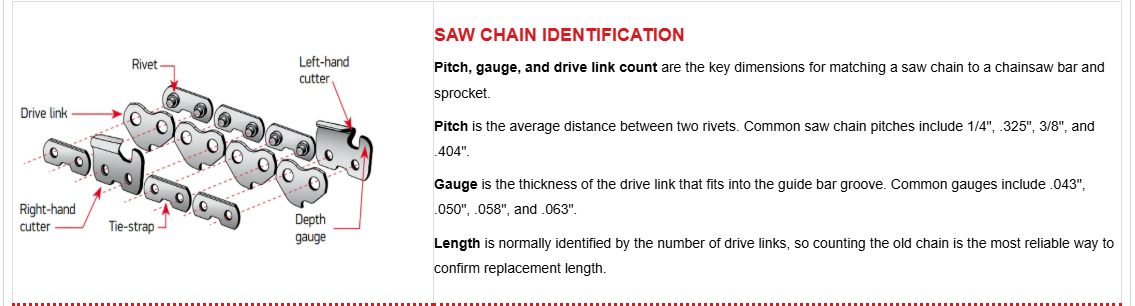
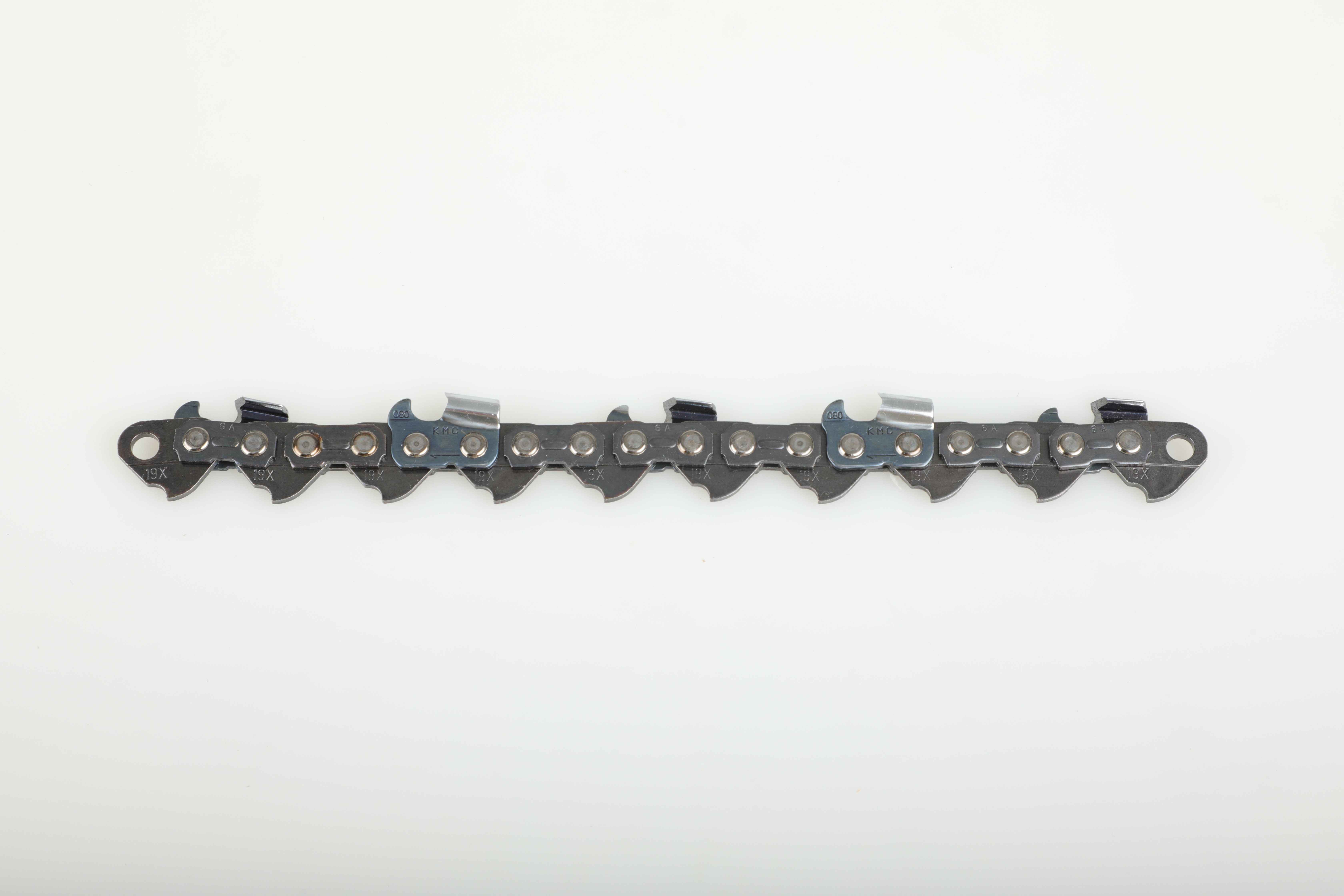
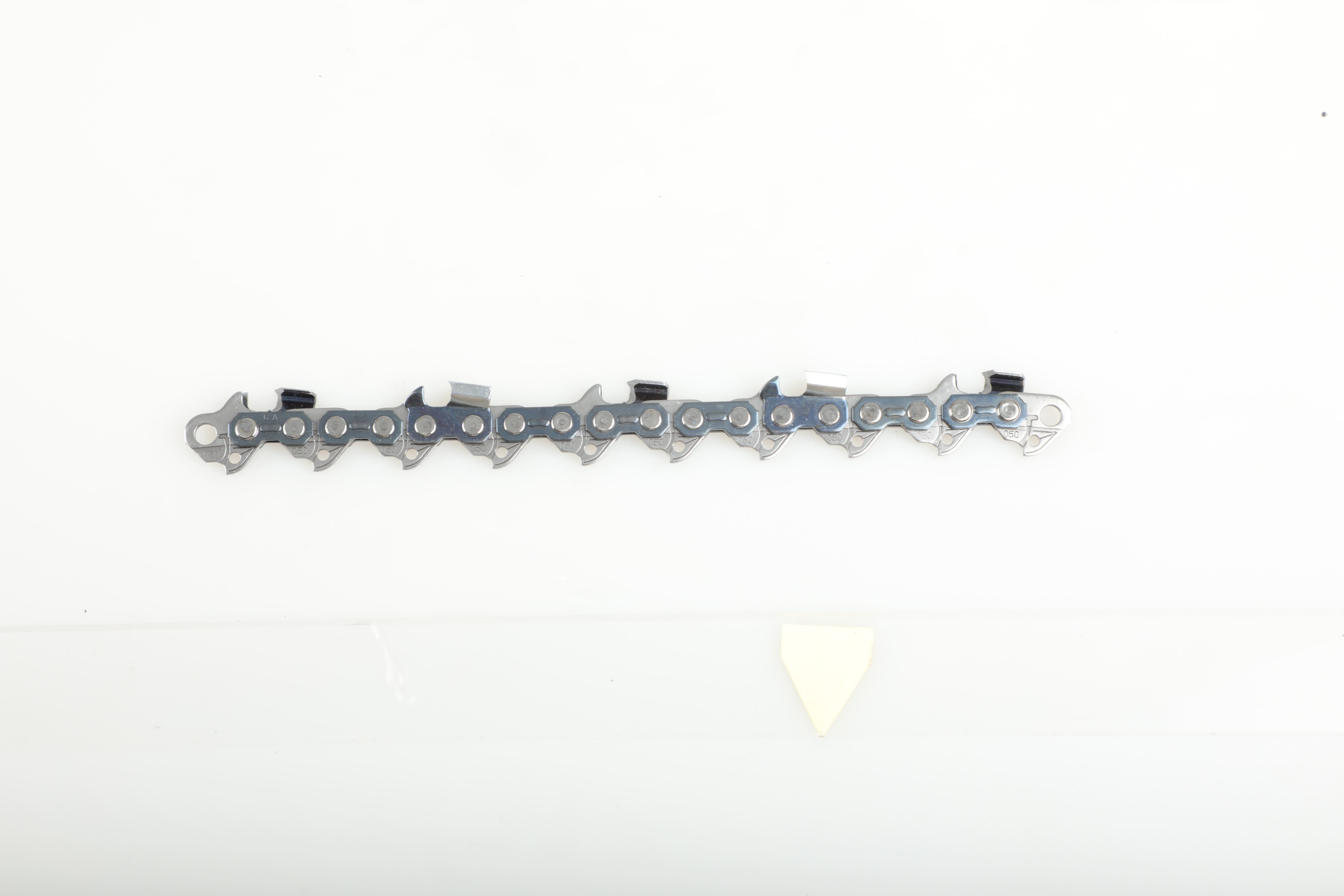
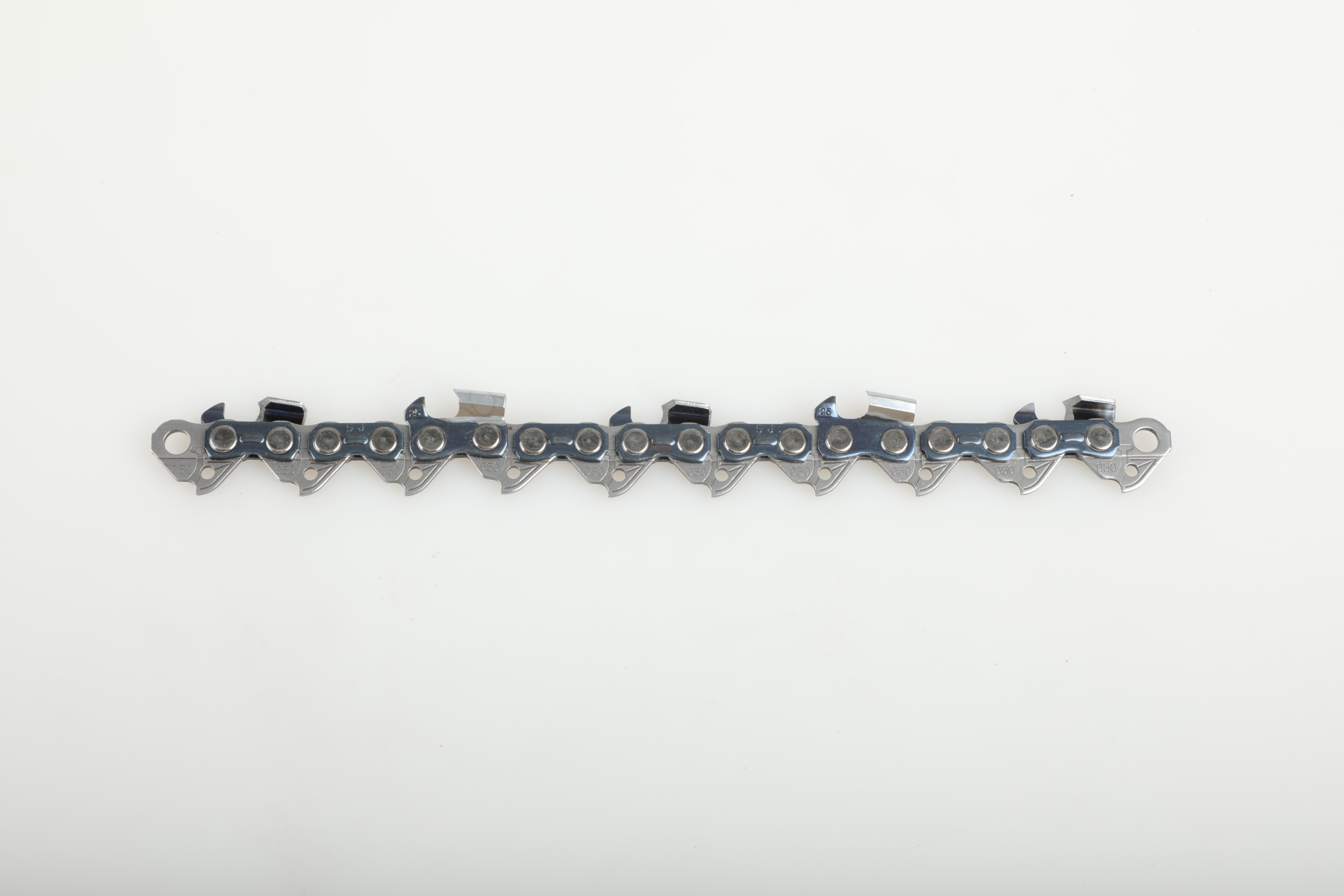
Gauge describes the thickness of the drive-link portion that runs in the guide-bar groove.
Understand What Chainsaw Chain Gauge Measures
Gauge does not describe cutter width, pitch, bar length or a complete strength rating. For replacement-chain buyers, service shops and distributors, this point should be connected to a written product or order requirement rather than left as a general preference. The response is easier to compare when every candidate uses the same terminology and confirms any exception before work begins.
The practical action is to identify the lower drive-link portion and read the product or bar specification Keep the result with the quotation, sample or order record so later decisions use the approved version. When several chain configurations are involved, separate them by pitch, gauge and drive-link count instead of combining different loops in one description.
A common failure is using the visible cutter as the measurement reference The guardrail is to keep gauge as its own field in every chart and order This does not eliminate every supply or operating risk, but it makes the decision visible, reviewable and easier to correct before a full order is packed or used.
| Decision point | What to confirm | Why it matters |
|---|---|---|
| .043 inch | Use with corresponding narrow groove | Common in some compact systems |
| .050 inch | Use only where specified | Available across several pitches |
| .058 inch | Use only where specified | Separate product configuration |
| .063 inch | Use only where specified | Separate product configuration |
| Millimeter units | Use verified equivalents | Avoids conversion confusion |
Read Gauge from the Guide Bar or Equipment Data
A serviceable guide bar normally carries or corresponds to a specified groove gauge. For replacement-chain buyers, service shops and distributors, this point should be connected to a written product or order requirement rather than left as a general preference. The response is easier to compare when every candidate uses the same terminology and confirms any exception before work begins.
The practical action is to clean the marking area and compare the saw, bar and old package information Keep the result with the quotation, sample or order record so later decisions use the approved version. When several chain configurations are involved, separate them by pitch, gauge and drive-link count instead of combining different loops in one description.
A common failure is assuming the saw still uses its original bar or trusting an unrelated old chain The guardrail is to resolve conflicting evidence before purchasing This does not eliminate every supply or operating risk, but it makes the decision visible, reviewable and easier to correct before a full order is packed or used.
Measure Gauge Only with an Appropriate Method
Small dimensional differences and wear make casual ruler measurements unreliable. For replacement-chain buyers, service shops and distributors, this point should be connected to a written product or order requirement rather than left as a general preference. The response is easier to compare when every candidate uses the same terminology and confirms any exception before work begins.
The practical action is to use a suitable precision method or qualified service when markings are missing Keep the result with the quotation, sample or order record so later decisions use the approved version. When several chain configurations are involved, separate them by pitch, gauge and drive-link count instead of combining different loops in one description.
A common failure is forcing feeler tools, guessing visually or measuring a damaged drive link The guardrail is to take several checks and compare with recognized gauge categories This does not eliminate every supply or operating risk, but it makes the decision visible, reviewable and easier to correct before a full order is packed or used.
Recognize Wrong-Gauge Fit Symptoms
A thick drive link may not enter or move in the groove, while an incorrect narrow link may have excessive side movement. For replacement-chain buyers, service shops and distributors, this point should be connected to a written product or order requirement rather than left as a general preference. The response is easier to compare when every candidate uses the same terminology and confirms any exception before work begins.
The practical action is to inspect the bar groove, burrs, wear and drive links when fit is abnormal Keep the result with the quotation, sample or order record so later decisions use the approved version. When several chain configurations are involved, separate them by pitch, gauge and drive-link count instead of combining different loops in one description.
A common failure is filing drive links or forcing installation to make an incompatible chain fit The guardrail is to replace or service components using approved dimensions This does not eliminate every supply or operating risk, but it makes the decision visible, reviewable and easier to correct before a full order is packed or used.
Pair Gauge with Pitch and Drive-Link Count
Gauge alone does not identify the drive spacing or loop length. For replacement-chain buyers, service shops and distributors, this point should be connected to a written product or order requirement rather than left as a general preference. The response is easier to compare when every candidate uses the same terminology and confirms any exception before work begins.
The practical action is to record pitch, gauge and exact count together and use the specifications guide Keep the result with the quotation, sample or order record so later decisions use the approved version. When several chain configurations are involved, separate them by pitch, gauge and drive-link count instead of combining different loops in one description.
A common failure is ordering a .050 chain without stating whether it is 3/8 LP, .325, 3/8 or another system The guardrail is to use one SKU for every complete configuration This does not eliminate every supply or operating risk, but it makes the decision visible, reviewable and easier to correct before a full order is packed or used.
Control Gauge in Retail and Wholesale Inventory
Packages, cartons and storage bins should show gauge in consistent units and positions. For replacement-chain buyers, service shops and distributors, this point should be connected to a written product or order requirement rather than left as a general preference. The response is easier to compare when every candidate uses the same terminology and confirms any exception before work begins.
The practical action is to use distinct product codes, barcodes and receiving samples Keep the result with the quotation, sample or order record so later decisions use the approved version. When several chain configurations are involved, separate them by pitch, gauge and drive-link count instead of combining different loops in one description.
A common failure is placing .050, .058 and .063 loops under one broad pitch label The guardrail is to transfer product identity to opened packages and workshop locations This does not eliminate every supply or operating risk, but it makes the decision visible, reviewable and easier to correct before a full order is packed or used.
Frequently Asked Questions
Is gauge the width of the cutter?
No. Gauge refers to the drive-link portion that runs in the guide-bar groove. Cutter dimensions and cutter profile are separate product characteristics.
Can a .050 chain fit a .058 bar?
Do not assume it can. The chain gauge should match the bar-groove specification. A mismatch can create poor guidance or abnormal fit, especially when components are worn.
Does pitch determine gauge?
No. The same pitch category may be available in more than one gauge. Confirm the guide bar, then match pitch, gauge and drive-link count as a complete set.
Where can I request a gauge-specific chain?
Select the relevant KMC product category and send pitch, gauge, drive links, cutter form and quantity through the contact page.
Conclusion
Chainsaw chain gauge is a bar-groove fit value, not a general performance label. Read the installed bar, measure carefully only when necessary, stop when fit is abnormal and pair gauge with pitch and drive-link count. Clear gauge identification protects both installation and inventory accuracy.