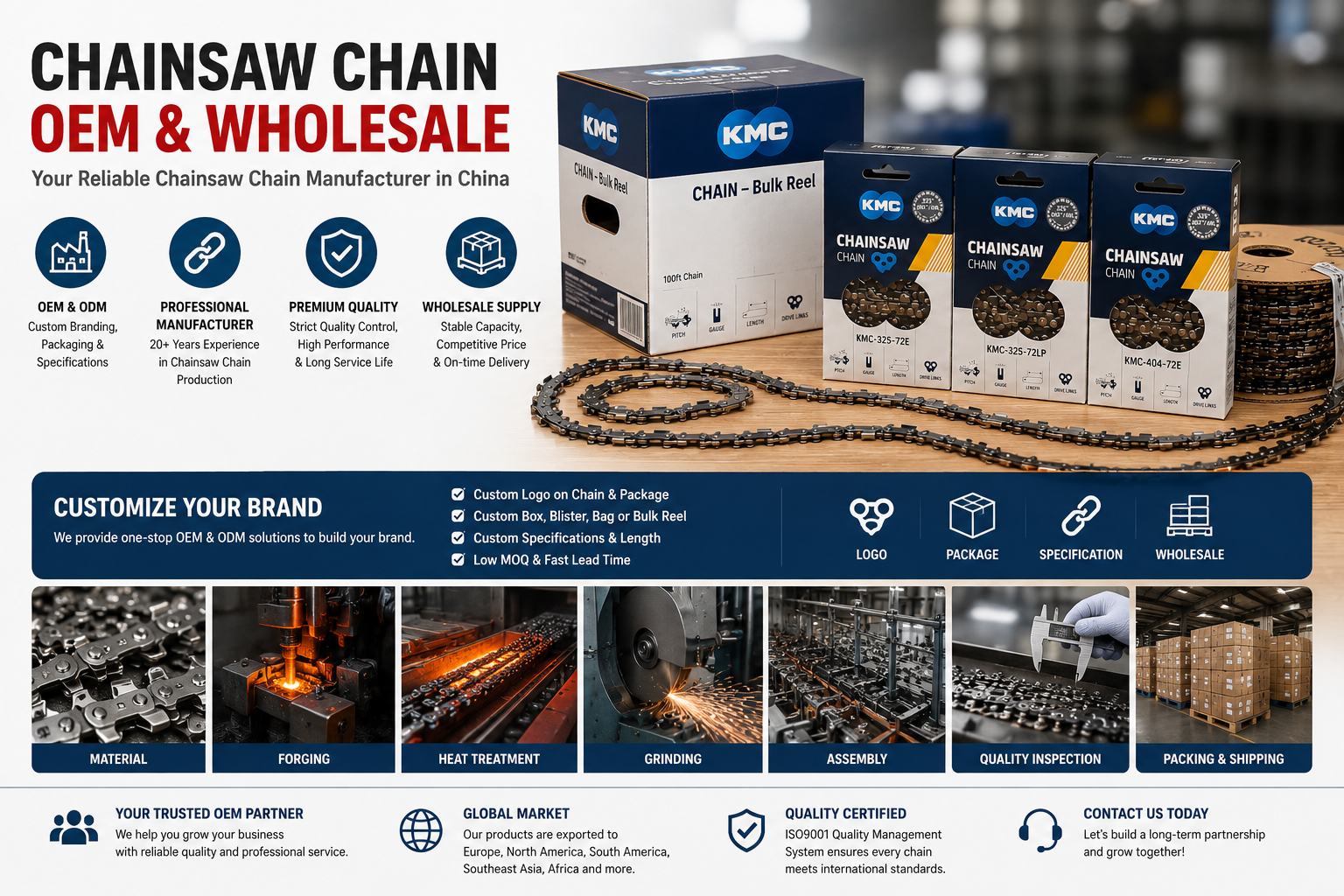
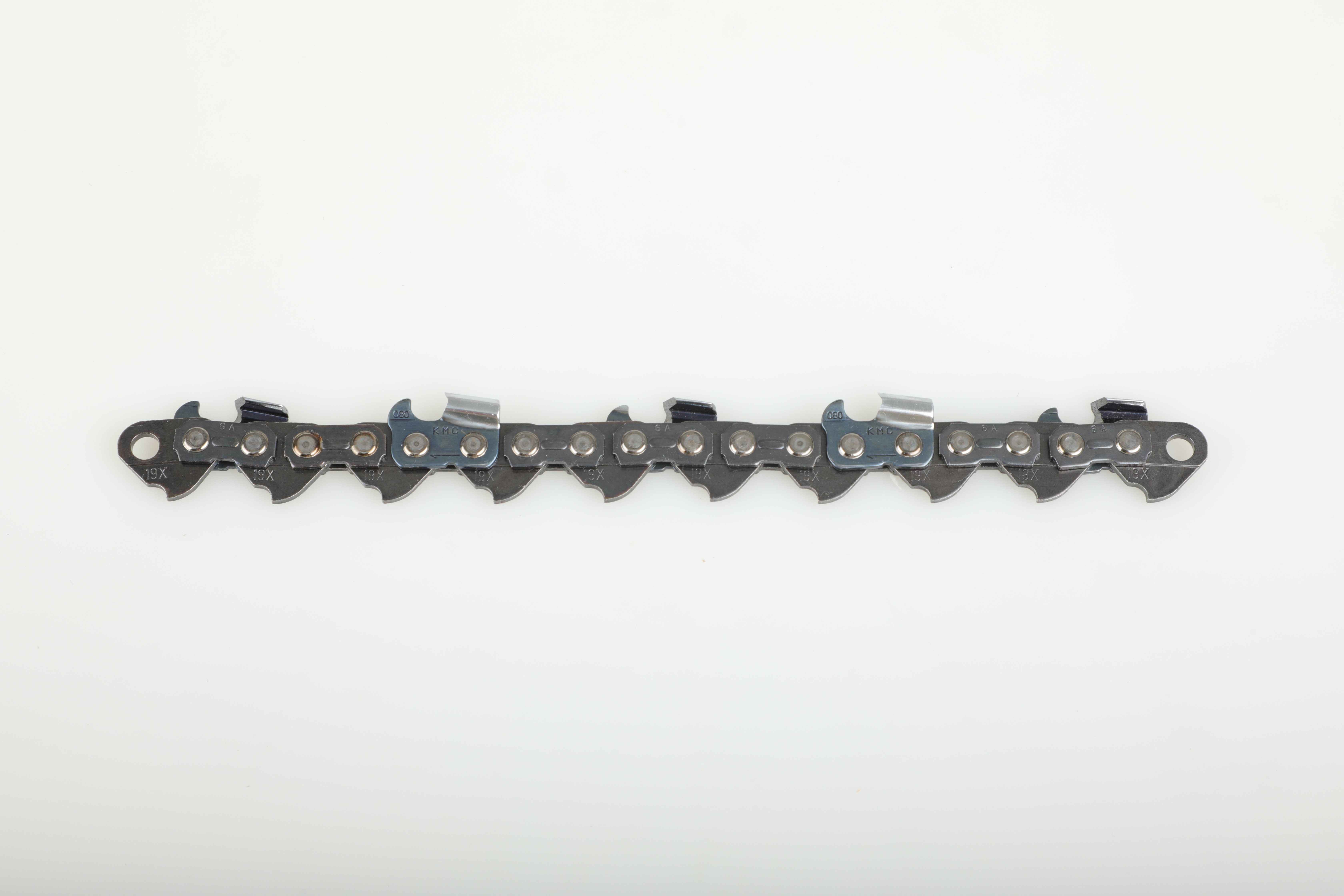
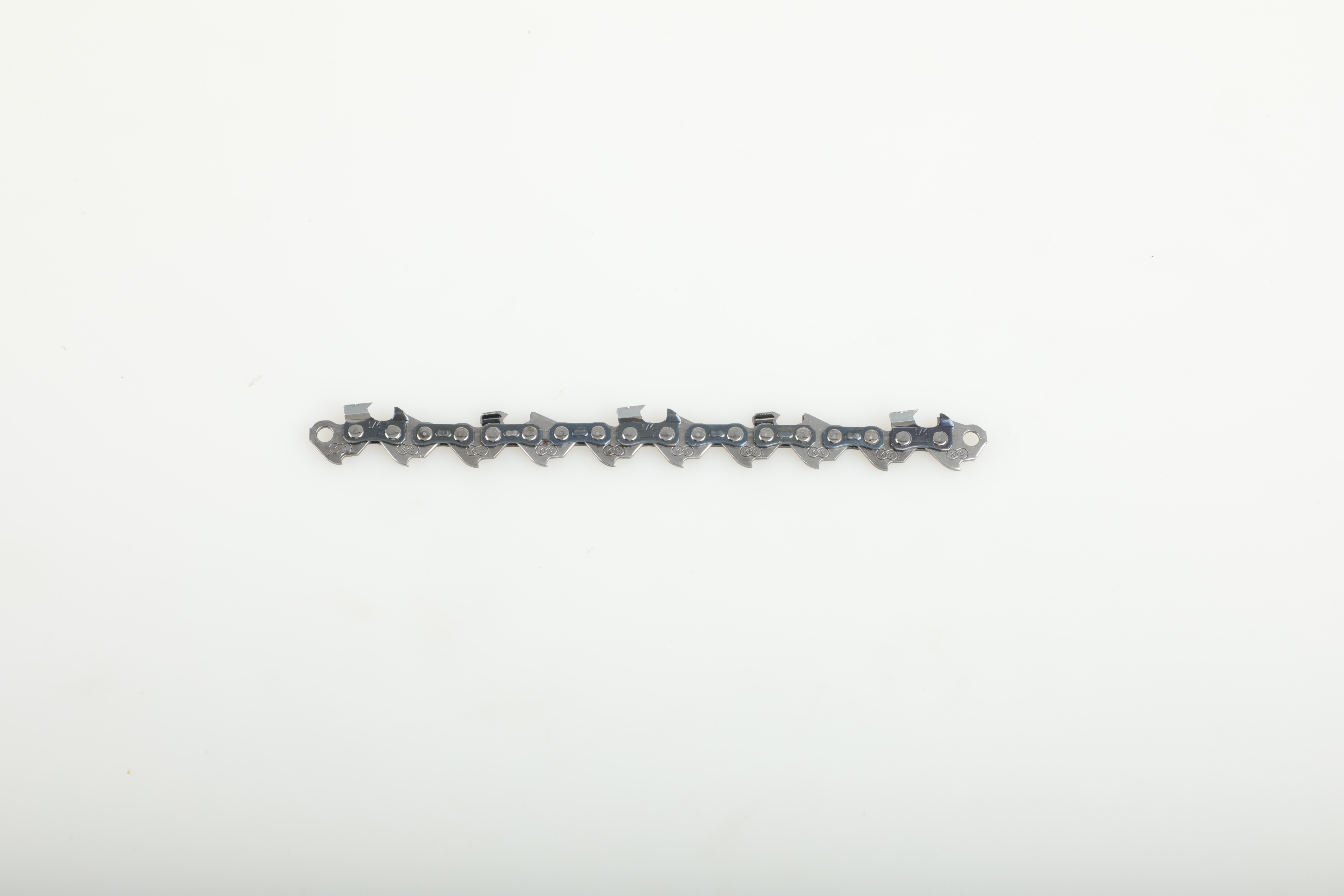
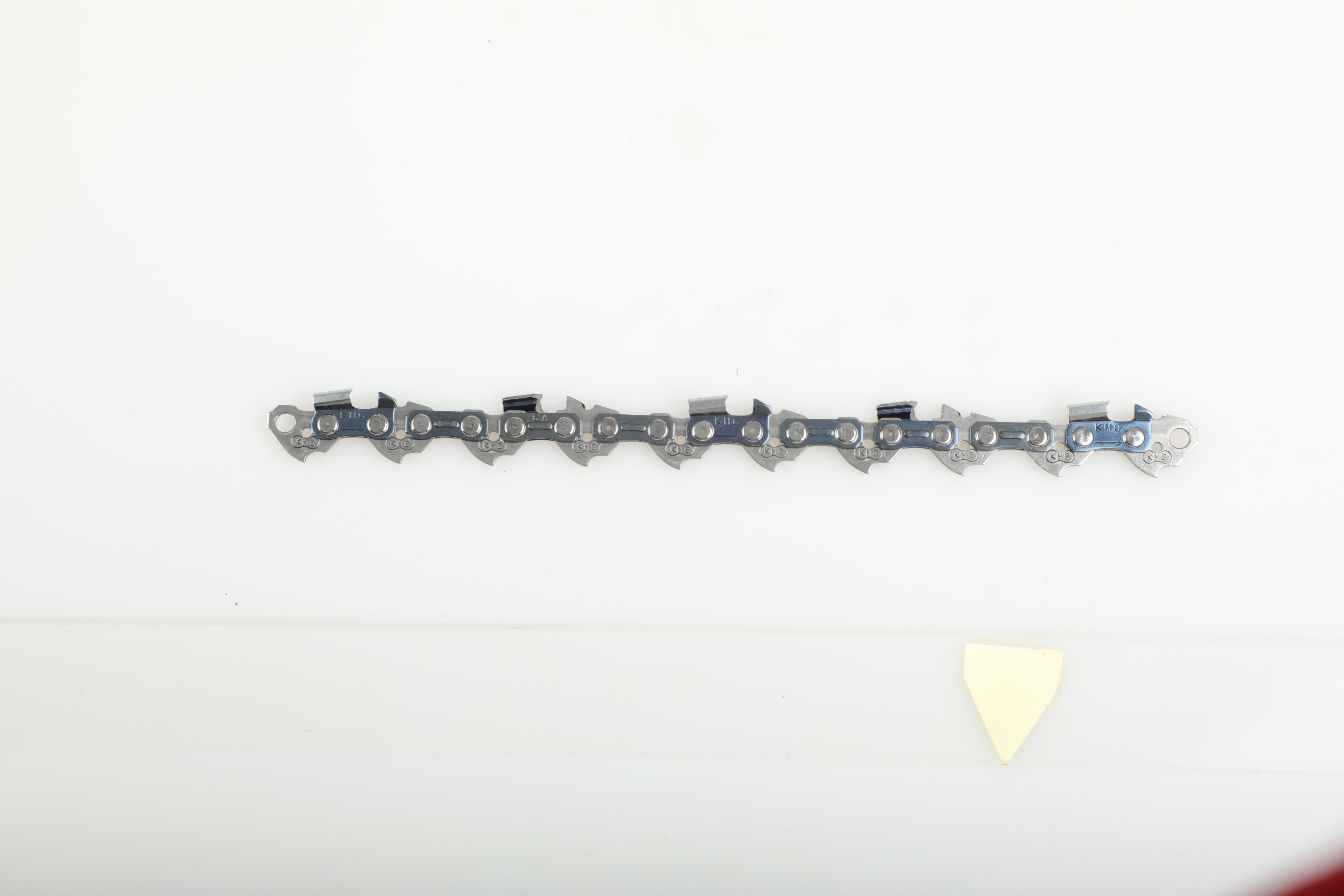
A factory visit is not useful if the buyer sees impressive equipment but cannot tell which station controls the ordered chain. Inside a chainsaw chain factory, the practical question is how one approved SKU—its pitch, gauge, drive links, cutter profile and sequence—moves from material receipt to a correctly identified unit package. Importers, OEM brands and wholesalers should begin with the KMC OEM and wholesale route, then follow a selected product through material control, heat treatment, assembly, functional checking and packing.
The first confirmation is the route card or equivalent production record for the buyer’s own item. A 3/8 LP .050 52 DL semi-chisel loop and a .325 .050 72 DL full-chisel loop may pass through related processes, but their components, settings and package identities cannot merge. A factory capability statement matters only when production records connect that capability to the exact chain being purchased.
The chainsaw chain factory route starts before any cutter reaches assembly
KMC product pages state that the chain material is 68CrNiMo3, and its OEM page describes a material-composition inspection before production. For a buyer, the release question is whether the received material is identified, separated and linked to the production batch. The factory should be able to show how material status prevents an unverified lot from entering the next operation.
Do not turn the material name into a complete quality claim. Steel selection, component geometry, heat treatment, hole condition, assembly and final setup work together. The purpose of the incoming record is to establish what entered the process and which finished order it can be traced to. A certificate or test record without the purchase-lot identity cannot do that job by itself.
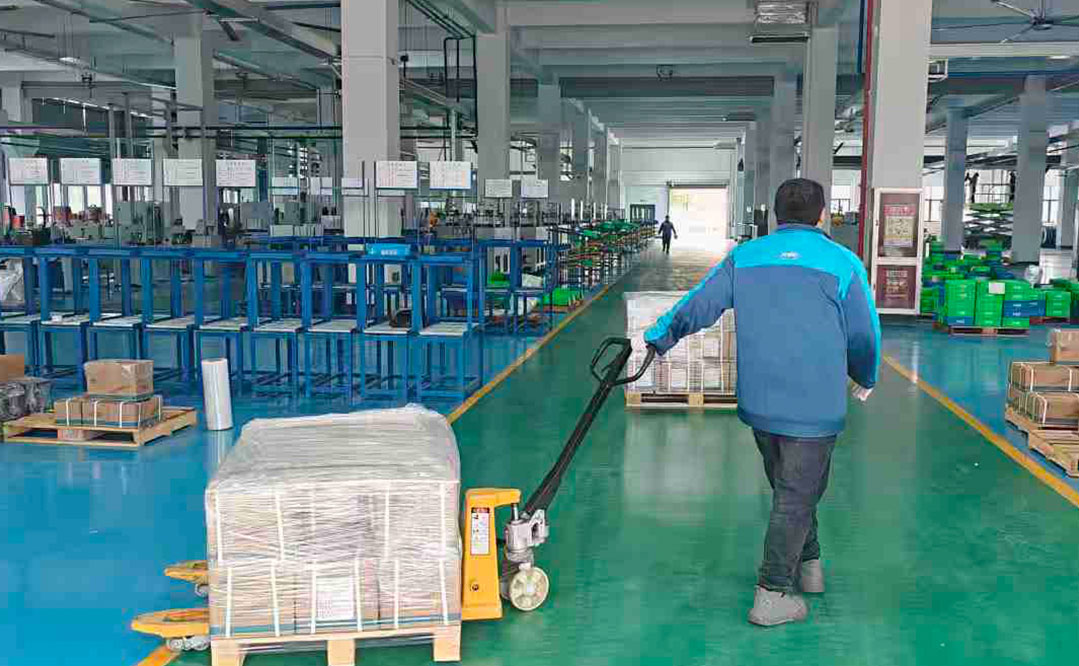
Mixed-gauge orders need component identity before the line starts
Consider a wholesaler ordering both 3/8 LP .043 and .050. KMC publishes 40, 45 and 52 DL for the .043 route and 40, 45, 50, 52, 55, 56 and 59 DL for .050. Because 40, 45 and 52 appear in both gauges, the factory cannot use loop count as a shortcut for component identity.
The work order should keep gauge visible before assembly, and any in-process container should carry the same item reference. During a visit or remote review, select one container and ask which finished SKU it supports. The answer should come from its record and label, not from an operator guessing by appearance.
Heat treatment must connect a process result to the specified components
KMC’s first-party production description includes heat-treatment process control and hardness testing. Those controls should be read as stages, not as a single marketing phrase. The buyer needs to know which components are covered, what record identifies the batch and how a result outside the working specification is held from assembly.
Industry factory descriptions likewise treat saw-chain production as a sequence of specialized processes rather than a simple stamping-and-packing operation. This general context helps a buyer ask the right questions, but it does not prove any KMC setting or result. KMC-specific acceptance values should come from the agreed specification and the order’s quality documentation.

A hardness report needs a batch, location and disposition
A page showing one hardness number is incomplete. The factory record should identify the sampled component, batch, test point and result, together with the disposition when a measurement does not pass. The buyer does not need to dictate the factory’s internal form, but the information should be recoverable for the selected production lot.
An OEM quality manager can test the system by choosing a held or completed order and asking for the relevant record. If the trace ends at a general monthly report, the buyer cannot know whether the reviewed result belongs to the ordered chain. If the record links to the batch and release, it can support later investigation without pretending that one reading describes every component.
Assembly is where the product specification becomes a physical loop
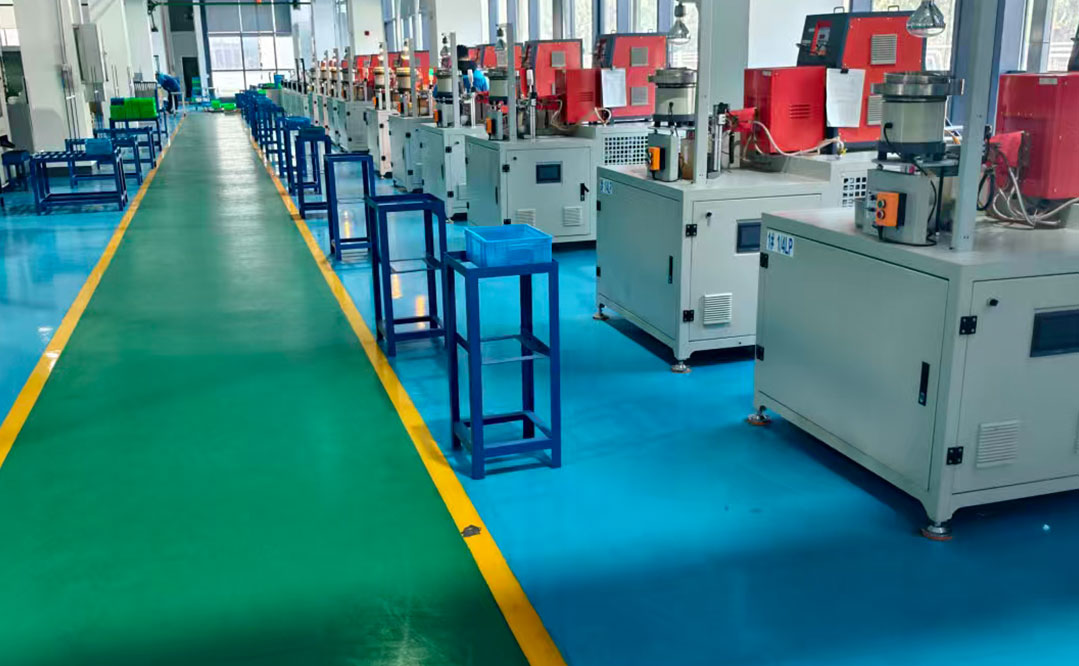
At assembly, cutter profile, tie straps, drive links, rivets, sequence and loop count become one moving chain. KMC presents automatic assembly as part of its production flow. For the buyer, automation should improve repeatability and identification, but the machine name alone is not an acceptance criterion. The setup has to match the approved SKU, and the first completed pieces must be checked before the full run continues.
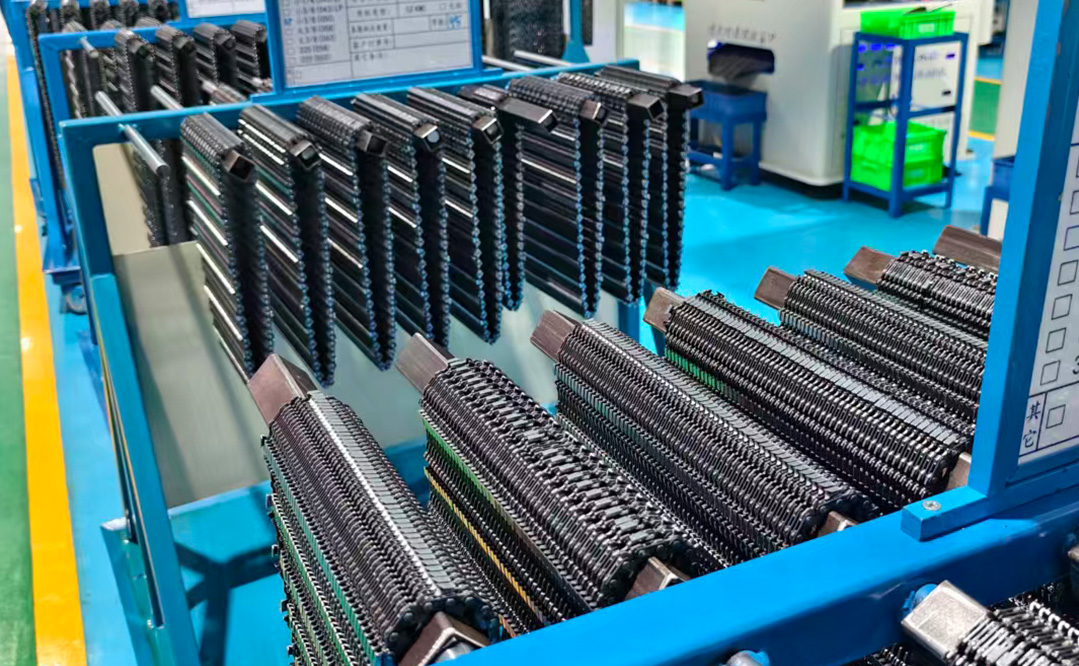
Count and sequence checks change with .325, 3/8 and .404 orders
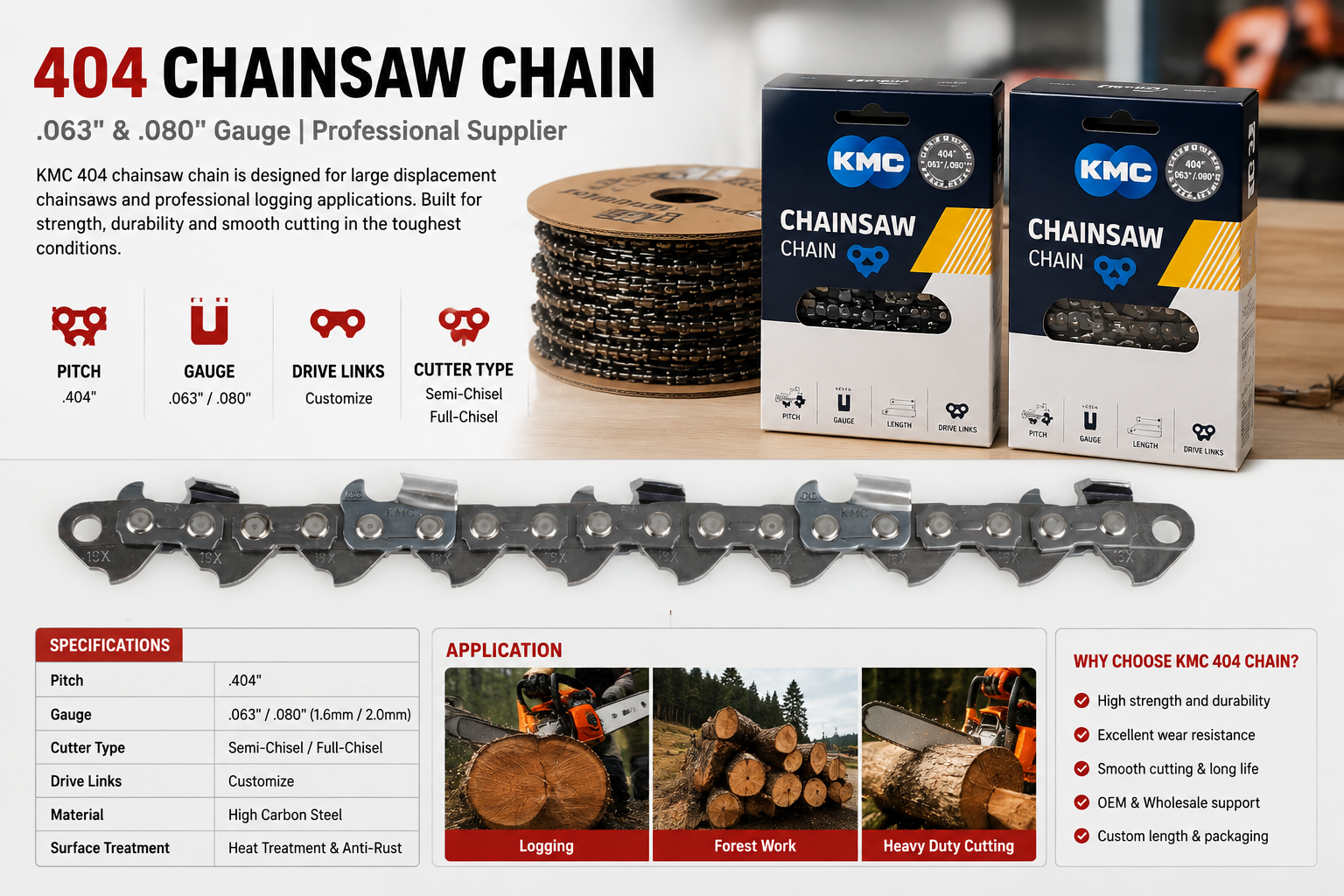
KMC’s verified .325 options include .050 and .058 products with 64, 72, 76, 78 and 86 DL. The verified 3/8 .058 product lists 68, 72, 76 and 84 DL. The .404 .063 product lists 60, 92, 100 and 104 DL, while the .404 .080 harvester route lists 78, 80, 90, 91, 94, 95 and 100 DL. The same assembly area may therefore handle counts that overlap across incompatible systems.
A line-release piece should be compared with the order for pitch, gauge, DL and cutter/sequence. A 100 DL .404 loop still needs its .063 or .080 gauge and application identity. If the run changes from one configuration to another, the changeover record should show how remaining components, labels and finished loops were separated.
Rivet condition belongs in the first-piece and in-process review
Rivets hold the alternating components together while the chain articulates around the bar and sprocket. The inspection should look for the agreed assembled condition, free articulation and visible defects rather than relying only on the final box count. A buyer should ask where a suspect assembly is placed and how the affected production window is identified.
This is especially relevant in long wholesale runs. If a defect is detected after many loops have passed the station, traceability determines whether the factory can isolate a defined quantity or must hold a much broader lot. Good containment reduces the chance that uncertain product reaches packing.
Cutting and final checks should test the actual ordered configuration
KMC states that its route includes cutting performance tests, final inspection and packing checks. A buyer should confirm which products are sampled, what machine or fixture is used and what the test is intended to detect. A cutting observation on one pitch and cutter profile does not automatically release every variant in a mixed order.
The test plan should reflect the order’s risk. A first OEM item, a configuration change or a complaint-replacement lot may justify different attention from an unchanged repeat order. The exact plan belongs in the commercial quality agreement. The website describes the available control route; the buyer and factory still need an order-specific acceptance record.
A full-chisel sample should not release a semi-chisel shipment
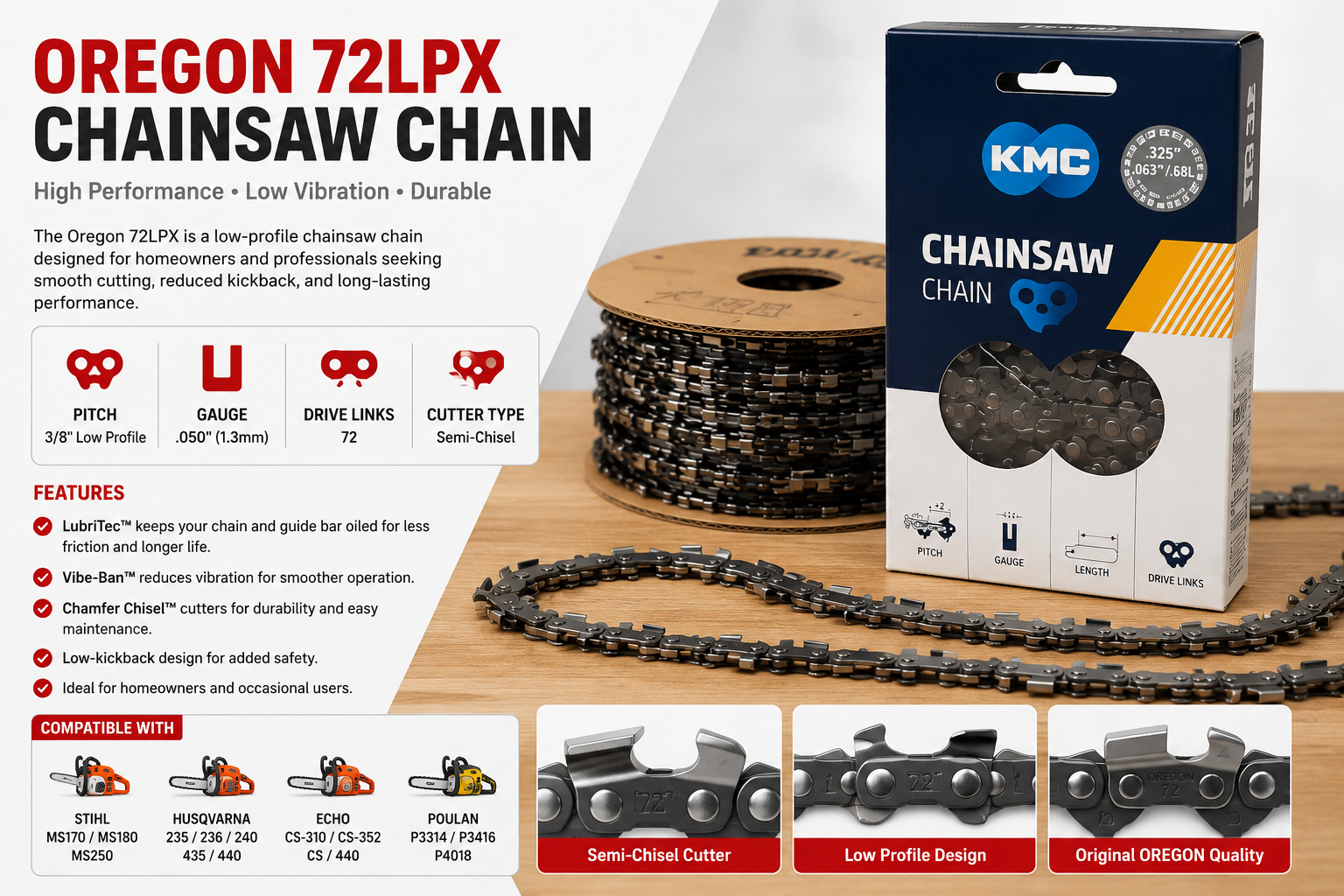
Several KMC 3/8 LP, .325, 3/8 and .404 products publish both semi-chisel and full-chisel routes. Semi-chisel uses a rounded working corner and is generally selected for tolerance in variable or contaminated wood; full-chisel uses a sharper square corner for fast work in clean wood by experienced users. If the buyer ordered both, the test and label record must distinguish them.
An importer serving rural dealers may emphasize semi-chisel configurations, while a professional forestry distributor may carry selected full-chisel or skip variants. The factory should not substitute a convenient test loop from another configuration and treat the result as universal. The checked sample must be named in a way that the buyer can compare with the order.
Capacity claims need to be converted into an order schedule
KMC’s OEM page states that the facility covers 50,000 square metres, operates 15 production lines and has output above 800,000 chains per month. These are KMC-published figures, not independently audited capacity data. A buyer should use them as the starting point for a capacity discussion and then ask how the specific pitch, cutter, package and quantity fit the planned production window.
The same page publishes indicative timing of 7–10 days for samples, 15–20 days for 1,000–5,000 units, 25–30 days for 5,000–20,000 and 35–45 days above 20,000. Confirm the current schedule in the order because artwork approval, component availability, mixed-SKU complexity and shipping arrangements can affect it. A large monthly headline does not mean every variant is available immediately.
A mixed-pitch launch needs line allocation and packaging time
An OEM launch covering 3/8 LP, .325, 3/8 and .404 products is not one homogeneous volume. Ask for the production and packing sequence by SKU. Retail blister cards may require a different final operation from individual boxes, and 100-foot reels require a different identity and handling route from pre-cut loops.
The schedule should name the date when technical data and artwork become frozen. If the buyer changes a barcode after loops are assembled, the product may be ready while the package is not. Separating technical readiness from packaging readiness makes the delivery discussion more accurate.
Packing closes the factory route only when the loop keeps its identity
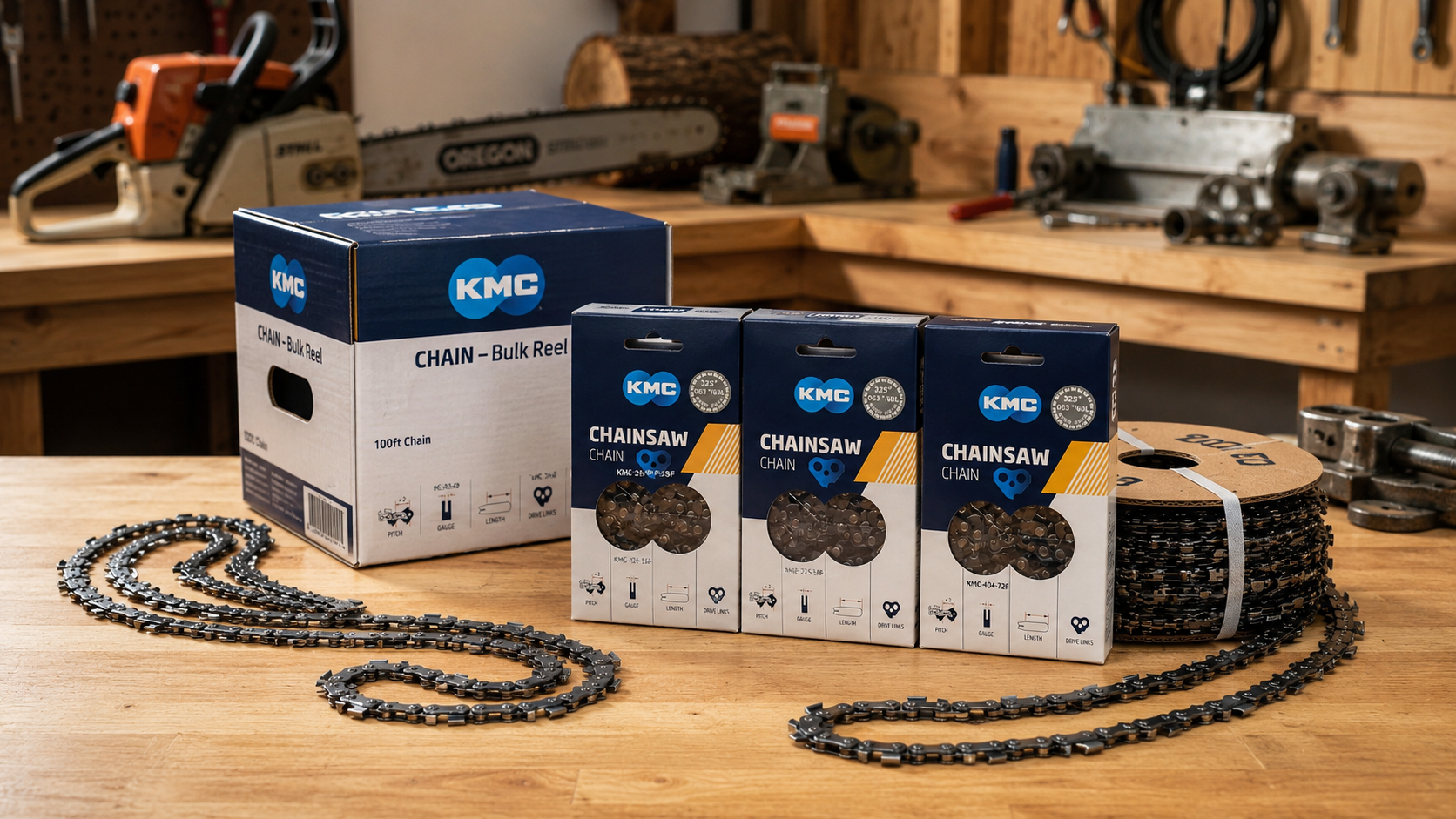
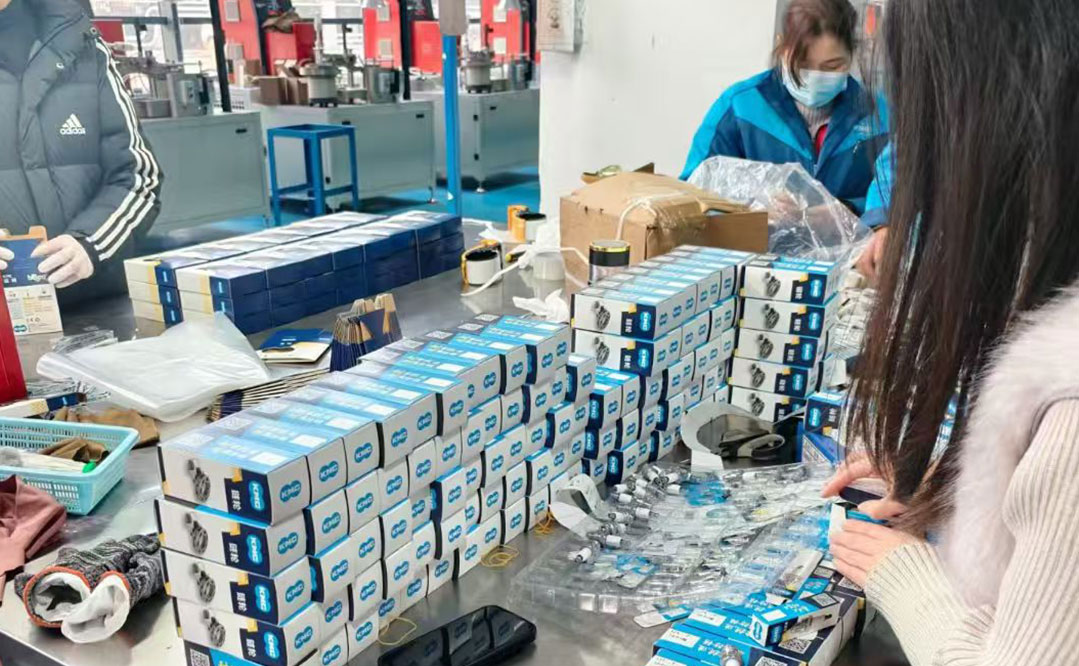
KMC publishes individual boxes, blister cards, custom cartons, pallets and 100-foot reels. At packing, the approved label must meet the correct loop. Check pitch, gauge, DL, cutter profile and item code on the unit, then verify the inner carton and pallet information. A final quantity count cannot detect a .050 loop inside a .043 box.
For a multi-SKU shipment, repeat the trace on one compact loop, one professional loop and any harvester item rather than sampling three boxes from the easiest SKU. Record the carton and pallet locations reviewed so the same evidence can be found if receiving later reports a discrepancy.
Before shipment release, select a packed loop and trace it backward: from barcode and unit label to packing record, assembly SKU, in-process identity and relevant material or process batch. The trace does not have to reveal confidential factory methods, but it must keep the buyer’s item coherent. That backward test is the clearest way to judge whether a chainsaw chain factory has turned production capability into a controlled order.