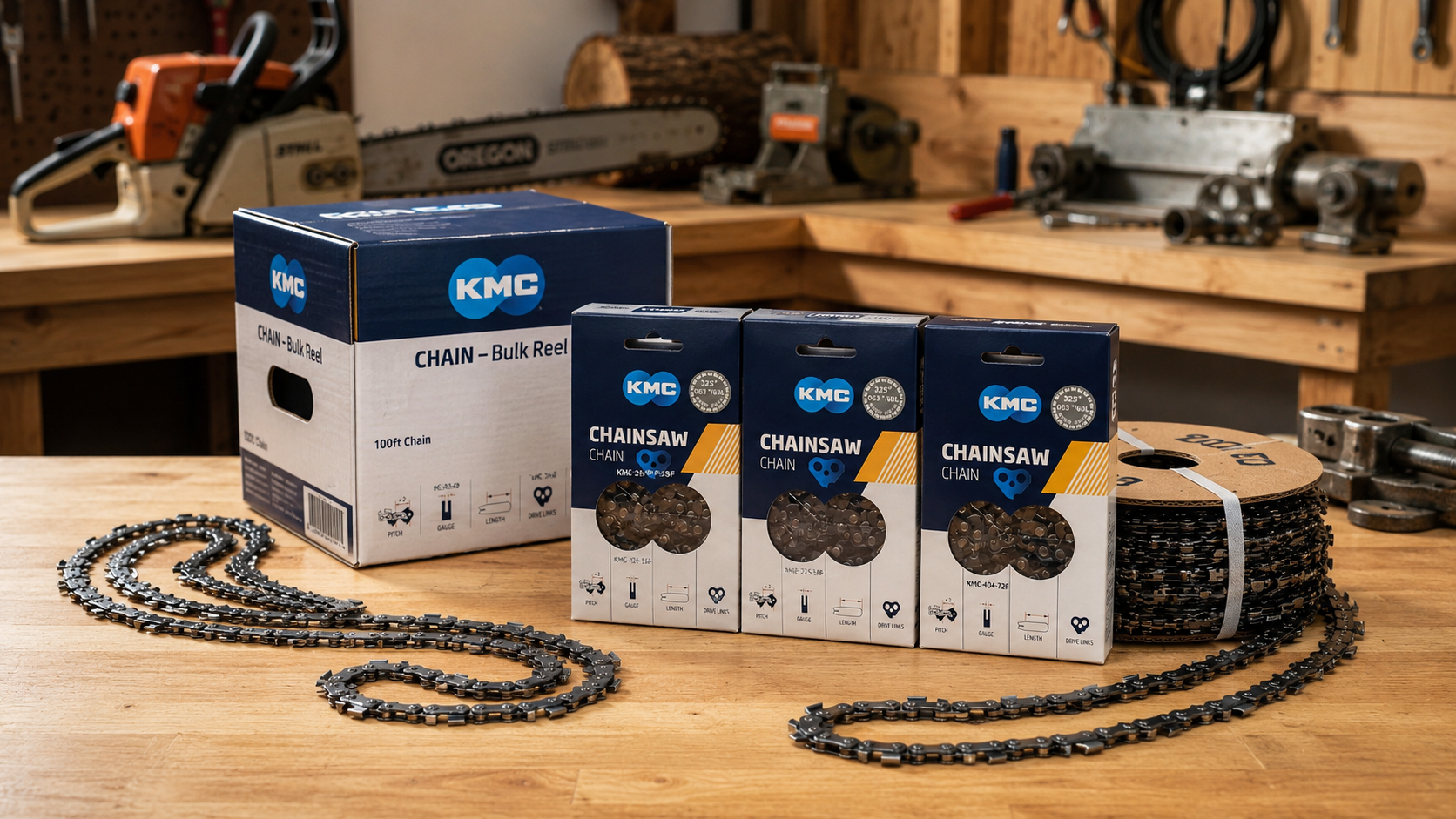
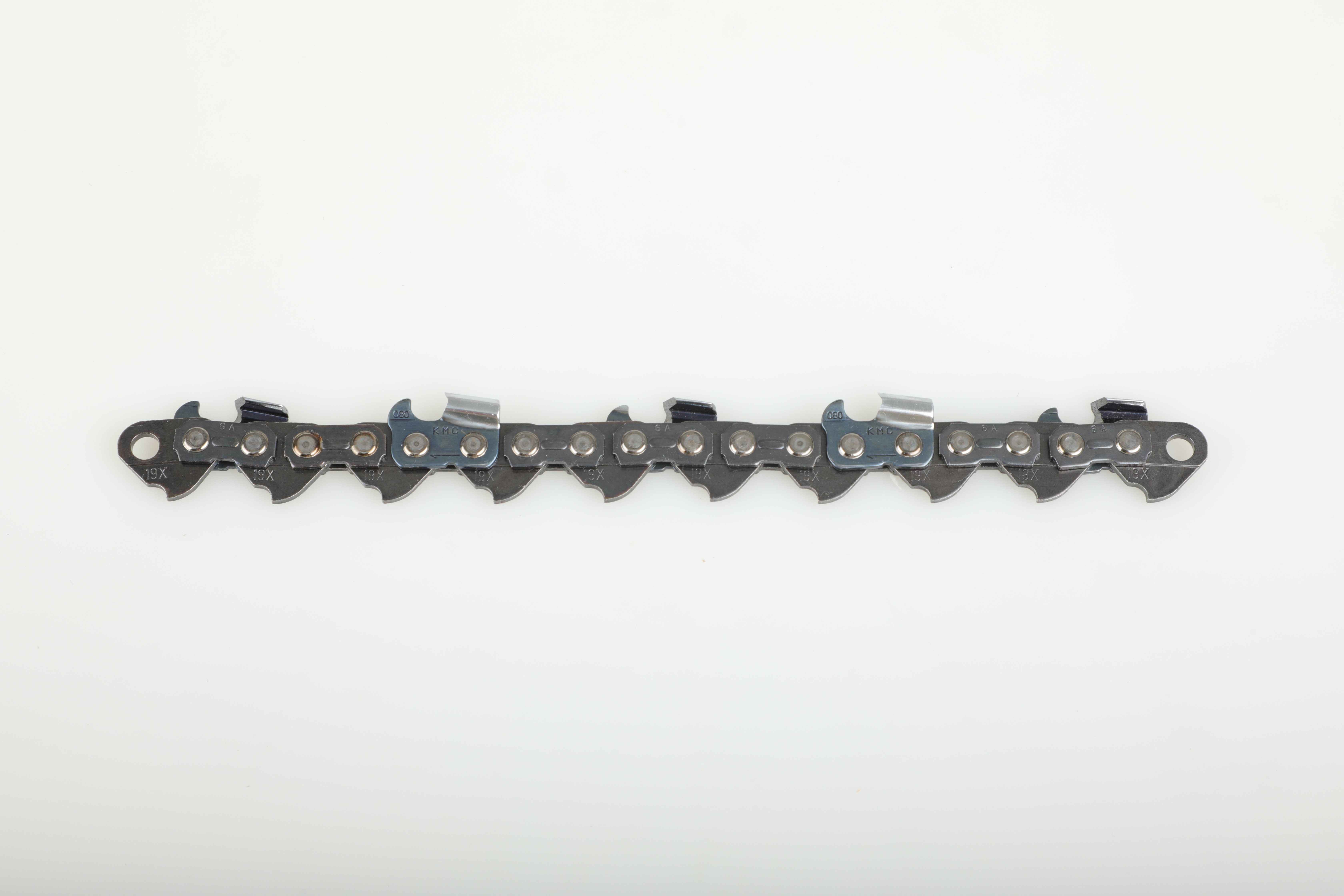
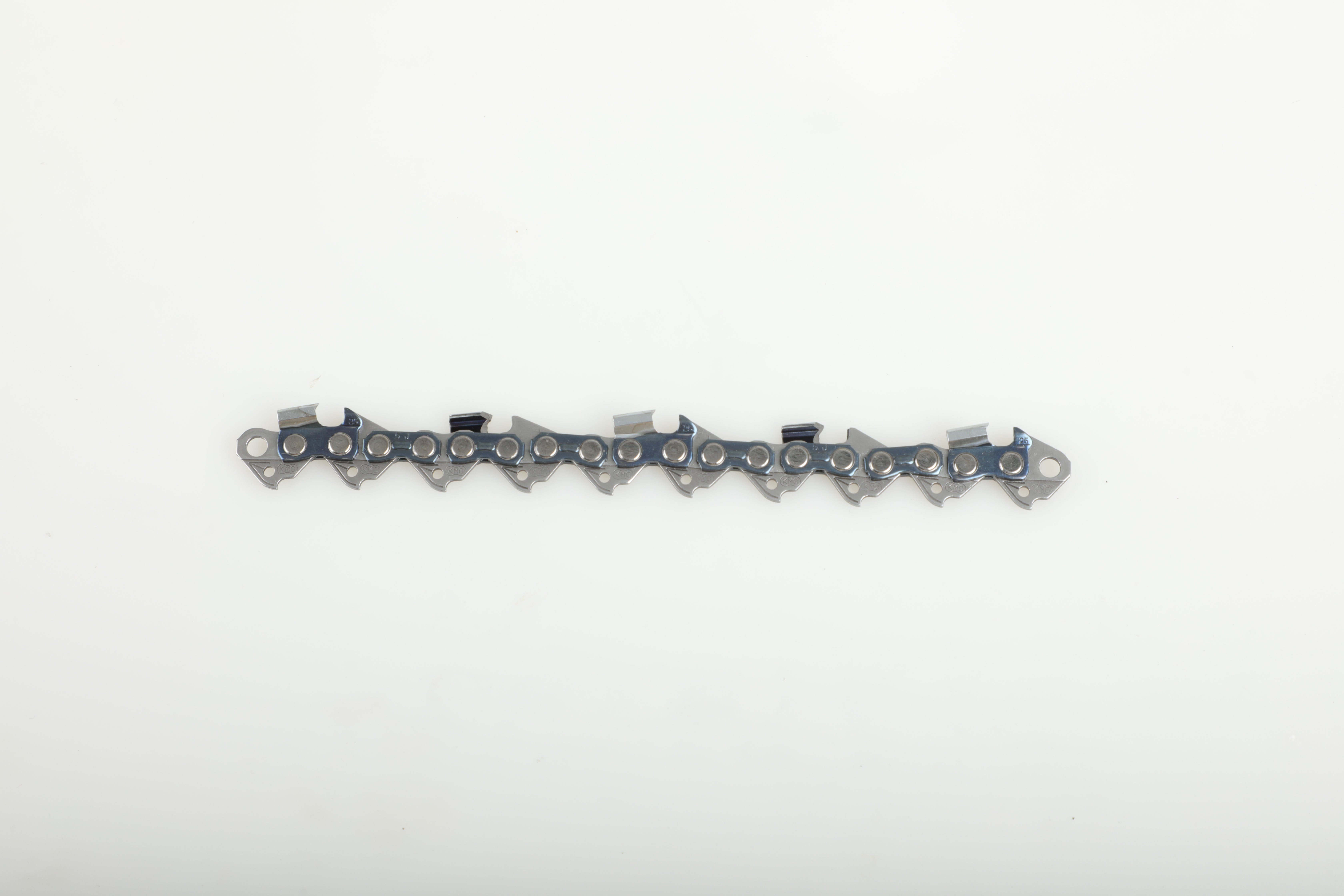
A harvester saw chain manufacturer should receive the cutting-head system before it receives a generic request for “heavy .404 chain.” Mechanized forestry uses the chain as part of a head, bar, nose and drive-sprocket assembly. The buyer must confirm pitch, gauge and drive-link count from that system, then approve cutter configuration and production evidence. KMC’s .404 .080 harvester chain is the relevant starting point for buyers whose equipment documentation calls for that route.
This article is for harvesting contractors, forestry-equipment distributors, fleet engineers and parts importers. The first decision is whether the requested loop belongs to a .404 .080 mechanized head or a different .404 system. KMC also publishes .404 .063 chain; the shared pitch does not make the gauges interchangeable. Approve the cutting attachment first, then ask the manufacturer to build and preserve its exact identity.
The harvester saw chain manufacturer needs the complete cutting-head record
Harvester manuals from established equipment suppliers treat bar, sprocket and chain as an integrated cutting attachment. That principle should shape the purchase file. Record the head model, bar reference, sprocket information, .404 pitch, .080-inch (2.0 mm) gauge and required DL count. Add the source document and revision. An old loop can support the record, but it should not overrule current equipment instructions.
If the old chain has unreadable markings, count the drive links and photograph the bar and attachment references. Do not infer gauge from pitch or general machine size. A thick drive link must correspond to the intended bar groove, while pitch must correspond to the drive system. Any disagreement stays unresolved until the fleet engineer or equipment documentation settles it.
KMC .404 .080 options cover seven published loop counts
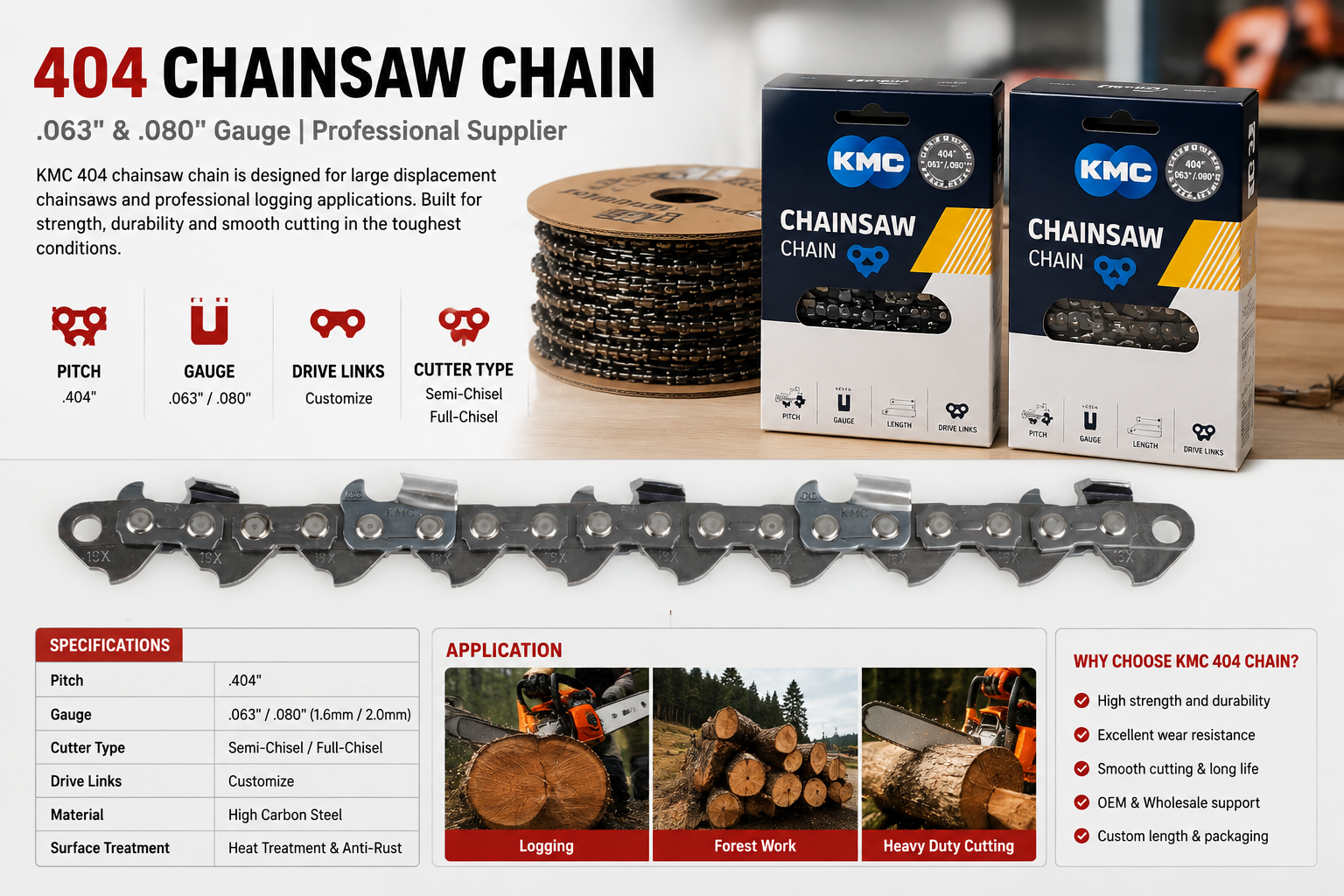
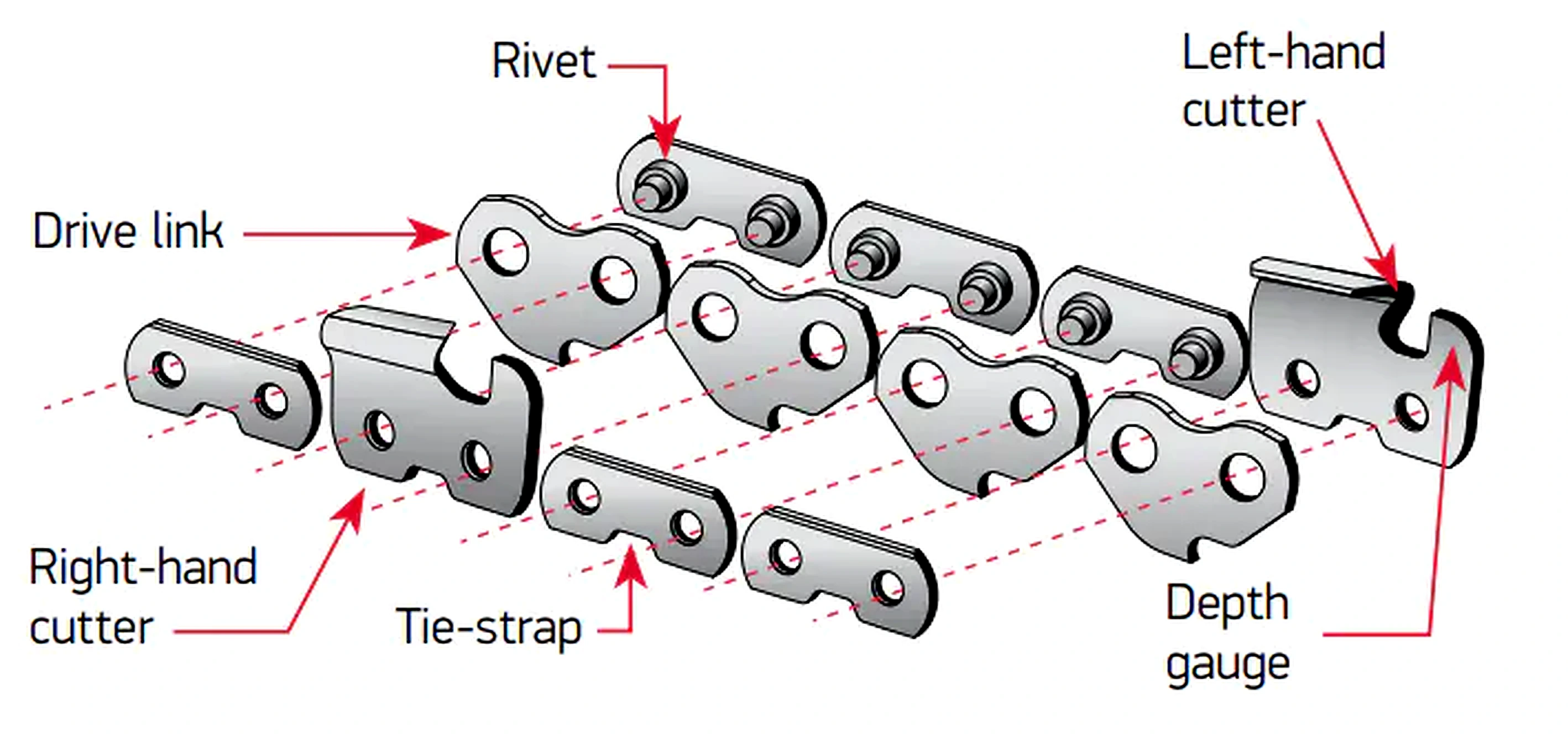
KMC publishes 78, 80, 90, 91, 94, 95 and 100 DL for its .404 .080 harvester product. It lists a semi-chisel cutter and 68CrNiMo3 material. These are product-page facts, not a fitment promise for every head. The buyer chooses the count supported by its bar and cutting-head documentation.
A fleet operating two head models may need 90 DL on one and 100 DL on another. Create separate item codes even when pitch, gauge and cutter are shared. The unit label and warehouse bin should show DL prominently so a mechanic does not select the longer loop from a general “.404 harvester” location.
A 100 DL count cannot distinguish .063 from .080
KMC’s broader .404 range also publishes a .404 .063 chain with 60, 92, 100 and 104 DL. Both products therefore include 100 DL. A request written as “.404, 100 drive links” is incomplete. Gauge and application must remain on the quote, sample tag, package and receiving record.
The existing KMC guide to .404 logging and harvester chain helps buyers understand the application boundary. The manufacturing order should go further by naming the exact cutting-head file that supports the .080 product.
Approve a harvester sample under operating-system boundaries
The sample plan should answer dimensional identity, assembly and the buyer’s agreed functional review. A physical loop is counted and compared with the signed record. The technical team checks the intended semi-chisel configuration and visible assembly condition. Installation and any cutting trial follow the equipment maker’s safe procedure; a questionable loop is not mounted merely to see whether it runs.
The tagged sample should travel with its engineering evidence
Mark the sample with pitch, gauge, DL, cutter, head/bar reference and sample revision. Keep photographs and inspection notes beside it. If the sample is used in a trial, record the attachment setup and wood condition so later observations are not separated from their context.
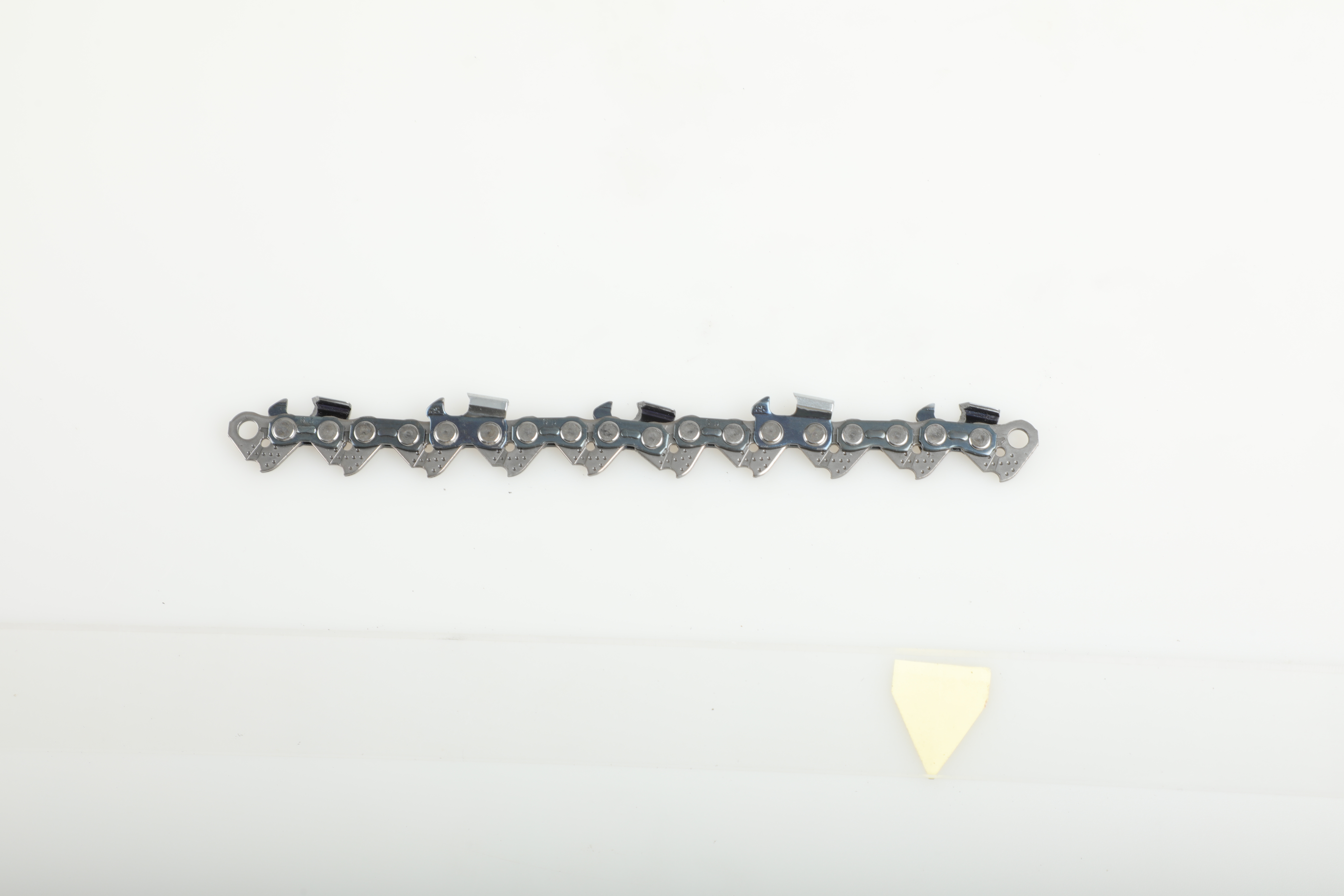
A distributor may approve the chain for one head and later receive a request for another machine. Do not extend the approval automatically. Compare the second head’s bar, sprocket, gauge and loop count. The same .404 .080 product family may support it, but the fitment evidence must be specific.
Semi-chisel selection should reflect the actual harvesting conditions
KMC’s .404 .080 page publishes semi-chisel only. A rounded working corner is generally chosen for edge tolerance where bark contamination, hard or frozen wood can be present. That does not create a universal performance guarantee. Feed settings, sharpening, lubrication, bar condition and the cutting head all affect operation.
A contractor working winter timber should document the conditions its maintenance team expects and the sharpening method it uses. The manufacturer supplies the agreed chain; the fleet owner maintains the attachment and follows machine instructions. Keeping those responsibilities separate makes complaint evidence more useful.
Manufacturing evidence should follow the .404 .080 lot
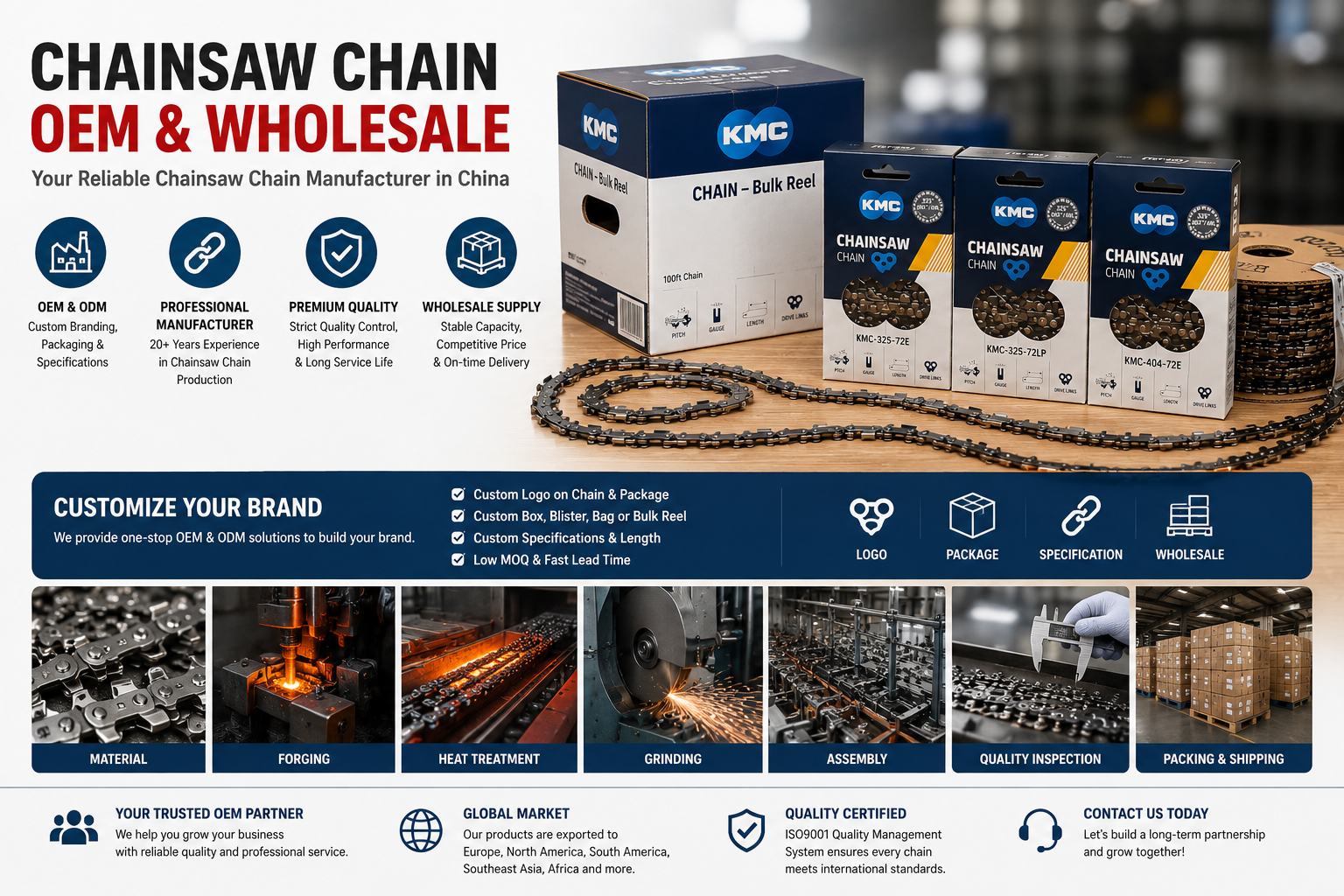
KMC describes material-composition inspection, heat-treatment and hardness control, automatic assembly, cutting tests and final inspection. A mechanized-forestry buyer should agree which lot-specific records accompany first production and repeat orders. A general factory photograph or monthly report cannot identify the exact .404 .080 lot.
Hardness and assembly records need batch identity
The buyer does not need confidential process settings to ask for traceability. The relevant record should identify the component or lot tested, result, disposition and link to the finished order. Assembly checks should confirm the approved DL and cutter configuration before full production continues.
If a result falls outside the working specification, the manufacturer should be able to show how affected material or loops were held. The useful question is not whether inspection exists in theory; it is whether the selected packed loop can be traced to released production.

Harvester packaging must survive field-service handling
Mechanized-forestry chain may move from an importer warehouse to a service truck and then to a remote machine. The unit package must keep .404, .080, DL and item code readable after the master carton is split. Cutter identity and head reference can support selection, but they should not replace the dimensions.
KMC’s OEM program publishes individual boxes, custom cartons, pallets, barcodes and multilingual manuals. Choose the format around field handling. A large inner quantity can leave loose loops separated from their label; an undersized pack can add handling without improving identification.
Service-truck stock should be divided by head and DL
A harvesting contractor with two cutting heads can use separate bins labelled by head reference and full chain specification. Replenishment staff then issue the correct 90, 94 or 100 DL loop without relying on memory. The bin label, unit pack and digital item description should use the same order of fields.
A fleet trial should separate chain evidence from head maintenance
Before judging a new lot, record bar condition, sprocket condition, lubrication route and the machine settings required by the equipment maker. A worn bar, damaged sprocket or restricted oil delivery can affect a correct chain. The trial record should identify what was inspected and who released the cutting attachment. This protects the operator and prevents a maintenance fault from being reported as an undefined chain defect.
One trial loop should not represent every head in the fleet
A contractor may operate the same nominal head model at different hours and maintenance states. Start on an attachment that has been inspected and documented, then expand according to the fleet’s approval plan. If a second head produces a different result, compare its bar, sprocket, settings and service history before changing the chain specification.
Record observations in operational language: chain identity, head identity, cutting condition, visible outcome and any maintenance action. Avoid unsupported claims about production per hour when the trial did not control feed, timber and operator variables. The purpose of the first evaluation is to confirm a stable route for the named system, not to create a universal performance number.
Scale from one cutting head to a fleet item master
After technical approval, create a fleet item master for every head/bar combination. Include .404 pitch, .080 gauge, DL, semi-chisel cutter, package code and the head references covered by the evidence. Link the held sample and inspection revision. Purchasing should order from this record instead of copying a short description from an old invoice.
Replenishment quantities can change while fitment stays fixed
Usage data may show that 90 DL moves quickly and 95 DL is needed only at one location. Adjust quantities without merging item identities. When a new bar changes the DL requirement, open a new technical review rather than editing the old item silently. This preserves historical receiving and maintenance records.
KMC publishes indicative timing of 7–10 days for samples, 15–20 days for 1,000–5,000 units, 25–30 days for 5,000–20,000 and 35–45 days above 20,000. These are website figures to reconfirm for the actual .404 .080 mix. A harvesting operation should place replenishment early enough that it never needs an unapproved loop substituted to recover a missed date.
For a multi-location fleet, the central item master should feed the branch labels and service-truck lists. Local teams may add their own bin location, but they should not shorten the technical name. A shared naming convention makes it possible to compare consumption, returns and maintenance notes by the exact loop instead of by a vague “harvester chain” group.
Release the manufacturer only after a backward trace works
Choose one packed .404 .080 loop and trace it backward through unit label, carton, packing record, assembly SKU, inspection evidence and signed cutting-head specification. Repeat the check on every high-risk DL in a mixed order. If the path breaks at a generic .404 description, the program is not ready for field distribution.
A qualified harvester saw chain manufacturer does more than supply a heavy loop. It preserves the cutting-head decision through sampling, production and service packaging. Approve the relationship when the exact head, .080 gauge, DL and semi-chisel configuration remain visible from engineering file to the loop carried into the forest.