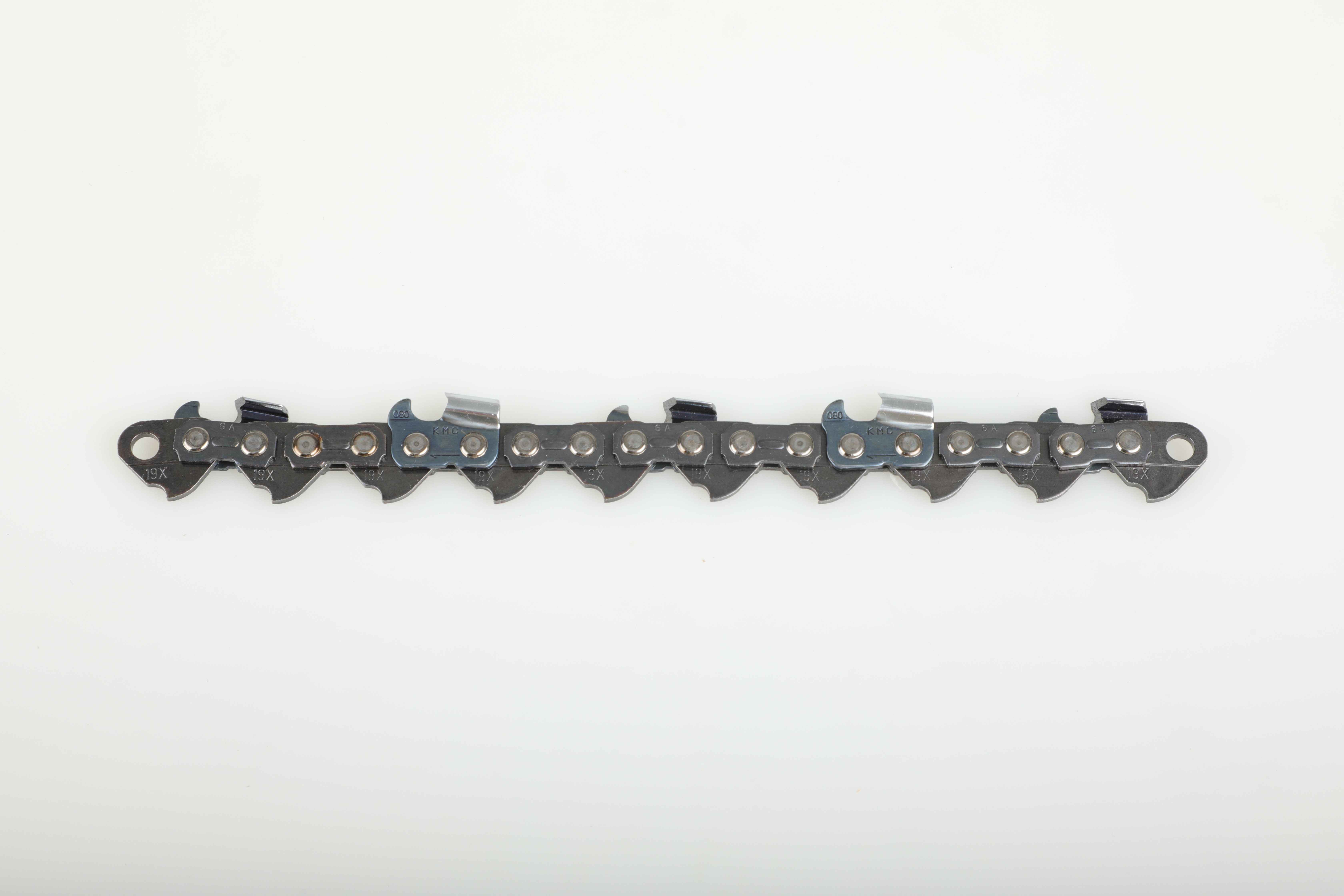
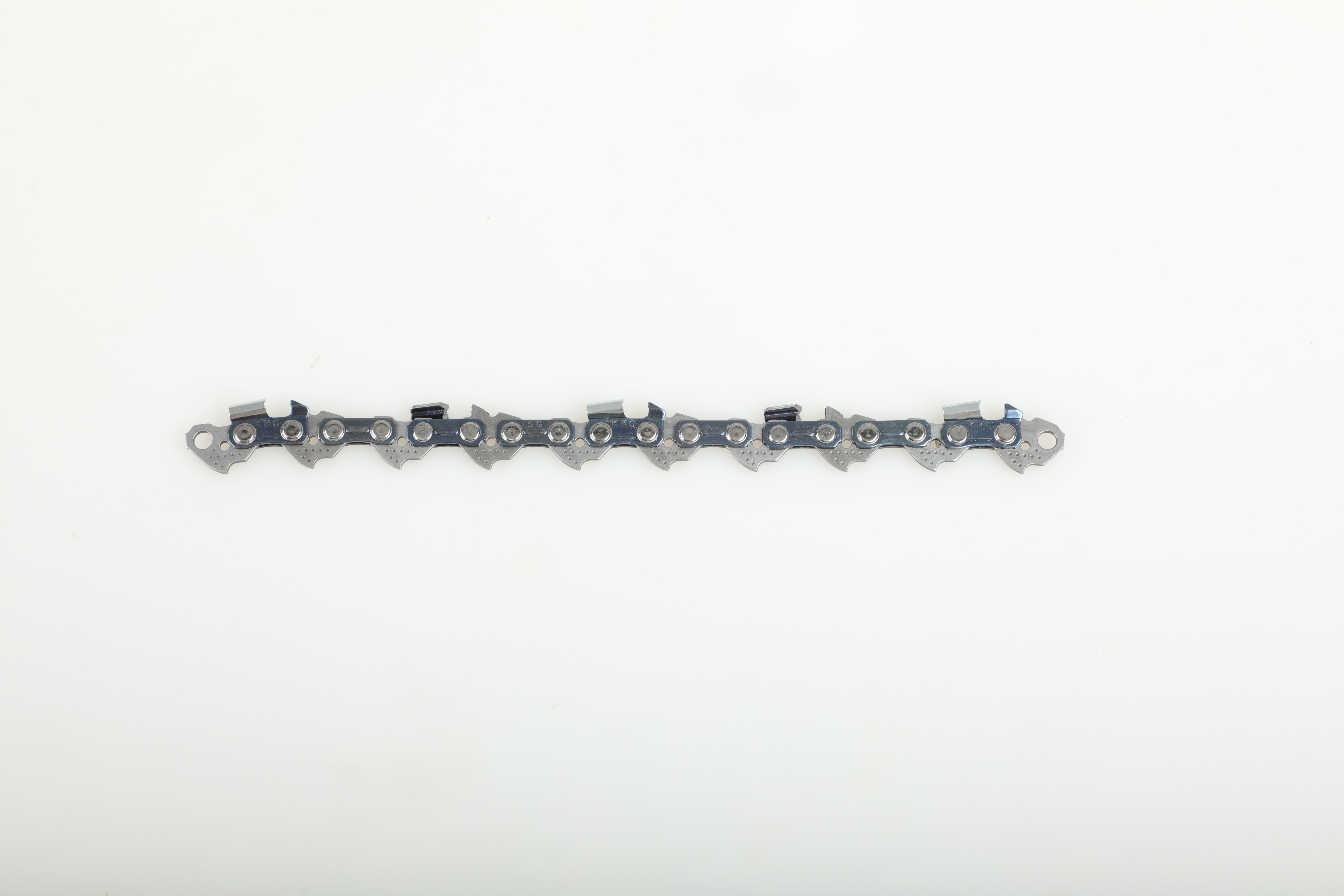
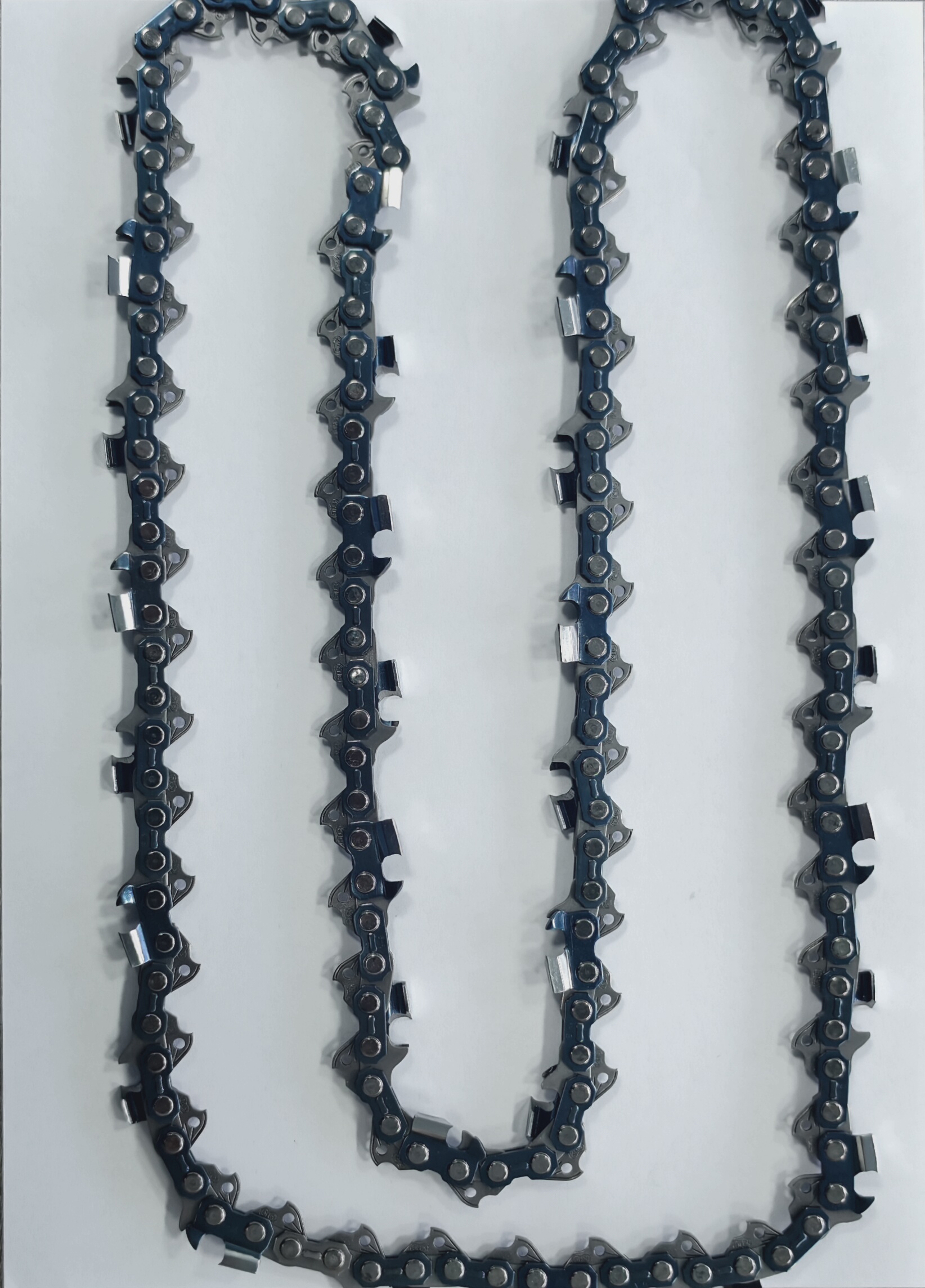
A distributor choosing a chainsaw chain supplier for a mixed-pitch line should first decide which cutting systems its dealers actually service. A compact cordless saw, a mid-size forestry saw and a heavy .404 machine do not belong in one undifferentiated “replacement chain” group. The supplier should help the buyer keep pitch, gauge and drive-link count visible from the purchase order to the unit package. KMC buyers can start with the full chainsaw chain range, then separate the assortment into 3/8 low profile, .325, 3/8, .404 and 1/4 families.
This approach suits importers, garden-equipment wholesalers, replacement-parts distributors and dealer networks. The first confirmation is not price or bar length; it is the combination printed on the guide bar or specified by the equipment maker. Official chain-selection guidance likewise treats pitch, gauge and drive-link count as the three fitment identifiers. A supplier can offer many loops, but the range becomes commercially useful only when warehouse staff and dealers can identify each one without opening every box.
Start with the customer jobs your chainsaw chain supplier must cover
Build the assortment from customer work rather than from a long factory catalogue. Light pruning, routine property maintenance, professional firewood cutting and mechanized forestry place different demands on the saw, bar and chain system. They also create different replacement cycles. A dealer serving pole saws may replenish short 3/8 LP loops frequently, while a forestry outlet may carry fewer .404 sizes but need precise identification every time.
The table below is an assortment map, not a compatibility promise. The final loop must still match the bar, sprocket and drive-link requirement of the individual machine.
| Dealer customer | KMC range to review | Order detail that prevents confusion |
|---|---|---|
| Pruning and compact-saw users | 3/8 LP .043 or .050 | Keep 1.1 mm and 1.3 mm gauge labels visually distinct |
| Mid-size saw owners | .325 .050 or .058 | Print the exact drive-link count beside the gauge |
| Professional cutting crews | 3/8 .058 | Separate it from 3/8 LP even though both use “3/8” wording |
| Heavy logging customers | .404 .063 | Do not mix it with .404 .080 harvester chain |
| Precision pruning and carving users | 1/4 .043, .050 or 1/4 LP .043 | Confirm pitch, profile and loop length independently |
Compact-saw customers need 3/8 LP .043 and .050 kept separate
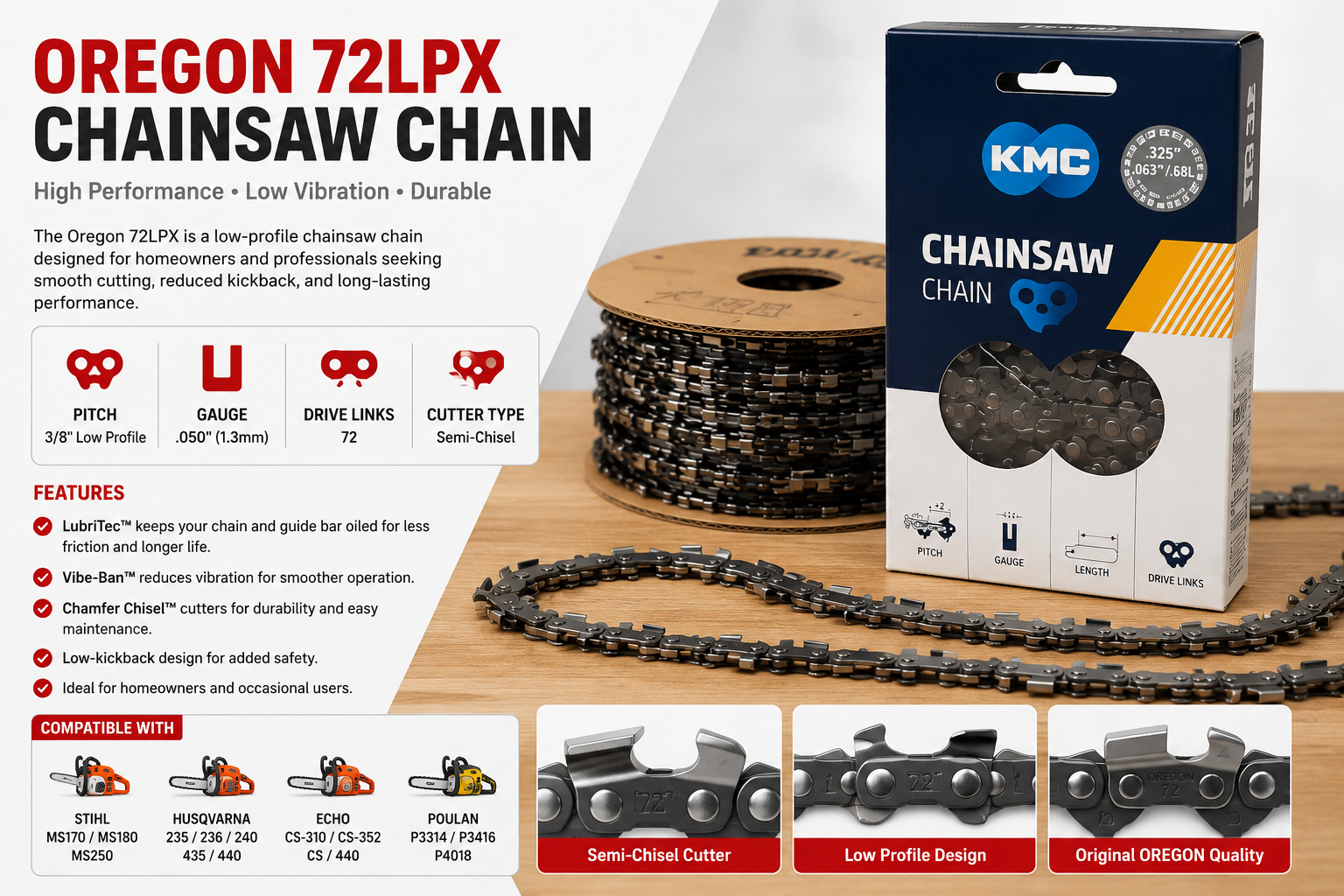
The 3/8 LP product family includes .043-inch (1.1 mm) and .050-inch (1.3 mm) gauges. KMC publishes 40, 45 and 52 drive links for its .043 product. Its .050 table lists 40, 45, 50, 52, 55, 56 and 59 drive links. Those overlapping loop counts make accurate gauge labeling essential: a box marked only “3/8 LP, 52 DL” still leaves out the bar-groove dimension.
A garden-equipment wholesaler may serve cordless chainsaws, compact petrol saws and pole-saw attachments in the same store. Staff should not infer the chain from the tool's general size. Two visually similar compact saws may use different gauges or loop counts. The safest dealer workflow is to read the bar marking, confirm the old loop if available and match all three specifications.
Professional dealers need .325 and 3/8 identified at receiving
KMC's .325 chainsaw chain range and its 3/8 chainsaw chain range serve different drive systems. The confirmed .325 .050 and .325 .058 tables both publish 64, 72, 76, 78 and 86 drive-link options. The confirmed 3/8 .058 table lists 68, 72, 76 and 84. A receiving team therefore cannot use “72 DL professional chain” as an item description; 72 DL appears in more than one pitch family.
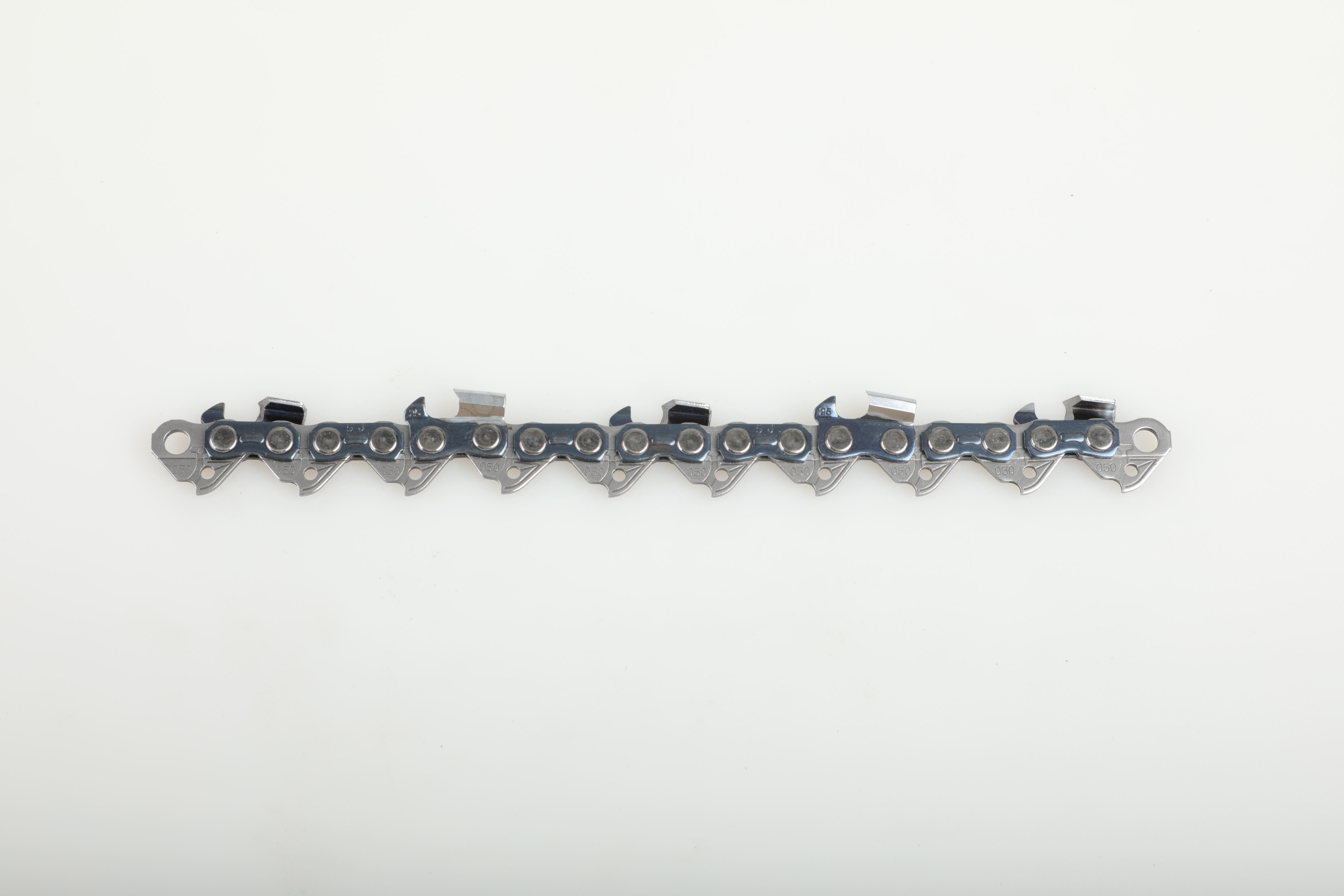
For a forestry dealer, a good purchase file repeats the complete identity on the order, packing list, inner box and retail package. A 72 DL .325 .050 semi-chisel loop should remain distinguishable from a 72 DL 3/8 .058 full-chisel loop even after the outer carton is removed. That is a supply-system requirement, not merely a graphic-design preference.
A mixed-pitch supplier order should behave like five small ranges
Managing each pitch family as a small range keeps the assortment understandable. Within that family, divide by gauge, then by drive-link count and cutter configuration. This hierarchy mirrors the fitment decision a dealer makes at the counter. It also makes sales data useful: the distributor can see whether a gauge is slow moving instead of combining unrelated loops under one broad product code.
For example, “3/8” and “3/8 LP” should not share a parent SKU merely because the pitch fraction looks similar. KMC's confirmed 3/8 .058 product uses a 1.5 mm gauge and includes 68, 72, 76 and 84 DL. Its 3/8 LP products use .043 or .050 gauges and have a different set of common loop counts. Keeping the families separate reduces picking errors and makes reorder quantities reflect real dealer demand.
Seventy-two drive links mean different things in .325 and 3/8 orders
Drive-link count is a loop-length identifier only inside a matching pitch and gauge system. A 72 DL .325 loop and a 72 DL 3/8 loop do not become interchangeable because their counts match. The links have to engage the correct sprocket and run in the correct bar groove. This is why a supplier's spreadsheet should use separate fields for pitch, gauge and drive links instead of embedding all information in an informal product name.
A distributor can make the same rule visible in its warehouse location codes. One practical sequence is pitch family, gauge and DL—for example, a location prefix for .325, a second field for .050 and a final field for 72 DL. The exact coding system is the distributor's choice; the important point is that the three specifications cannot disappear when the chain moves from factory carton to shelf bin.
Cutter profile must follow the wood condition dealers report
KMC product tables list semi-chisel and full-chisel options on several 3/8 LP, .325, 3/8 and .404 products. Semi-chisel cutters have a rounded working corner and generally tolerate dirty, hard or frozen wood better before losing their edge. Full-chisel cutters use a sharper square corner and are chosen for fast cutting in clean wood by users who can maintain the chain correctly. This application difference is also reflected in official Husqvarna cutter guidance.
A rural dealer selling to farms may need more semi-chisel stock because bark contamination, dust and varied wood conditions are common. A professional logging outlet working mostly in clean softwood may have demand for full-chisel loops. The supplier should not turn cutter style into a universal “good, better, best” hierarchy. It is an application choice that belongs on the SKU and package.
Two distributor scenarios reveal whether the supplier can support the range
Before placing a broad order, test the proposed assortment against two real customer journeys. The point is not to predict every sale. It is to see whether the range has clear boundaries, whether staff can identify each item and whether replenishment can occur without reinterpreting old invoices.
A garden-equipment wholesaler serving cordless and pole saws
This wholesaler may begin with 3/8 LP .043 and .050 loops plus selected 1/4 products. KMC's 1/4 chain family includes .043, .050 and low-profile .043 routes. The confirmed 1/4 .043 table lists 32, 56, 60, 64 and 72 DL, while the 1/4 .050 table lists 58, 60, 64 and 69 DL. The 1/4 LP .043 page does not publish a common drive-link list, so the buyer should provide the required loop length rather than inventing one.
For the first order, select only sizes tied to machines the dealer network actually services. Ask several high-volume dealers for bar-stamp data and recent replacement sales. That evidence is more useful than filling every theoretical DL option. A smaller, correctly identified range produces better reorder information than a broad assortment built from guesses.
A forestry parts distributor adding .404 logging chain
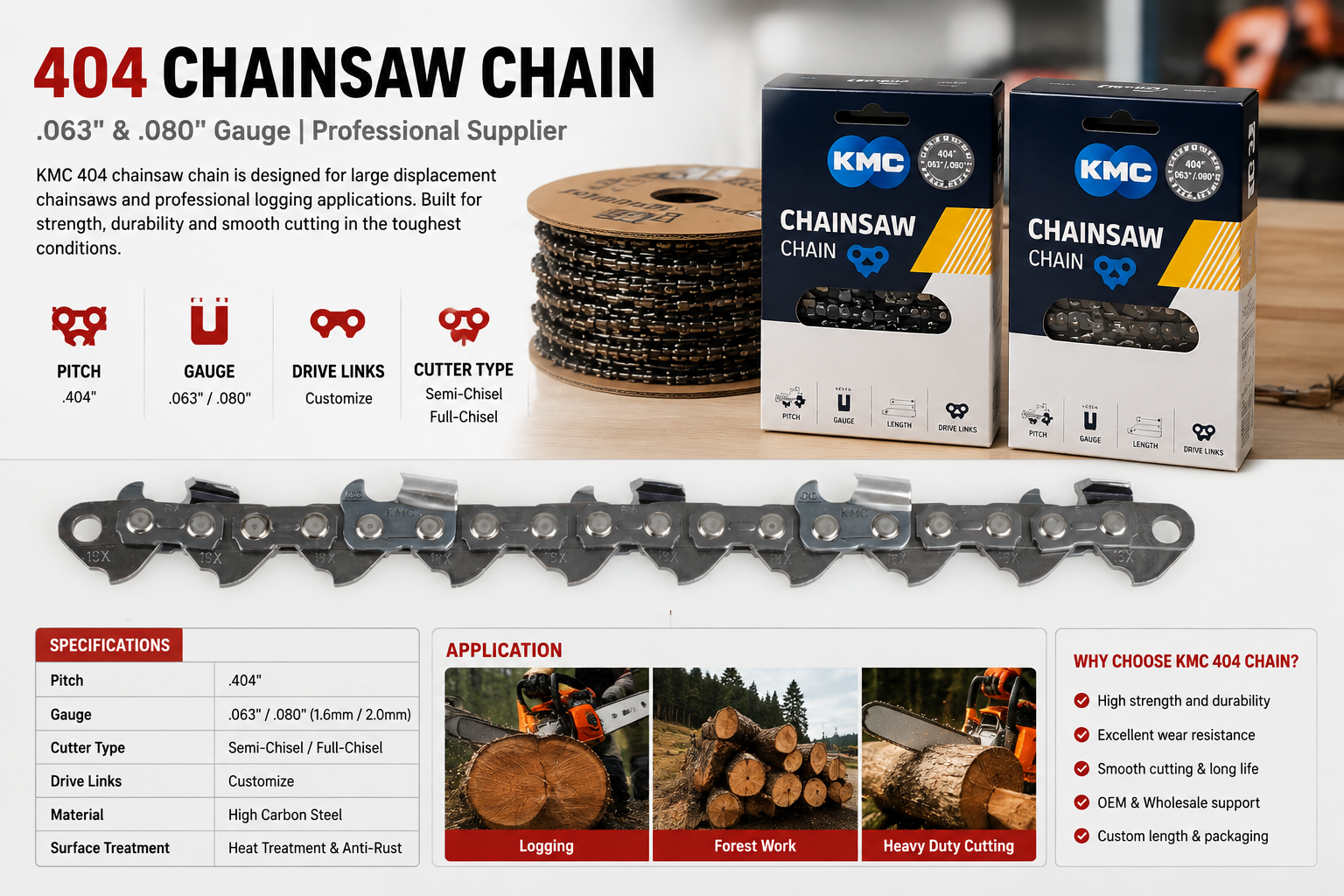
A forestry distributor may already carry .325 and 3/8 loops and then add the .404 product family. KMC publishes a .404 .063 product with 60, 92, 100 and 104 drive links, semi-chisel or full-chisel cutters, and standard, semi-skip or skip sequences. It also publishes a separate .404 .080 semi-chisel harvester product with 78, 80, 90, 91, 94, 95 and 100 DL.
The shared .404 pitch and the overlapping 100 DL count make gauge and application especially important. A counter worker should never select .404 chain from pitch and DL alone. Mechanized-harvester chain belongs to the cutting-head specification, while .404 .063 loops belong to their matching handheld or heavy-duty bar-and-sprocket system.
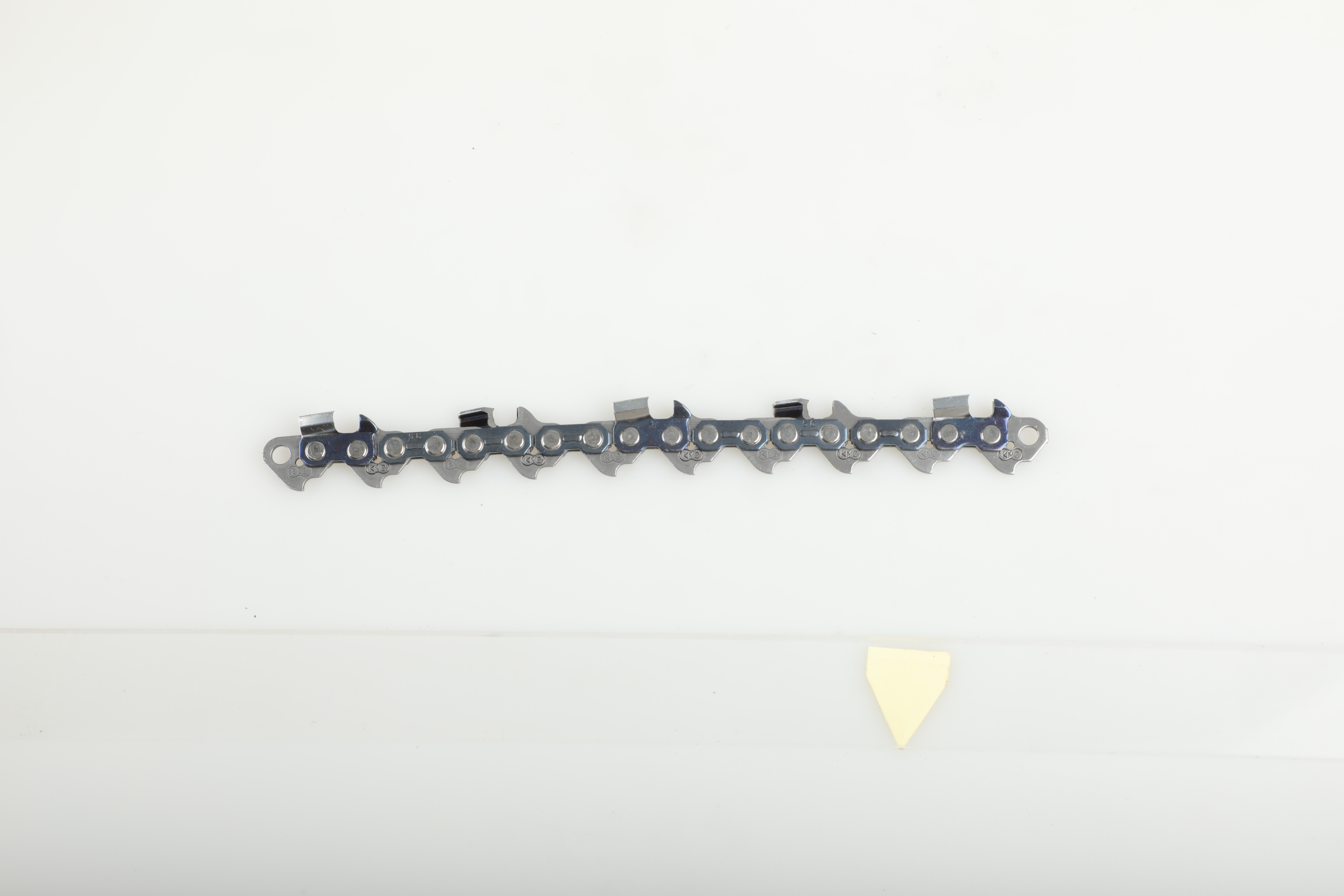
Use packaging data to prevent counter and warehouse mistakes
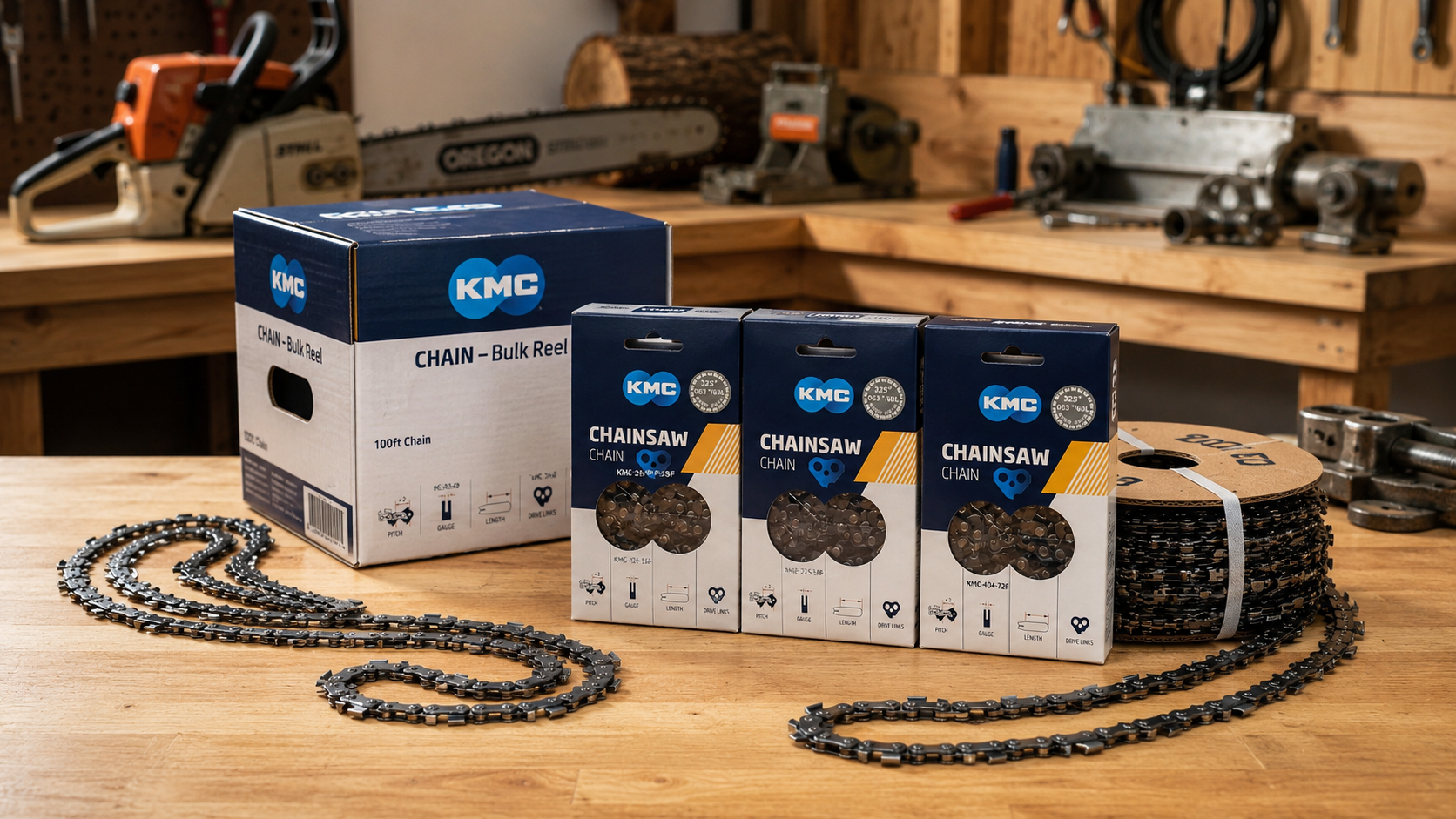
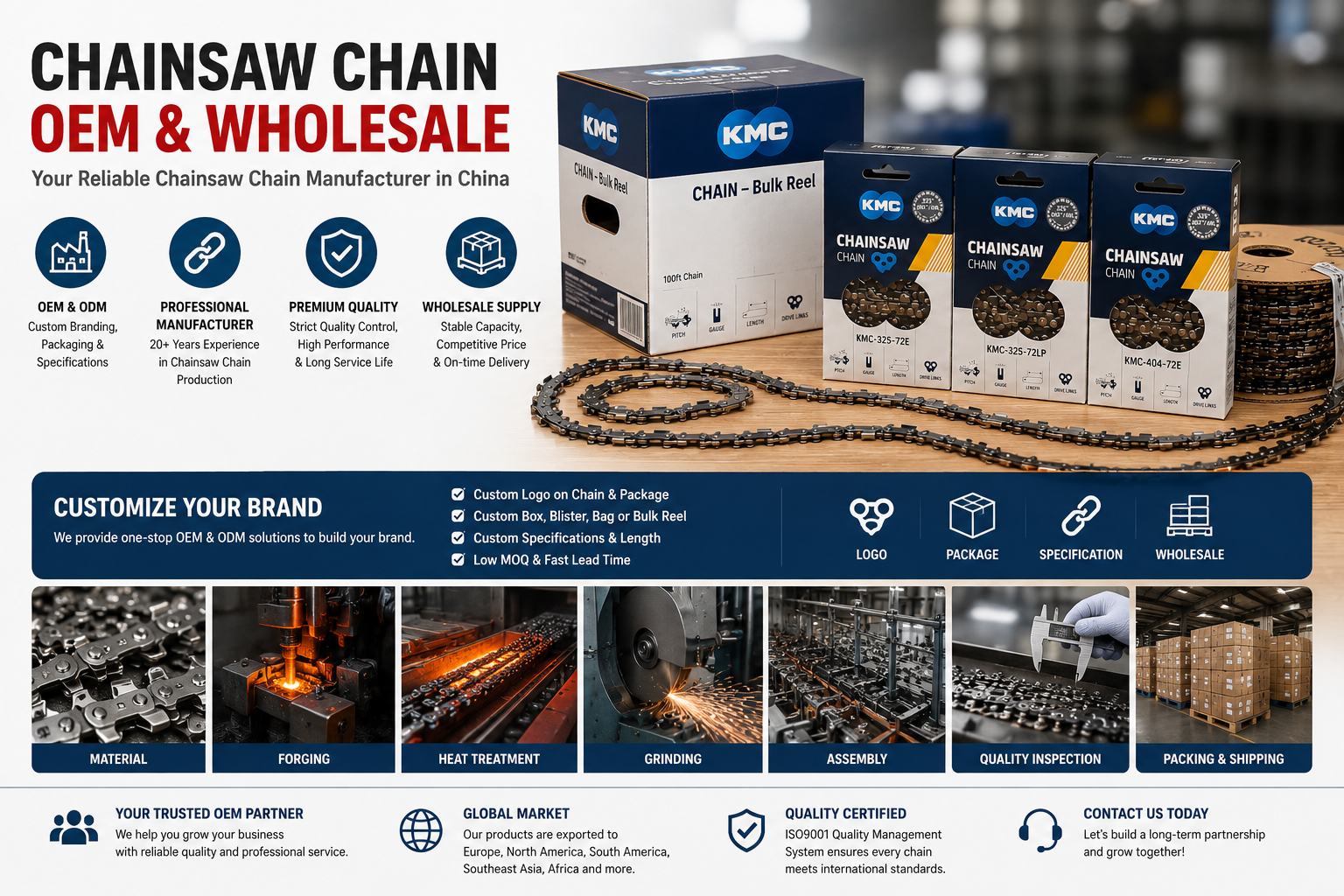
KMC's OEM and wholesale page lists individual loop boxes, blister cards, custom cartons, pallet marking and bulk 100-foot reels. A distributor should assign those formats to specific commercial jobs. Retail-ready loops need immediate fitment recognition. Workshop reels need technical identification that remains with the reel while trained staff make replacement loops.
Put pitch, gauge and drive-link count on the same label face
Do not force a dealer to turn the box over three times to assemble the fitment identity. Place pitch, gauge and drive-link count together in a readable hierarchy. Add cutter style and sequence when the range carries alternatives. Brand compatibility can appear as supporting information, but it should never visually overpower the actual dimensions.
Before artwork approval, compare the printed data with a packed physical sample. The sample inside a .325 .050 72 DL box must be counted and checked, not assumed correct from the art proof. For 3/8 LP .043 and .050 products, use a clear gauge distinction in text and, if the brand system permits, a secondary color cue. Text remains essential because color alone is not a reliable technical identifier.
Plan carton quantities around each dealer's replenishment rhythm
A fast-moving 3/8 LP loop may justify a different inner quantity from a slower .404 configuration. The supplier's packaging line can support consistency, but the distributor must decide how cartons will be broken, picked and delivered. An inner pack that is too large encourages loose boxes to be separated from their item label; an inner pack that is too small adds handling without improving availability.
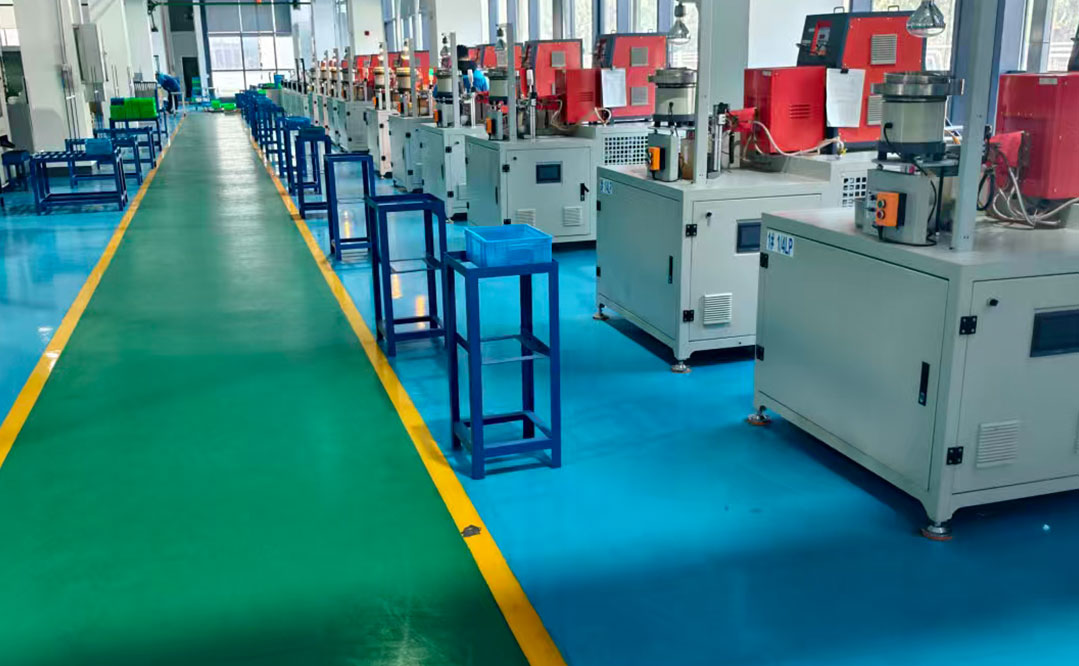
Use early sales data to adjust quantities by SKU, not by pitch family total. If 52 DL 3/8 LP .050 sells quickly while 45 DL moves slowly, the next purchase should reflect that difference. Keeping the original item identity intact makes this possible. It also lets the distributor investigate returns by exact chain rather than by a vague category.
Choose the chainsaw chain supplier that preserves SKU identity
A useful supplier relationship makes the distributor's range easier to buy, receive, store, sell and reorder. The proof is visible in ordinary operations: each loop keeps its pitch, gauge, drive-link count and cutter identity; compact and professional families do not merge; .404 .063 does not drift into .404 .080; and packaging continues the same technical record.
Begin with the machine population your dealers service, approve a focused group of SKUs and expand only when sales data supports the next size. Catalogue breadth matters, but disciplined identification matters more. The chainsaw chain supplier that preserves each SKU from order sheet to dealer shelf gives the buyer a range that can grow without becoming harder to control.