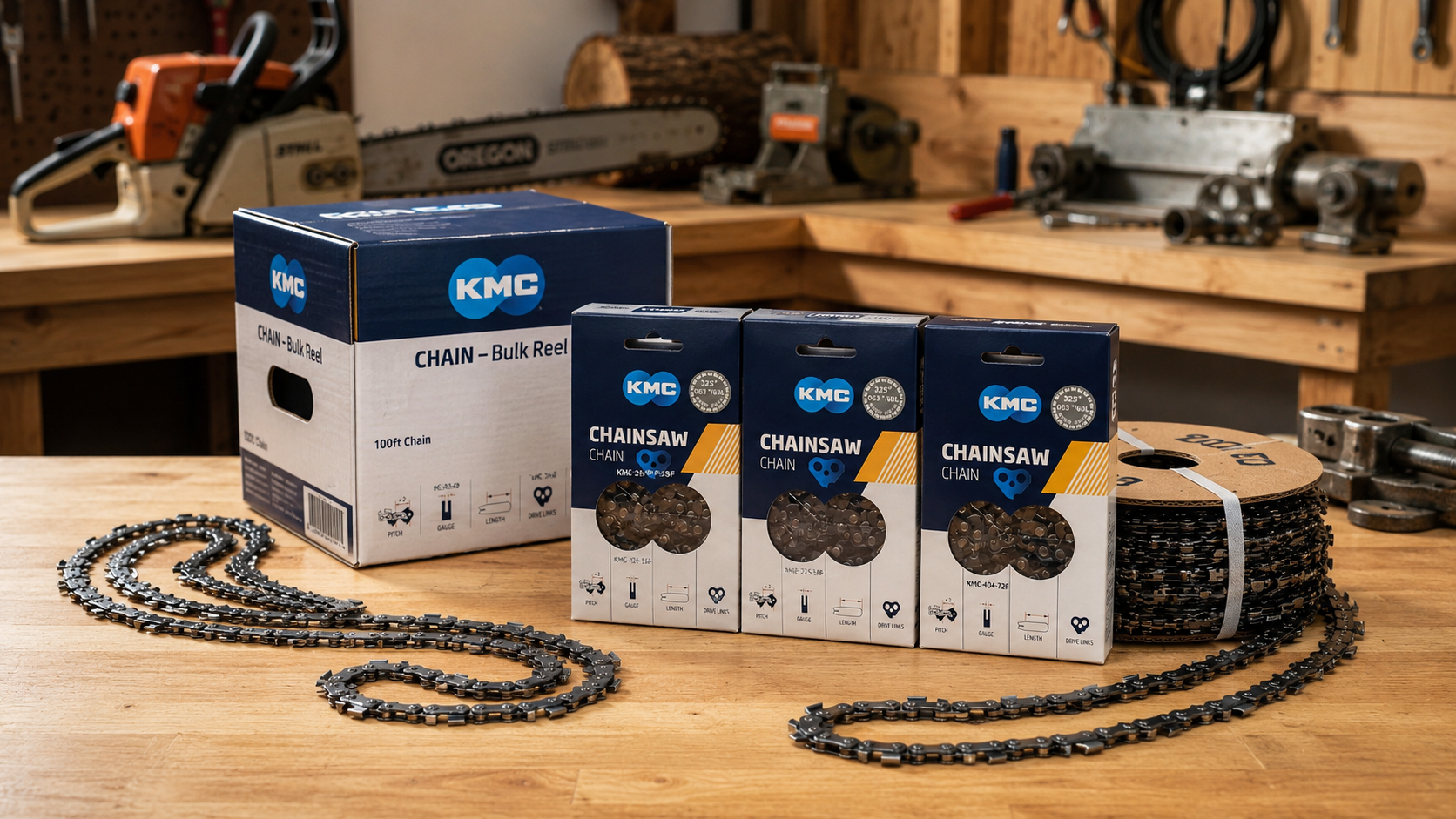
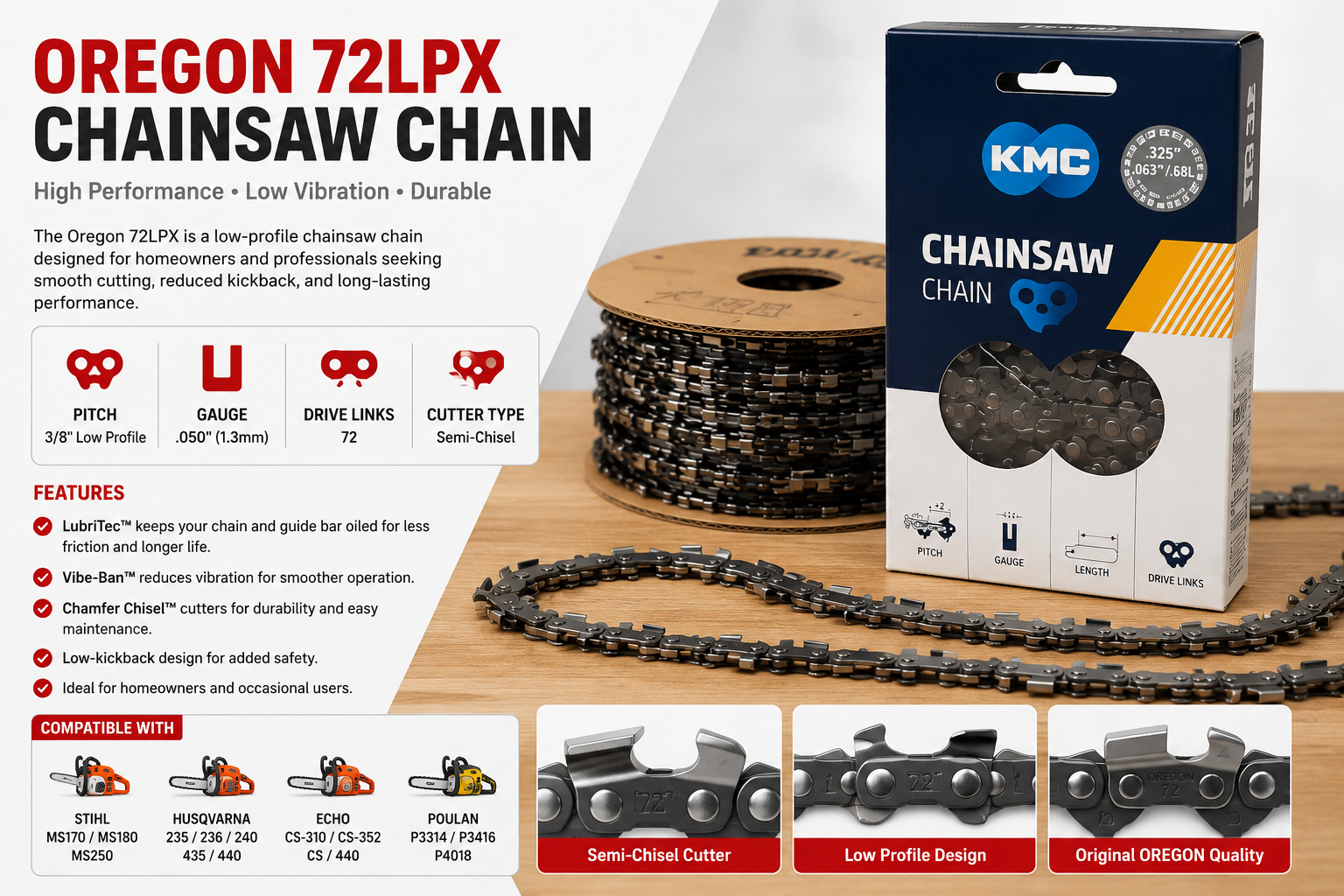
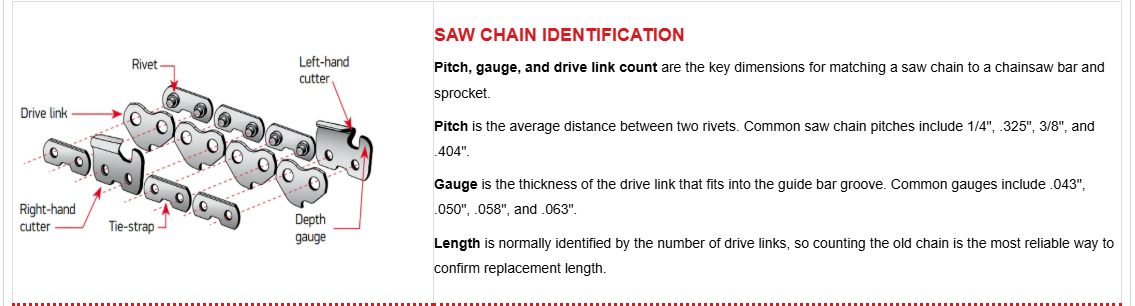
A first sample can be unusable even when the buyer and saw chain manufacturer both believe they agreed on a “16-inch chain.” Guide-bar length does not uniquely identify a loop. The handoff has to state pitch, gauge and drive-link count, then add cutter profile, sequence, branding and package identity. Importers, replacement-parts brands and distributors should begin with the markings on the intended bar or the equipment maker’s specification—not with a generic length description. KMC buyers can compare the available saw-chain families before assigning a sample to 3/8 LP, .325, 3/8, .404 or 1/4 production.
The first decision is whether the buyer is validating fitment, cutting configuration, retail presentation or all three. A fitment sample answers whether the loop belongs on the specified bar and sprocket system. A packaging sample proves that the correct technical identity survives printing, packing and receiving. Combining those aims is possible, but only when the approval record says exactly what was examined. A photograph of a closed box is not evidence that the loop inside has the right number of drive links.
Give the saw chain manufacturer a build record, not a bar-length nickname
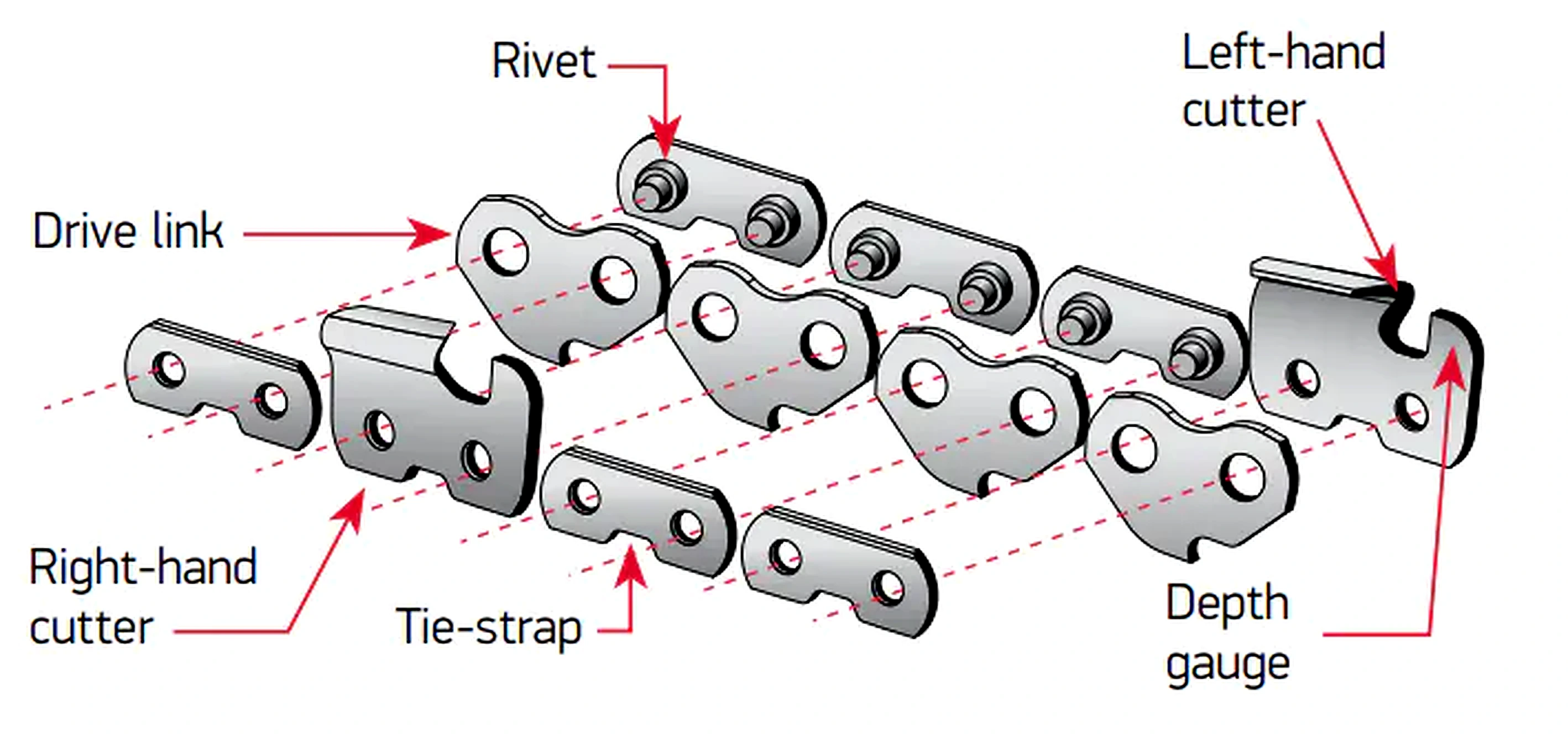
A workable sample request reads like a controlled product record. Put pitch, gauge and drive-link count in separate fields. Official chain-selection guidance treats these as independent fitment dimensions: pitch must match the sprocket and bar nose, gauge must match the bar groove, and drive-link count determines loop length within that system. Two bars sold under the same nominal length can require different loop counts, so the saw model or bar reference should support the dimensions rather than replace them.
The minimum technical line might read “3/8 LP, .050 in (1.3 mm), 52 DL, semi-chisel, standard sequence.” Below it, identify the intended machine or bar reference, the source of the dimensions and the person who confirmed them. If the old loop was counted, record how it was counted. If the bar stamp supplied the pitch and gauge, preserve a legible photograph. This turns a buyer’s memory into evidence the manufacturer can review.
A 52 DL request still needs the 3/8 LP gauge
KMC’s 3/8 low-profile range shows why a drive-link count alone is incomplete. The published .043-inch product lists 40, 45 and 52 DL. The .050-inch product lists 40, 45, 50, 52, 55, 56 and 59 DL. A 52 DL loop appears in both gauge routes. The buyer must state whether the bar groove is .043 inch (1.1 mm) or .050 inch (1.3 mm).
Consider a garden-tool brand preparing replacement loops for two compact saws. Its merchandising team may call both products “14-inch compact chains,” while the engineering records show different gauges. If the purchase request keeps only the retail length, the sample process begins with an avoidable ambiguity. Separate item codes and separate build records should exist before artwork is created.
A 72 DL loop can belong to .325 or 3/8 systems
The same problem crosses pitch families. KMC’s verified .325 .050 chain table includes 64, 72, 76, 78 and 86 DL. Its verified 3/8 .058 chain lists 68, 72, 76 and 84 DL. “72 DL professional loop” could therefore describe two incompatible drive systems even before cutter style is discussed.
A forestry parts buyer should require the sample tag to repeat the complete combination. During receiving, staff can compare that tag with the request before the sample leaves its protective package. If the pitch field is missing, the sample should be placed on hold rather than inferred from the tooth shape or nominal bar length.
Decide which cutting behavior the first saw-chain sample must represent
Once fitment is fixed, define the cutter and sequence that belong to the user’s work. KMC publishes semi-chisel and full-chisel options across several 3/8 LP, .325, 3/8 and .404 products, together with standard, semi-skip and skip sequences on applicable pages. These alternatives are not decoration. A sample built with a different cutter from the intended order may fit the bar while proving nothing about the range the buyer plans to sell.
Semi-chisel samples suit mixed or contaminated wood decisions
A rounded semi-chisel working corner is generally chosen where edge retention in hard, frozen or dirty wood matters more than maximum speed in ideal clean wood. A rural dealer brand serving farms, storm cleanup and varied firewood may therefore use a semi-chisel sample as its first application reference. The approval should still avoid promising universal performance; wood condition, sharpening and the saw setup all affect the result.
The buyer can inspect whether the sample matches the named cutter profile and whether the package describes it consistently. Cutting trials should follow the intended machine’s instructions and safe operating procedure. Record the wood condition and setup if observations will influence a commercial decision. A statement such as “cut well” is too vague to compare with a later production lot.
Full-chisel and skip configurations need an explicit application boundary
Full-chisel cutters use a sharper square working corner and are commonly selected by experienced users seeking fast cutting in clean wood. Skip or semi-skip sequences reduce the number of cutters on applicable longer loops, but they should not be specified merely because they sound professional. The bar length, powerhead, wood and operator requirements need to support the choice.
A distributor that sells to both property owners and professional logging crews should not approve one full-chisel skip sample as a universal replacement. Create separate records for the consumer-oriented loop and the professional configuration. The sample label should make that distinction visible so the faster-cutting option is not later presented as the default for every machine or user.
Make the first sample answer five different approval questions
One sample can move through several teams, but each team should sign only the part it can verify. The product engineer checks the chain identity. A trained technical reviewer examines assembly and the agreed cutter configuration. The brand team checks artwork. The warehouse team checks scannability and item separation. Purchasing confirms that the approved record matches the quotation and planned order.
Identity: Does the tag and physical loop show the requested pitch, gauge and drive-link count?
Configuration: Are cutter profile and sequence the variants named in the build record?
Workmanship: Are assembly, rivet condition and visible finish consistent with the approved reference?
Presentation: Does the individual package preserve the complete item identity without relying on carton context?
Traceability: Can the buyer connect the loop, package proof and inspection notes to one revision and one sample date?
Do not let a package proof become a technical approval
A private-label team may receive a convincing box mock-up before a functional loop is available. That proof can validate logo position, barcode placement and required languages, but it cannot validate drive-link count, gauge or assembly. Mark it “artwork proof” and keep the technical approval open. Conversely, an unbranded chain can prove fitment and construction without approving retail print.
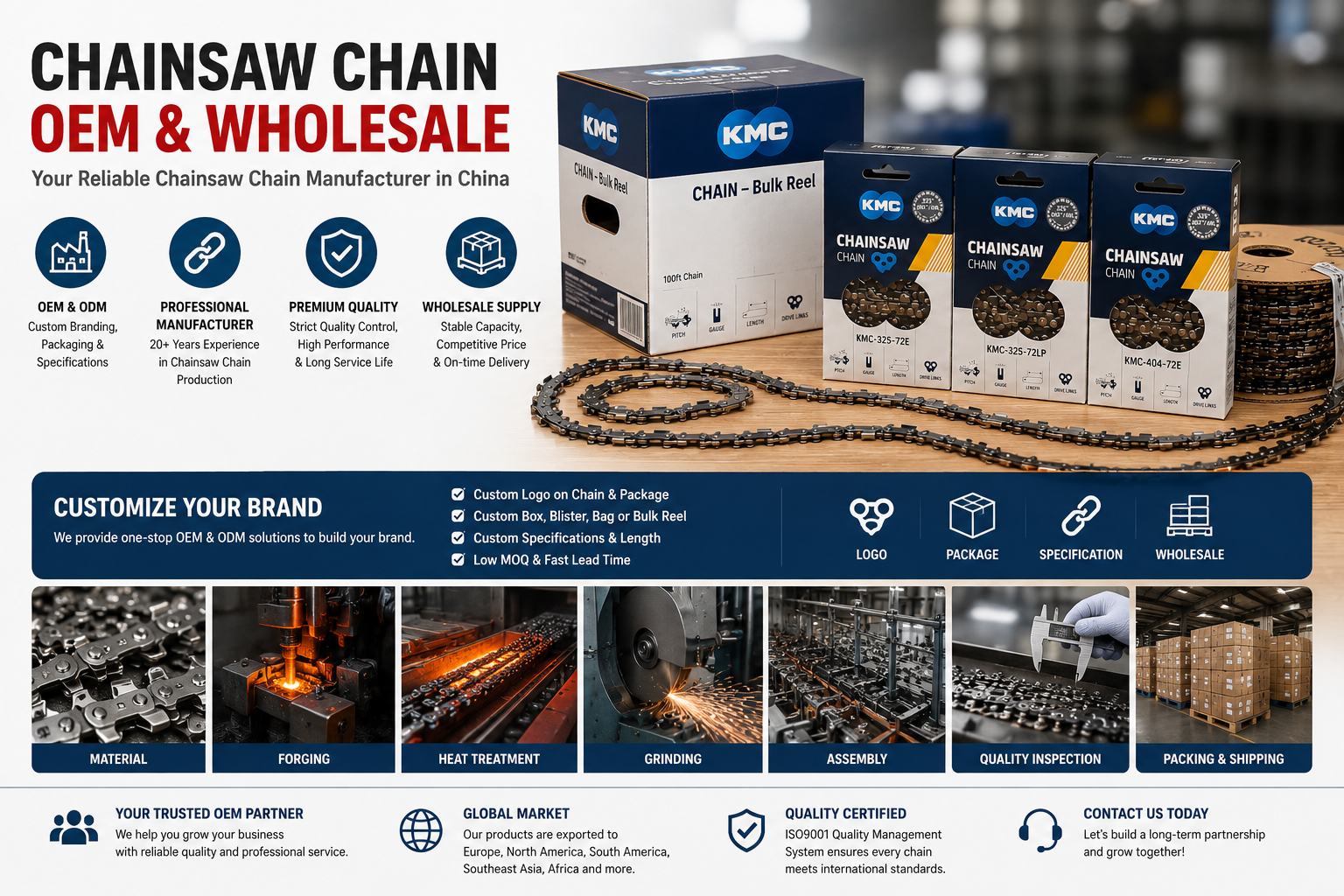
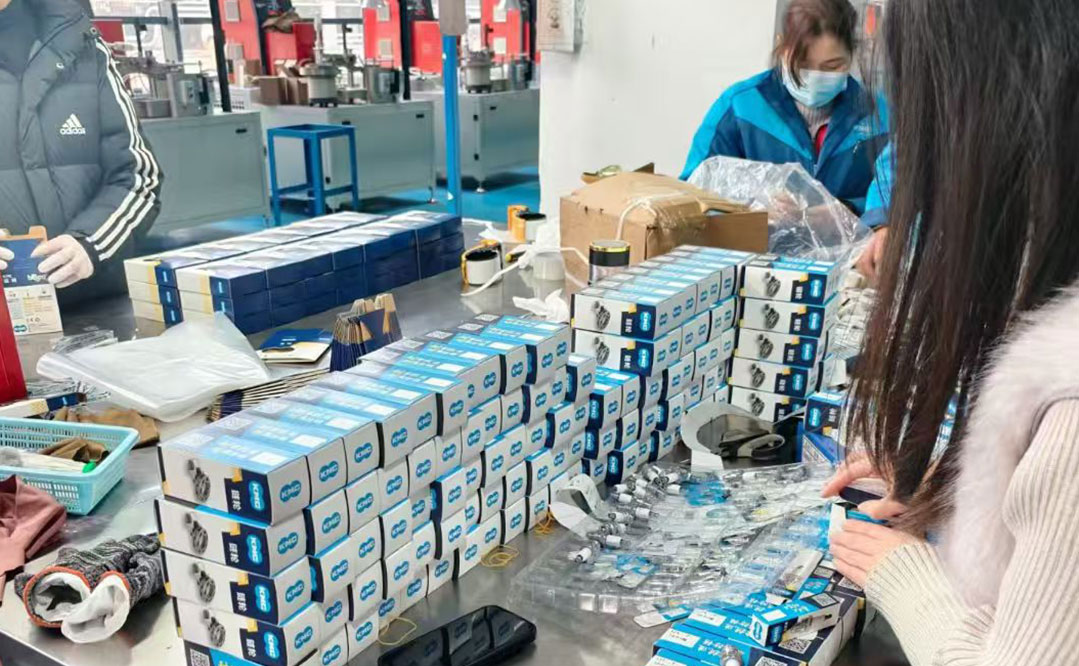
KMC’s OEM and wholesale information describes logo, barcode, multilingual manual, individual box, blister card, custom carton and pallet options. A buyer should decide which of those elements belongs in the first approval round. Freezing every visual detail before fitment is confirmed creates rework if the technical item changes.
Use a held reference loop to compare repeat production
After the sample passes, retain a clearly marked reference rather than putting the only approved loop into sales stock. Photograph its label and package, record the sample identifier and keep the signed build record beside it. This “golden sample” is useful only when its status is controlled; an unmarked chain on a shelf can be confused with later production.
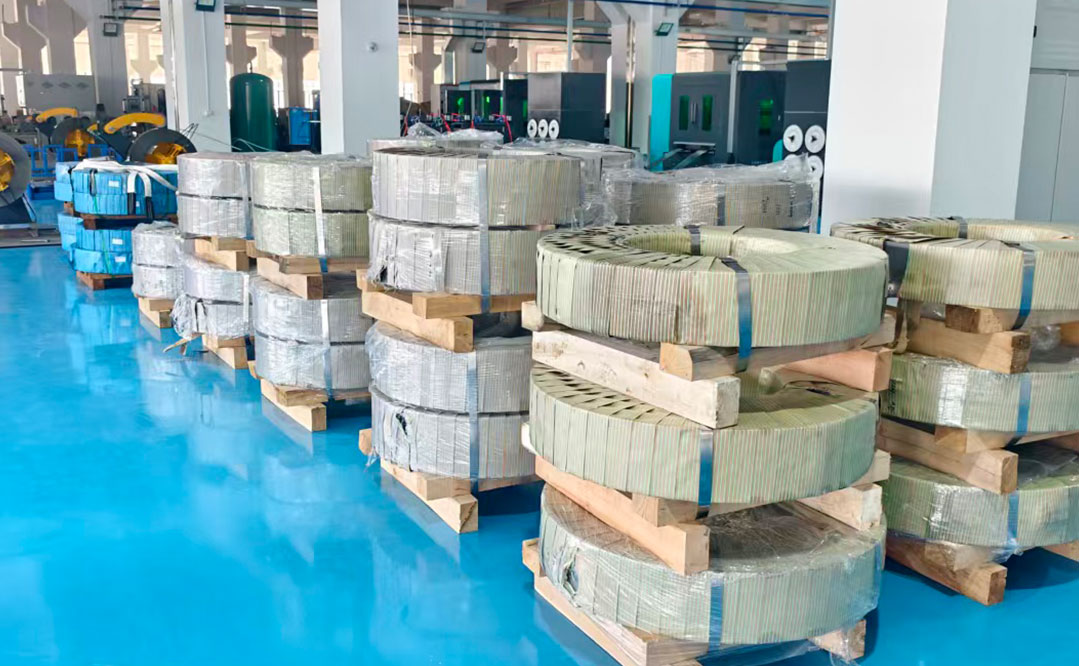
The reference does not replace production inspection. It provides a physical comparison for the agreed visible attributes while the manufacturer’s controls address material, heat treatment, assembly and final checks. KMC states that its saw-chain products use 68CrNiMo3 material and describes composition inspection, heat treatment and hardness control, assembly checks, cutting tests and final inspection. Those are first-party process statements to confirm for the order rather than independent certification claims.
A .404 sample must state whether it is a handheld loop or harvester chain
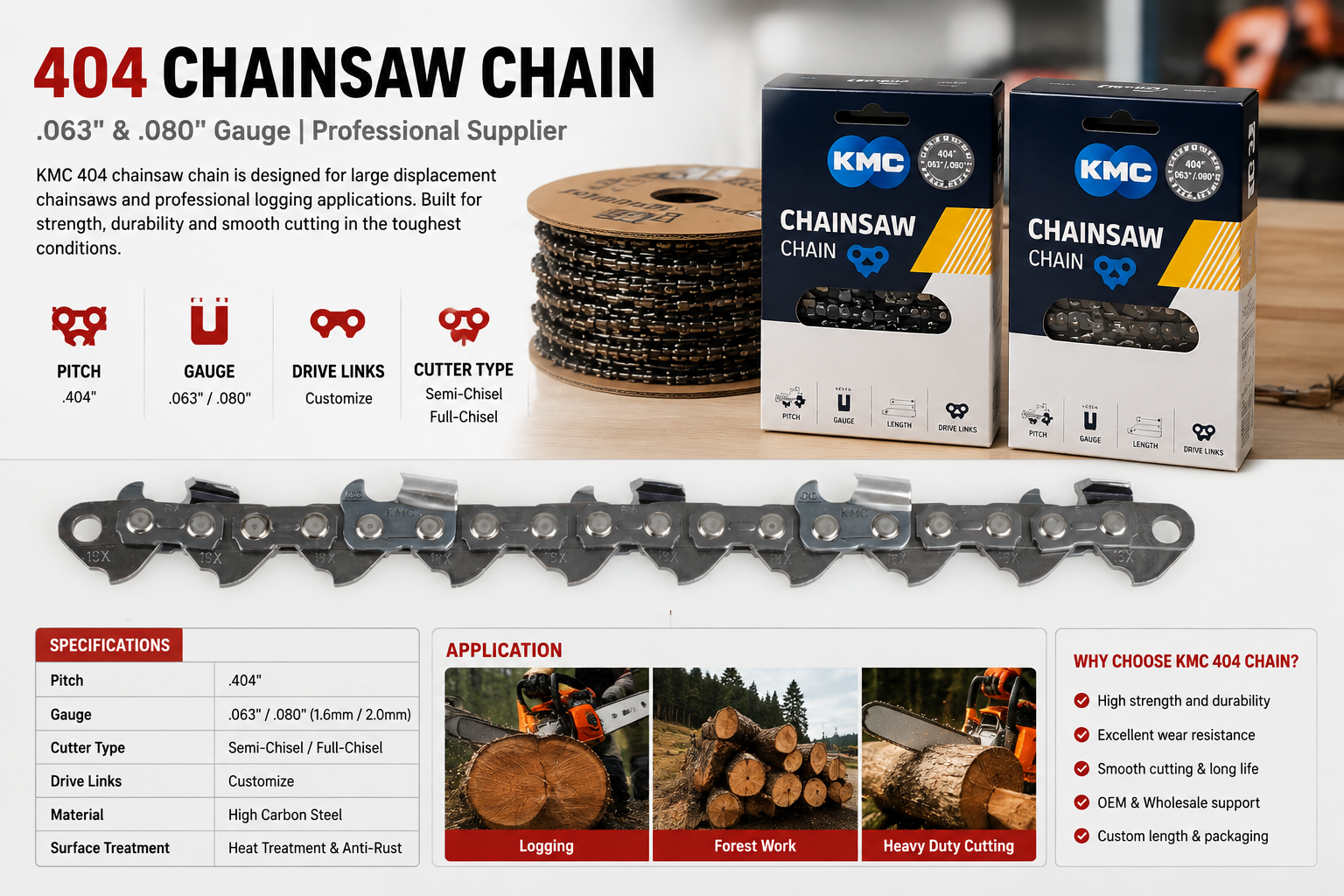
Heavy-chain requests need an application field in addition to the dimensional line. KMC’s .404 range includes a published .404 .063 product with 60, 92, 100 and 104 DL and a separate .404 .080 harvester product with 78, 80, 90, 91, 94, 95 and 100 DL. Pitch and a 100 DL count are shared, but gauge and operating system are different.
The cutting-head record governs a .404 .080 harvester sample
A mechanized-forestry buyer should take the .404 .080 dimensions from the cutting-head, bar and sprocket documentation. The first sample request should name that system and the required 78–100 DL option rather than treating the loop as a longer handheld chain. Harvester chain works inside an integrated cutting attachment; a visually plausible loop is not evidence of compatibility.
If the buyer is replacing an existing harvester loop, preserve its full identification and count the drive links carefully. Photographing the worn loop alone may not reveal the groove dimension. The technical team should reconcile the old part, bar specification and machine documentation before the saw chain manufacturer builds the sample.
Release production only from the signed saw-chain sample record
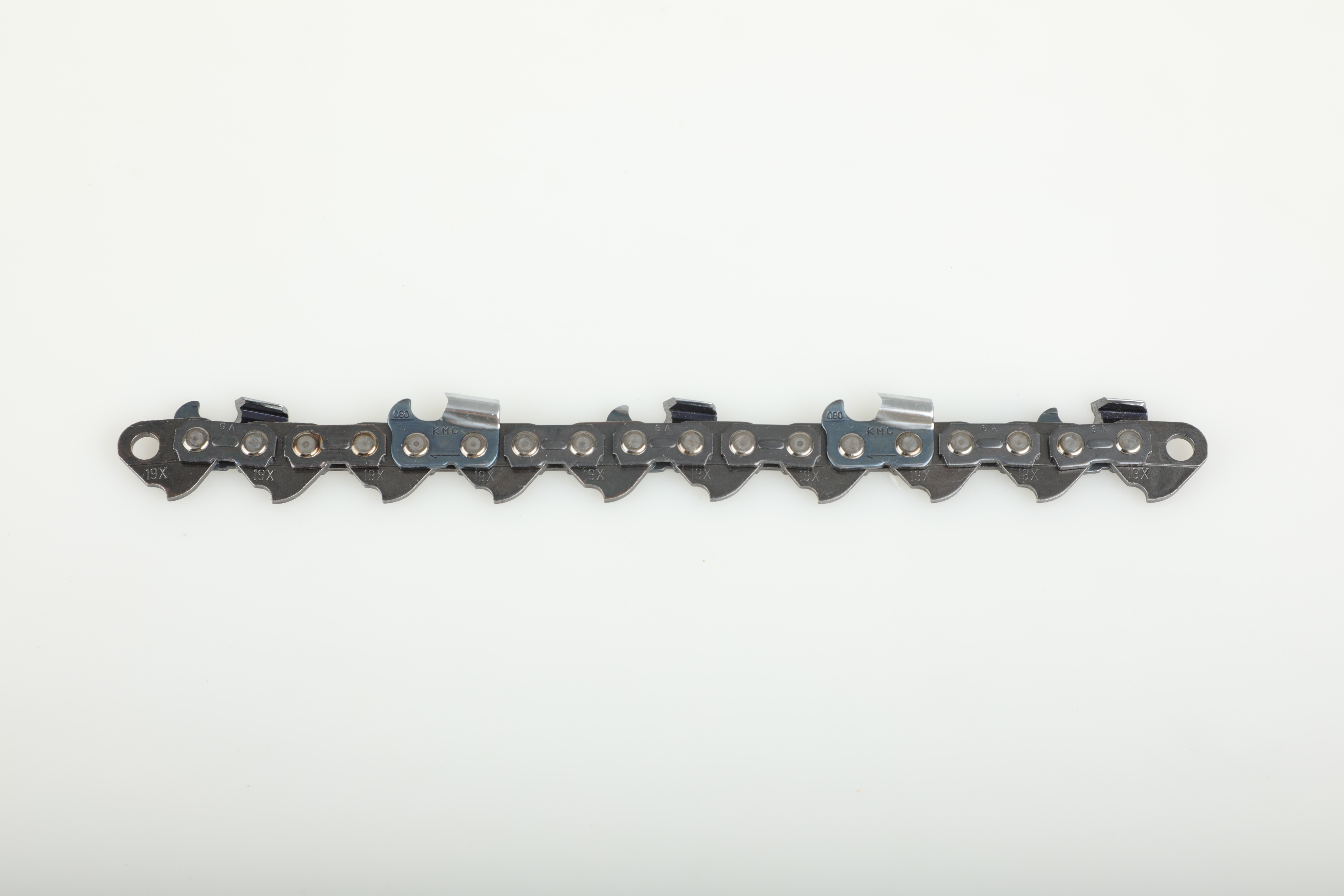
The final approval should list what passed, what remains open and what may not change without a new review. Freeze the confirmed pitch, gauge, drive-link count, cutter profile, sequence, label data and package revision. Attach the photographs and inspection notes that support the decision. If cutting performance was not tested, say so; a dimensional and artwork approval must not quietly become a performance claim.
Then compare the purchase order with that signed record line by line. A sample is successful when it removes ambiguity from repeat production, receiving and later replenishment—not when it simply looks finished. Give the saw chain manufacturer one controlled identity for the loop and one controlled identity for its package. That handoff lets both parties detect a change before it becomes a shipment of correctly boxed but incorrectly specified chain.