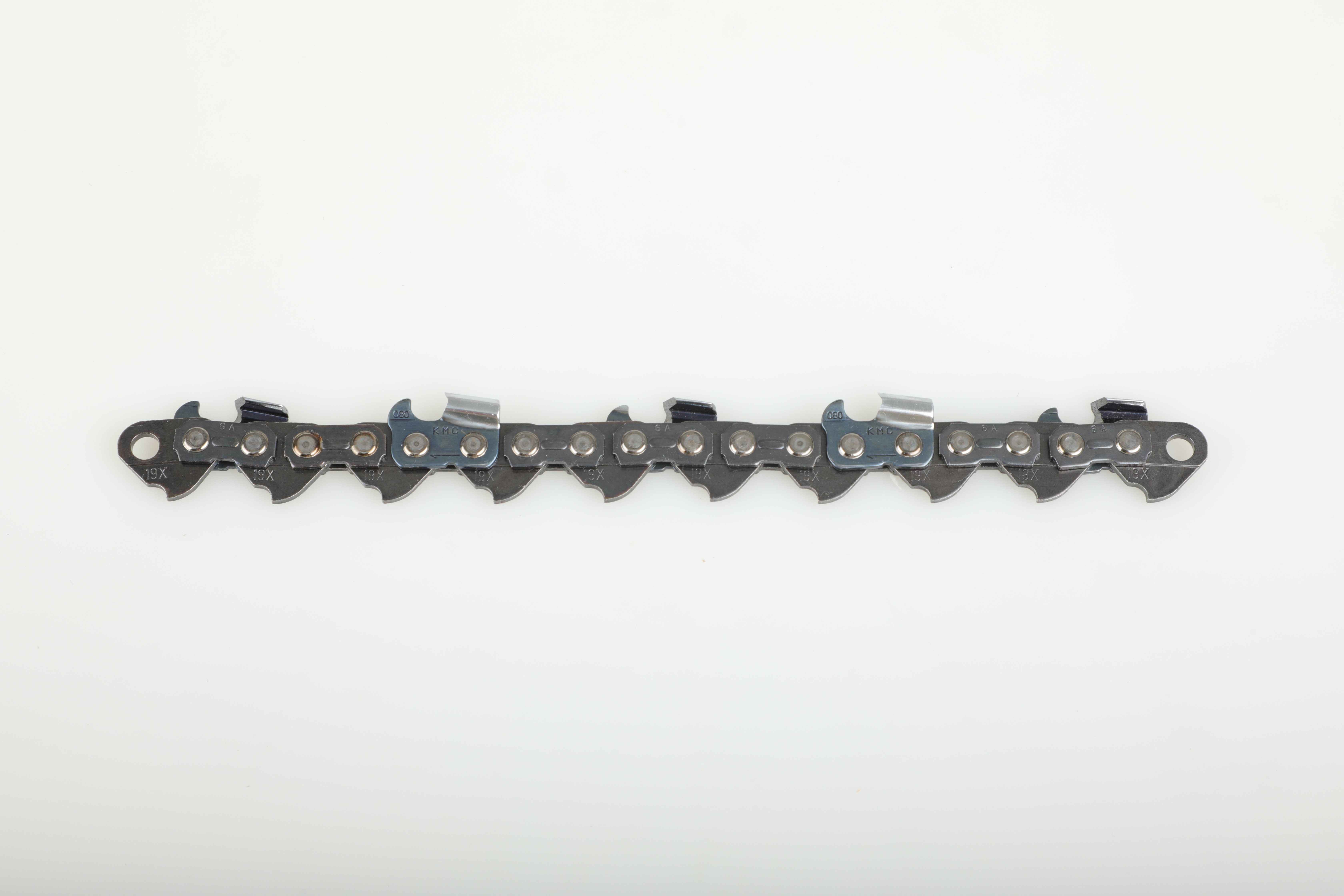
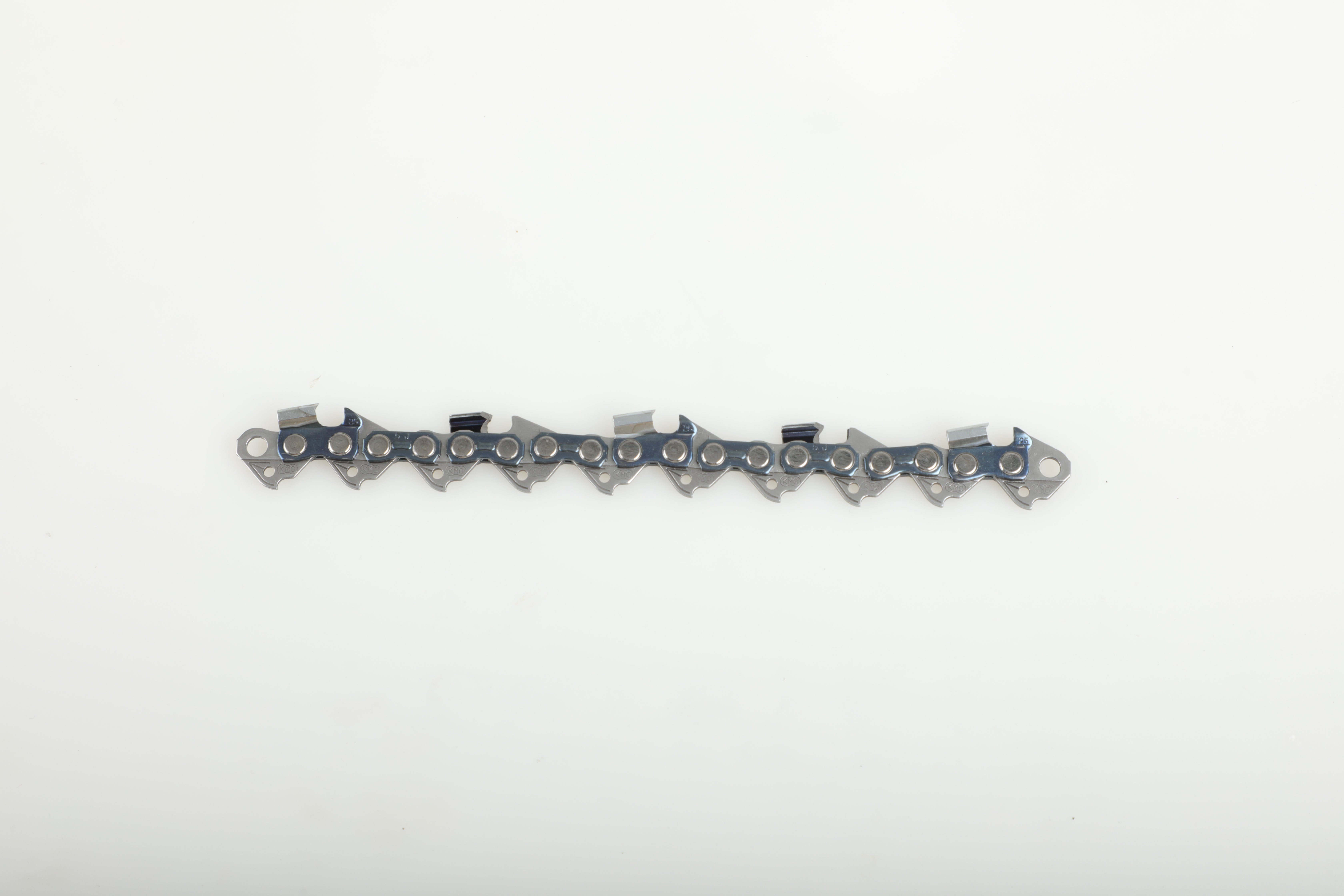
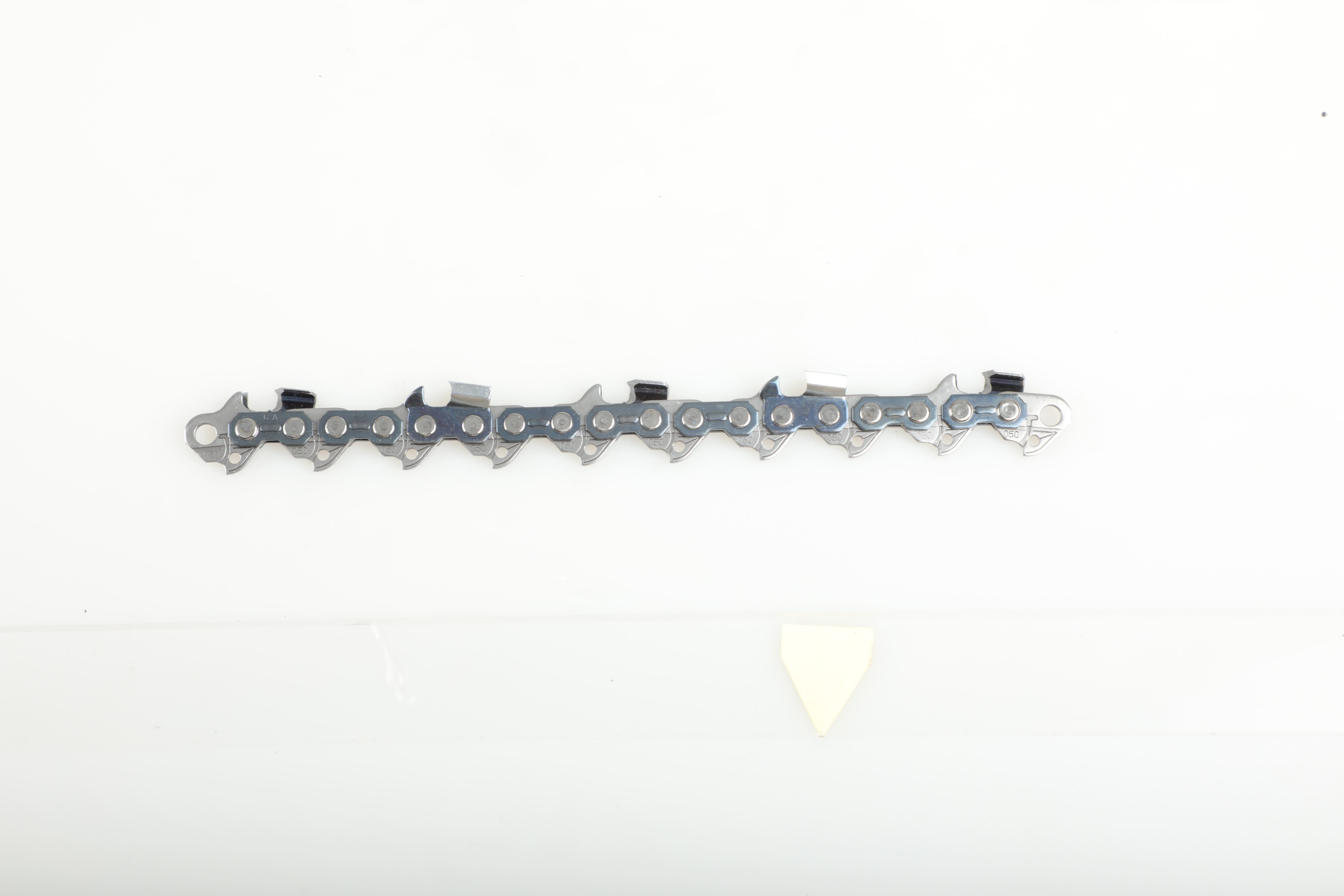
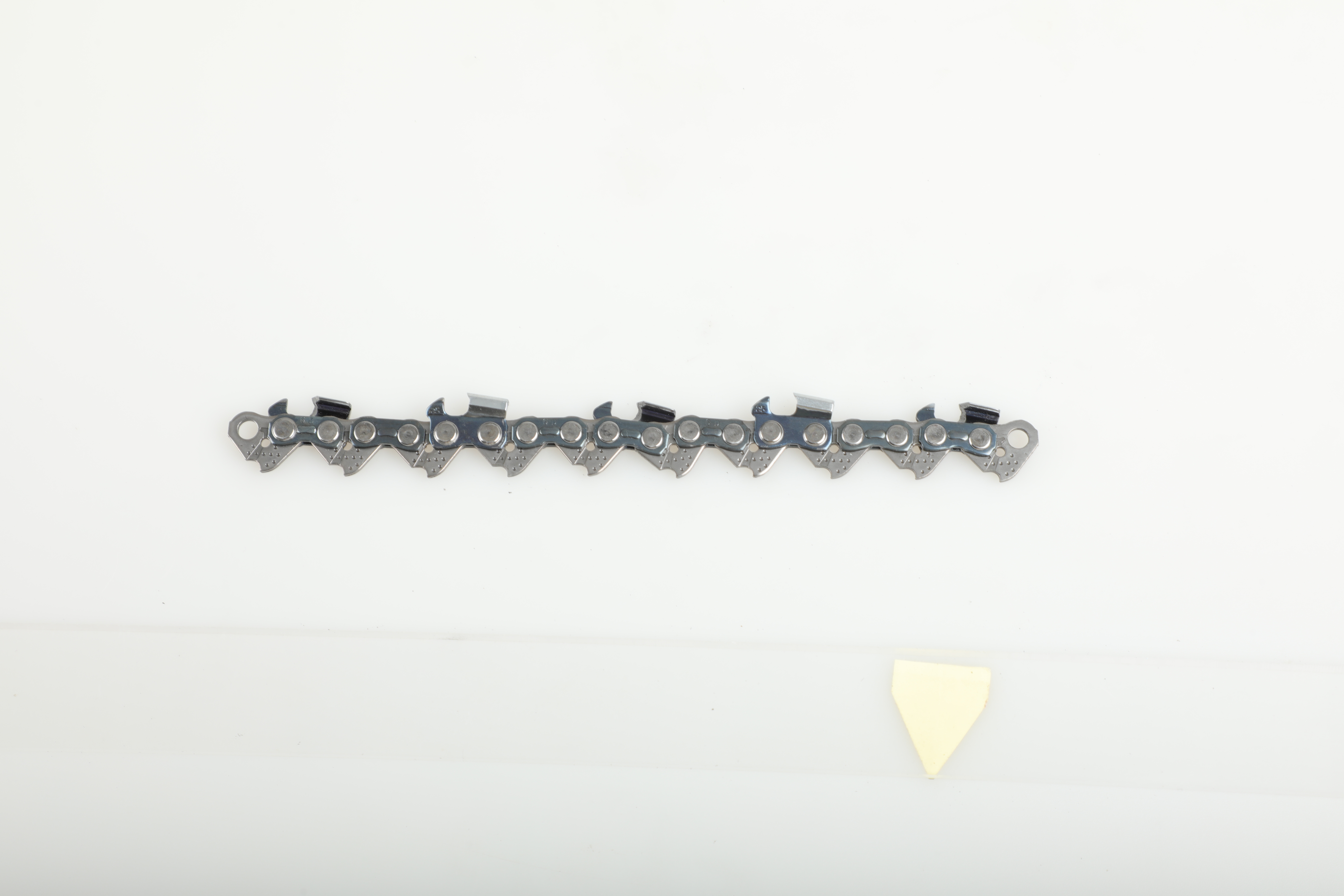
The best chainsaw chain for logging is not one universal cutter or pitch. It is the chain that fits the saw, bar and sprocket exactly, matches the timber and site conditions, and can be sharpened and maintained throughout the workday. Fast cutting matters, but predictable handling, durability and correct system compatibility matter just as much.
The best chain is the one that fits the saw and the timber. Begin with pitch, gauge and drive-link count. Then choose full-chisel or semi-chisel cutters according to wood cleanliness, operator preference and maintenance conditions. Finally, keep the chain, guide bar, sprocket and lubrication system working as one cutting attachment.
What Makes the Best Chainsaw Chain for Logging?
A logging chain must first be compatible. The drive links need the correct pitch for the sprocket and bar-nose system, the correct gauge for the guide-bar groove and the correct count for the installed bar. A chain that cannot run correctly is not improved by an aggressive cutter profile.
After fit, the main decision is how the cutting edge should behave in the expected wood. Clean, freshly felled timber presents a different edge environment from logs dragged across soil, trees with dirty bark or storm material containing grit. The right chain balances cutting rate with the time required for sharpening and cleaning.
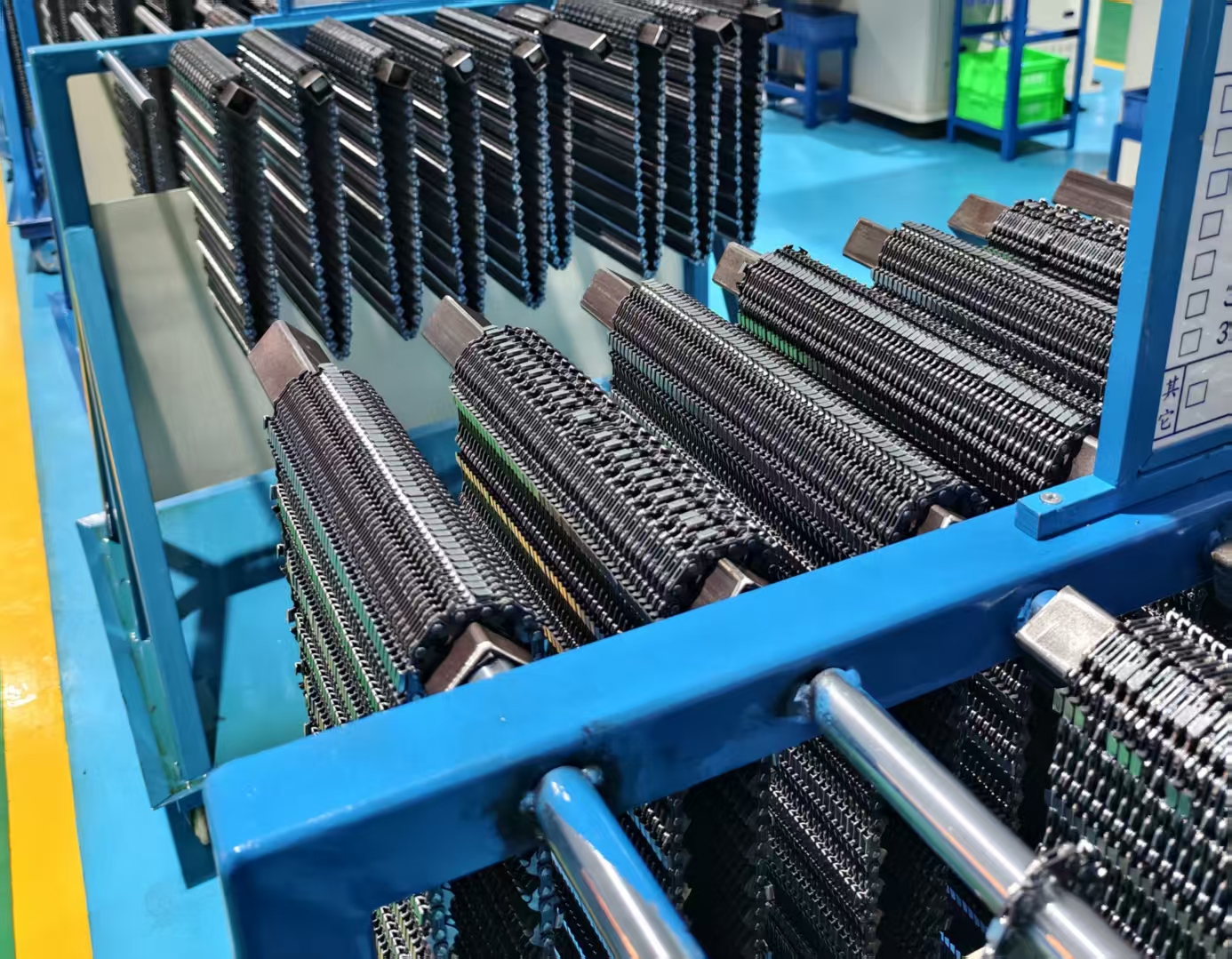
Logging chain selection begins with equipment fit and then accounts for cutter profile, timber and field conditions.
Operator familiarity also matters. A productive setup is one the user can tension, sharpen and inspect correctly. Switching to a different cutter geometry without the appropriate files, guides or maintenance knowledge can create more downtime rather than less.
Full Chisel or Semi Chisel for Logging?
Full-chisel cutters
Full-chisel cutters have an angular working corner. In clean timber and with correct maintenance, this geometry is selected when an aggressive, fast cut is the priority. It is commonly used by experienced operators who can keep the cutting edges even and avoid unnecessary contact with soil and debris.
The sharper corner is less tolerant of abrasive contamination. A brief touch against soil, dirty bark or embedded grit can reduce cutting effectiveness. In remote work, the time saved during clean cutting needs to be compared with the sharpening time created by the actual site conditions.
Semi-chisel cutters
Semi-chisel cutters have a more rounded working corner. They are often chosen for mixed forests, dirty bark, wet wood and field conditions where edge durability and straightforward maintenance are valued. Cutting may feel less aggressive, but the chain can remain practical when the environment is not consistently clean.
Semi chisel is not only a homeowner option. A professional crew may choose it deliberately when timber contamination, weather or task variety makes a more tolerant edge useful. The choice should follow the work rather than a label about the user.
| Factor | Full chisel | Semi chisel |
|---|---|---|
| Working corner | Angular | Rounded |
| Typical priority | Fast cutting in clean wood | Edge tolerance in mixed conditions |
| Contamination | Requires careful avoidance of dirt and grit | Often selected where wood is less clean |
| Maintenance focus | Precise, consistent sharpening | Practical edge maintenance |
Pitch, Gauge and Drive Links for Logging Saws
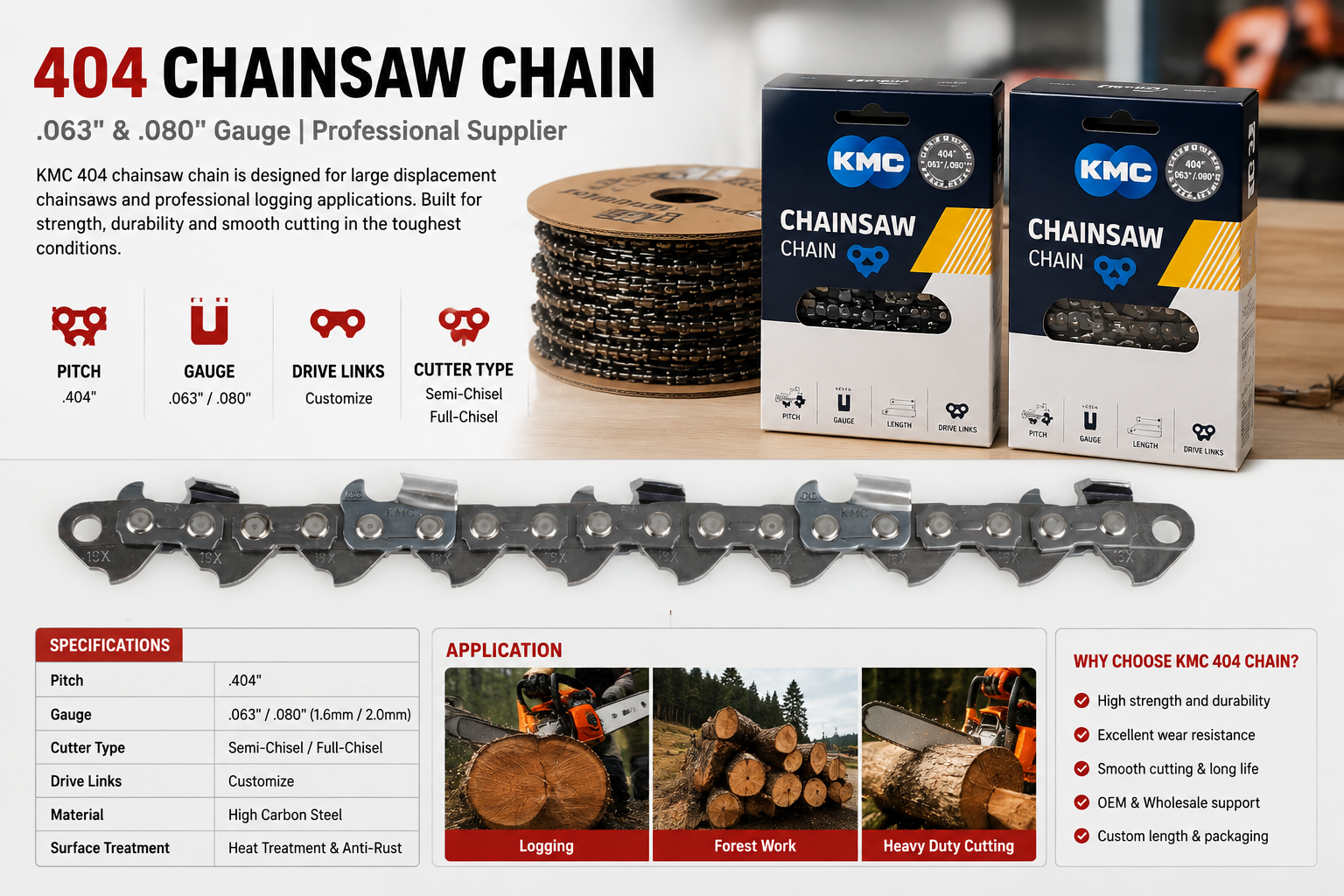
Logging chains are available in several pitch families, including .325 chain, standard 3/8 chain and .404 chain. These categories do not form a simple ranking from weak to strong. Each must be used with a saw, sprocket and guide bar designed for that system.
Gauge is the thickness of the drive link in the guide-bar groove. It has to match the bar marking. A gauge that is too thick will not seat correctly; one that is too thin will not receive the intended support. Drive-link count determines the loop length for the specific bar.
Read pitch and gauge from the actual guide bar or equipment documentation.
Confirm the drive-link count for the installed bar.
Check that the drive sprocket and bar nose use the same pitch family.
Choose cutter profile and sequence only after the fit data are fixed.
Use the saw maker’s approved cutting-attachment configuration.
A longer bar does not automatically require a particular pitch, and bar length alone does not identify drive-link count. Professional purchasing records should list the full size for every saw and bar combination in the fleet.
Match the Chain to Timber and Site Conditions
Clean, sound timber allows the cutting edge to work without frequent contact with abrasive material. Full chisel may be a productive choice when the operator can keep the chain out of soil and maintain it accurately. If logs are muddy, bark holds grit or trees are handled on rough ground, semi chisel can reduce the sensitivity of the edge to those conditions.
Frozen, storm-damaged or contaminated timber requires a careful site assessment. Remove loose soil where practical and inspect for wire, nails, stones and other objects before cutting. No saw chain is intended to cut hidden metal safely. Stop when the material cannot be assessed or when the task exceeds the equipment and operator’s capability.
Species names alone should not decide the chain. Moisture, bark condition, contamination, log diameter, cut type and equipment setup can all change the work. Record what actually causes sharpening or cutting problems and use that information to refine future chain selection.
Chain sequence may also enter the decision on long cutting attachments. Full-complement, semi-skip and full-skip configurations differ in cutter spacing and chip clearance. Use a sequence offered and approved for the bar, saw and application rather than assuming fewer cutters always improve production.
Setup and Maintenance for Productive Logging
A sharp chain on a worn bar or sprocket will not deliver a stable cutting system. Inspect bar rails, groove condition, nose sprocket, drive sprocket and lubrication whenever a chain is replaced. Repeated drive-link damage, unusual vibration or uneven wear should trigger a system inspection rather than another sharpening attempt.
Set chain tension according to the saw instructions and recheck it as the equipment warms and operating conditions change. The chain should move correctly around the bar without hanging away from the rails. Excessive tension increases friction; inadequate tension can allow derailment.
Sharpen all cutters consistently using the correct file and guide for the chain. Keep left- and right-hand cutters balanced and maintain depth gauges with the specified tool. A chain that pulls to one side, produces fine dust instead of useful chips or needs excessive feed pressure requires inspection.
Carry correctly sized files and a depth-gauge tool for each chain family.
Rotate serviceable chains so maintenance can be completed carefully.
Keep spare chains identified by pitch, gauge and drive links.
Clean bar grooves and oil passages during routine service.
Replace cracked, distorted or seriously damaged links rather than improvising a repair.
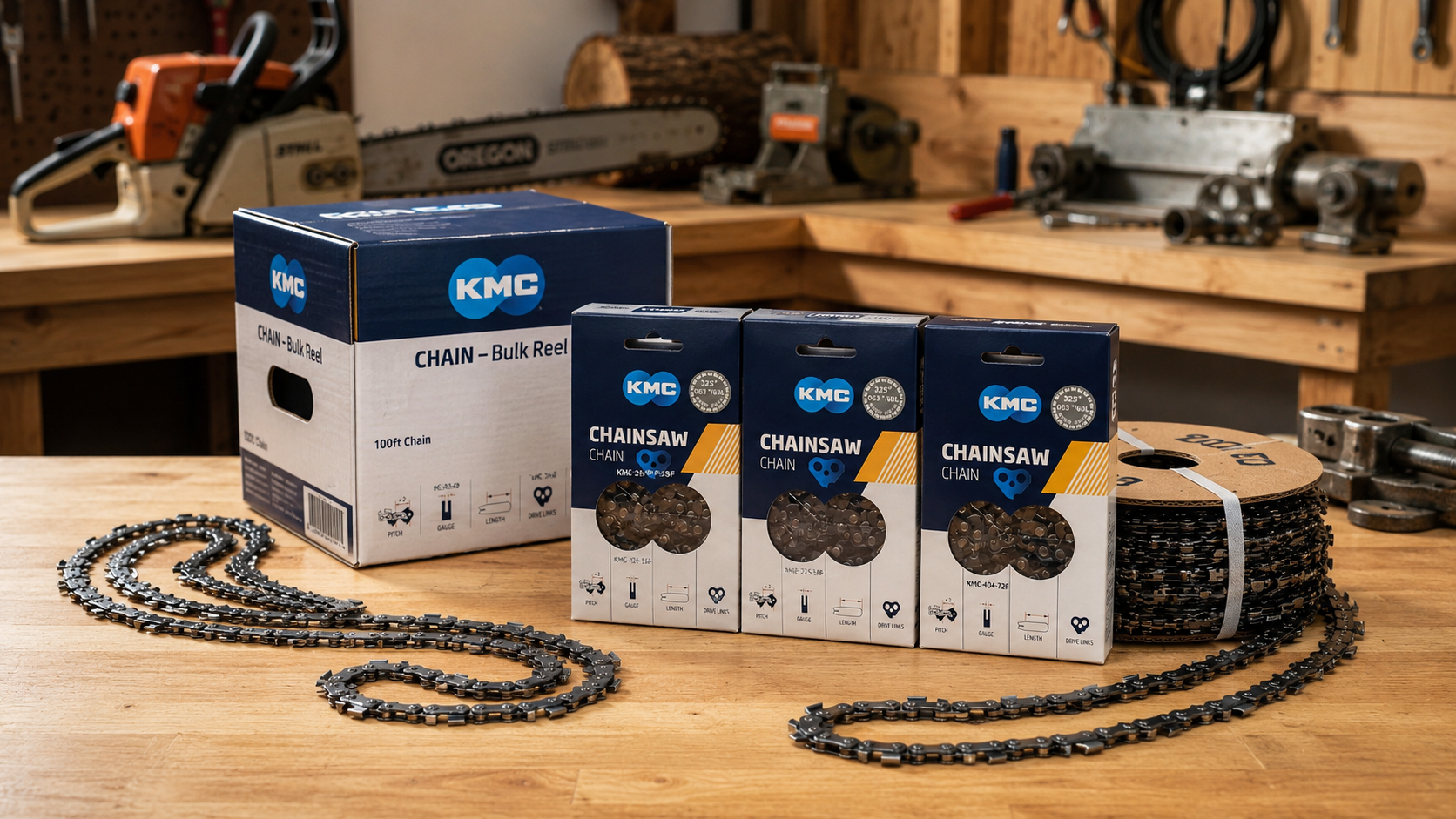
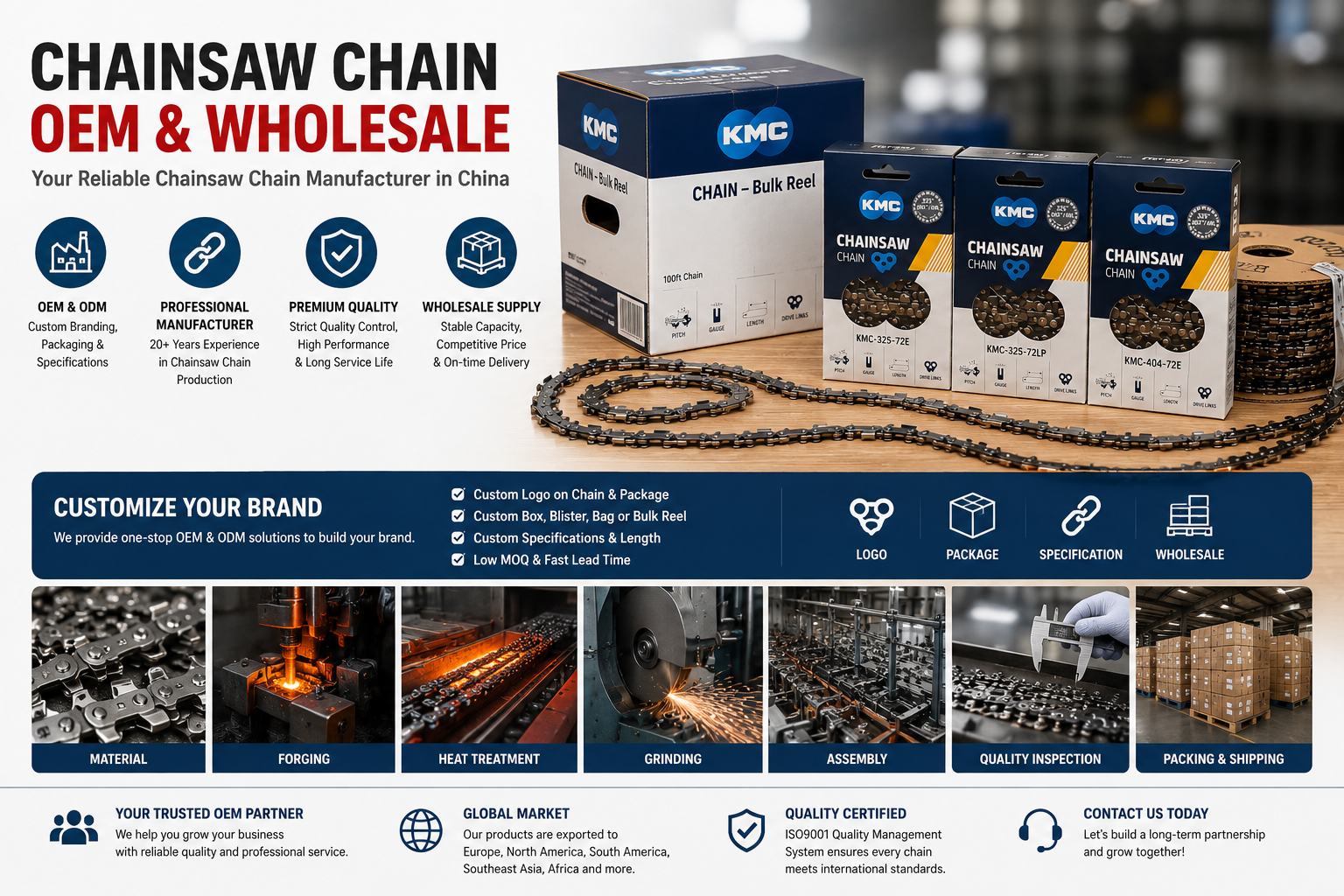
For fleet or distributor planning, review the KMC chainsaw chain product range by pitch and cutter requirement. A written specification list makes mixed logging-chain orders easier to verify.
Frequently Asked Questions
Is full chisel always the best logging chain?
No. Full chisel is often selected for fast cutting in clean timber, but semi chisel may be more practical in dirty bark, mixed wood or field conditions that dull a sharp corner quickly. Fit, site conditions and maintenance capability decide the better option.
Which pitch is best for professional logging?
Use the pitch specified for the saw, sprocket and guide bar. .325, standard 3/8 and .404 are different cutting systems, not performance settings that can be changed by preference alone. A complete conversion should only use an approved configuration.
Does a skip chain cut faster?
A skip sequence has fewer cutters and more space between them, which may suit particular long-bar applications. It is not automatically faster in every cut. Use a sequence intended for the saw, bar, timber and operator.
How often should a logging chain be sharpened?
Sharpen when cutting performance, chip formation or feed behavior shows the edge needs service, and immediately after contact with abrasive material. Frequency depends on wood, contamination, technique and maintenance; a fixed number of cuts is not reliable for every site.
Can I choose a logging chain by guide-bar length?
No. Bar length does not identify pitch, gauge or drive-link count by itself. Read the bar markings or verified equipment specification and record all three dimensions before ordering a replacement loop.
Conclusion: The best chainsaw chain for logging combines exact fit with a cutter profile suited to real timber conditions. Full chisel favors clean cutting and precise maintenance; semi chisel favors tolerance and versatility. Pitch, gauge, drive links, bar condition, lubrication and sharpening must all be managed as one system.
For help planning a professional assortment, contact KMC with the saw, bar, chain size and expected logging conditions.