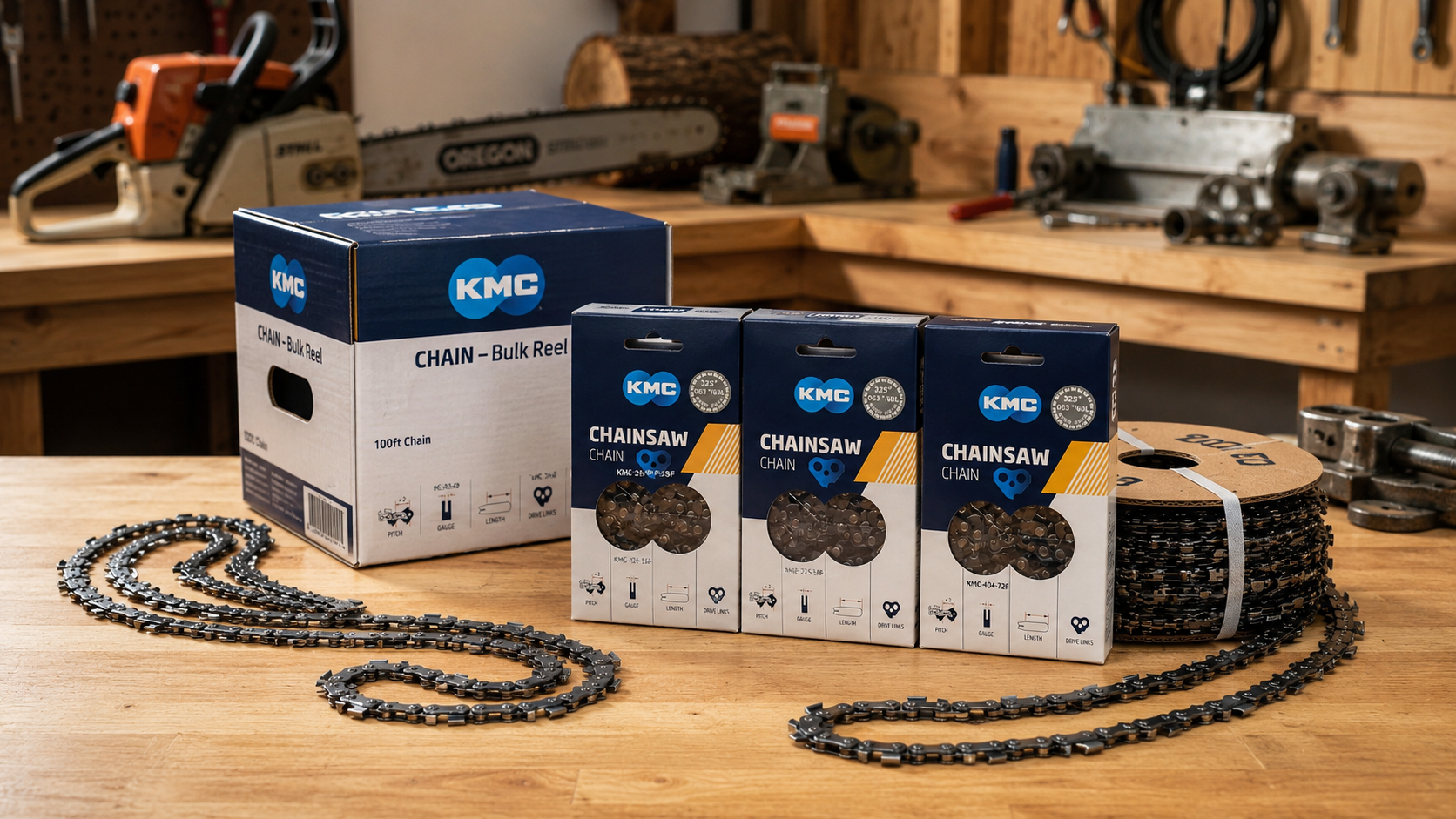
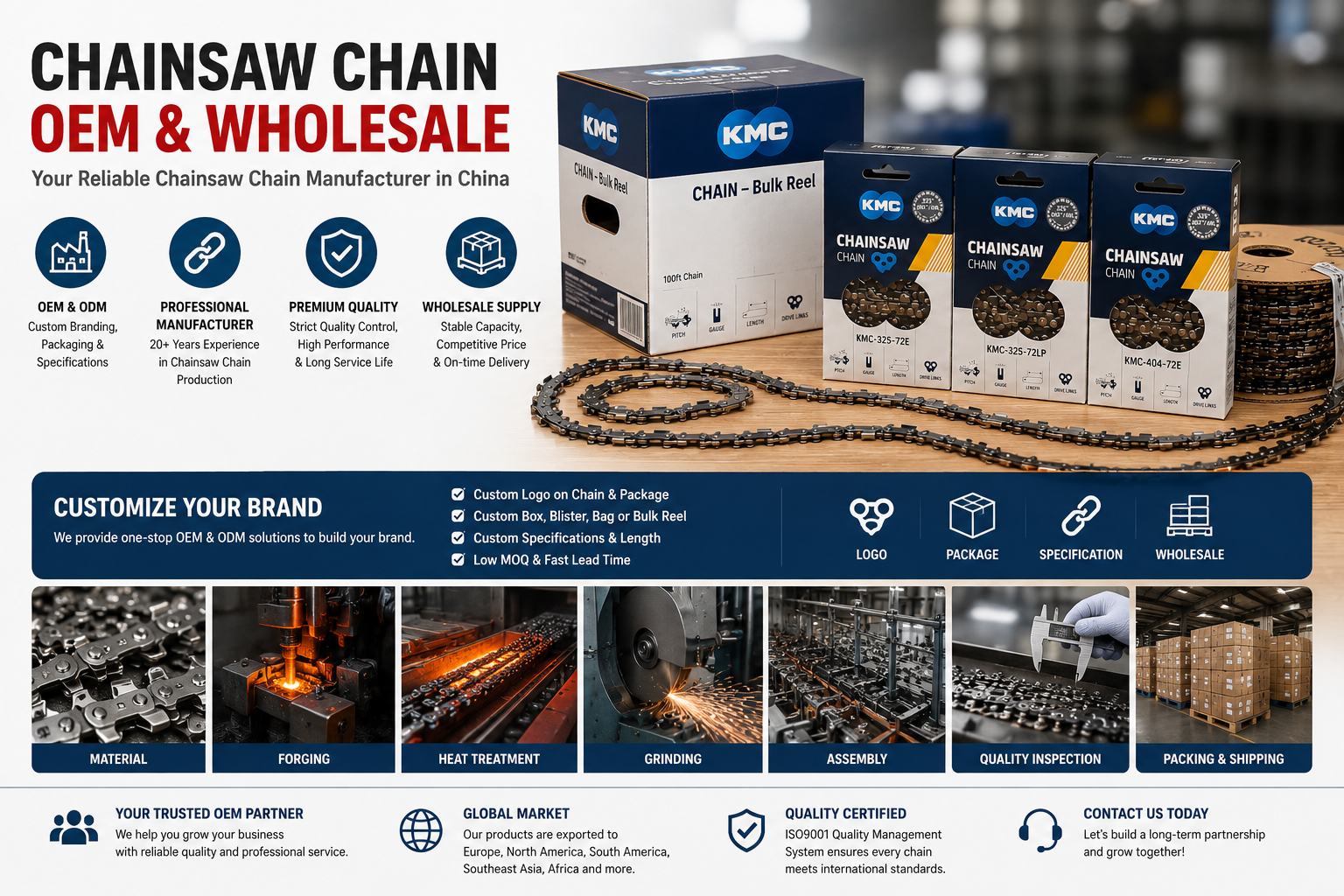
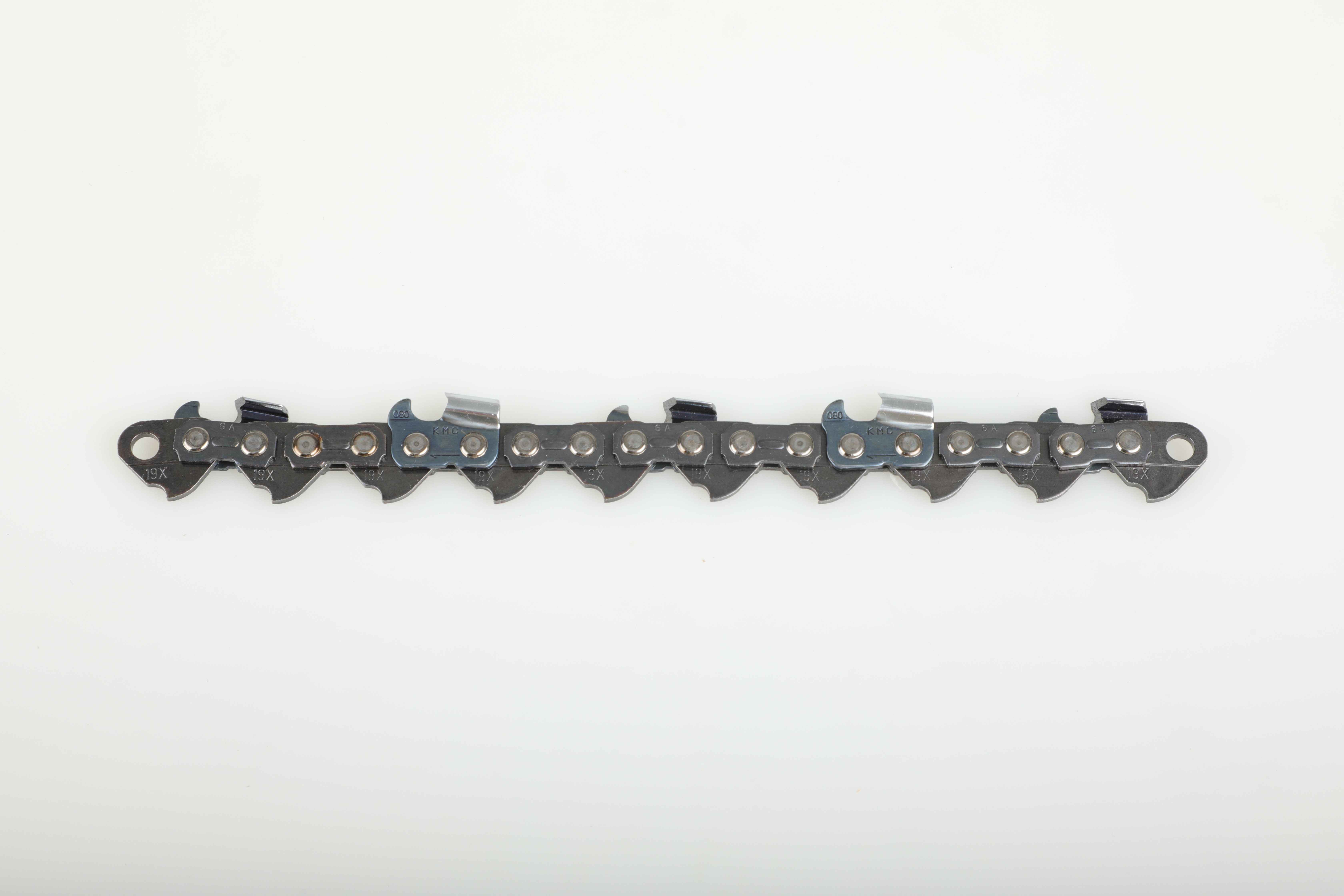
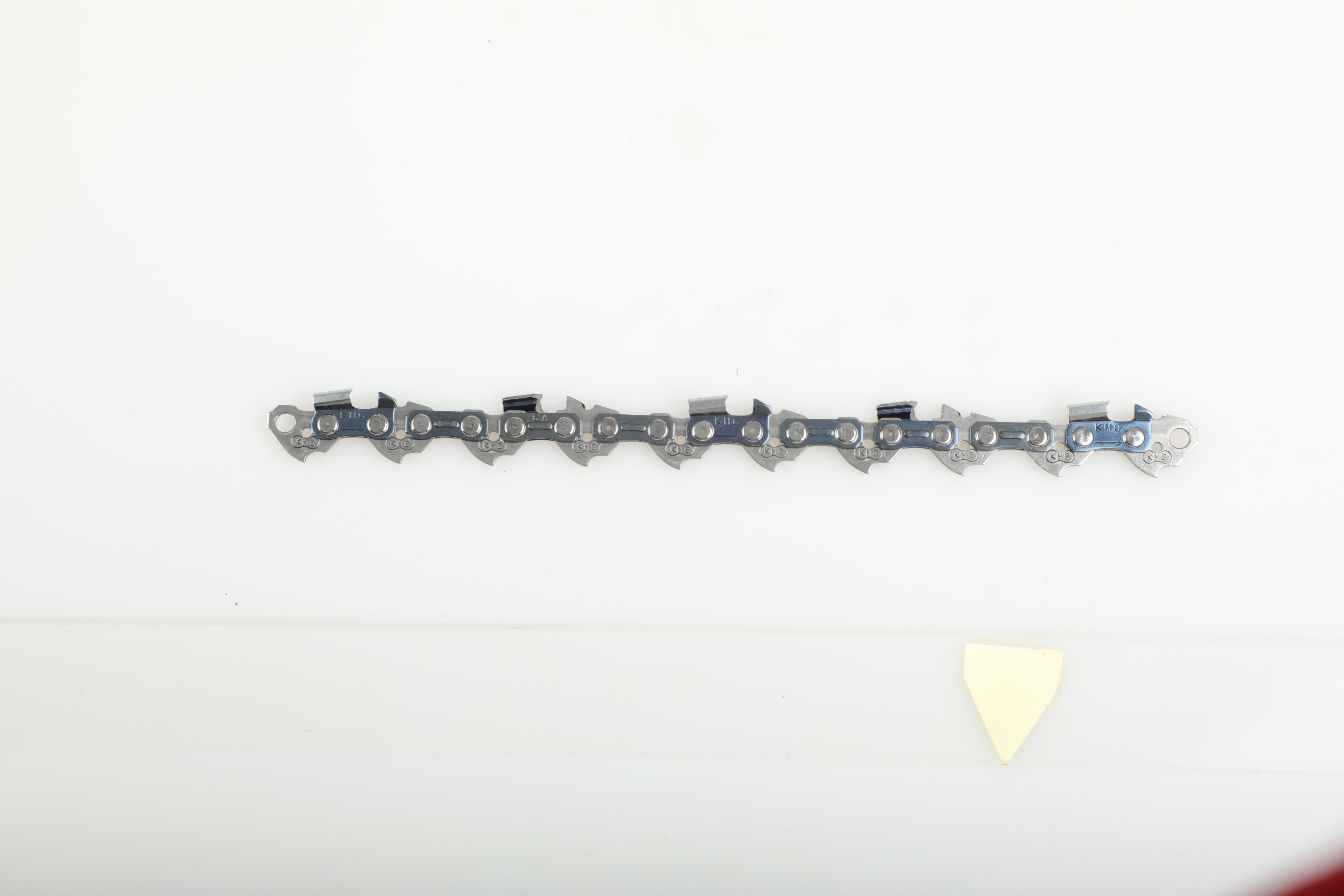
A good sample is only the first piece of evidence when working with a China saw chain supplier. It may be assembled carefully, labelled by hand and shipped alone; the first production order adds line changeovers, carton quantities, barcodes and multiple SKUs. Importers and replacement-chain brands should therefore approve three different stages: the technical sample, the first bulk shipment and the replenishment order. KMC’s OEM and wholesale program provides the product and packaging routes, while the buyer’s records keep each stage tied to the same fitment.
The first decision is which attributes must stay unchanged across all three stages. Pitch, gauge, drive-link count, cutter profile and sequence define the loop. Unit label, barcode, carton mark and pack quantity define how it remains identifiable. Price and delivery may change by order size, but neither should silently change the approved chain. A repeatable supply program begins when the bulk goods—not only the sample—match that controlled identity.
The first sample should answer a narrow question for the China saw chain supplier
Do not ask one loop to prove every future order. State whether the first sample is for dimensional fit, cutter selection, visible workmanship, packaging or a combination. Record the machine or bar evidence behind pitch, gauge and DL. Official chain guidance makes clear that all three must match; the sample request should not collapse them into a nominal bar length.
Use a compact 3/8 LP loop to test the supplier’s specification discipline
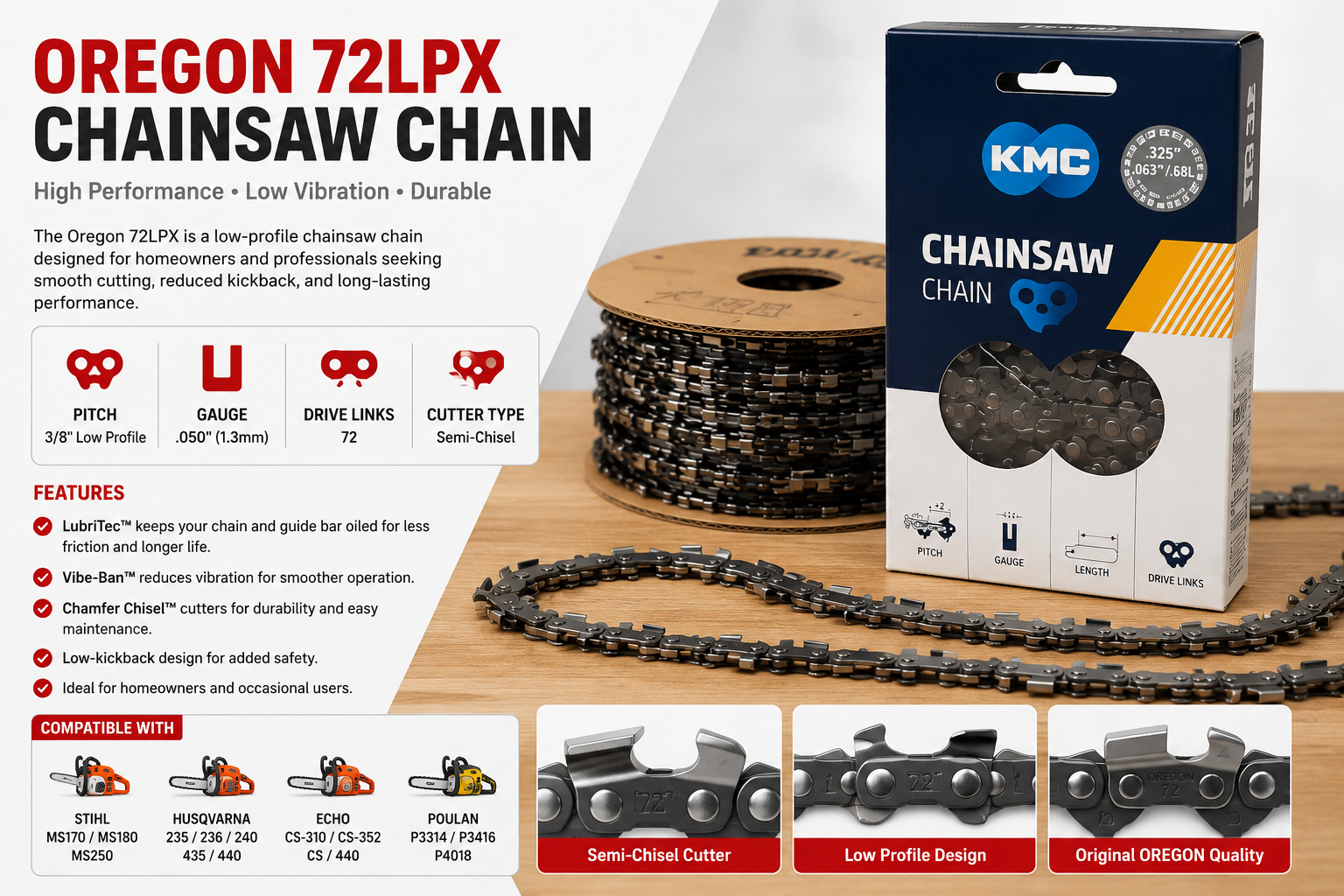
KMC’s 3/8 LP products offer a useful test because .043 and .050 gauges share several DL counts. The .043 table lists 40, 45 and 52 DL, while .050 lists 40, 45, 50, 52, 55, 56 and 59. Requesting a 52 DL sample without gauge leaves the supplier to ask a question or make an assumption.
A garden-equipment importer can submit “3/8 LP, .050 (1.3 mm), 52 DL, semi-chisel, standard sequence” and require the same identity on the sample tag. When the loop arrives, compare the physical item, tag and sample record. If one omits gauge, fix the documentation before advancing; the first bulk order will multiply that omission.
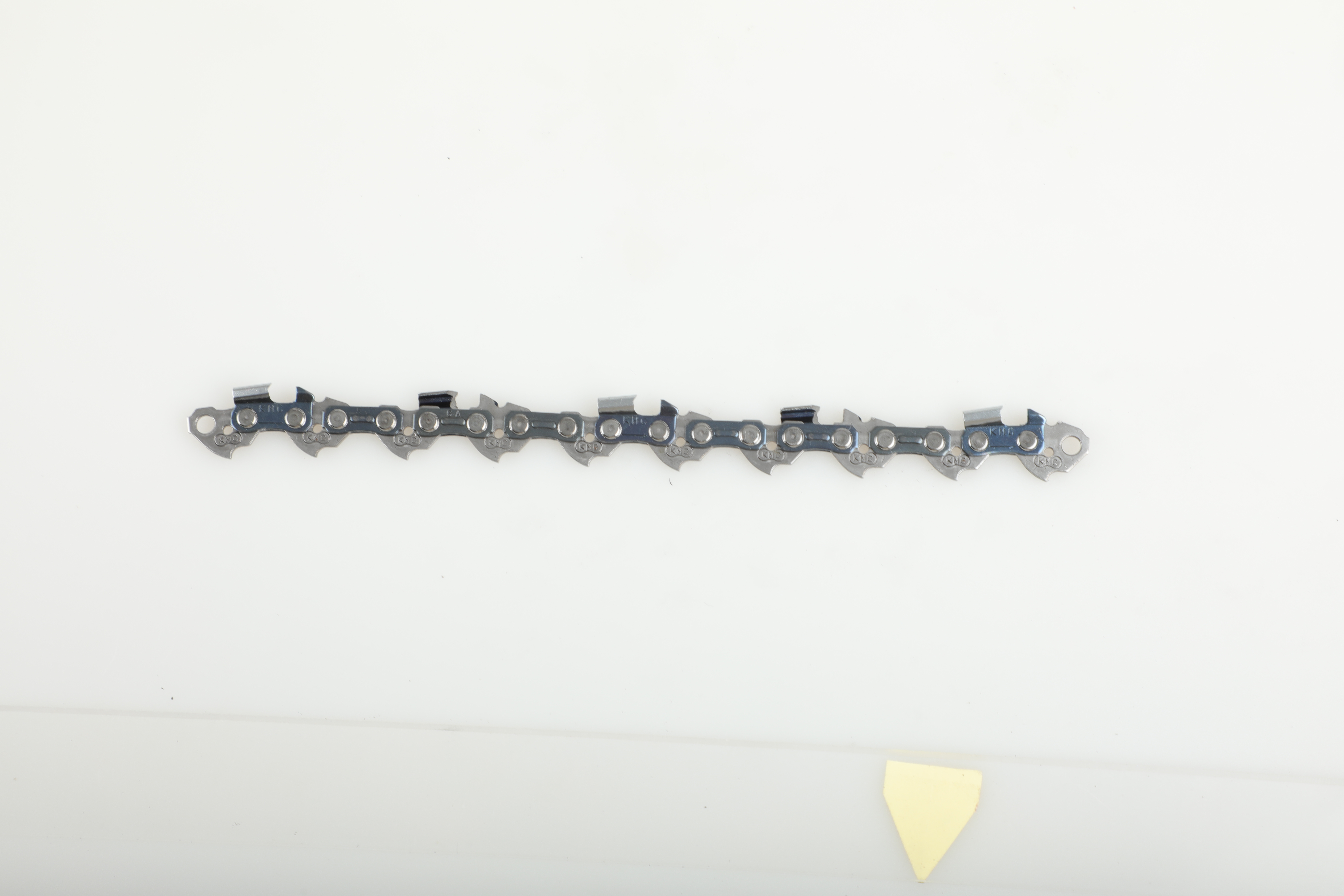
Keep the sample package provisional until the chain passes
A plain box or temporary label is often enough for technical approval. Mark it as provisional so a buyer does not mistake it for the final retail pack. Once fitment and configuration pass, move the exact dimensions into the artwork proof. This order prevents the brand team from polishing a box for the wrong gauge or DL.
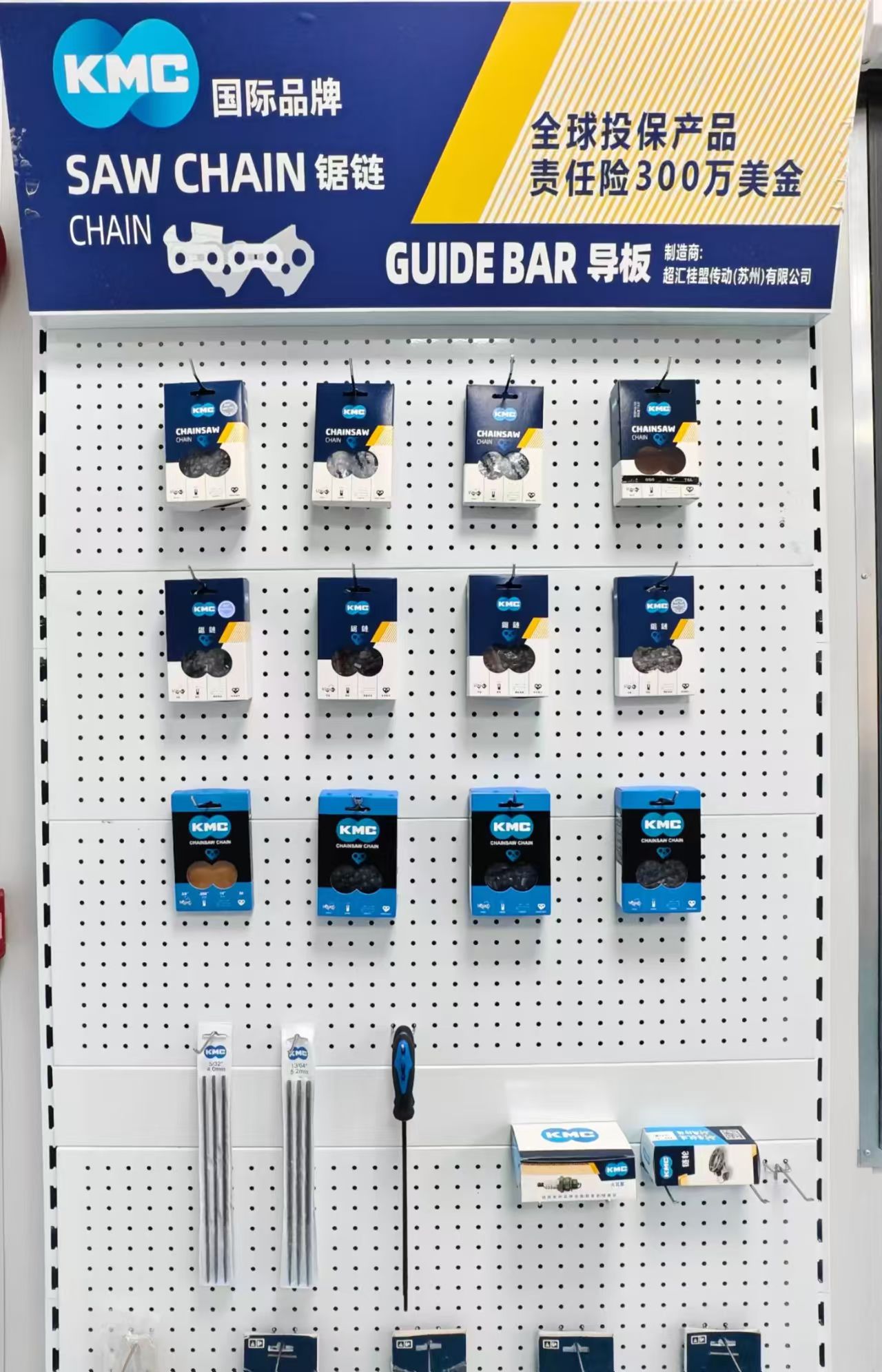
KMC publishes individual boxes, blister cards, custom cartons, barcodes and multilingual manual options. Choose the format based on the channel. A retail loop needs immediate fitment recognition; a workshop item needs an identity that remains attached through storage and issue. The sample stage should decide which information the final format must carry, not merely its colors.
The first bulk order tests controls that one sample cannot reveal
The first production shipment adds repeated assembly, counting, labeling and packing. Treat it as a controlled launch rather than an ordinary replenishment. The purchase record should state the approved revision for each SKU and package. Inspection should sample more than one carton and include any configuration whose pitch, gauge or DL overlaps another item in the shipment.
| Stage | Main question | Evidence retained |
|---|---|---|
| Technical sample | Is this the intended loop and configuration? | Signed specification, tagged loop, inspection notes |
| First bulk order | Does repeated production and packing preserve the item? | Final artwork, sampled units, carton and receiving records |
| Replenishment | Did the current order stay on the approved baseline? | Current item master, change log, lot-specific checks |
Sample both sides of a 72 DL overlap
KMC’s verified .325 .050 product includes 64, 72, 76, 78 and 86 DL. The verified 3/8 .058 product includes 68, 72, 76 and 84 DL. If the first bulk order contains both 72 DL items, inspect both. The shared count creates a foreseeable packing and master-data risk.
A forestry distributor should compare unit label, physical identification, carton and receiving description. If the barcode screen displays only “72 DL semi-chisel,” correct the item master before branch distribution. A technically correct box can still create wrong sales when its digital record loses pitch and gauge.
Check the first and later cartons, not a presentation sample
A supplier may prepare one presentation unit at the top of a pallet. That unit is useful but cannot represent label consistency through the run. Select cartons from different positions under the agreed inspection method, then compare unit identity and quantity. Record exactly what was sampled so a later discrepancy can be located.
KMC describes material composition inspection, heat treatment/hardness control, automatic assembly, cutting tests and final inspection. The buyer should connect requested order evidence to the relevant SKU without asking one general factory report to prove every variant. The first bulk launch is where factory process statements become lot-specific receiving evidence.

Receiving should close the first-bulk loop before dealers get stock
Pre-shipment inspection does not replace destination receiving. Transit may separate labels, damage cartons or reveal a quantity discrepancy that was not visible in the sampled units. When the first bulk order arrives, quarantine a practical sample of cartons until the receiving team compares the packing list, carton mark, unit barcode and physical loop identity. Use the same SKU names and revision numbers that appeared in the supplier approval file.
A regional distributor should run this exercise before dividing the shipment among branches. If ten locations receive stock first, one master-data error produces ten different return trails. At the central warehouse, scan representative items from every high-risk overlap—such as .325 and 3/8 at 72 DL—and confirm that the screen description includes pitch and gauge. Count an inner pack and check that loose units retain their labels after the carton is opened.
Record the receiving result against the shipment and close any discrepancy with a documented disposition. Product held for review should not be mixed with accepted units. Once the first bulk lot is released, preserve the final receiving record beside the signed sample and inspection evidence. That complete file becomes the baseline against which the next replenishment is judged.
Repeat orders need a current baseline, not a copied invoice
After the first shipment is accepted, create an item master from the approved state. Include pitch, gauge, DL, cutter, sequence, unit package revision, barcode and carton quantity. Link the held reference loop and inspection record. The next purchase order should draw from this master rather than repeat a shortened commercial description from an old invoice.
A reorder can drift even when the SKU code stays the same
Artwork may be updated, a carton quantity changed or a cutter option added while the commercial code remains familiar. Before a repeat order, compare the current master with the previous accepted lot and list every intended change. If no change is planned, state “repeat to approved revision” and name that revision.
A distributor adding full-chisel alongside a semi-chisel item should create a new variant rather than overwrite the old description. KMC publishes both cutter routes on several 3/8 LP, .325, 3/8 and .404 products. Dealers may need both for different wood conditions, so their labels and barcodes must remain distinct.
Use replenishment data to change quantity, not fitment identity
Sales history may show that 3/8 LP .050 52 DL moves faster than 55 DL, or that .325 .050 72 DL is concentrated in certain branches. Adjust quantities by SKU. Do not merge slow items into a broad “same bar length” product or allow a substitute gauge because the intended loop is temporarily unavailable.
KMC publishes indicative timing of 15–20 days for 1,000–5,000 units, 25–30 days for 5,000–20,000 and 35–45 days above 20,000, with 7–10 days for samples. Confirm the current schedule at every order. Planning earlier is safer than requesting an unapproved substitution to recover a missed replenishment date.
A .404 replenishment proves whether the range boundaries survived
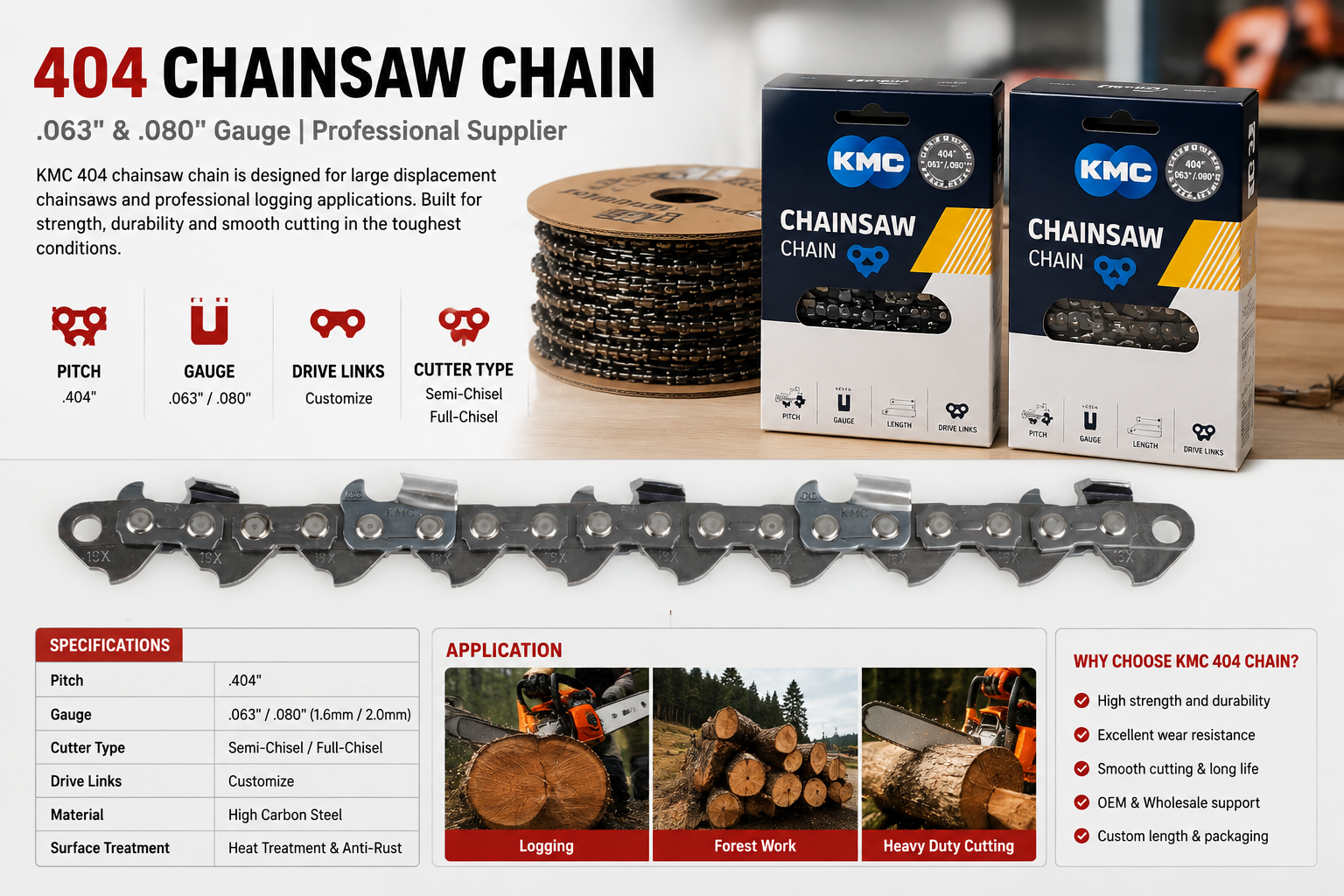
KMC’s .404 family includes a .404 .063 product with 60, 92, 100 and 104 DL and a separate .404 .080 harvester product with 78, 80, 90, 91, 94, 95 and 100 DL. Both publish 100 DL, but they belong to different gauges and machine systems.
A mechanized-forestry distributor may reorder harvester chain less frequently but in commercially important quantities. The item master should keep the cutting-head reference, .080 gauge and semi-chisel route visible. A warehouse search for “.404 100 DL” should return two clearly different items, not one ambiguous result.
Compare the new packed unit with the accepted first-bulk unit
For a repeat .404 order, pull one retained first-bulk package and the held technical reference. Compare the new unit’s dimensions, cutter, code and pack revision. The retained references do not replace lot inspection; they help the buyer detect an unintended change that a familiar SKU name could conceal.

Advance the supplier relationship only when evidence survives all three orders
A reliable sample proves that the parties can define and build one item. A controlled first bulk shipment proves that repeated production and packing can preserve it. A clean replenishment proves that the baseline survives time, staff changes and revised commercial quantities. Each stage earns the next; none should be skipped because the isolated sample looked good.
Before sending the repeat purchase, open the current item master, not the oldest invoice in the folder. Verify the approved product and package revisions, list deliberate changes and confirm the schedule. A China saw chain supplier can support long-term supply only when buyer and factory keep the same technical identity visible from the first tagged loop to the latest replenishment carton.