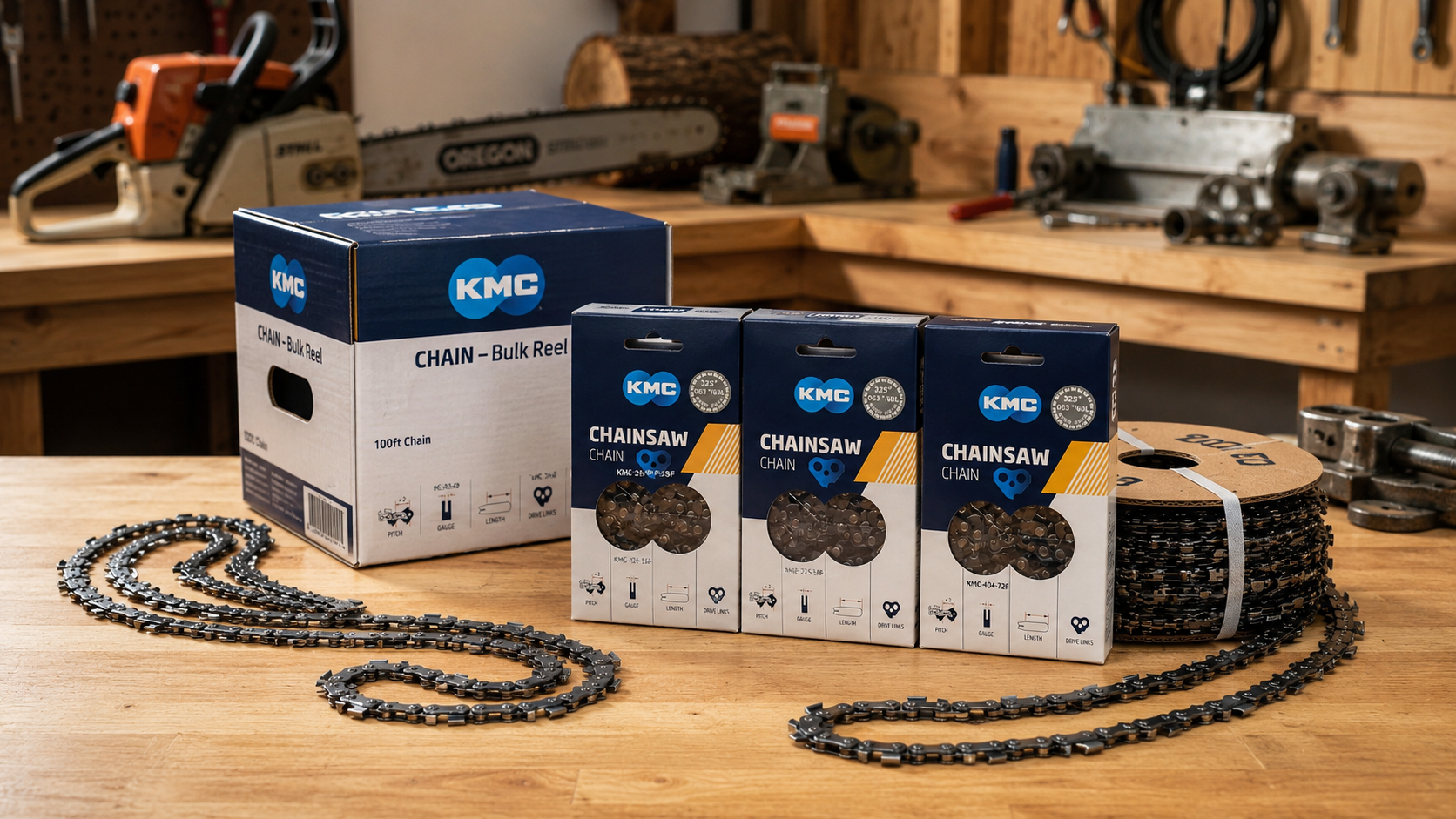
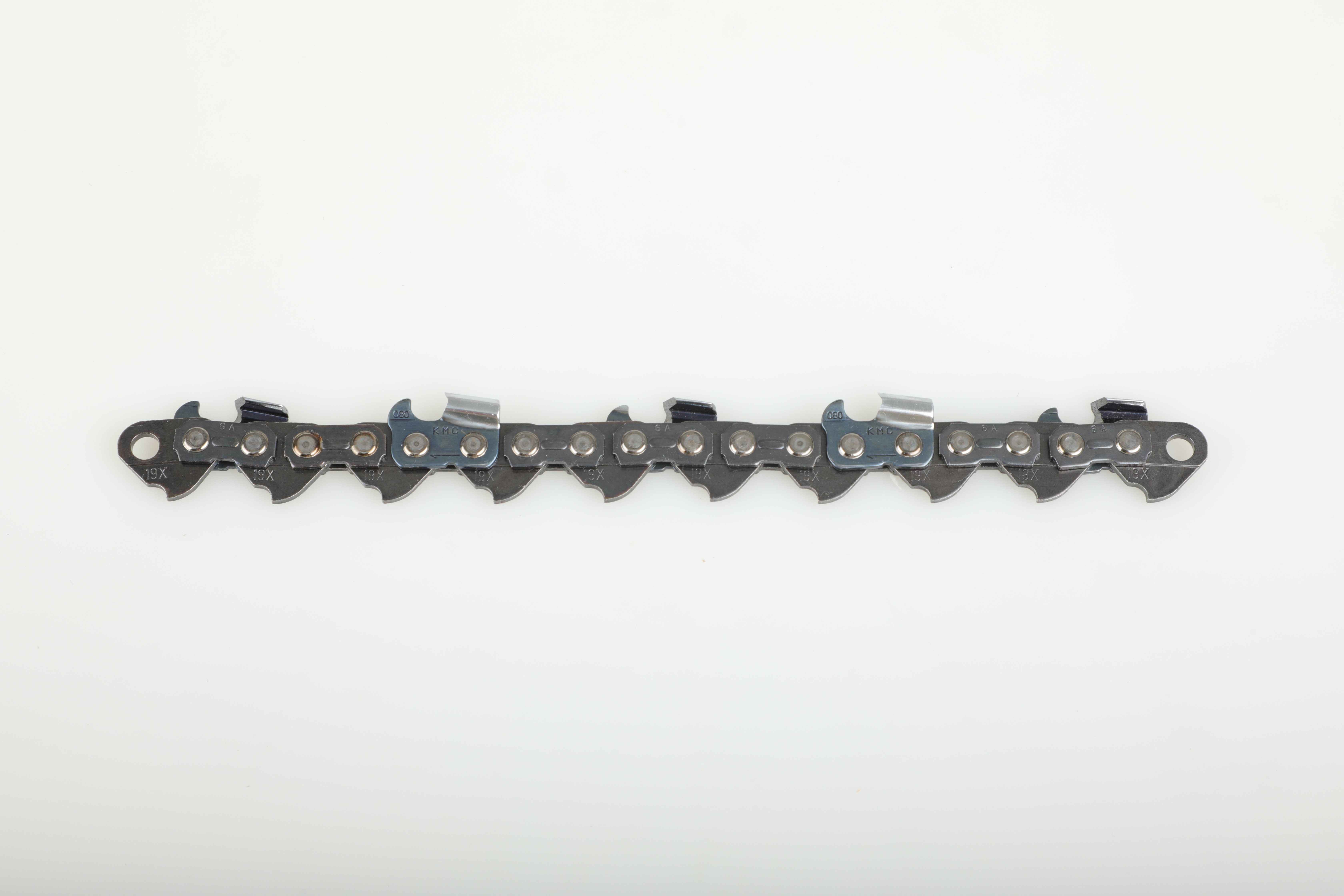
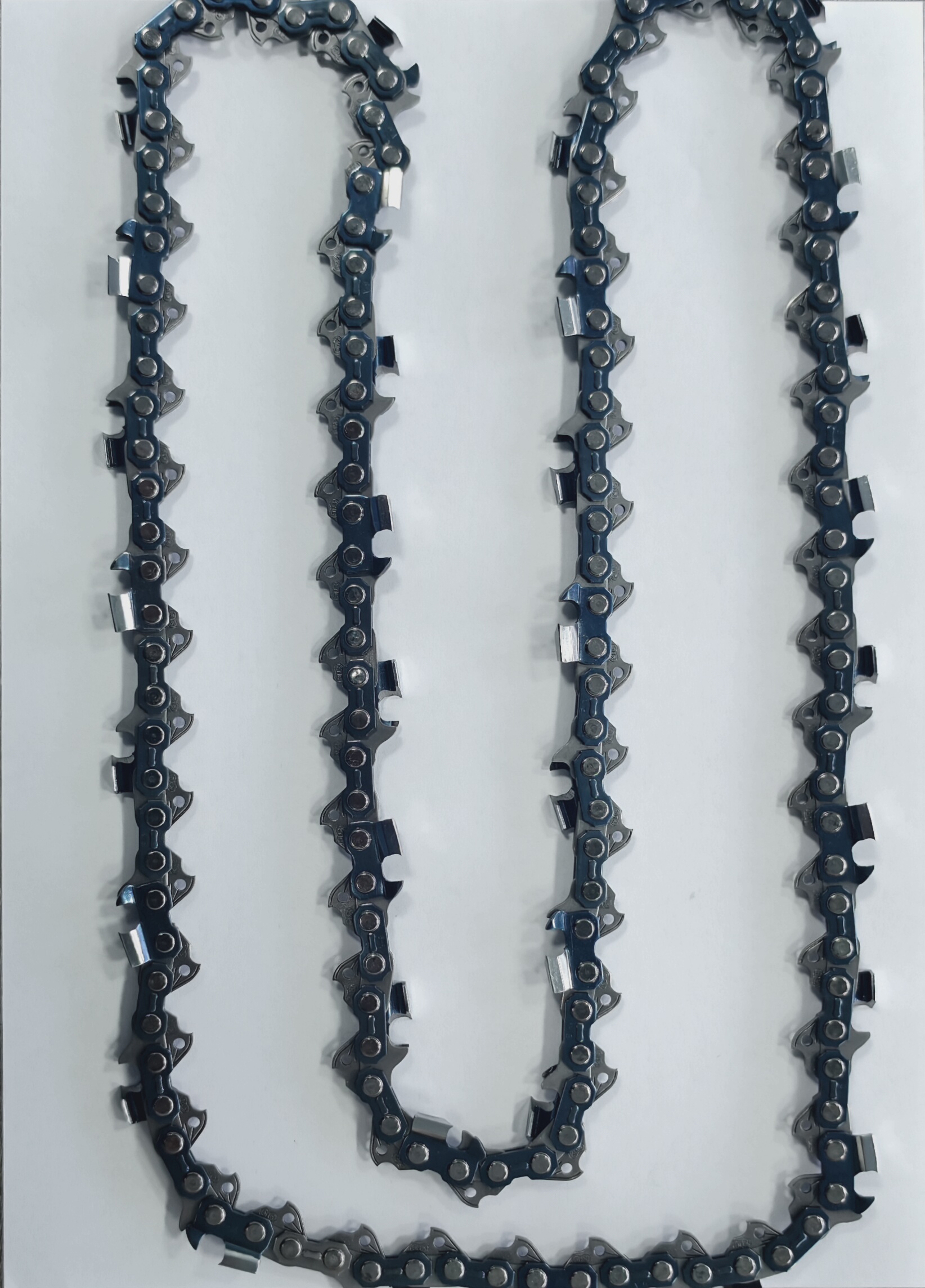
A replacement loop can be the advertised bar length and still come back to the dealer because its drive links will not enter the groove. That return is not solved by offering more sizes. A dealer or wholesaler needs a saw chain supplier that can preserve pitch, gauge and drive-link count from the original fitment record through the shelf label. KMC’s saw-chain range covers 3/8 low profile, .325, 3/8, .404 and 1/4 systems; the practical job is to stock only the combinations supported by machines the network actually services.
This guide suits parts distributors, garden-equipment dealers and multi-branch service networks. The first confirmation at the counter should be the bar or equipment specification, not the customer’s estimate of bar length. Official guidance explains that a replacement chain must match pitch, gauge and drive-link count; a length description alone cannot establish compatibility. The supplier provides the verified loop options, while the dealer’s own machine evidence determines which options belong in the program.
A saw chain supplier cannot correct fitment data the dealer never captured
Start with the installed base. Export the saw models, bar references and recent chain sales that the service network can verify. For each entry, create separate fields for pitch, gauge, drive links and any applicable cutter choice. Record the source: equipment manual, bar stamp, existing approved loop or manufacturer parts reference. An informal note such as “small 14-inch saw” should remain an unresolved lead, not become a sellable item.
When the bar stamp is legible, photograph it beside the machine model. Pitch may also appear on the drive sprocket, while gauge describes the lower drive-link thickness and corresponding bar-groove width. If the original chain is available, count its drive links and retain the result with the record. The three measurements must agree with the machine system before the supplier SKU is attached.
Use the returned loop to diagnose a .043 versus .050 error
KMC’s 3/8 LP family includes .043-inch (1.1 mm) and .050-inch (1.3 mm) products. Its .043 table lists 40, 45 and 52 DL; the .050 table lists 40, 45, 50, 52, 55, 56 and 59 DL. A returned 52 DL loop can therefore have the correct pitch and length count but the wrong gauge.
If the replacement is too thick to enter the groove, stop the installation. If it is thinner than the specified groove, do not treat easy insertion as proof of fit. The dealer should compare the loop marking and bar data, then code the return as a gauge mismatch. This is more useful than a general “does not fit” reason because it shows whether the catalogue, counter process or customer selection needs correction.
Separate compact .325 LP from standard .325 replacements
The shared .325 wording can hide a second boundary. KMC publishes a low-profile .325 .043 product with semi-chisel or micro-chisel options and 46, 51, 59 and 64 DL. Its standard .325 family also includes verified .050 and .058 products listing 64, 72, 76, 78 and 86 DL. A 64 DL count therefore does not tell a counter worker whether the customer needs the low-profile .043 system or a standard .325 gauge.
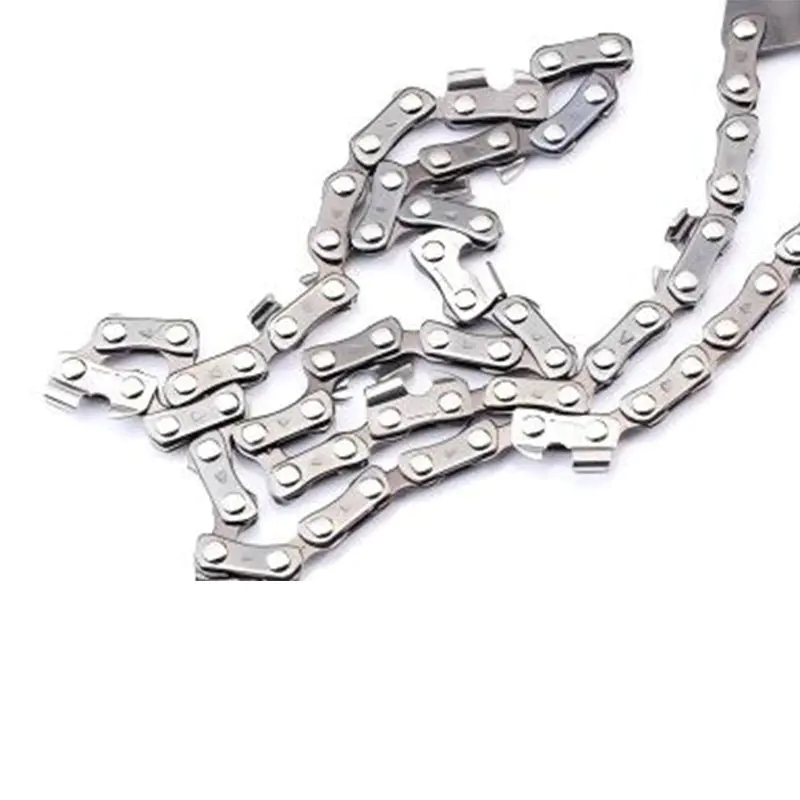
Turn every wrong-chain return into a better supplier item record
A return log should describe the failed dimension and the evidence used to correct it. Useful codes include wrong pitch, wrong gauge, wrong drive-link count, cutter expectation mismatch, package data mismatch and unresolved machine identity. Keep installation damage or bar wear separate from a supplier item error. Otherwise a damaged bar can make a correct chain look like an incorrect product.
The service counter should photograph the bar marking and returned package when practical, then attach the corrected loop code. Monthly, review exceptions by location and item. A cluster of wrong-gauge returns at one branch may signal that the shelf labels overemphasize bar length. Repeated wrong-DL returns on one machine family may mean the catalogue combines bars that require different loop lengths.
A forestry dealer must keep .325 and 3/8 counts in their own systems
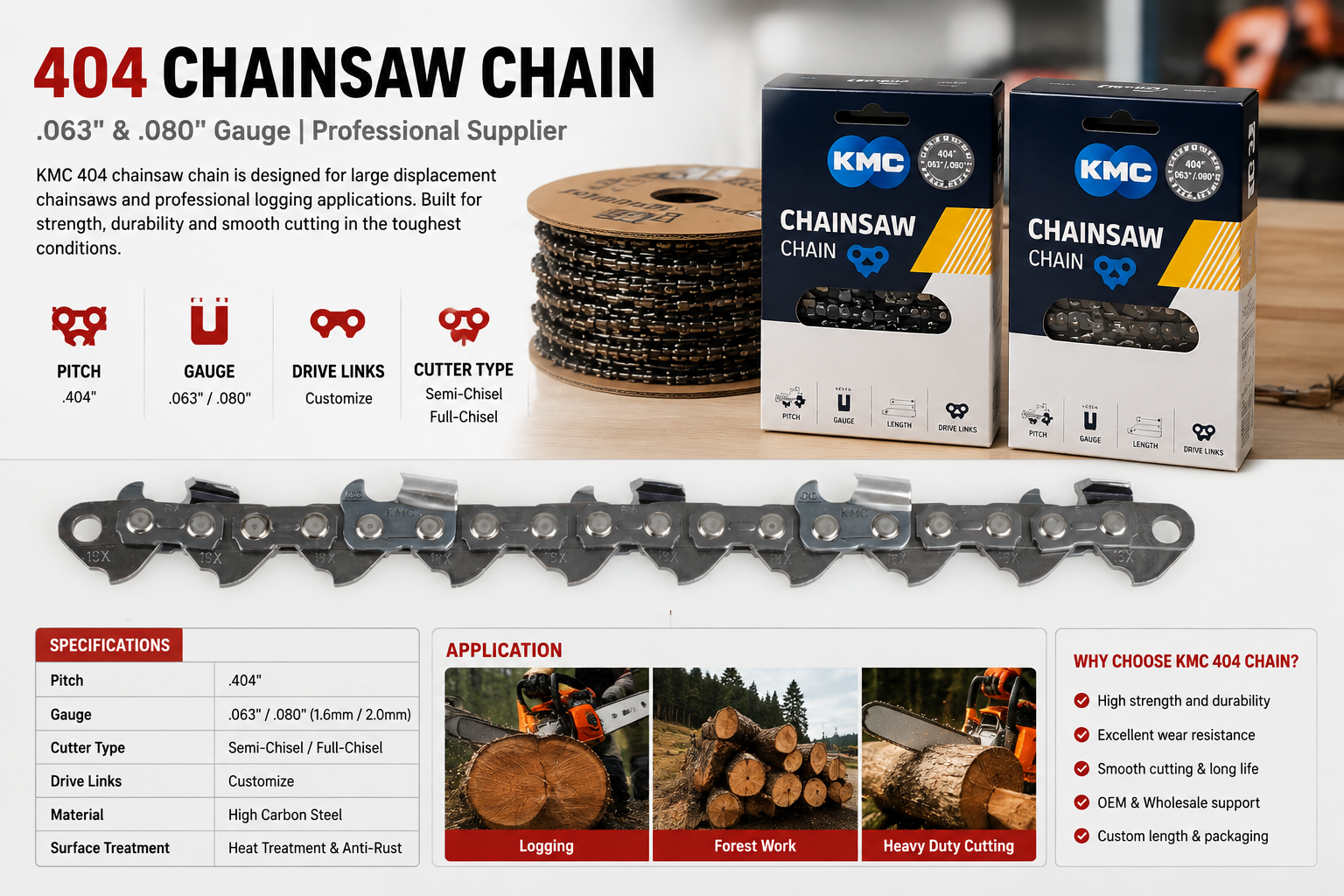
KMC’s verified .325 .050 and .325 .058 products list 64, 72, 76, 78 and 86 DL. Its verified 3/8 .058 product lists 68, 72, 76 and 84 DL. A dealer may therefore see 72 and 76 DL in both pitch groups. “76-drive-link chain” should never be a standalone bin description.
A professional service branch can reduce confusion by arranging locations first by pitch, then gauge, then DL. Package labels should print that same hierarchy. During a return, the counter worker compares each field rather than searching by a nickname. The method also helps the saw chain supplier investigate a reported packing problem because the disputed SKU remains complete.
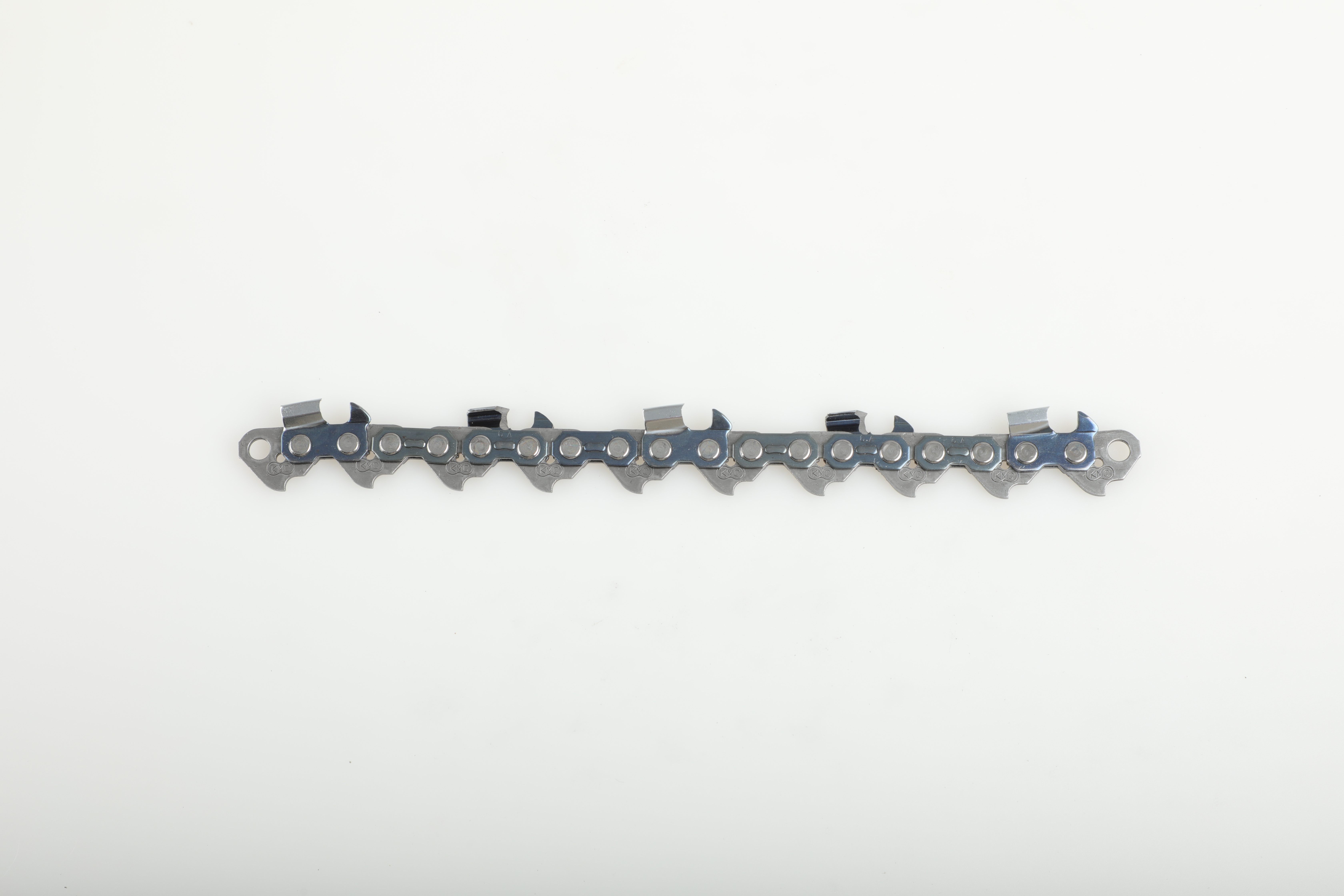
Do not hide worn bars inside the wrong-product statistics
A correctly specified new loop may fit poorly when the bar groove is packed with debris, the rails are damaged or the sprocket is worn. Official maintenance guidance advises checking the chain dimensions as well as bar condition when a new loop will not fit. The counter record should identify whether the bar was inspected and whether the machine was operated after the failed installation attempt.
This distinction protects the customer and improves purchasing data. If bar damage is coded as “wrong chain,” the distributor may delete a valid SKU or challenge the supplier without evidence. If every return is blamed on wear, a genuine label or packing error can persist. A brief technical inspection and an exact reason code keep the two causes separate.
Design shelf labels around the decision made at the service counter
The package front should let staff read pitch, gauge and DL together. Bar length or compatible models may appear as supporting information, but they should not displace the dimensions. Add cutter profile where the same fitment is sold in semi-chisel and full-chisel variants. For multilingual markets, keep the numbers and unit conversions in a stable position even when descriptive text changes.
Use different visual routes for 3/8 LP and professional 3/8
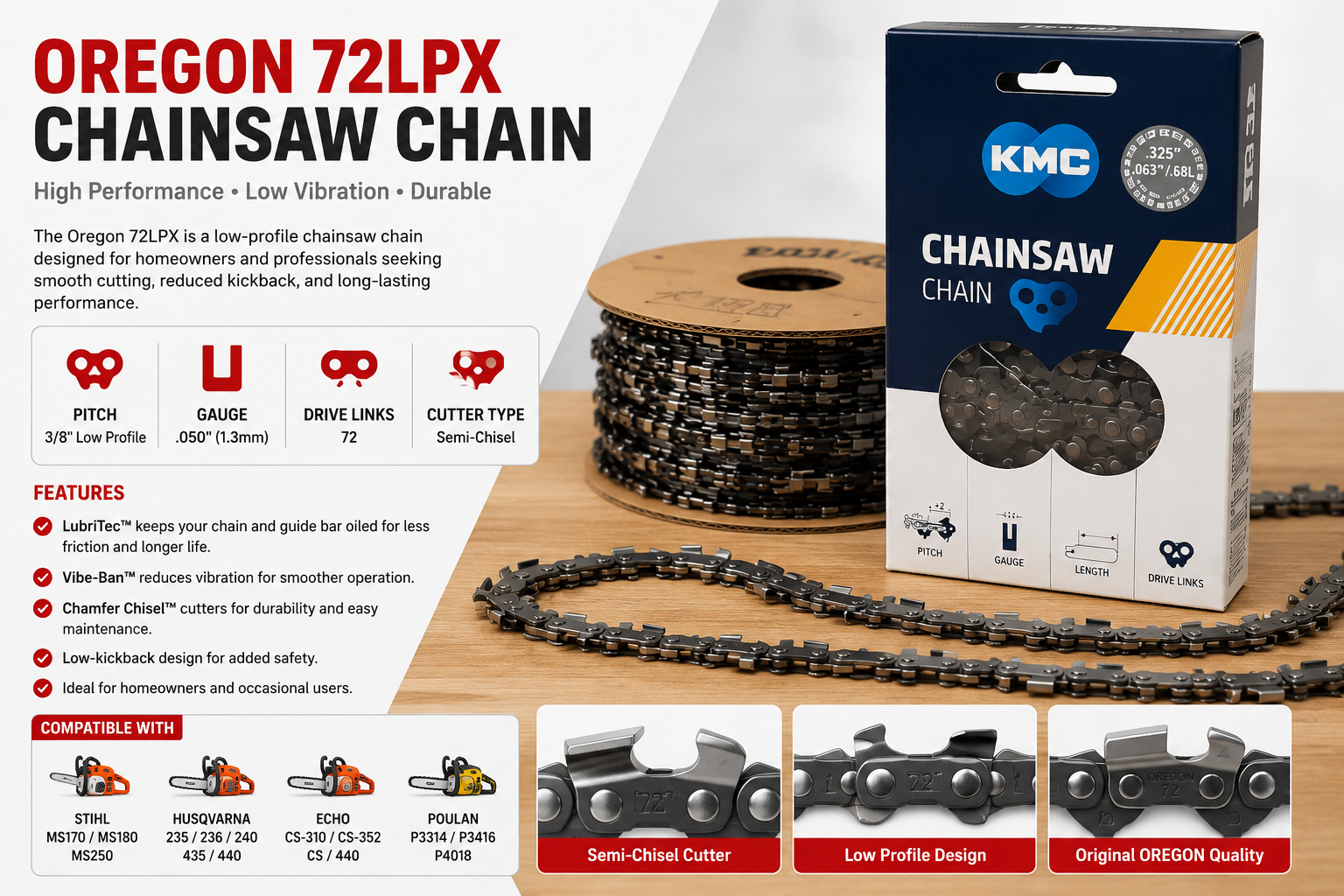
A customer may hear “three-eighths” and assume the families are the same. KMC’s compact 3/8 LP products use .043 or .050 gauges and shorter published DL ranges. The verified professional 3/8 product uses .058 (1.5 mm) and lists 68, 72, 76 and 84 DL. Their package system should make the “LP” designation prominent and avoid placing both families under one undifferentiated 3/8 shelf sign.
A multi-branch dealer can test the label by asking a staff member who did not create it to locate a 3/8 LP .050 52 DL loop and a 3/8 .058 72 DL loop. The test is not about speed alone. The staff member should be able to explain which fields differ and why the products cannot substitute for each other.
Keep the item identity after the outer carton is opened
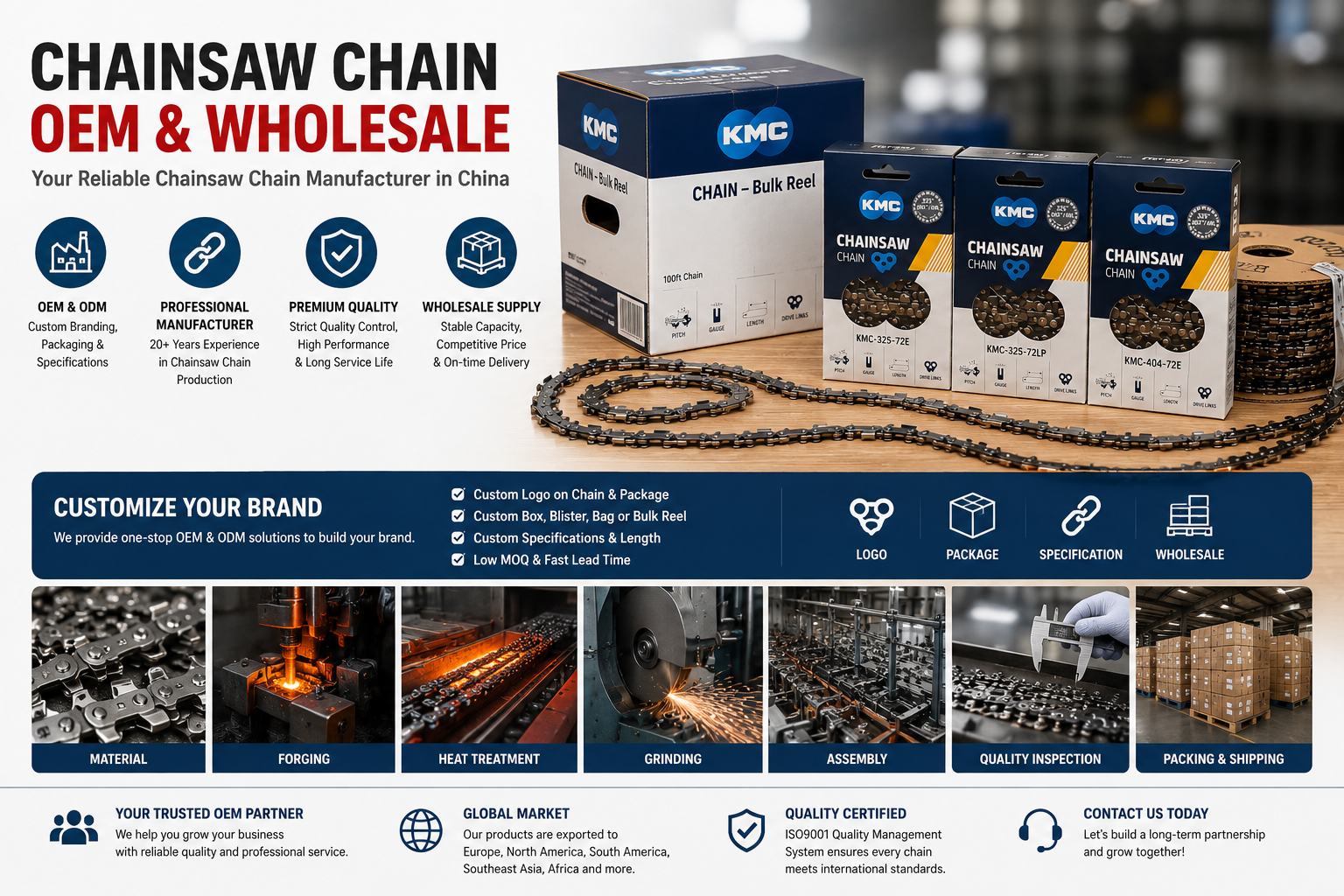
KMC’s OEM and wholesale page describes individual boxes, blister cards, custom cartons, pallet marking and barcode options. A replacement program should require the complete technical identity on the unit pack, not only the master carton. Branches often break cartons and place individual loops into shelf bins; the fitment data must survive that movement.
Barcode assignment should follow the complete variant rather than a shared marketing family. If .325 .050 72 DL semi-chisel and .325 .058 72 DL semi-chisel scan to the same item, the digital stock record recreates the ambiguity that clear printing was meant to remove. Test the code on the unit package, inner carton and receiving document before the first branch delivery. The screen description shown after scanning should repeat the same pitch, gauge and DL sequence printed on the box.
A wholesale warehouse that supplies ten service branches can use the first inbound carton as a controlled receiving exercise. One employee reads the purchase record, another scans and opens a unit, and a technical reviewer checks the physical identification. Any disagreement is resolved before the remaining cartons are distributed. This small step is specific to the new replacement SKU and prevents a master-data error from reaching every counter at once.
Stock 1/4 chain only where the service network can identify the exact route
Precision pruning, carving and compact attachments can create demand for 1/4 chain, but the pitch label is not enough. KMC’s 1/4 range includes .043, .050 and low-profile .043 routes. The confirmed 1/4 .043 table lists 32, 56, 60, 64 and 72 DL; the 1/4 .050 table lists 58, 60, 64 and 69 DL. KMC’s 1/4 LP .043 page does not publish a common DL list, so the buyer should provide the required loop length instead of filling the gap by assumption.
A dealer serving pole saw attachments may see two tools with similar cutting length but different chain systems. Staff should reference the attachment model and bar, not the powerhead family alone. If the fitment cannot be proved, the safer service outcome is to identify the machine correctly before selling a loop.
Expand the replacement range only after the exception log supports it
Begin with the models and dimensions supported by reliable evidence. Keep a list of unresolved requests rather than converting them into guessed stock. When the same missing fitment appears repeatedly, verify it against the machine or bar documentation, request the appropriate supplier sample and add it as a controlled item. This makes range growth answer real service demand.
Review returns by exact cause, branch and SKU after each replenishment cycle. A strong saw chain supplier helps preserve the product identity, packaging and repeat-order consistency, but the dealer remains responsible for the installed-base record and counter decision. Expand when the exception log proves a recurring need; until then, a smaller verified range will serve customers better than shelves filled with near matches.