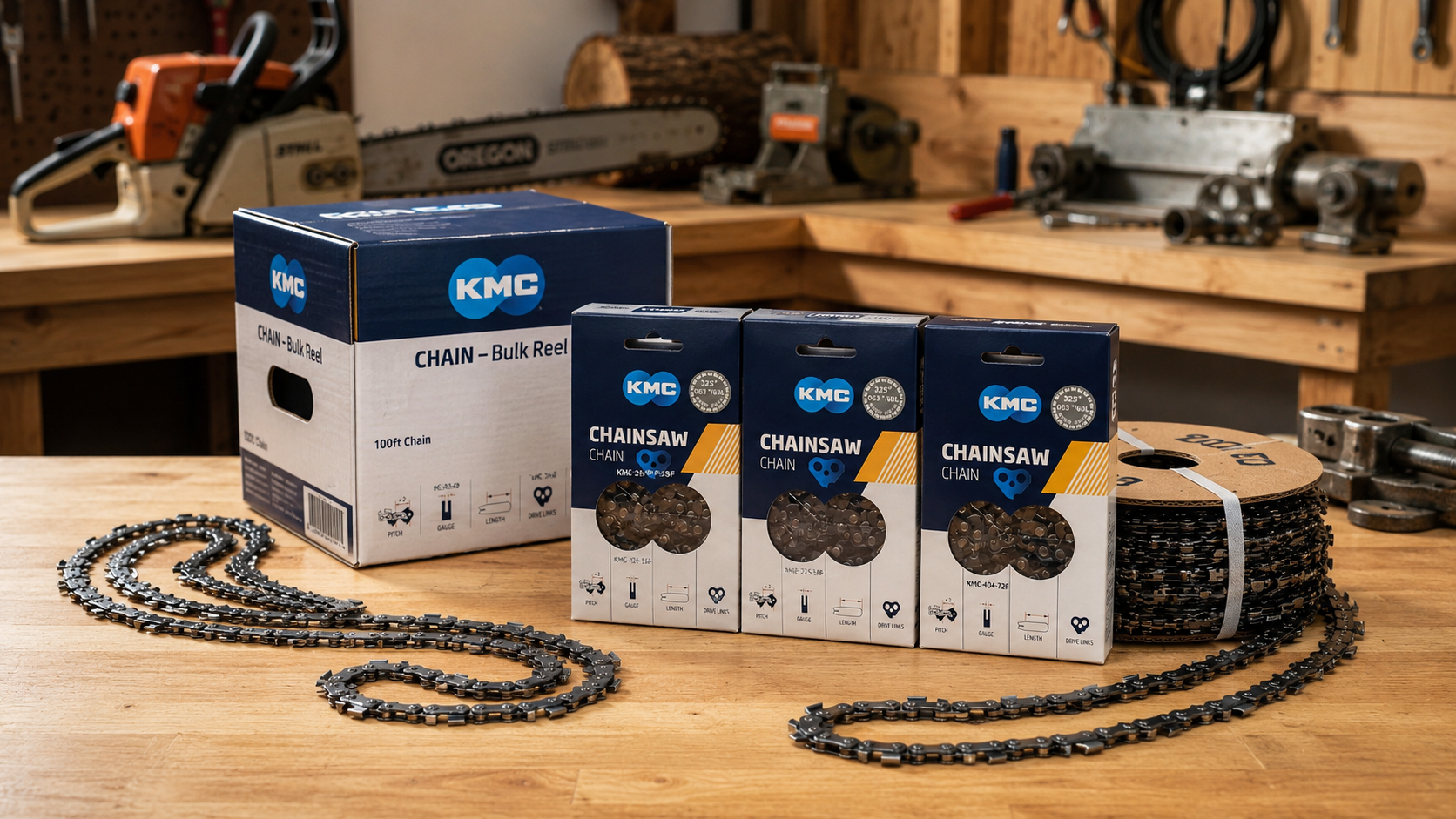
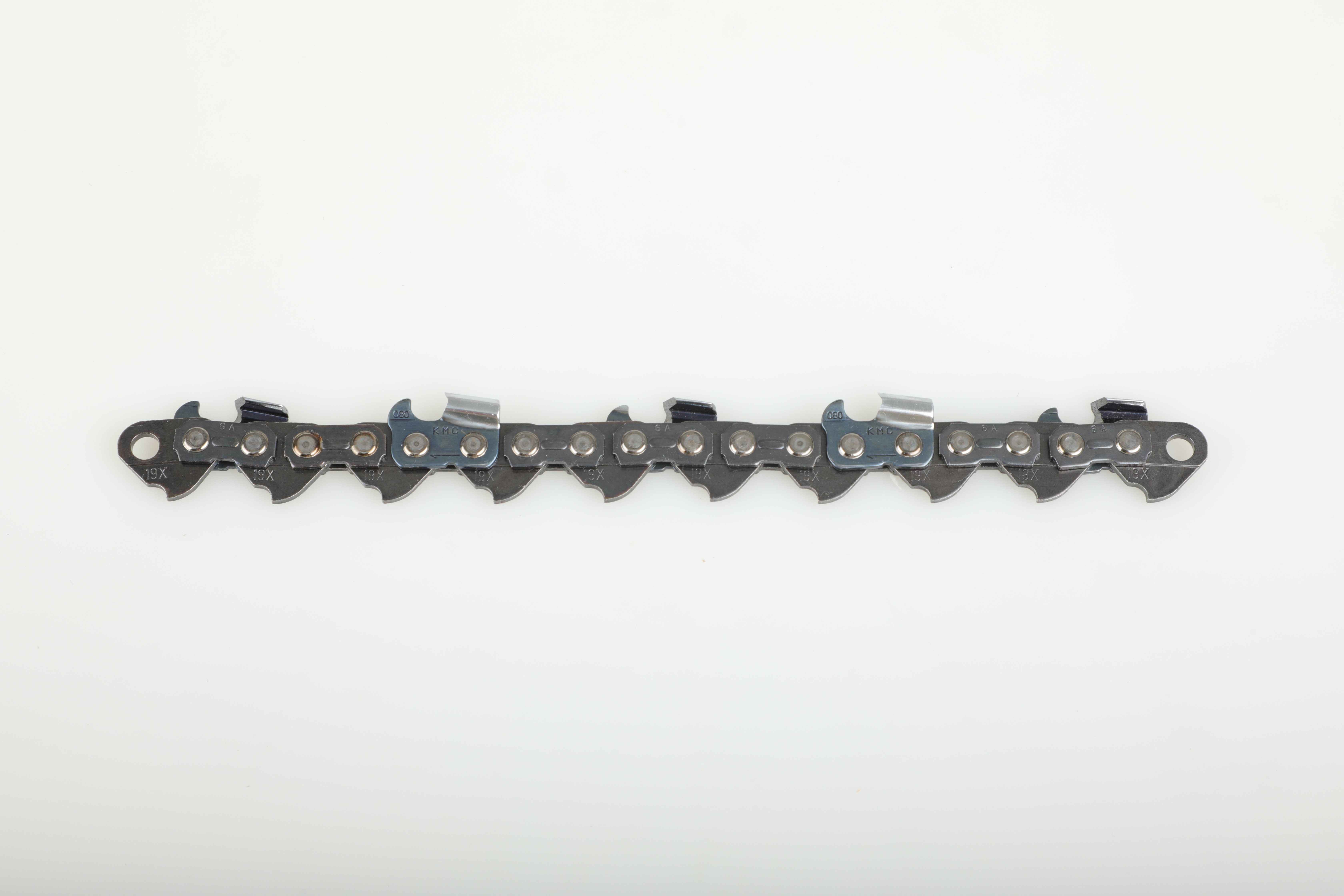
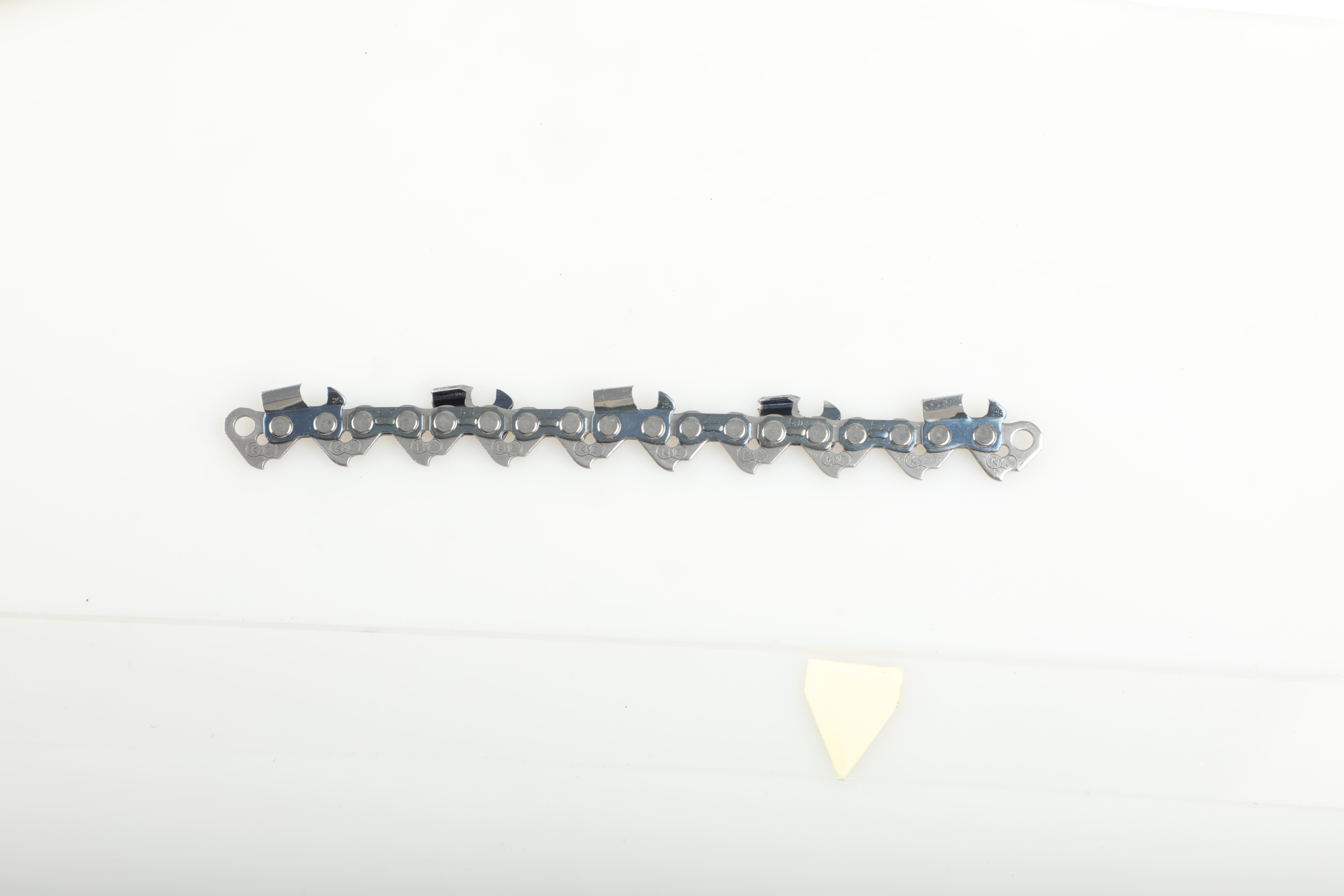
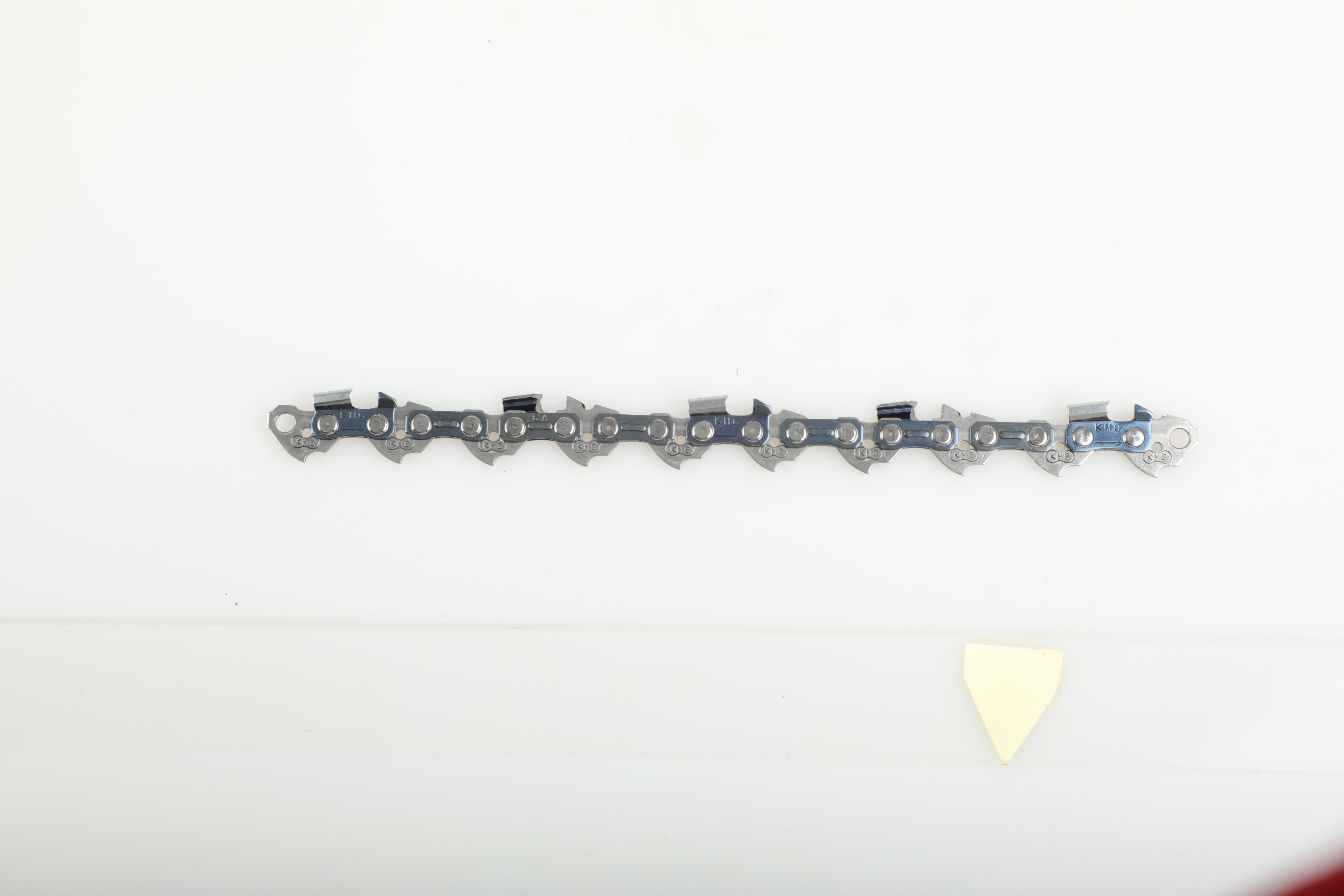
Choosing a China chainsaw chain manufacturer does not remove the buyer’s responsibility for the product definition. The safest cross-border order starts with an independent fitment record—pitch, gauge and drive-link count—then controls cutter profile, sequence, package revision and shipment evidence. Importers, private-label brands and distributors can begin with KMC’s published chainsaw-chain range, but only the combinations supported by their machine and bar data should enter a purchase order.
The first confirmation is not country of origin, a familiar bar length or a photographed competitor box. It is the complete identity of the replacement loop. Time-zone differences and long email threads make informal descriptions especially risky: an omitted gauge may not be noticed until a sample is packed, and a late artwork change can separate the box from the approved chain. A controlled sourcing file prevents those gaps from becoming production assumptions.
Send a China chainsaw chain manufacturer dimensions it can build and verify
A buyer inquiry should use separate fields for pitch, gauge, DL, cutter, sequence and required pack. Add the equipment or bar reference as supporting evidence and state where each dimension came from. Official size guidance treats pitch, gauge and drive-link count as independent fitment requirements. A nominal 16-inch or 18-inch bar description cannot replace them because different saw and bar combinations may use different loop counts.
If the buyer begins with an existing chain code, translate it into dimensions before quoting. Codes owned by another brand may be useful clues, but the manufacturing record should not depend on the China supplier interpreting a code that was never agreed as a technical standard. Attach a bar-stamp photograph or equipment document where possible and flag anything that still needs confirmation.
A 3/8 LP inquiry must choose .043 or .050 before price comparison
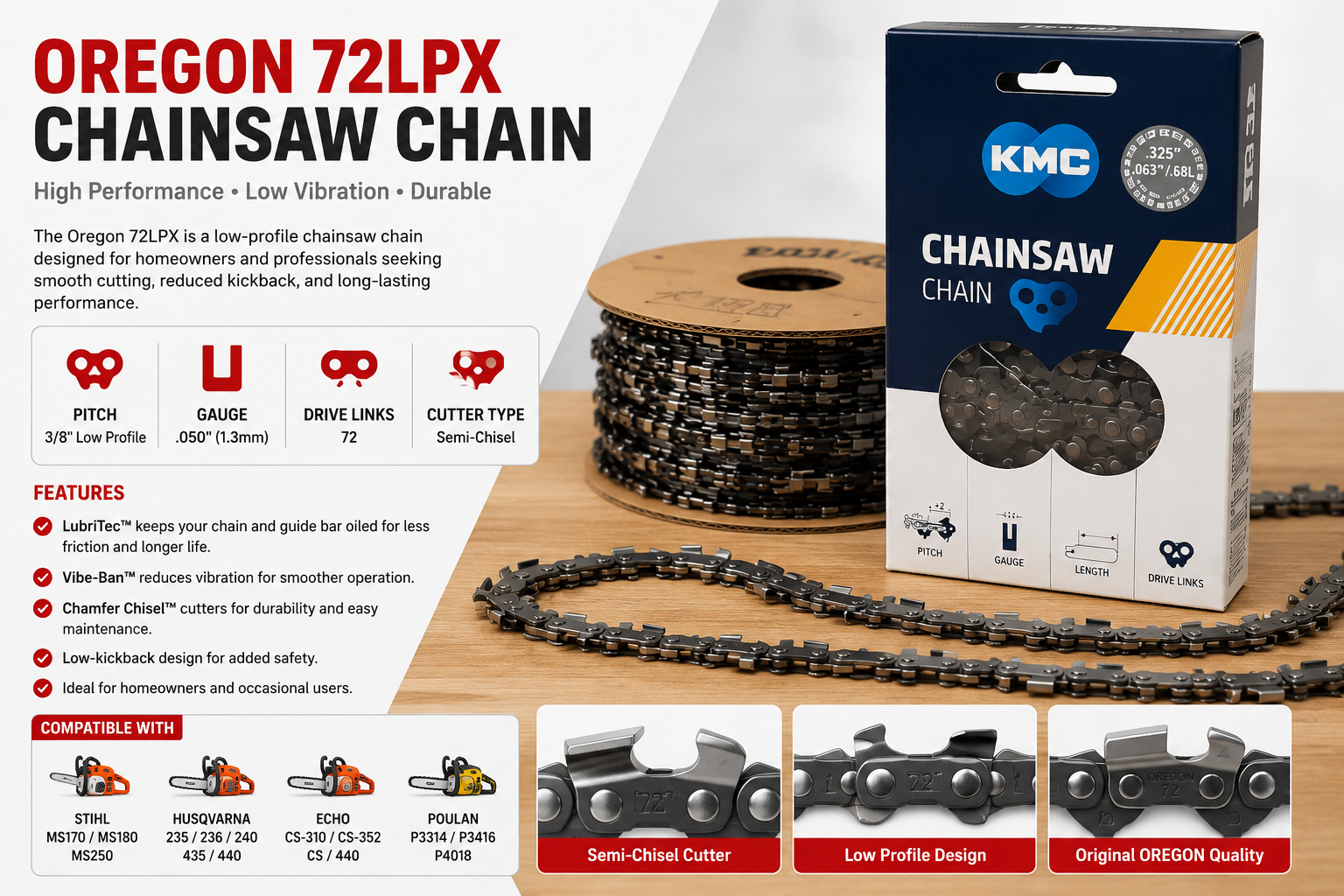
KMC’s 3/8 low-profile range publishes a .043-inch (1.1 mm) product with 40, 45 and 52 DL and a .050-inch (1.3 mm) product with 40, 45, 50, 52, 55, 56 and 59 DL. An inquiry for “3/8 LP 52 DL” is therefore incomplete. Both gauge routes publish that count.
An e-commerce replacement brand may have product listings built around bar length because that is what customers see first. Before sourcing, its technical file should add gauge and DL from the actual fitment. The retail title can remain customer-friendly, but the order and barcode record must preserve the complete combination.
Professional .325 and 3/8 loops need separate quotation lines
KMC’s verified .325 .050 and .058 products list 64, 72, 76, 78 and 86 DL. Its verified 3/8 .058 product lists 68, 72, 76 and 84 DL. Because 72 and 76 occur in both pitch systems, an order line such as “professional semi-chisel, 72 DL” cannot identify the product.
Use one line per pitch, gauge, DL, cutter and sequence combination. Separate quantities and package codes should follow those lines. This structure lets both parties see whether a price change comes from volume, configuration or packaging instead of comparing totals built from different products.
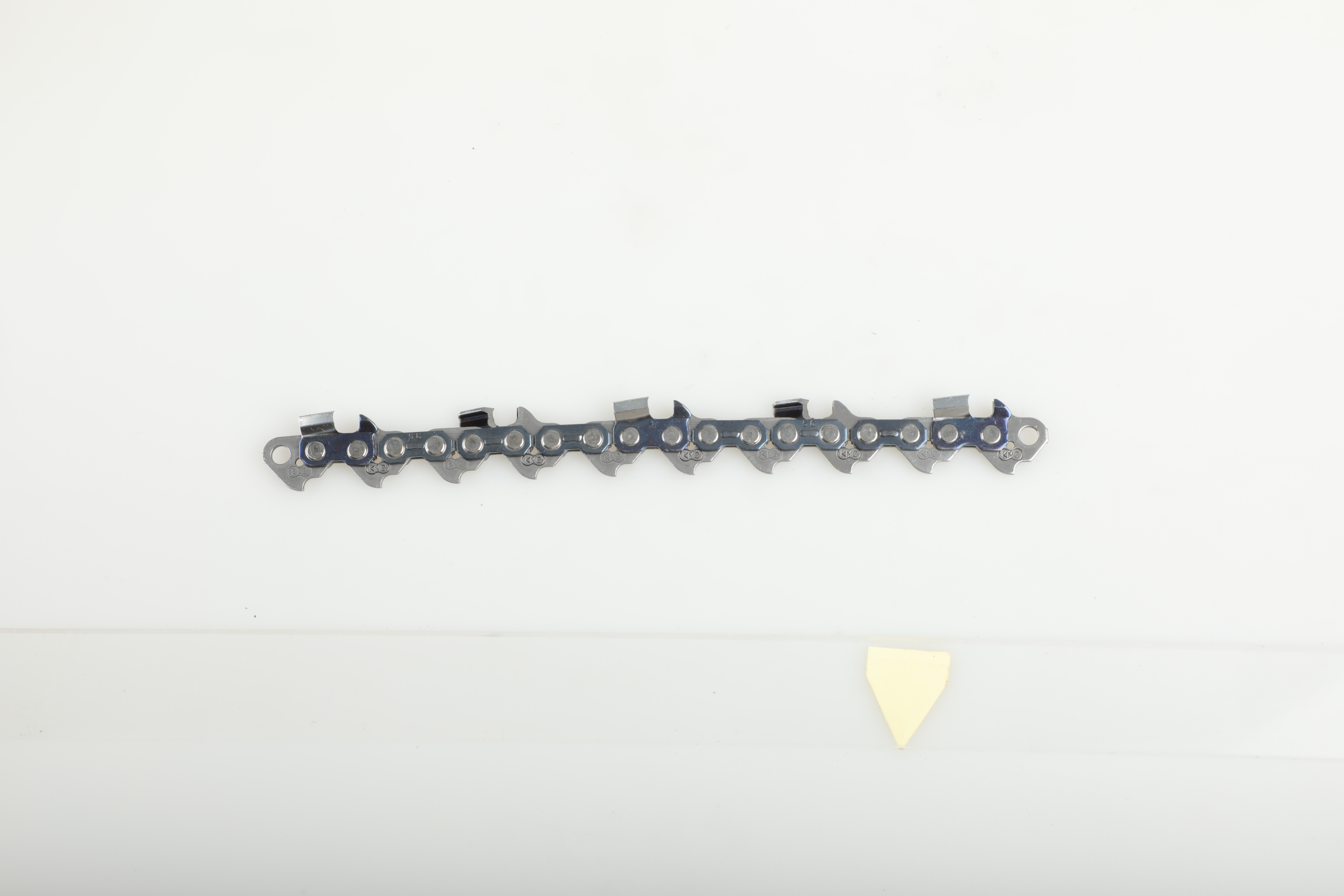
Keep commercial evidence distinct from technical evidence
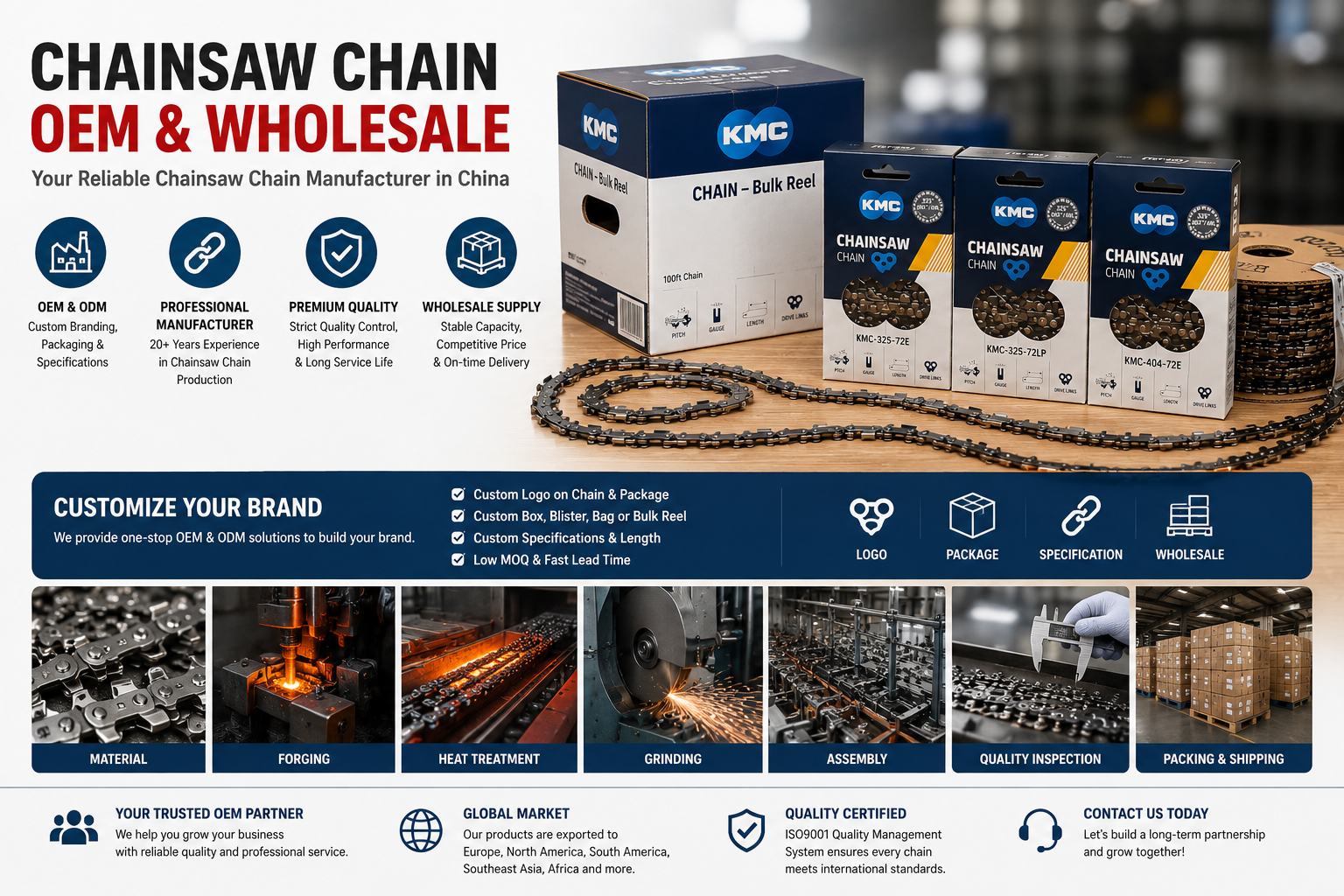
A supplier presentation may state factory size, line count and monthly capacity. KMC’s OEM page publishes a 50,000-square-metre facility, 15 production lines and output above 800,000 chains per month. These are first-party KMC statements, not independently audited capacity measurements. They help frame the discussion but do not establish when a particular .404, .325 or retail-package order can ship.
Ask for a schedule tied to the SKU mix, technical approval and artwork release. KMC also publishes indicative timing of 7–10 days for samples, 15–20 days for 1,000–5,000 units, 25–30 days for 5,000–20,000 and 35–45 days above 20,000. Confirm current timing on the order because mixed variants, package format and readiness of the buyer’s files can affect the plan.
A capacity headline cannot reserve the buyer’s production window
A wholesaler may place 12,000 loops across many DL counts and cutter profiles. That order is operationally different from 12,000 identical loops even when the total is the same. The schedule should state when specifications freeze, when each group enters production and when packing data is ready. If one artwork is late, the parties can see whether it affects one SKU or the whole shipment.
Do not treat a pro forma invoice as a complete production schedule unless it names the relevant dates and revisions. Commercial confirmation proves that an order exists; the technical and packaging records prove what should be made and packed. Keeping them connected but distinct makes change control possible.
Use staged approvals so a package change cannot rewrite the chain
Cross-border OEM work usually creates several files: chain specification, label, unit package, carton mark, barcode list and perhaps multilingual instructions. Assign a revision and owner to each. Technical approval should freeze the loop identity. Artwork approval should freeze the presentation. Shipment approval should confirm that the correct revisions meet in the packed goods.
A revision table should settle changes made across time zones
Keep one decision table with the item code, document name, current revision, approval status, approver and date. Mark a file “open” while questions remain, “frozen” when production may rely on it and “superseded” when a later revision replaces it. Do not delete the earlier approved file from the order archive; retaining it shows what changed and helps explain any work already completed against the previous instruction.
Suppose a buyer in Europe sends a revised 3/8 LP carton at the end of its day, while the factory team sees the email the following morning. The change message should state whether the unit label, barcode and production quantity are affected and whether work must stop. A new attachment with the same filename is not sufficient. The revision table should identify the new file, and the China production contact should acknowledge the affected SKU before the buyer assumes the change is active.
Small wording corrections still need control when they alter a fitment number. Changing “.050” to “.058” is not ordinary copy editing; it changes the chain identity. The technical owner should review it even if the edit occurs in artwork. Conversely, a confirmed address-format change on an outer carton should not reopen cutter or DL approval. Clear ownership prevents every update from either being ignored or restarting the entire order.
Approve the unbranded technical loop before decorative details dominate
A private-label buyer may spend more review time on colors and logos than on the loop inside. Reverse that order. First check pitch, gauge, DL, cutter and sequence against the signed item record. Then review the brand presentation. KMC lists custom logos, labels, barcodes, multilingual manuals, individual boxes, blister cards, cartons and pallets; each option should have a named proof rather than an approval hidden inside email text.
If the buyer changes from a 72 DL .325 .050 loop to a 76 DL version, the barcode and package are affected even if the graphic design remains identical. The change record should identify every dependent file. If only the logo color changes, the technical chain record should remain untouched. This prevents a visual revision from reopening a fitment decision accidentally.

One approved carton does not prove every unit label inside
During pre-shipment review, select units from more than one carton and more than one SKU. Read the unit package, scan the code if applicable and compare the loop identity with the order. A correct outer mark can conceal an inner mix, while a correct unit can be placed in the wrong carton. Sampling should follow the agreed inspection plan rather than focus on the easiest visible box.
A distributor ordering both .325 .050 72 DL and 3/8 .058 72 DL should include both in that review because their DL counts overlap. A .404 order containing .063 and .080 products deserves the same attention: KMC publishes 100 DL in both routes, but the gauge and application differ.
A .404 order should state the machine system, not only the shared pitch
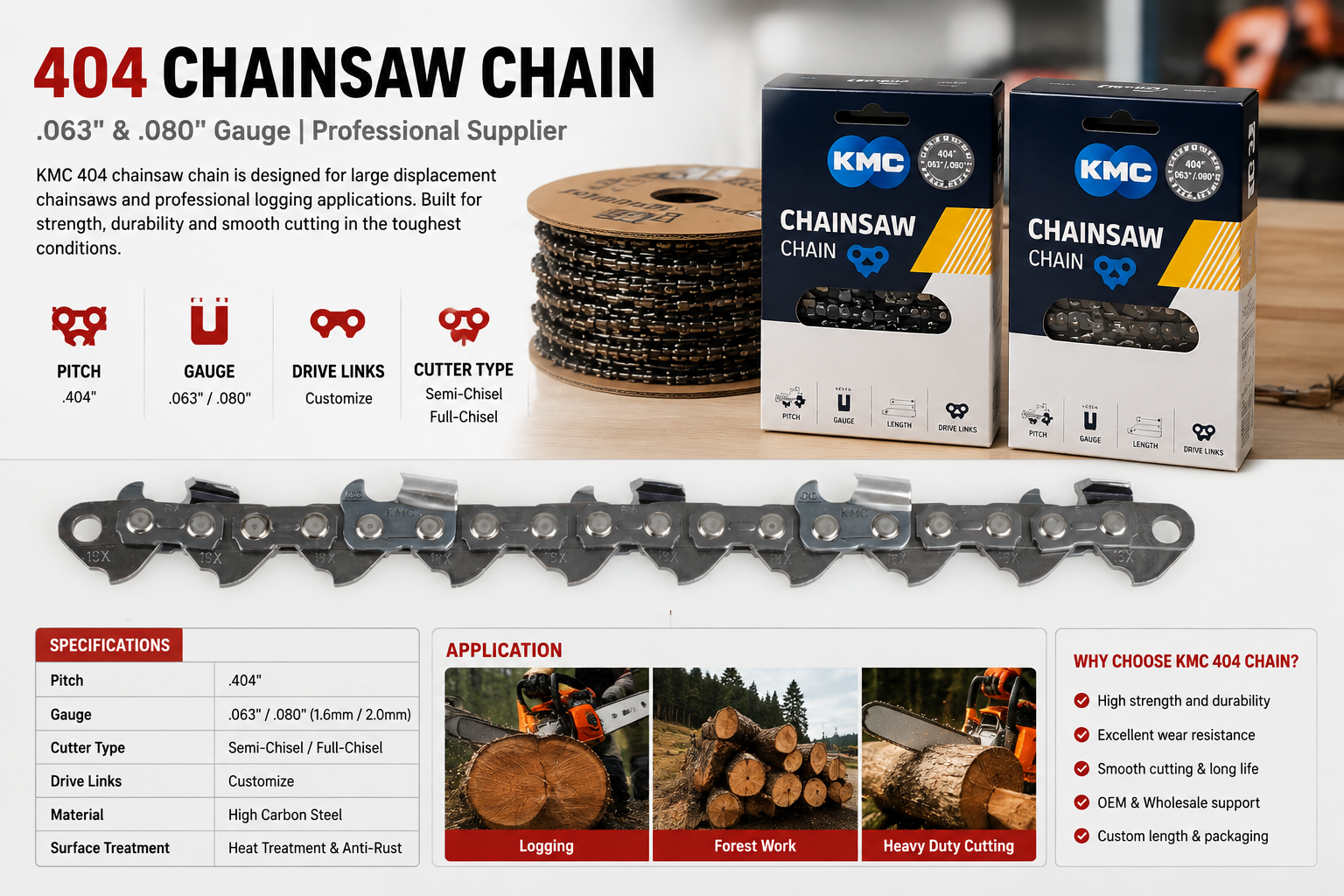
KMC’s .404 product family includes a .404 .063 product with 60, 92, 100 and 104 DL and a separate .404 .080 semi-chisel harvester product with 78, 80, 90, 91, 94, 95 and 100 DL. A remote buyer should identify whether the chain is for the applicable handheld/heavy logging system or a mechanized cutting head.
The cutting-head file governs a .404 .080 import order
A forestry importer should take .404 .080 fitment from the harvester head, bar and sprocket documentation. The machine reference belongs on the technical record, but it does not replace the gauge and DL. If an old loop is supplied as evidence, count it and reconcile it with the equipment information before production.
This boundary also affects packaging and warehouse placement. Harvester chains should not be placed in a bin identified only as “.404 100 DL” beside .404 .063 loops. The unit package and receiving record should keep gauge and application visible after the master carton is opened.
Build a shipment file that the receiving team can actually use
The useful shipment file is not a large archive of unrelated photos. It links the final purchase revision, approved item list, package proofs, carton list and agreed inspection evidence. Name documents by SKU and revision. If a packing list uses a shortened commercial description, include a cross-reference to the full technical item record.

At destination, the receiving team should be able to choose one packed loop and reconcile its barcode, package dimensions and carton location with the signed order. Any discrepancy goes on hold under the exact SKU rather than becoming a vague claim against the entire shipment. Authorize shipment from a China chainsaw chain manufacturer only when that selected-unit trace works before the goods leave—not after the dealer network discovers which assumption was wrong.